People Who Keep Every Birthday Card, Every Handwritten Note, And Every Photograph In A Labeled Box Often Aren’t Just Sentimental, Many Grew Up In Households Where Evidence Of Being Loved Had To Be Stored Somewhere It Couldn’t Be Taken Back
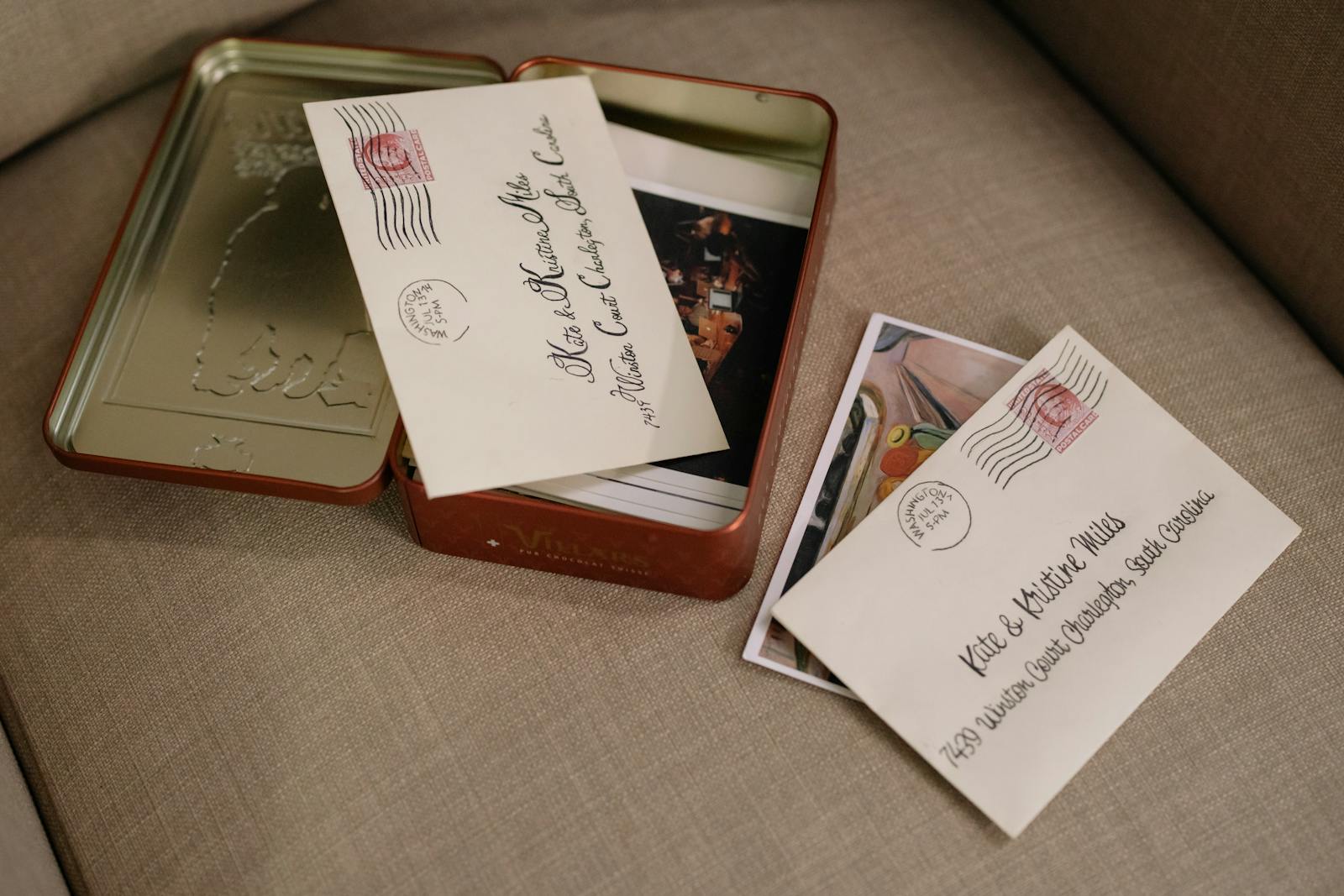
Look, I noticed it in myself first. There’s a shoebox on the top shelf of my closet that I haven’t opened in maybe three years, and I know exactly what’s in it. Birthday cards going back to when I was about eleven. A note a girl wrote me in 1998 that I have no business still owning. Postcards from people whose last names I’d struggle to remember. The thing is labeled. Of course it’s labeled.
And for years I told myself the same story everyone tells themselves about this kind of behavior, that I’m just sentimental, that I’m the soft one in the family, that I have a romantic streak about handwriting and paper. Sweet quirk. The kind of thing a partner teases you about when you refuse to throw out a card from 2003.
Honestly, I think the read is wrong, or at least incomplete. Sentimentality is warm and outward. The labeled-box behavior is something quieter and more defensive. It’s evidence-keeping. And evidence-keeping, when you look at where it tends to come from, has a pattern.
The difference between keeping things and storing proof
There is a version of holding onto objects that is genuinely about love of the object. People who frame photographs and put them on the wall. People who pin a child’s drawing to the fridge for a few weeks and then quietly recycle it. The relationship to the object is light. The memory does not depend on the paper.
And then there is the other version. The shoebox of every card anyone has ever written. The folder of handwritten notes from friendships that ended a decade ago. The negatives of photographs already digitized three times. Everything labeled by year. Everything findable. Everything kept where no one else can get to it.
That is not the same behavior. The second version treats the object as the load-bearing wall. If the card is gone, the proof is gone. If the proof is gone, the love might never have happened in the first place.
Which is a strange thing for an adult brain to believe. So the question is where the belief comes from.
What the attachment research actually says
Attachment theory has been working on a version of this question for sixty years, mostly without using the word “box.” The simplest framing: children who grow up uncertain about whether their caregivers will be emotionally available develop what researchers call insecure attachment patterns that follow them into adult relationships. The uncertainty itself becomes a habit. The body keeps scanning for it long after the original household is gone.
One thing that uncertainty produces is a need for documentation. If love is intermittent, the child learns to track it. When did it appear. What did it look like. Did it come on a birthday. Did it come in a card. Was the card signed “love” or just signed.
An adult who grew up in that environment doesn’t necessarily remember doing this. They just notice, much later, that they have a complete archive and other people don’t.
Research on childhood adversity and adult attachment suggests that early experiences of inconsistent care don’t just shape who we date, they shape what we hold onto, how we organize it, and what we believe will happen if we let it go.
Why the box has to be labeled
This is the detail that gives it away.
Look, a genuinely sentimental person tends toward chaos. They’ve got a drawer full of cards mixed with old concert tickets and a few bits of ribbon, maybe a Blockbuster card in there for some reason. They couldn’t tell you which year a card is from without reading it. The mess is part of the warmth. Memory is allowed to be soft.
The labeled box is different. The labeled box is a system. Year, sender, occasion. A spreadsheet’s worth of order applied to objects that are supposed to be about feeling. The labeling is the tell. It’s the part of the behavior that says: I need to be able to prove this on demand. I need to be able to find the evidence quickly. I need this to hold up.
Hold up against what, exactly. That’s the question worth sitting with. Most people who do this can’t immediately answer it. They just feel a low-grade dread when they imagine throwing the box out.
Households where love had a habit of being revised
The pattern shows up most often in people who grew up in homes where affection was real but unstable. Not necessarily abusive homes. Often homes that looked completely fine from outside.
What they had in common was revision. A parent who said something loving on Tuesday and pretended not to remember it on Thursday. A parent who gave a thoughtful gift and then, in an argument months later, listed it as proof of how much they had sacrificed. A parent whose warmth shifted with their mood, their stress, their drinking, their second marriage, their unspoken disappointments.
In a household like that, love is not a stable substance. It’s a thing that can be retroactively edited. You were told you were loved, and then later you were told that was conditional, or you were told you had misunderstood, or you were told you had imagined the warmth you remembered.
A child living inside that revision does what any reasonable person would do. They start keeping records.
The card from your tenth birthday becomes important not because of what’s written in it, but because it cannot be unwritten. The handwriting is fixed. The date is fixed. Whatever this person felt about you in that specific moment, on that specific day, is preserved in a form that no one can come back later and renegotiate. As research on emotionally immature parents suggests, when caregivers routinely rewrite the emotional record, children may develop their own ways of preserving what actually happened.
The connection to other adult patterns
Once you see this, you start to see it in adjacent behaviors. The people who keep every receipt. The people who screenshot every meaningful text exchange. The people who save voicemails for years. The people who keep a running mental list of everything a partner has ever said that hurt them, with dates.
It’s all the same instinct. It’s the body’s response to having grown up in an environment where the official version of events kept changing. You don’t trust that this moment, this kindness, this commitment, will still be true in six months. So you build an archive. The archive is not love. The archive is what you reach for when love feels like it might be about to be revised again.
I wrote recently about the labeled-folder version of this with paperwork, receipts, warranties, utility bills, and the engine underneath is similar. Watching adults get cornered by missing evidence teaches you that evidence matters. Watching affection get rewritten teaches the same lesson, just on a softer kind of paper.
Why this isn’t quite the same as hoarding
It’s worth being careful here. Hoarding is a clinical condition, and it has its own profile, an inability to discard objects regardless of value, distress at the thought of letting things go, accumulation that interferes with daily life.
The box-keeper is doing something narrower. Most of their possessions are normal. Their kitchen is fine. Their wardrobe is fine. The archive is selective. It targets emotional artifacts specifically, cards, letters, photographs, things with handwriting on them, things with someone else’s voice in them.
That selectivity is what makes it psychologically interesting. The person isn’t trying to hold onto everything. They are trying to hold onto the proof of having been loved. Those are not the same project.
What it does to adult relationships
Here is where it gets uncomfortable. If you grew up needing physical evidence that affection had occurred, you tend to bring that requirement, quietly, into your adult relationships.
You may not realize you do it. But you might find yourself uneasy when a partner expresses love only in conversation, with nothing written down. You might prefer the birthday card to the warm hug, because the card stays. You might find yourself rereading old messages from your partner during periods when the relationship feels uncertain, looking for the version of them that loved you, as if to confirm that version actually existed.
None of this is dysfunction exactly. It’s a coping system that worked once and never got updated. As we’ve explored before, people raised with little affection don’t grow up unable to love, they grow up suspicious of love that finally arrives. The labeled box is a softer cousin of that suspicion. It says: I’ll accept this love, but I’m also going to keep it on paper, just in case.
The cost of the archive
The archive has a hidden cost, and it took me a long time to understand what it was.
If your sense of having been loved depends on physical evidence, then love that doesn’t produce evidence doesn’t fully count. The friend who calls but never writes. The partner who shows up but isn’t a card-writer. The parent who finally, awkwardly, in their seventies, starts trying to express something they couldn’t express forty years ago, but says it out loud rather than in writing.
An evidence-trained brain has trouble registering these as real. The love is there. It just doesn’t fit the format the archive accepts. So part of growing up, for people who built one of these boxes, is learning to widen what counts.
That’s slow work. Slower than people expect.
A note on the cross-cultural piece
One thing the attachment literature is increasingly clear about: this stuff varies by culture more than older textbooks let on. A recent international study published in the International Journal of Psychology, co-authored by Bucknell psychologist T. Joel Wade, found that fearful and preoccupied attachment styles correlate with different reproductive and relational behaviors across the U.S., Canada, and Japan. The underlying anxiety is similar; what people do with it isn’t.
Researchers have also pushed back on the older idea that attachment is just about mothers. Work coming out of the Collaboration on Attachment to Multiple Parents Synthesis consortium suggests that what matters is the number of stable, secure attachments a child develops within their family network, not the specific gender of who provides them. Which means the labeled-box adult is rarely reacting to one parent. They’re usually reacting to a whole household, a whole pattern of who was reliably warm and who wasn’t.
What to do if this is you
I’m not going to tell anyone to throw out their box. The box has been doing useful work for a long time. Throwing it out doesn’t dismantle the underlying need; it just removes the soothing object.
What’s more useful, I think, is noticing the function. Asking honestly: what am I afraid would happen if I didn’t have this. Whose revision am I bracing against. Whose version of events am I keeping a counter-record to.
Honestly, here’s where I’ll plant a flag. I think the box is adaptive when you’re a kid and limiting when you’re an adult, and most of us hang onto it well past the expiration date. It’s not that the box is bad. It’s that the box quietly trains you to discount any love that didn’t come with a paper trail, and that’s a much bigger tax than people realize. The phone call that wasn’t recorded counts. The hug that wasn’t photographed counts. The friend who shows up reliably for fifteen years but never wrote you a single note counts as much as anyone who ever signed a card “love.” Maybe more. The box was a child’s solution to an adult-sized problem, clever, effective, and built for a household you don’t live in anymore. Keeping it is fine. Letting it run your inner accounting is the part I’d push back on.
You can just have been loved. Even without the paperwork.
Feature image by cottonbro studio on Pexels
Popular Products
-
 Brightening & Hydrating Rose Facial C...
$154.99$107.78 -
 Pheromone Long Lasting Attraction Per...
$88.99$61.78 -
 Crystal Glass Rose Table Decoration w...
$137.99$95.78 -
 Mini Facial Hair Trimmer with Replace...
$15.99$9.78 -
 Whitening & Spot Removal Skincare Set...
$201.99$140.78