Recovering From The Pandemic And Its Aftermath: Lessons From Seven Research Studies
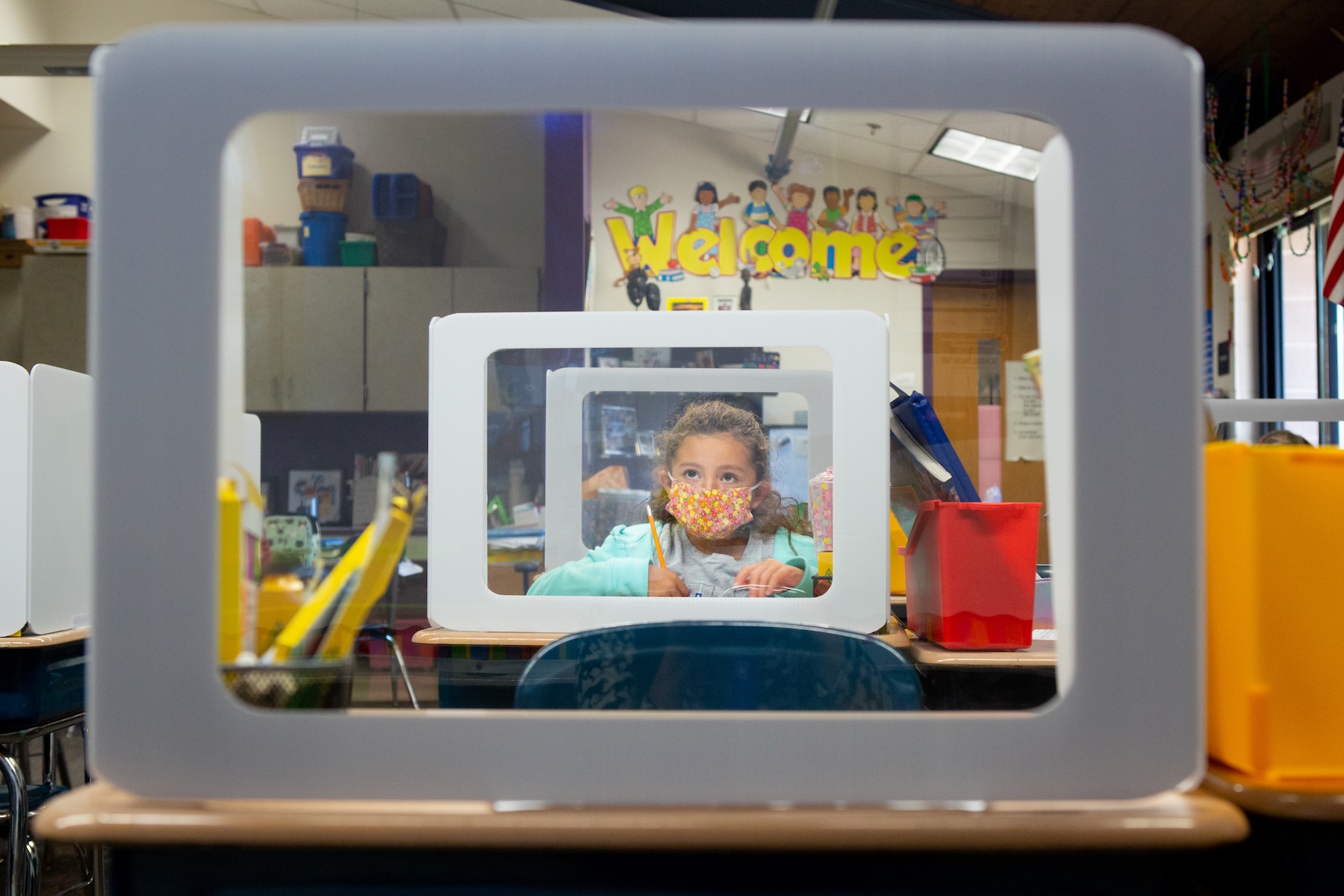
In 2024, four full years after the COVID-19 pandemic closed schools, districts, and public systems were still dealing with steep declines in student achievement and attendance. During the 2024-25 school year, 23% of students were chronically absent, compared to just 15 % before the pandemic, and all 50 states have yet to return to pre-pandemic levels of absenteeism. On NAEP, the Nation’s Report Card, 30% of fourth graders scored proficient or advanced in reading in 2024, down from 32 % in 2022. At the bottom of the achievement distribution, the situation is worse: 34% of eighth graders scored below basic in reading, the largest percentage in that category in NAEP’s 32 years of testing reading.
In this context, we launched our 2024 round of Evidence Project research funding. With support from the Walton Family Foundation, we solicited the field’s best ideas for research to understand chronic absenteeism and learning recovery. We received almost 100 letters of interest and 33 full applications, and we were able to fund seven exceptional research projects in these two areas. These studies posed important questions about the root causes of current crises and helped identify promising paths to recovery and reinvention. As the funding comes to an end, this synthesis looks across the published and upcoming reports to draw overarching conclusions and make recommendations for policy and future research.
The researchers found that the remaining COVID-related challenges are complex and that in many cases, existing strategies are not designed to match that complexity. Efforts to reduce chronic absenteeism and to accelerate learning more broadly have had uneven success, largely because the students and districts that are still struggling are also the ones current strategies are least equipped to reach or serve. The most-absent students are often dealing with family responsibilities, transportation issues, mental health struggles, or a lack of engagement, demonstrating how other major current challenges, such as academic performance declines, intersect with absenteeism. There have been larger increases in student absenteeism in low-income districts, for example, where students were also less likely to have recovered in math and reading.
Several studies also found that schools and districts lacked data systems that could track student needs and whether the interventions meant to address those needs were actually working. Additionally, researchers found that district leaders and school principals were critical to sustaining progress: leaders’ continued problem-solving and advocacy helped strategies, particularly learning-recovery programs like high-impact tutoring, continue after funding had ended and public attention had shifted.
Moving forward, districts and the field need better data systems to track students’ needs over time, adequate and reliable resources so effective programs don’t have to be scaled back, and new, more ambitious interventions that go beyond generic outreach to address students’ complex and individual challenges. Underlying all of this is the need for stable school and district leadership that can build strong staff, foster a culture of improvement, and use data to identify and respond precisely to student needs.
Evidence Project Research Funded in 2024
To help educational researchers and leaders understand the ongoing impacts of the Covid-19 pandemic on students and how best to move forward, we commissioned the following research projects:
- Post-Pandemic Recovery and Renewal: A Deep Exploration of Chronic Absenteeism—Causes, Consequences, and Potential Solutions, University of Southern California: This project used a nationally-representative survey, paired with interview data from the Understanding America Study, to investigate parents’ and teens’ attitudes and behaviors related to absenteeism in America’s schools.
- Examining the Role of Student Well-Being and Reverse Engineering Success in Chronic Absenteeism in Districts and Schools in Georgia, Michigan State University: To explore pre- and post-COVID trends in absenteeism and student well-being in the state of Georgia, this project used a mixed-methods approach that included qualitative data collection through a survey of school leaders, interviews with state policy actors, focus groups with parents and students, and quantitative analysis of school- and district-level administrative data.
- Wrong Target or Faulty Execution: Exploring Misalignments in Absenteeism Interventions Post-Pandemic in a Large Urban District, Vanderbilt University: This mixed-methods project examined Metropolitan Nashville Public Schools’ adoption of progressive approaches to chronic absenteeism through interviews with school leaders, staff, students, and parents, observation of district attendance meetings and school visits, and quantitative data analysis of district administrative data.
- Understanding Changes in Student Absences, Causes of Absences, and Potential Solutions Following the COVID-19 Pandemic, University of North Carolina at Chapel Hill: To study the causes and impact of increased absenteeism in North Carolina public schools, this project used statewide administrative data, statewide survey data, and qualitative data collected through interviews with students, families, and school leaders and staff.
- Pandemic Learning Recovery Strategies: Evidence from Massachusetts Charter Schools, Massachusetts Institute of Technology: This project utilized Massachusetts charter school admissions lottery data, state administrative data, and a novel survey on charter school learning recovery practices to study whether the effectiveness of Massachusetts charter schools declined before, during, and after the pandemic.
- Navigating the ESSER Cliff: District Strategies and Impacts on Tutoring Programs, Stanford University: This mixed-methods project used surveys, semi-structured interviews, and case studies to understand how districts’ responses to ESSER funding and the ESSER funding cliff affected high-impact tutoring programs.
- A Research-Practice-Partnership to Examine Learning Recovery Interventions in California, American Institutes for Research: This project leveraged a research-practice partnership between researchers at the American Institutes for Research (AIR), University of California (UC) Berkeley, and UC San Diego, and policymakers at the California Department of Education. Researchers closely examined data on learning recovery interventions and implementation in California public schools from the 2014–15 to 2024–25 school years, with a focus on improving and accelerating student outcomes.
Interventions often don’t reach the students most in need, in part because their needs aren’t fully understood.
Districts and states have not ignored post-COVID absenteeism; most have rolled out real strategies to bring students back to school. But these seven studies reveal that efforts to reduce chronic absenteeism have had uneven success. In large part, this is because the students still missing school are the ones that current strategies are least equipped to reach.
The UNC team’s analysis shows that while chronic absenteeism has declined since its post-COVID peak, improvements in attendance are not equally distributed across all demographic groups. Rather, recent gains in attendance have mostly been in the middle of the attendance distribution, meaning that many of the most-absent students are not returning to school. Similarly, the Michigan State project confirms that absenteeism varies across axes of inequality like race, gender, homelessness, disability, and economic disadvantage.
Survey research from the USC team confirmed high ongoing levels of student absenteeism and helped shed light on the multifaceted nature of the problem. While increased illness is part of the story, many of the most-absent students are missing for other reasons, like family responsibilities, transportation issues, mental health struggles, or feeling a lack of engagement with school (“just don’t want to go”). Other major challenges, like academic performance declines, are intricately connected with absenteeism. Teens who were flagged as having concerning scores on a widely used mental health screener reported missing twice as much school as those who were not flagged. And students who were earning mostly As and Bs or better reported missing 10 fewer days per year than those earning worse grades.
The AIR research in California extends these findings beyond attendance into learning recovery more broadly. They found that following the pandemic, districts across California adopted a range of recovery strategies, including increased instructional learning time, enhanced staffing, and more engagement with students and families. But they also found that the degree of learning loss a district experienced was not correlated with its likelihood of adopting these strategies. Instead, the adoption of recovery strategies was correlated with external factors, like labor market constraints. In other words, the districts where students experienced the greatest learning loss were not necessarily the ones providing students with the most intensive recovery support.
The vast majority of strategies aren’t matched to the depth of need.
Across contexts and methods, the funded projects confirmed that existing strategies aren’t matched to post-pandemic realities:
- Three projects (Vanderbilt, Michigan State, and UNC) highlighted how existing strategies have been effective in some ways but will not be sufficient to reach the most absent students. Both the UNC and Vanderbilt projects found that the approaches districts are taking to address absenteeism, even those that emphasize matching instruction to students’ needs, are simply not able to deal with the depth of the challenges that many students face.
- The Vanderbilt research highlights that many students who are eligible for, and could benefit from, attendance interventions do not receive them. In part, this is driven by the current challenges inherent to tracking the necessary data across multiple systems (e.g., attendance, academic, behavioral, and intervention). If done correctly, data tracking and analysis could reveal which students might benefit the most.
- The Michigan State project echoed other projects in finding that students’ feeling that they are known, valued, and connected to the school community is an important factor driving attendance. However, districts often do not adequately address this type of student engagement at the school level. The schools that beat the odds are often those whose leaders recognize the critical role of student engagement and use relationship-based strategies to mobilize attendance teams consistently and coherently.
- Stanford’s research on ESSER-funded high-impact tutoring found that while programs launched quickly with external vendor support, districts lacked the funding stability, data infrastructure, and in-house capacity to sustain or scale them once federal funds expired. As a result, many districts were forced to narrow tutoring programs to the students and grade levels that fit their strategic priorities, rather than matching support to the full scope and severity of student need.
Districts and schools lack the data systems to track student needs and intervention outcomes.
Nearly all seven projects found that districts and schools lack the data infrastructure to identify which students need support or to know whether that support is working. For example, MIT and USC’s findings reinforce that student-level data is essential, whether that data indicates which school practices are driving learning recovery or captures specific reasons a given student is missing school. Without systems that track and highlight individual students’ data, interventions risk being designed for an “average” student who may not be an accurate reflection of genuine student needs or experiences. The Michigan State findings demonstrate an outcome of not having such data: administrators’ perceptions of what drives absenteeism (student or family behavior) often diverge from what the evidence actually shows drives absenteeism (frequently, school culture and climate). Schools that made fuller recoveries post-COVID were distinguished partly by the active use of data, not just the collection of it.
Two projects point to how improved data infrastructure will support ongoing recovery. The Vanderbilt team’s findings suggest that better integrating data systems, which are currently fragmented across separate platforms for attendance, academic, behavioral, and intervention, would allow districts to catch at-risk students before they become chronically absent. Stanford’s findings show how a dearth of data can also impact funding and sustainability; district leaders often lacked the empirical data and likely the staff capacity to analyze it, needed to demonstrate program effectiveness. This meant that it was more challenging to secure continued investment in promising programs, even when those programs may have been working.
Leadership is a key ingredient for addressing this complexity.
Each of our funded projects provided compelling evidence that more successful reform efforts are possible, but that a major driver of those reforms is exceptional leadership. For instance:
- In a study of charter effectiveness, the MIT team found that staffing changes, including principal turnover, were strongly correlated with variation in school effectiveness. That work also found that school principals were essential for sustaining effectiveness and called for efforts to boost effective principal retention.
- In the AIR study of California schools, researchers identified the importance of internal cultural conditions and schoolwide commitment to sustained recovery-effort implementation. Leaders were essential for supporting quality instruction and retaining effective teachers. These factors contributed to their finding that the schools seeing the greatest post-COVID recovery were typically those that had seen the greatest progress before the pandemic.
- Stanford researchers found that successfully sustaining tutoring programs required a “district champion” to advocate for high-impact tutoring and use district resources strategically. In many cases, budget shortfalls forced districts to scale back tutoring programs, but some leaders turned this challenge into an opportunity by right-sizing and reducing their tutor pools to “the best of the best.”
- The Vanderbilt study highlights the importance of leadership in building usable systems and educator capacity for implementing attendance interventions.
Implications
These seven projects point to why so many districts have not fully recovered from pandemic-era disruptions. Interventions too often fail to reach the students who need them most, and even when support is provided, it’s frequently too generic to meet a given student’s needs. Underlying both problems is a data infrastructure gap: schools and districts often lack the systems to identify who needs help or to know whether their interventions are actually working. Where progress has held, it has typically been the result of specific leadership actions, sustained problem-solving, advocacy for continued funding, and the organizational systems built to carry interventions forward once initial funding and attention faded.
The broader field of education, including the individual educators, schools, and districts operating within it, needs to do better at intervening with the students who need it most. These seven studies point to several concrete ways forward:
- Invest in better data systems that track individual students’ needs over time and across settings. Districts need integrated systems that deliver a coherent picture of a student across attendance, academic, behavioral, and intervention records, not fragmented platforms that make it hard to see the full scope of a student’s needs or to know whether interventions are working. Better data would allow schools to move from reactive to proactive identification, catching students before problems compound.
- Ensure districts and schools have the resources to meet student needs at scale, without being forced to narrow programs that are working. Too often, promising interventions get scaled back because of unpredictable funding, high vendor costs, or an inability to prove impact with the data on hand. Districts need more stable, flexible funding streams so effective programs can serve the full population of students who need them, rather than being narrowed to whichever students and grade levels a shrinking budget can cover.
- Develop new, ambitious, and creative interventions that go beyond generic, one-size-fits-all responses. Standard approaches, like a call home or a form letter, are necessary but not sufficient for students with complex, often idiosyncratic needs. Schools should invest in strategies that diagnose individual students’ specific challenges and pursue solutions matched to those challenges. They should also strengthen student-adult relationships and engagement, rather than relying solely on compliance-oriented outreach. This kind of fine-tuned, relationship-based work will take more time, data, and resources than generic strategies. Still, the evidence suggests it’s what’s actually needed to reach the students who are furthest behind.
- Support stable district and school leadership that can assemble quality staff, build a culture of improvement, and put data to use. To sustain school and district progress, leadership emerged as a defining factor across these projects. Leaders who can retain effective teachers, build coherent organizational systems, and use data to track student needs are also best positioned to carry interventions forward, even after initial funding and public attention have faded. Given how central leadership is to recovery and remediation, the field should draw more deliberately on the substantial body of existing research on how to support and develop principals and how to hold them accountable for results.
Popular Products
-
 Brightening & Hydrating Rose Facial C...
$154.99$107.78 -
 Pheromone Long Lasting Attraction Per...
$88.99$61.78 -
 Crystal Glass Rose Table Decoration w...
$137.99$95.78 -
 Mini Facial Hair Trimmer with Replace...
$15.99$9.78 -
 Whitening & Spot Removal Skincare Set...
$201.99$140.78