Social Psychologists Found That People Who Keep Their Living Spaces Immaculate Aren’t Necessarily Organized — Many Of Them Learned That A Clean House Was The Only Form Of Control Available In A Childhood Where Everything Else Was Unpredictable
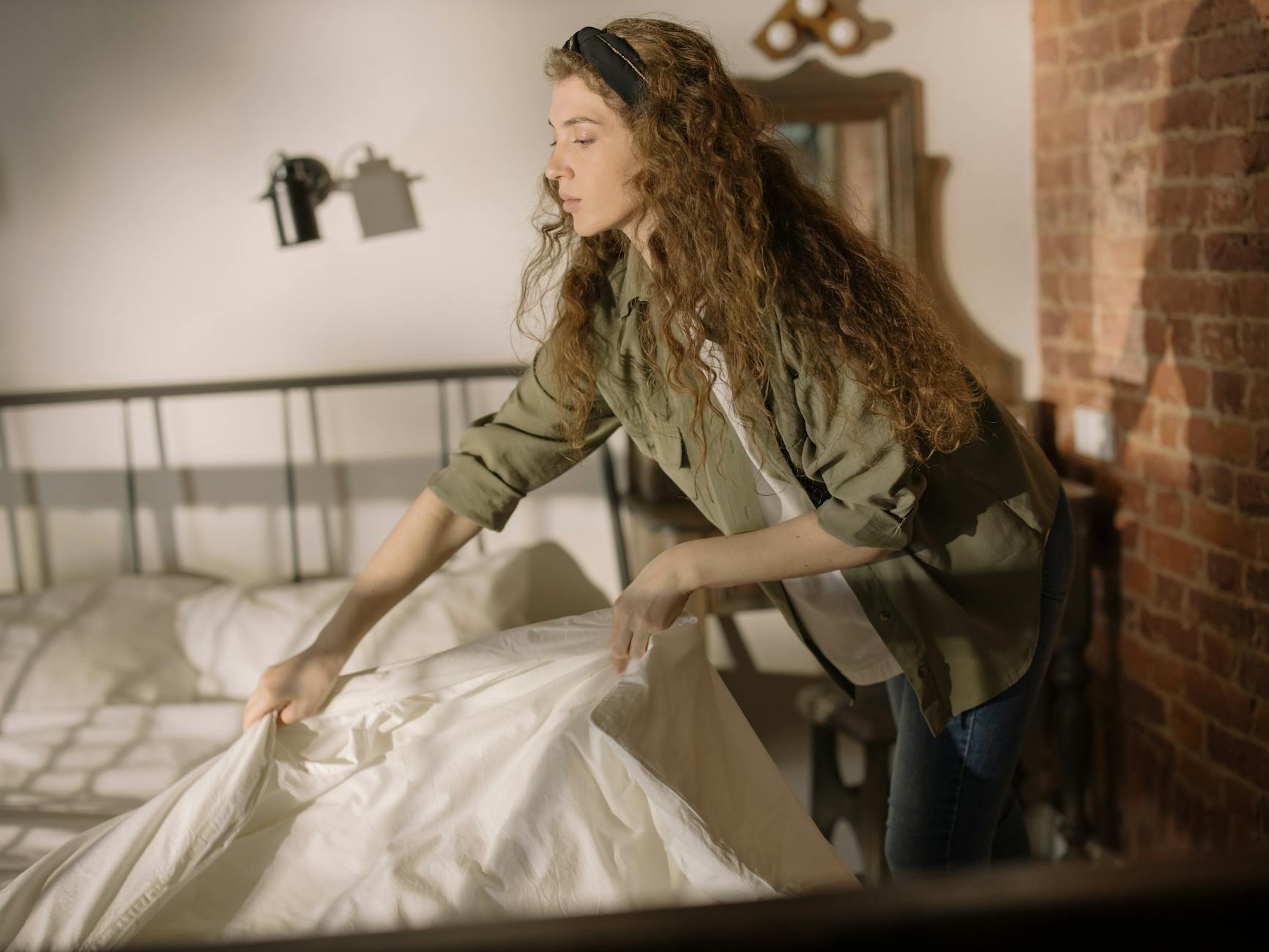
Longitudinal work on childhood adversity and adult behaviour has begun to trouble one of the more persistent assumptions about domestic life: that a spotless home is evidence of discipline, maturity, or moral seriousness. Research on childhood adversity indicates that early-life unpredictability measurably rewires the brain’s threat-detection systems, producing adults whose hypervigilance expresses itself most visibly in the management of small, controllable domains (the countertop, the linen cupboard, the arrangement of shoes by the door). It bears noting that what looks, from the outside, like an unambiguous marker of having one’s life in order is, for a significant subset of immaculate housekeepers, something considerably stranger: a trauma response dressed in rubber gloves.
The conventional reading of tidiness presumes a tidy person is an organised person; someone with systems and habits, someone who read a book about decluttering and took it seriously. That framing, one might argue, misses what is actually happening beneath the surface for a significant subset of immaculate housekeepers. For many of them, the behaviour did not originate in adulthood as a lifestyle choice. It was installed in childhood, in environments where physical order was the only variable a small person could influence while everything else (emotional safety, parental mood, financial stability, whether dinner would happen or become an argument) remained entirely outside their control.
The Architecture of Unpredictability
To understand how a clean house becomes a survival mechanism, it is necessary to understand what unpredictability does to a developing brain. Research on child development and trauma indicates that children require a degree of environmental consistency in order to feel safe; when that consistency is absent (when a parent’s mood shifts without warning, when the rules change based on who has been drinking, when affection arrives and withdraws on no discernible schedule), the child’s nervous system learns that the world is fundamentally unreliable. The brain’s threat-detection apparatus recalibrates toward permanent vigilance, scanning for anything (anything at all, however small) that can be managed, ordered, rendered predictable by small hands. It bears noting that this recalibration is not a conscious strategy but a neurological adaptation; the child does not decide to become hypervigilant any more than a sapling decides to lean toward light. The organism simply responds to what the environment is teaching it, and the lesson (delivered repeatedly, often wordlessly) is that safety is not given but negotiated, moment by moment, through whatever levers happen to be within reach.
Anything within their reach. That is the critical phrase. A seven-year-old cannot regulate a parent’s rage. Cannot prevent financial chaos. Cannot make an absent caregiver show up. But a seven-year-old can make a bed; can line up shoes by the door; can wipe a counter until it shines.
The logic is primitive and powerful: if I make this space orderly, perhaps the disorder will not come. Perhaps the shouting will not start tonight. Perhaps keeping this one visible thing perfect will hold everything else together.
It does not, of course. But the association between clean space and felt safety gets carved deep, below language, below conscious memory. And it persists.
When Tidying Becomes a Nervous System Event
One comes across the pattern most clearly in retrospect. Consider a grandmother who set a proper Sunday table even when money was tight; the easy reading is dignity, self-respect in the face of scarcity, the rituals of someone who had survived a war and knew what real disorder looked like. The table was her small, deliberate answer to it.
What is less obvious, until one has the vocabulary for it, is how much that ritual was doing for her nervous system. The ironed tablecloth was not decorative; it was regulatory. And versions of the same pattern surface everywhere once the eye is trained for them: the friend who cannot sit down until every dish is washed, the colleague who cannot sleep if a jacket is left on a chair, the acquaintance who describes a messy room with the kind of urgency most people reserve for emergencies.
This urgency is the tell. An organised person prefers tidiness; a person running a childhood survival programme needs it. The difference between preference and compulsion is where the cleaning instinct lives in the body. For the preference crowd, mess is mildly irritating. For the compulsion crowd, mess triggers a stress response (heart rate climbing, chest tightening, a restless energy that will not settle until order has been restored).
Research on attachment styles and childhood trauma maps this cleanly. Children who grow up with inconsistent caregiving often develop anxious or avoidant attachment patterns, and both styles share a common root: the learned belief that safety depends on something one does, not something one inherently deserves. The anxiously attached person cleans to prevent abandonment; the avoidant person cleans to maintain the illusion of not needing anyone. Both, one might argue, are managing the same wound from different angles.
Control as Currency
The word “control” carries a bad reputation; it is associated with domineering behaviour, with manipulation, with rigidity. But control, in the context of a chaotic childhood, was currency. The only currency available.
Cleaning becomes a form of agency; a small zone of influence in a world that otherwise refuses to respond to one’s efforts. There is a related pattern worth noting, concerning how people reclassify needs as projects they can handle alone, and cleaning is perhaps the purest example. The need is emotional safety. The project is scrubbing the bathroom tiles. The reclassification happens so automatically that the person genuinely believes they just like a clean house.
They do like a clean house. The question is why they like it with that particular intensity, that particular non-negotiability.
Studies on how childhood adversity shapes behavioural judgment reveal something worth sitting with: observers tend to extend more moral credit once they learn about difficult backgrounds. A tidy person gets praised; a tidy person who cleaned obsessively as a child to manage household chaos gets understood. The behaviour looks identical. The engine driving it is entirely different.
The Adult Version
The pattern does not soften much with age. If anything, it becomes more sophisticated. Adults who learned cleaning as control often extend the behaviour into other domains; their inboxes are at zero, their calendars are colour-coded, their kitchens contain labelled containers arranged by frequency of use. Friends admire the order and ask how it is done, and the answer is usually something self-deprecating, dismissing the behaviour as a personality quirk or being “Type A.” That phrase (a bit Type A) is doing enormous work. It reframes a trauma response as a personality trait; it makes the behaviour legible as ambition rather than anxiety; and it protects the person from having to explain the real origin, which would require vulnerability they may not yet have language for.
What is striking is how these individuals often struggle when things actually are going well. The relationship is stable; the job is secure; the fridge is full. And yet the compulsion to clean, to organise, to impose order on a space that does not need imposing upon, persists. Because the behaviour was never about the mess in the first place; it was about the feeling underneath the mess. The feeling of things falling apart.
Research on childhood trauma’s impact on adult relationships reinforces this point: the patterns developed to survive difficult early environments do not automatically recalibrate when the environment improves. Many researchers suggest the body keeps running the old programme because the nervous system does not trust the new data yet. A calm house feels suspicious to someone whose nervous system was calibrated by chaos.
What Happens When the Cleaning Stops
There is something revealing in conversations with people who fit this pattern. When illness hits, when injury forces them to stop, when life circumstances make their usual cleaning impossible, they do not merely feel frustrated; they feel unsafe. The language they use is diagnostic: they may report feeling that everything is falling apart, expressing that they cannot cope and need to restore order.
The panic that surfaces when cleaning becomes impossible is itself the evidence. A person who simply prefers tidiness will adapt, grumble a bit, lower their standards temporarily. A person whose sense of safety is welded to productivity will experience a genuine psychological crisis. The mess is not just untidy; it is a portal back to the original helplessness.
This is also why these individuals often have difficulty sharing domestic space. A partner who leaves a coffee cup on the counter is not being untidy; they are introducing unpredictability into the one domain this person has spent decades keeping controlled. The emotional reaction is disproportionate to the stimulus because it is not really about the coffee cup; it is about what the coffee cup represents: someone else altering the environment without permission.
A recent video from The Artful Parent explores how millennial parents, in trying to break these exact cycles of control and unpredictability, might inadvertently be creating new anxieties in their own children; it is a thoughtful look at how trauma responses can shift shape across generations rather than simply disappearing.
The Distance Between Organised and Surviving
The distinction matters because the interventions are completely different. An organised person who wants to be tidier needs a better system; some shelving, a routine, perhaps one of those books about discarding things that do not spark joy. A person who cleans compulsively because their childhood wired them to equate order with safety needs something gentler and more profound. They need to learn, slowly and with support, that they can be safe in a space that is imperfect.
That is a terrifying proposition for someone whose earliest experience taught them otherwise.
Therapy, it bears noting, is often where these patterns first come into focus; patterns around work, around people-pleasing, around wrapping identity in productivity. Cleaning is not always the primary version, but the underlying architecture (the belief that effort and vigilance are what keep the world from collapsing) is consistent enough across cases that recognition tends to arrive in the body before it arrives in the intellect.
There is a version of self-sufficiency that looks like strength from the outside and feels like exhaustion from within. Compulsive cleaning is one of its quieter expressions. Nobody stages an intervention for the person whose house is always immaculate; nobody suggests they might be struggling. The behaviour looks too much like competence for anyone to question it.
And that is precisely what makes it so durable. The person receives social reinforcement for a survival mechanism; others compliment them on their beautiful home and apparent discipline, and each compliment tightens the loop. Each piece of praise makes it harder to examine what is actually driving the behaviour, because examining it would mean acknowledging that the “together” was assembled in self-defence, not in joy.
A clean house can be a beautiful thing. It can reflect care, attention, an investment in the space where a life is lived. But when the cleaning cannot stop, when the spotlessness has a desperate edge, when the person wielding the cloth would rather scrub for an hour than sit in stillness for ten minutes, something else is operating. Something old. Something that learned, very young, that the only safe surface is one that has been cleaned by one’s own hand.
Recognising that does not make the house any less tidy. But it might, eventually, make the person inside it feel as though they can rest. Not because every surface is gleaming, but because, for the first time, they have begun to understand that they were never the thing holding the world together. The seven-year-old who made the bed with such precision can finally be told what no one told them then: the chaos was never theirs to clean up, and their safety was never something they had to earn one scrubbed counter at a time.
Popular Products
-
 Personalized PU Leather Engraved Wallet
$80.99$55.78 -
 Voice Control Wooden Digital Alarm Clock
$33.99$22.78 -
 Large Dial Stainless Steel Women’s Watch
$33.99$22.78 -
 Adjustable Custom Projection Couple Ring
$44.99$30.78 -
 Stainless Steel Custom Photo Necklace
$44.99$30.78