The Parents Who Raised Their Children To Be Independent Often Discover In Their Seventies That Independence Was So Thoroughly Taught It Now Feels Rude For A Grown Child To Need Them
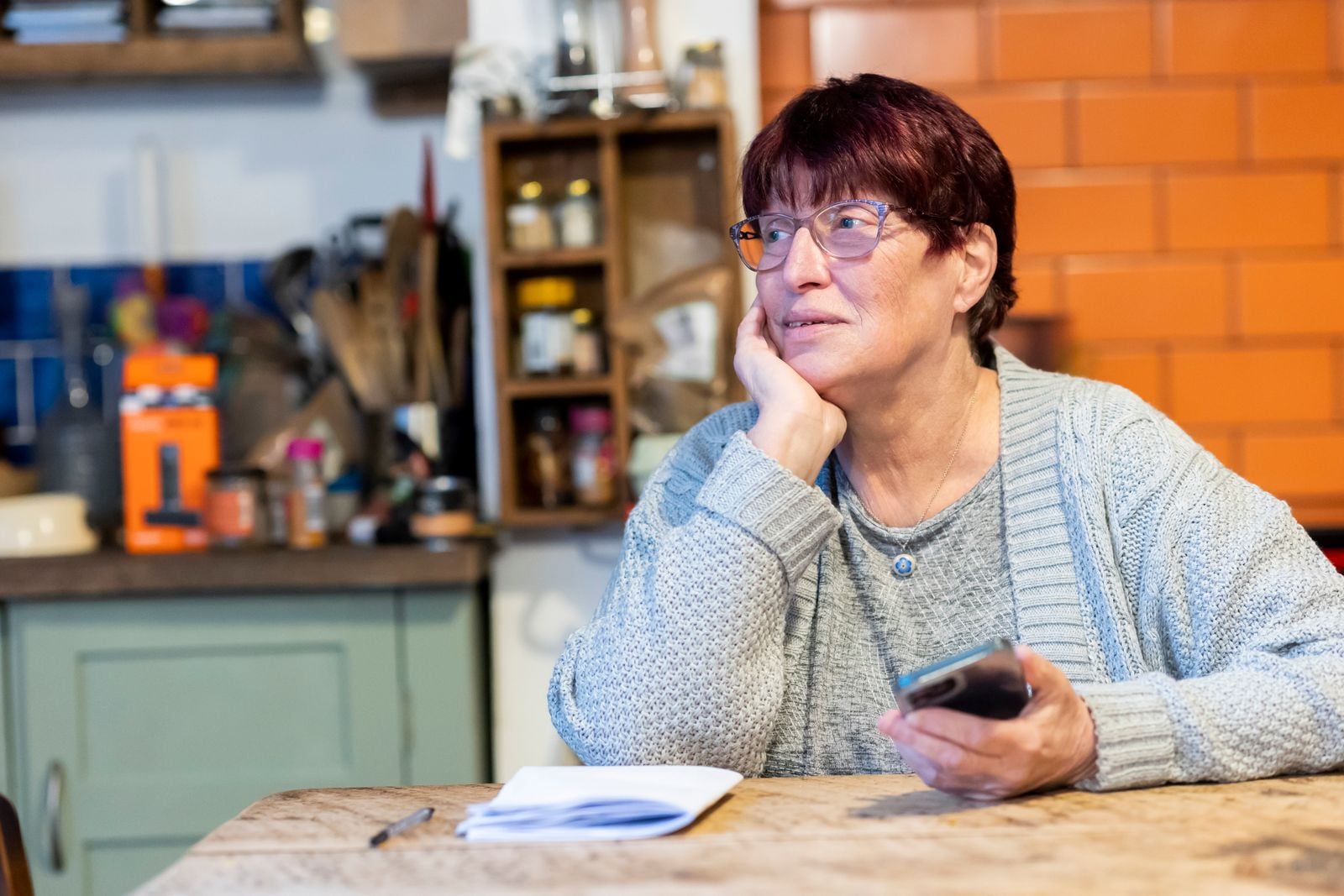
Autonomy-supportive parenting is one of the most consistently well-evidenced approaches in developmental psychology, associated with self-motivation, resilience, and stronger mental health in children. It is also the approach that, decades later, can leave a parent in their seventies staring at a phone that does not ring, unsure whether the silence is a report card or a rebuke.
The title of this piece is a long sentence, and it is worth taking seriously rather than treating as a punchline. Parents who worked hard to raise children who could look after themselves sometimes discover, in later life, that the lesson took so thoroughly that asking for help now feels like a breach of the family’s own code. The children learned. The parents taught. The unintended consequence is a particular kind of quiet.
What autonomy-supportive parenting actually is
In the research literature, the approach usually goes by the name parental autonomy support. It sits close to authoritative parenting but places specific weight on encouraging a child to make age-appropriate decisions inside clear boundaries, with warmth and unconditional regard as the base layer. A Psychology Today summary of the evidence notes that a 2015 systematic review linked this style to better academic performance, higher self-esteem, and stronger self-motivation, and that a study of nearly 500 German families during the first weeks of the 2020 lockdowns found autonomy-supportive parents reported higher wellbeing for their children and less frustration themselves.
The broader picture from developmental research is consistent. A Nature Index overview of parenting-style research describes authoritative parenting, with its combination of warmth, communication and consistent boundaries, as associated with self-discipline, resilience and lower rates of both anxiety-type and conduct-type difficulties. The message that reached a generation of parents in Northern Europe and elsewhere, sometimes through books, sometimes through public-health advice, sometimes just through the cultural water, was: love them, listen to them, let them try.
None of this is wrong. The complication arrives forty years later.
What the lesson sounds like when it comes back
Consider what a child raised this way learns, over years, without anyone saying it directly. That competence is a form of respect. That handling your own difficulty is a way of honouring the effort your parents put in. That asking for help is fine, in principle, but should be reserved for genuine emergencies, because the household ran on the assumption that you could probably work it out.
Now imagine that child at forty-five, with a job, a mortgage, possibly children of their own, and a parent at seventy-three who has recently retired and has more time than they used to. The parent, in this stage of life, would quite like to be needed. The child, having internalised the family script, experiences needing them as a kind of imposition. Not because they do not love their parents. Because leaning on them feels like undoing the very thing everyone was so proud of.
This is the shape of the problem the title points at. It is not a failure of love on either side. It is a pattern that the parenting worked, and the working of it has made the later stage awkward.
Why the seventies are where this shows up
Independence in adult children is easy to celebrate when everyone is busy. In your fifties and sixties, watching a grown child manage their own life is straightforwardly good news. You are still working, still travelling, still the person other people phone. The absence of demands feels like success.
Then the diary starts to empty. Work ends, or narrows. Friends move, or fall ill, or die. Physical range contracts in small ways at first, then in less small ways. The Harvard Study of Adult Development, which we have written about in the context of long-running friendship research, has consistently found that the quality of close relationships matters more in later life than the size of one’s social network. For many people in their seventies, that person is, or would like to be, a grown child.
And the grown child, if they were raised well according to the modern script, has learned that mature relationships involve reciprocity and low burden. Which is a fine principle at thirty. At seventy, on the other side, it can read as a locked door.
The child’s side of the same wall
The child is not being cold. Something more specific is going on. Autonomy-supportive parenting, especially in its more thorough versions, teaches children to attend closely to their own inner signals, make decisions from within, and treat calling in help as a small act of self-audit. Ask yourself first. Try it once. Then, if you must, ask.
This is a durable set of habits. Scandinavia Standard has explored, in a related piece on how children develop internal validation systems, how self-reliance built early can be extremely stable but hard to loosen later. A person who has been running their own quality control since they were nine does not suddenly decide, at forty-eight, that they need editorial notes from mum.
There is also a specific feeling that shows up when such a person considers asking a parent for something practical. It is close to embarrassment. Not shame exactly, and not guilt. Something more like: this is not what we do. The house rule was competence. Turning up needy feels like breaking it.
The generation gap in the room
It matters that the parents currently in their seventies were not themselves raised with autonomy-supportive parenting as an explicit style. Many of them grew up with a much looser framework, the sort we discussed in a piece on the accidental durability of children raised in the 1960s and 70s. Their own parents were often available but not particularly attentive, and independence was a fact of life rather than a value being cultivated.
Which means the parents in this article did something new. They chose the deliberate version. They read the books, or absorbed the ideas from the culture, and raised their children with more warmth, more talking, more taking the child’s inner life seriously. The result is a generation of adult children whose self-reliance is not just a habit but a value they identify with. Undoing it, even to make a phone call about nothing, feels like betraying the project.
Cross-cultural work on filial expectations has found that parenting style and children’s later sense of duty to their parents are entangled in more complicated ways than the older narrative that warmer parenting leads to more loyal adult children. Warmth builds closeness. Autonomy support builds distance-tolerating closeness, which is not quite the same thing.

What the research does not settle
It is worth being careful here. The evidence on autonomy-supportive parenting largely concerns childhood and early adulthood outcomes. The claim in this article’s title is a claim about what happens in the parent’s seventies, decades later, and there is much less rigorous research on that specific arc. The work on helicopter parenting and emerging-adult career identity shows that too little autonomy support has costs. It does not establish that a great deal of autonomy support produces a specific kind of loneliness for the parents thirty years on.
What we can say is that the pattern this title names is recognisable to a lot of families, that the psychological ingredients are well-documented, and that the mechanism is plausible. It is one reading. It is not the final word.
There are also many households where the opposite is true. Adult children who were raised with a great deal of autonomy support turn out to be excellent at maintaining warm, low-friction adult relationships with their parents, precisely because nothing feels obligated. The point is not that autonomy support has a downside that cancels the upside. The point is that certain later-life dynamics are downstream of how independence was framed at home.
What to do with the observation
The useful move, if you recognise your own family here, is small and not therapeutic. It is a change of framing. Contact between an adult child and an older parent does not have to be transactional – it doesn’t need to convey either need or independence as the primary message. A phone call in which nothing is asked and nothing is reported is a category the family may not have practised.
For the parent in their seventies, it can help to make requests that are unmistakably requests, and specific. A ride to a specific appointment. A hand with a specific task. Vague offers of availability are hard for a self-reliant adult child to metabolise, because there is no clear thing to say yes to. A concrete request lets the child do something without breaking the family code, because the parent has asked in plain language, and answering is now the competent response.
For the adult child, the recognition is that calling without a reason is not a regression. It is a different skill, and one the household did not particularly train for. It can be learned in one’s forties or fifties, mostly by doing it badly a few times and noticing that no one seems to mind.
The parenting worked. Something else is now being asked of the same relationship, and the vocabulary for it has to be built rather than inherited.
The post The parents who raised their children to be independent often discover in their seventies that independence was so thoroughly taught it now feels rude for a grown child to need them appeared first on Scandinavia Standard.
Popular Products
-
 Aqua Peel Facial Deep Clean & Dermabr...
$138.99$96.78 -
 Custom Engraved Gift Box - Black Paper
$50.99$34.78 -
 Smart Notebook Wireless Graphics Tablet
$175.99$135.78 -
 Enamel Heart Pendant Necklace
$49.56$24.78 -
 Women's Custom Name 18K Gold Plated N...
$68.99$47.78