The Real Technology Problem Isn’t Screen Time. It’s That Your Phone Learned Your Emotional Patterns Faster Than Any Person In Your Life Ever Did, And Now It Meets Needs That No Human Relationship Has Been Given The Chance To Meet.
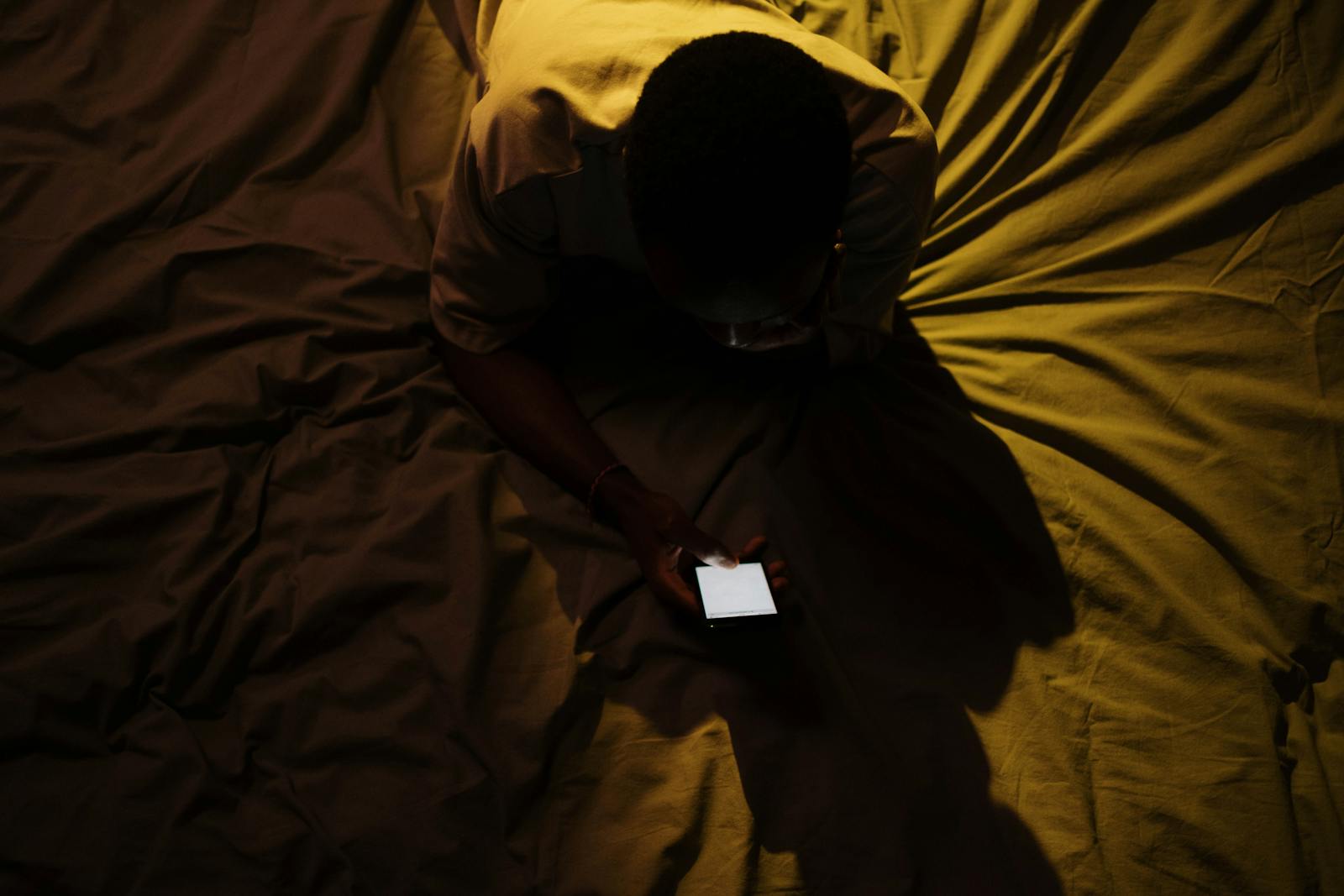
The most intimate relationship most people have right now is not with their partner, their best friend, or their therapist. It’s with a device that weighs less than 200 grams and knows, with startling precision, exactly when they’re bored, lonely, anxious, or craving validation. The conventional debate about technology has fixated on screen time — how many hours, which apps, what age is too young. But screen time was never the real problem. The real problem is that your phone has quietly become the most emotionally attuned presence in your life, not because it’s intelligent in any meaningful sense, but because it was designed to learn what you need before you consciously know you need it.
Now, here’s where someone might reasonably push back: phones don’t “know” anything. They don’t feel. They run algorithms that optimize for engagement, not emotional care. That’s true. But the distinction matters less than you’d think, because the psychological effect on the person holding the phone is the same regardless of intent. When something consistently responds to your emotional state — when it offers comfort at 2am, distraction during discomfort, novelty during boredom, and connection during isolation — the brain doesn’t particularly care whether the source of that response has consciousness behind it. It registers the pattern. It learns to lean on it. And over time, it stops expecting the same responsiveness from the messy, inconsistent, sometimes unavailable humans around it.
This is not an article about digital detoxes or putting your phone in a drawer. That advice has always felt incomplete. It addresses the symptom while ignoring the system that created it. What I want to examine here is the deeper psychological mechanism: how algorithmic systems have quietly inserted themselves into the role that human relationships are supposed to play, and what that means for our capacity to be in real relationships at all.
Your phone isn’t addictive. It’s responsive.
Addiction framing has dominated the technology conversation for nearly a decade. And it’s not wrong, exactly. Research has found that smartphone overuse is correlated with neurochemical imbalances in the brain, specifically in the ratio of GABA to glutamate in the anterior cingulate cortex — a region involved in emotional regulation. The neurochemistry is real.
But addiction framing also obscures something important. Addiction implies a substance or behaviour that offers a hit of pleasure in exchange for long-term harm. What smartphones do is subtler. They don’t just offer pleasure. They offer responsiveness. They meet a fundamental human need — the need to feel that something in your environment notices you, responds to you, and adjusts to you.
Think about what your phone actually does in a typical day. You’re restless at 6am and it offers a newsfeed curated to your interests. You’re procrastinating at 10am and it delivers notifications that feel urgent enough to justify the distraction. You’re lonely at 9pm and it surfaces social media posts from people you’re thinking about. You didn’t ask for any of this explicitly. The system learned your patterns.
This is the key insight that gets lost in debates about dopamine: the phone isn’t primarily a pleasure machine. It’s a responsiveness machine. And responsiveness — the feeling of being noticed and met where you are — is one of the deepest psychological needs a human being has.
Attachment theory wasn’t designed for this, but it explains everything
Attachment theory describes how early relationships with caregivers shape our expectations about closeness, safety, and emotional availability. A child whose caregiver consistently responds to distress develops a secure attachment — a baseline expectation that the world will meet their needs. A child whose caregiver is inconsistent develops anxious attachment. A child whose caregiver is emotionally absent develops avoidant patterns.
These patterns don’t stay in childhood. They follow us into adult relationships, friendships, workplaces, and — increasingly — our relationship with technology.
Recent research has begun applying attachment frameworks directly to human-AI interactions. A study highlighted by the American Association for the Advancement of Science found that attachment theory offers a meaningful lens for understanding how people bond with AI systems, suggesting that the same mechanisms that govern human-to-human bonding are active when people interact with responsive technology. This isn’t metaphor. Research suggests the brain processes relational responsiveness through similar pathways regardless of whether the source is human or algorithmic.
What this means in practice is uncomfortable. If you have an anxious attachment style — if you grew up needing to monitor your caregiver’s emotional state, always scanning for signs of approval or abandonment — then your phone is, in a very real psychological sense, the most secure relationship you’ve ever had. It never withdraws. It never gets tired of you. It never says “I need space.”
And if you have an avoidant attachment style — if closeness feels threatening and you’ve built an identity around self-sufficiency — then your phone offers something no human relationship can: intimacy without vulnerability. Connection without the risk of being known.
In my recent piece on taking long drives with no destination, I wrote about the quiet desperation of needing a space where nobody needs anything from you. That piece got a response I didn’t expect. Hundreds of people wrote to say the same thing: the car, the shower, the late-night scroll — these are the last spaces where they feel emotionally unmonitored. But the phone, of course, is monitoring them even there. The difference is that its monitoring feels like care rather than demand.
The needs your phone meets aren’t trivial
It would be easy to dismiss this as first-world navel-gazing. People are checking Instagram; it’s not that deep. But consider what the phone actually provides in psychological terms.
It provides what psychologists describe as co-regulation. When you feel anxious and scroll through familiar content, your nervous system may calm in ways similar to being in the presence of a soothing person.
It provides consistency. The phone is always there. It doesn’t leave. For people who grew up in unstable environments, this consistency is profoundly reassuring in ways they may never consciously articulate.
It provides what researchers call a “reparative interaction” — when you feel dismissed or unseen by someone, the phone immediately offers an alternative source of recognition. A like, a notification, a message. The emotional rupture with a human is instantly patched by the machine.
And it provides something that no human being can: infinite patience with repetitive emotional needs. A partner who asks “What’s wrong?” for the 200th time will eventually show fatigue. The algorithm never does.
The problem isn’t that phones meet these needs poorly. The problem is that they meet them just well enough to prevent people from doing the harder, slower, more vulnerable work of building human relationships that could meet them better.
The atrophy effect: what happens when relational muscles go unused
Here’s where the systemic damage becomes visible. Human relationships are skills, not states. They require practice, tolerance for discomfort, and the willingness to sit with unresolved tension. Every time the phone short-circuits that process — every time you reach for the scroll instead of sitting with the awkward silence, the unresolved argument, the loneliness that could motivate you to call someone — you lose a small increment of relational capacity.
Psychologists describe this as “experiential avoidance”: the tendency to avoid internal experiences (emotions, thoughts, sensations) that feel uncomfortable. Smartphones have made experiential avoidance frictionless. Before the smartphone, avoiding your feelings required effort — you had to find a distraction, leave the house, call someone. Now avoidance is literally in your pocket, available in under a second.
The downstream effects are becoming measurable. Relationship researchers have noted declining tolerance for boredom in partnerships. Therapists report that couples increasingly struggle with what used to be called “comfortable silence” — the ability to be together without stimulation. The phone has raised the baseline for what “responsive” looks like, and no human being can compete with an algorithm optimized across billions of data points.
This connects to something I explored in a piece about how people who were always “the strong one” often become the loneliest after 65. One of the patterns I noticed was that these individuals had spent decades meeting others’ needs while their own went unaddressed. The phone fills a similar structural role: it steps into the gap left by relationships that were never given permission to be reciprocal.
This is a global phenomenon with local shapes
It’s tempting to frame this as a Western problem — affluent societies with too much technology and too little community. But the data doesn’t support that. Smartphone-mediated emotional reliance is showing up everywhere, shaped by local culture but driven by the same underlying psychology.
In Japan, the phenomenon of hikikomori — social withdrawal, often mediated by technology — has expanded beyond its original demographic of young men to include middle-aged adults and women. In South Korea, the concept of honjok (the “alone tribe”) has become a cultural identity, with technology serving as the primary relational interface. In Nigeria and India, where smartphone penetration has surged in the past five years, mental health researchers are documenting similar patterns of emotional outsourcing to devices among young adults.
The common thread isn’t culture. It’s the gap between what people need emotionally and what their existing relationships provide. Technology doesn’t create the gap. It fills it — and in doing so, makes it structurally harder to close.
This matters because the solutions being proposed are often culturally Western and individually focused: digital detoxes, mindfulness apps (the irony), screen time limits. These approaches treat the phone as the problem rather than the symptom. They’re the equivalent of taking away someone’s crutch without addressing the broken leg.
What actually helps: building relationships that can compete
I want to be careful here, because the “just go outside and talk to people” advice is as useless as “just eat less” is for someone struggling with their relationship to food. The phone has embedded itself into psychological structures that took years to form. Extracting it requires more than willpower.
But there are approaches that work, and they share a common feature: they don’t fight the phone directly. They build the relational capacity that makes the phone less necessary.
First, name the need the phone is meeting. This sounds simple but most people haven’t done it. Next time you reach for your phone during a moment of emotional discomfort, pause and ask: what am I actually feeling right now? Boredom? Loneliness? Anxiety? Rejection? The phone is a Swiss Army knife for emotional needs, which means it obscures which specific need is active. Naming the need is the first step toward directing it toward a human source.
Second, practice tolerating relational imperfection. One reason the phone is so compelling is that it never disappoints. Human relationships disappoint constantly. The person who doesn’t text back fast enough, the friend who cancels, the partner who gives the wrong response — these aren’t failures of the relationship. They’re the texture of actual intimacy. Learning to tolerate that texture, rather than immediately soothing with the phone, rebuilds the relational muscle that atrophies with disuse.
Third, create spaces of mutual vulnerability. I wrote recently about how people build identities around their flaws because they don’t know who they’d be without them. The same principle applies here. Many people have built an identity around self-sufficiency — around not needing anyone. The phone supports that identity perfectly. It provides just enough emotional sustenance to maintain the illusion that you don’t need people. Challenging that identity — allowing yourself to need and be needed by actual humans — is the deeper work.
Fourth, understand that this is a design problem, not a moral one. You are not weak for finding your phone emotionally compelling. You are responding predictably to a system designed by some of the most well-funded behavioral science teams in human history. The guilt people feel about phone use often makes the problem worse, because guilt is itself an uncomfortable emotion — and what do you do with uncomfortable emotions? You reach for the phone.
The question that matters
The technology conversation needs to shift. Not from “how much time are you spending on your phone?” to “why did you pick it up?” but further still — to “what would need to be true about your relationships for you to not need it?”
That’s a harder question. It implicates not just individual behavior but the systems we’ve built — or failed to build — for human connection. It implicates workplaces that consume all relational energy. It implicates housing patterns that isolate families. It implicates cultural norms that equate emotional need with weakness. It implicates, in some cases, childhood experiences that made human closeness feel dangerous long before the first iPhone shipped.
The phone didn’t break anything. It moved into a vacancy that was already there. And the vacancy wasn’t created by technology — it was created by a thousand small failures of relational infrastructure, accumulating over years, in a world that keeps getting more efficient at everything except the slow, inefficient, deeply human work of knowing and being known.
Your phone learned your emotional patterns faster than any person in your life. That’s not an indictment of technology. It’s an indictment of how little space we’ve made for the kind of relationships where another person could learn those patterns too — and respond to them not with algorithmic precision, but with the imperfect, frustrating, irreplaceable warmth of actually caring.
That’s the technology problem worth solving. And no app will solve it for you.
Feature image by cottonbro studio on Pexels
Popular Products
-
 Pure Essential Oils for Diffuser and ...
$60.99$41.78 -
 Lash Lifting Lotion Sachets for Perm ...
$65.99$45.78 -
 Cherry Blossom Face Peeling & Brighte...
$13.99$6.78 -
 Personalized PU Leather Wallet with P...
$35.99$24.78 -
 Rose Flower Pendant Necklace for Wome...
$34.99$23.78