There’s A Specific Kind Of Financial Anxiety That Has Nothing To Do With How Much Money You Have. It Belongs To People Who Finally Became Comfortable But Never Updated The Internal Math That Was Written During Scarcity, So Every Purchase Still Runs Through A Threat Calculator From 1997.
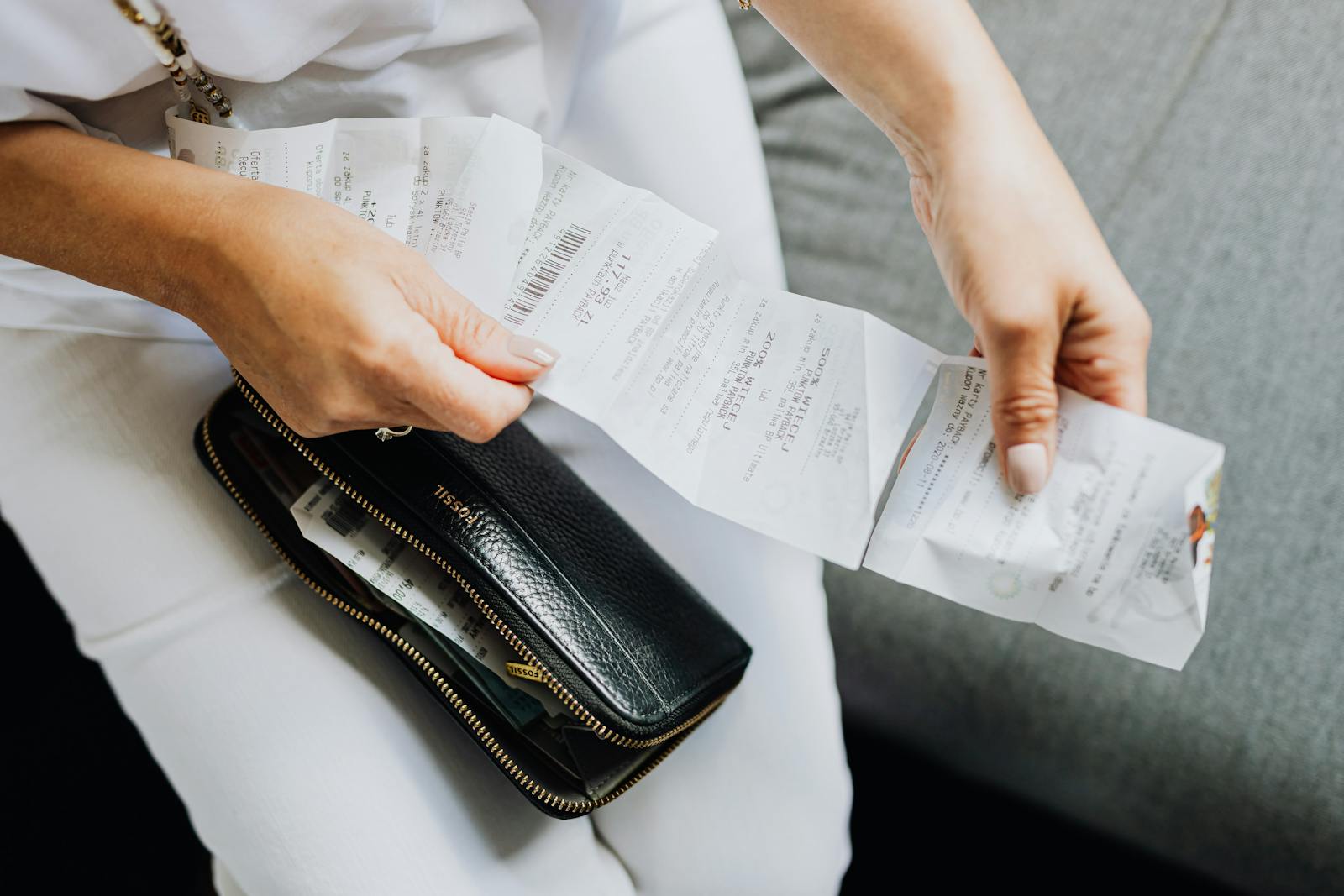
Money is not the source of most financial anxiety. The source is a filing system in your nervous system that was organized during the worst years and never reorganized when things got better.
Conventional wisdom says financial stress correlates with financial reality. Earn more, worry less. Build a cushion, breathe easier. The entire architecture of financial advice rests on this assumption: that the anxiety is rational, proportional, and responsive to material improvement. But anyone who grew up watching a parent stare at a stack of bills with a particular quality of silence knows that something else is operating. Something that doesn’t update when the direct deposit clears.
What I’ve found, after years of sitting with this question, is that financial anxiety often belongs to a version of yourself that no longer exists but still controls the calculator. The threat hasn’t been real in decades. The math keeps running anyway.
The Nervous System Keeps Old Ledgers
Growing up poor shapes the way people make financial choices later in life, even when their circumstances have fundamentally changed. I’ve seen it in myself and in every guy I know who came from the same kind of neighborhood I did. Early scarcity doesn’t just teach lessons about money. It installs a decision-making architecture that persists into abundance.
This makes intuitive sense to anyone who’s lived it. You earn a comfortable salary, your fridge is full, you have health insurance, and yet buying a $14 sandwich still triggers a small internal audit. You do the math. You check the account. You hesitate. Then you buy it and feel slightly uneasy for twenty minutes afterward.
The unease has nothing to do with the sandwich. It has everything to do with a kitchen table where you once absorbed, wordlessly, that money was a source of danger between the people you loved most.
There’s a threat-detection system in all of us that is really just pattern recognition running on outdated data. Your brain identified the conditions under which bad things happened (low account balances, unexpected expenses, raised voices about the electric bill) and built a permanent alarm around them. The alarm doesn’t know about your 401(k). It still thinks the electricity might get shut off.
The Gap Between the Spreadsheet and the Body
One of the more quietly devastating things I’ve come to understand is that nearly half of American adults report finances as their biggest source of stress, and a higher paycheck doesn’t automatically eliminate that worry. People earning well above the median still describe the same knot in the stomach, the same reflexive calculations, the same low-grade vigilance.
This is the gap I keep coming back to. The spreadsheet says you’re fine. The body disagrees.
I remember the particular relief of realizing that “enough” doesn’t mean rich. It means the bills are paid and the people you love are fed. That recognition didn’t come from a raise or a bonus. It came from sitting still long enough to notice that the emergency I’d been bracing for had stopped being likely about fifteen years earlier. My body just hadn’t gotten the memo.
This kind of mismatch—residual hypervigilance, if you want a clinical term—sounds contained when you name it that way. In practice, it looks like a grown adult with a pension and savings who still feels a flush of cortisol when the car makes a new noise, because a car repair in 1994 meant choosing between the mechanic and groceries.
Scarcity Writes the Deeper Code
Everything I’ve read about childhood adversity and its long arc into adulthood keeps confirming what I already felt in my bones. A piece in Psychology Today explored how adult relationships can reshape memories of childhood trauma, suggesting that these early imprints, while powerful, are not entirely fixed. The neural pathways carved by scarcity can be rerouted. But the rerouting requires awareness that the old road is still being traveled.
Most people never get that awareness. They just think they’re bad with money, or anxious by nature, or irrationally cheap. They don’t connect the specific texture of their financial worry to a specific era of their childhood.
Related Stories from Silicon Canals
- People who remember exactly how much things cost from their childhood. The electric bill. The price of school shoes. A specific grocery total. They weren’t paying attention to money. They were paying attention to their parents’ faces when money came up.
- The $130 billion tariff refund the Supreme Court forced — and the replacement tariff already taking its place
- Elon Musk says his tweets are personal thoughts. A $44 billion trial tests who pays when markets disagree.
The code scarcity writes is remarkably detailed. It doesn’t just say “be careful.” It says things like: never order the most expensive thing on the menu. Always know exactly what’s in the account. Feel guilty about leisure spending even when it’s budgeted. Interpret generosity as recklessness. Treat financial stability as temporary, because in your formative experience, it was.
These aren’t personality traits. They’re survival instructions from a context that no longer applies.
When Comfort Feels Like a Setup
Here is the part that nobody talks about: for people whose internal financial math was written during scarcity, comfort itself becomes a threat signal.
Think about that. The very thing you worked toward triggers the alarm. Because in the old code, feeling comfortable meant you weren’t paying close enough attention. Comfort was the moment before the phone call, the unexpected bill, the announcement that something was about to change.
Research on financial anxiety in uncertain times has documented this phenomenon at scale: people who are materially stable but psychologically exhausted by the effort of maintaining vigilance against a collapse that remains, at best, theoretical. The fatigue comes from a threat-detection system that never powers down.
I had a customer refuse to pay a $12,000 invoice early in my contracting days. That experience took years to happen and about forty-five seconds to encode as a permanent rule: people will disappear with your money, so always expect it. It took me decades to recognize that this rule, while reasonable back then, was running my financial life in 2020 with exactly the same authority.

The rule didn’t keep me safe. It kept me braced. Those are very different things.
The Proximity Problem
Something behavioural scientists have identified adds another layer to this: proximity to comfort without security creates a specific kind of psychological weight. The lower middle class, for instance, often experiences more financial anxiety than those below them, because they can see stability but can’t quite trust it.
This maps perfectly onto the experience of people who grew up poor and became comfortable. You can see the stability. You’re standing in it. You just can’t trust it because your nervous system keeps referencing a period when the ground gave way.
Recent data shows middle-income Americans are increasingly pessimistic about their financial futures, even when current conditions are stable. Part of this is rational (inflation, cost of living). But part of it is the old math reasserting itself under new conditions, finding fresh reasons to confirm what was already believed: that security is temporary.
I went through two recessions that dried up contracts and taught me a slow, uncomfortable lesson. The lesson wasn’t about money management. It was that a good reputation is the only marketing that matters, and that the anxiety of financial precarity doesn’t fully leave when the precarity ends. It just finds a quieter room to sit in.
Updating the Internal Math
So what does it actually look like to update the calculator?
The first step is unglamorous: noticing when the math is running. Not stopping it. Just noticing. The $14 sandwich hesitation. The guilt after buying new shoes. The reflexive mental audit when someone suggests splitting the check at a nice restaurant. Each of these is a signal that the old system is active.
The second step is harder. It requires asking: when was this rule written? Because the answer is almost never “last year” or “during a recent crisis.” The answer is usually a decade, a kitchen table, a specific quality of silence you absorbed before you had language for what was happening.
I’ve been writing in a journal for a few years now—Donna bought it for me as a joke, and the joke was on both of us because I couldn’t stop filling the pages. One thing I keep circling back to is my father’s anger when I came home late—how his nervous system had processed so many catastrophic simulations that relief arrived as fury. Financial anxiety operates on the same principle. Your system has run so many catastrophic financial simulations over the years that even a positive bank balance gets processed through the catastrophe engine first.
The third step is perhaps the most counterintuitive: you don’t try to convince yourself the old fears were wrong. They weren’t wrong. They were accurate responses to real conditions. The work is in recognizing that the conditions changed and the response didn’t.
A therapist—Donna convinced me to try counseling, and I’m glad she did—once used a metaphor I found useful: imagine you moved out of a house with a faulty carbon monoxide detector that went off constantly. You’ve been in a new house for twenty years. Safe wiring, new detectors, no gas leaks. But every time the heater clicks on, your chest tightens. You’re not crazy. You’re just still listening for the old alarm.
What “Enough” Actually Means
I started saving for retirement too late and caught up by working weekends through my fifties. During that period, I kept thinking: when I hit the number, the anxiety will resolve. The number came. The anxiety adjusted its target. It always does.
“Enough” is not a number. It’s a nervous system state. And for people whose internal calculator was programmed during scarcity, no number will ever satisfy the system, because the system isn’t measuring money. It’s measuring safety. And the threat it’s scanning for is emotional, not financial.
The threat is: will I end up back there? Back in the version of life where choosing between two necessities was an ordinary occurrence? Where money wasn’t a tool but a verdict on whether you were managing adulthood correctly?
No spreadsheet answers that question. No raise resolves it. The only thing that begins to shift it is the slow, patient recognition that you are not where you were, and the alarm that served you then is costing you now.
I think a lot about the fifteen years I spent pretending to be someone my father would approve of, and this has the same shape. The financial version is spending decades performing a relationship with money that was authored by someone else’s fear and then mistaking it for your own personality.
You’re not cheap. You’re not irrational. You’re not bad at enjoying what you’ve earned.
You’re running math from 1997 on a 2026 income, and the two will never reconcile until you notice which calculator you’re using.
Feature image by www.kaboompics.com on Pexels
Undercurrent — our weekly newsletter. The sharpest writing from Silicon Canals, curated reads from across the web, and an editorial connecting what others cover in isolation. Every Sunday.
Free. No spam. Unsubscribe anytime.
Popular Products
-
 Upgraded Butt Lifting Bodysuit
$83.99$57.78 -
 Ice Cooling Painless Hair Removal Device
$200.78$110.78 -
 Couples Card Game
$15.89$8.78 -
 Satin Floral Sleepwear Pajamas
$15.00$8.78 -
 Bedroom Battle Card Game
$53.99$30.78