Deadly Falls Are On The Rise Among Older Quebecers. Prevention Could Save Lives
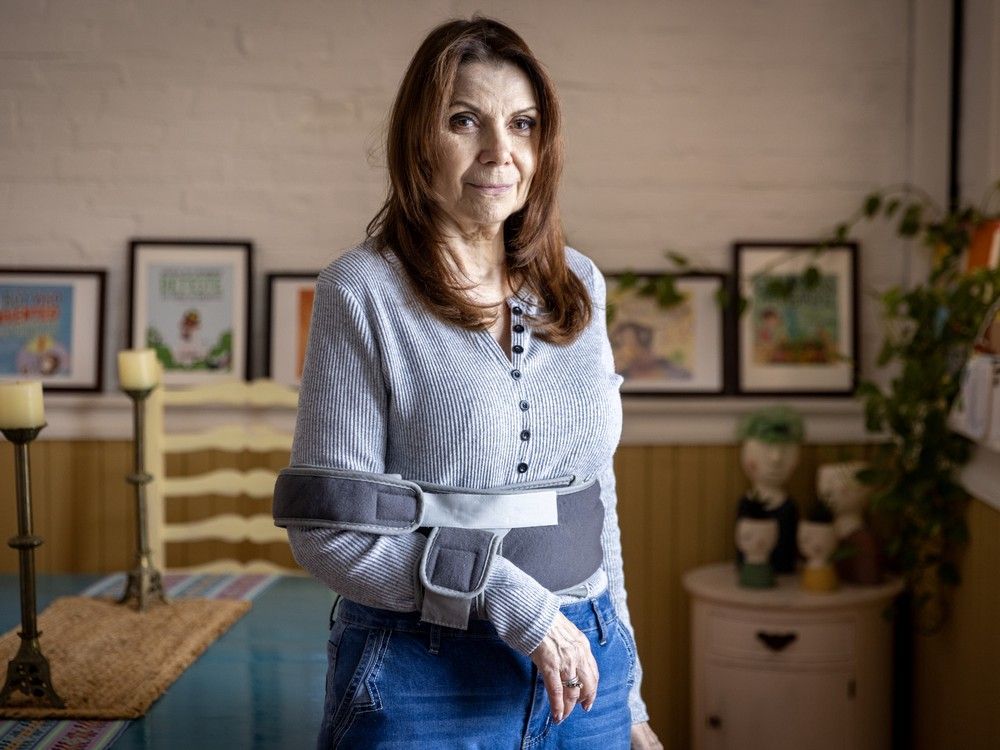
Had she known the northwestern Quebec city of Val d’Or would be blanketed in snow in early November, Montrealer Anne Renaud would definitely not have worn her UGG boots, “which have absolutely no traction,” to visit her boyfriend there. The morning of Nov. 7, the 68-year-old author of children’s books wiped out during a walk around the block, landed hard on her right shoulder and fractured it.
“I knew it was broken, because it hurt so much,” she recalled. The good news: It was a clean break and she didn’t need surgery — but the pain was considerable. “I was uncomfortable whichever way I moved.”
Back in Montreal, Renaud ordered winter boots with thick soles and good traction. She is being followed at a hospital-based orthopedic clinic, she started physiotherapy and does exercises daily to regain strength and range of motion in the shoulder. And if she was once nonchalant about how she moved and where she stepped, she is more cautious now.
Anyone can fall, of course — but for older adults, the consequences can be devastating. Half of older adults who sustain a hip fracture in a fall, for instance, never recover the functional capacity they had before the fall; one-fifth die within six months, often of pneumonia, heart problems or surgical complications.
An increase in deaths from traumatic brain injuries has also been observed in this population, attributable mainly to falls among older adults. “Based on the scientific literature, we know that, often, traumatic brain injury affects the autonomy of older people and can precipitate admission to institutions and early death,” said Mathieu Gagné, scientific adviser for monitoring of unintentional injuries at the Institut national de santé publique du Québec (INSPQ).
Among Quebecers 65 and older, falls are the leading cause of death and hospitalization attributable to unintentional injuries, according to a 2025 study on the subject by the INSPQ for the provincial health ministry. And between 2000 and 2021, deaths attributable to falls quadrupled in that population, the study found — from 565 to 2,355, or 69 deaths per 100,000 residents to 136. Adults aged 85 and older were particularly affected.
Of Canada’s most populous provinces, Quebec already has the highest proportion of older adults — more than one resident in five is 65 or older — and, according to demographic projections, the figure could climb to more than one in four by 2041. And as the population ages, the incidence of falls and injuries they cause is likely to increase, the study found.
An increase in deaths attributable to falls among older adults has also been reported elsewhere in Canada and in countries including the Netherlands, Spain, the United Kingdom, Australia and the United States. Former Canadian prime minister Brian Mulroney was 84 when he died of complications from a fall in his Palm Beach home in 2024. Ivana Trump died at 73 of blunt impact injuries to the torso sustained in a fall down a flight of stairs in her New York townhouse in 2022. And Canadian poet and singer Leonard Cohen died in his sleep after falling during the night in the bedroom of his Los Angeles home in 2016. He was 82.
One possible reason for the increase in older adults falling is simply that the total number of older adults is increasing — and age is one risk factor for falls, said Dr. Sidonie Pénicaud, a physician with Montreal’s public health department specializing in public health and preventive medicine. One older Quebecer in three living in the community falls every year — one in two among those 85 and older.
Another possible explanation for the increase is more accurate reporting of falls as the precise cause of death among older adults: At the beginning of the 2000s, about one death in 10 attributable to a fall was reported to the coroner for investigation, the 2025 INSPQ study found: By 2021 it was nearly one in two.
The good news is that, even as morbidity and mortality from falls have increased, so have initiatives and interventions in the medical and public health community to reduce or prevent them.
The INSPQ has done a number studies on falls and fall prevention among older adults. “The whole idea of prevention is taken seriously by the INSPQ,” said Guillaume Burigusa, scientific adviser on prevention of unintentional injuries for the state-funded institute of public health.
In 2024, a specialized falls and fractures prevention clinic was implemented in McGill University’s division of geriatric medicine, in collaboration with the geriatrics divisions of the Jewish General and the Montreal General hospitals, to provide specialized, multi-disciplinary care for older adults who are at high risk of falls and fractures. The concept of a one-stop model, focused on both fall and fracture prevention, was pioneered by Dr. Gustavo Duque , director of McGill’s division of geriatric medicine, and his team; he previously developed such a model in Australia.
The clinic at the Jewish General is part of an expanded outpatient geriatrics department, the Susan & Aron Lieberman Family Wellness in Aging Geriatric Centre, which was inaugurated in 2021. The name was chosen deliberately, Dr. Ruby Friedman, a geriatrician in the hospital’s division of geriatrics, said at the time — to suggest that the centre’s mission is not only to treat illness but to help its patients maintain an optimal level of autonomy and health for their circumstances.
Falls are among the so-called “geriatric giants” affecting care of the elderly, he said, citing the term coined by Bernard Isaacs (1924-1995), an innovative Scottish-born geriatrician. “It takes a child one year to acquire independent movement and 10 years to acquire independent mobility,” Isaacs used to say. “An old person can lose both in a day.”
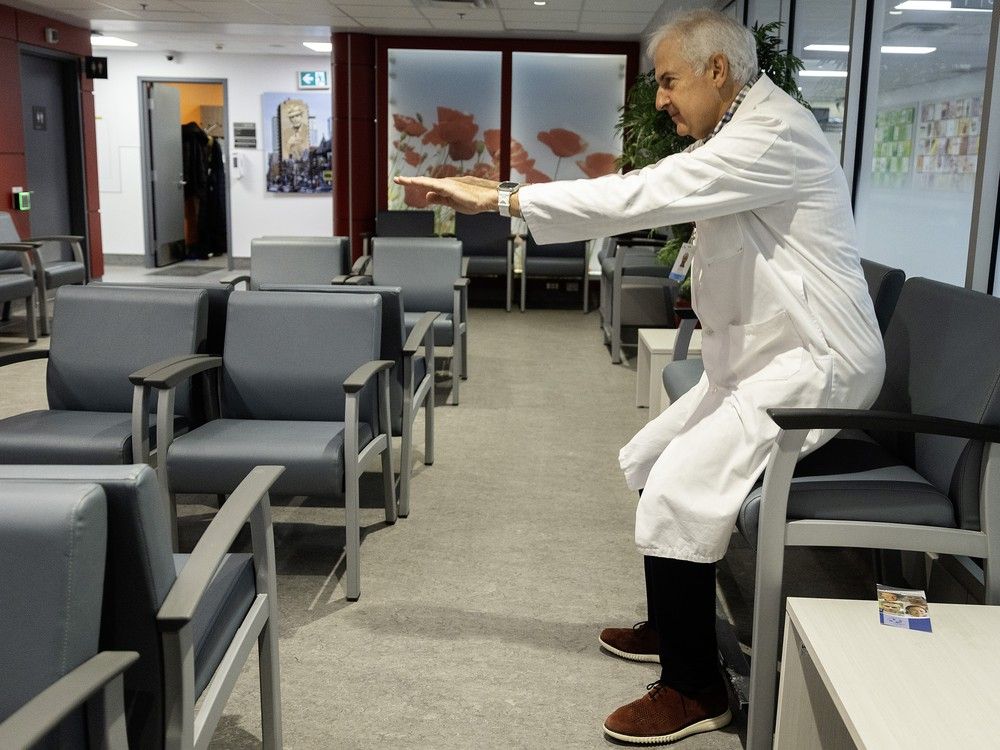
Falls, said Friedman, “are a huge problem — a common problem and a serious one. A standard question we ask during our evaluation in the geriatric clinic is ‘Have you fallen?’ Some people think falling is a normal part of aging. ‘Nothing happened,’ they say. It’s not just falls: It’s also near-falls. We ask: ‘Have you had to grab on to the wall or brace yourself?’ These are all warning signs,” he said.
“Aging is not a disease: It’s a physiological process: The ability to withstand stress diminishes.”
A gradual, age-related decline in the body’s ability to maintain internal balance takes place, due to shrinking physiological reserves: It’s known as homeostenosis, explained Friedman, who until January was chief of the hospital’s division of geriatrics. “You’re OK so long as you are home and buying your groceries — but if you fall and end up in the hospital with any kind of fracture, you can be pretty close to losing a lot more function.
“We want to keep people out of the hospital. There is a fate worse than death — and it is misery and suffering. Tell older folks that ‘If you fall and break your hip, you could become confused in hospital and unable to go back home’ and most would not want to end up in a long-term institution,” he said.
“So what do we do? The Number One responsibility of all health-care professionals is to relieve suffering. The goal is to be proactive and preventive, rather than reactive.”
Preventive medicine requires an inter-disciplinary approach, Friedman said. “It means you have a whole team of health-care professionals and their evaluations are integrated into patient management: doctors, nurses, physiotherapists, occupational therapists, community partners. Care of the elderly is low-tech, high-touch.”
Half of Quebecers aged 65 or older have at least two chronic illnesses, which often means using prescription medication — and a link has been established between the concurrent use of several medications and an increased risk of falls. Certain classes of drugs, including sleeping and anti-anxiety medication, can affect balance, alertness or reflexes or cause a sudden drop in blood pressure when someone stands from sitting or lying, resulting in dizziness or lightheadedness and the risk of a fall.
“Somewhere around age 75 to 80, the body’s way of dealing with medications changes so that what worked when you were 50, 60 and 70 starts to become problematic,” Friedman said.
“We prescribe medications in a moment, but to take away a medication is something people are afraid to do. Yet this is preventive — before people get into trouble. We see frail elderly people taking three blood pressure-lowering medications. At the moment, they have low blood pressure, not high blood pressure — and the risk of a fracture is real. And then what? Misery. Suffering.”
Health-care providers should conduct regular reviews of medications their older patients are using, to identify and reduce or optimize the use of those which are unnecessary or increase fall risk, Friedman said: The practice is known as de-prescribing. “This is preventive: It is one of the things we do constantly in care of the elderly and is one of the most satisfying.”
Older adults also need a thorough baseline medical evaluation, he said.
“And the home environment needs to be examined for safety. Are there grab bars in the bathroom? Is there a chair in the tub or shower? Have loose carpets, which are tripping hazards, been taken away?”
“We are talking about prevention,” Friedman said. The geriatric centre’s outpatient occupational therapy department involves the CLSC if a home visit is needed and “the process is jump-started with an interdisciplinary plan.”
People also need to be evaluated for cognitive issues, he said. Cognitive problems make people especially vulnerable to repeated falls and, for them, consequences of a hip fracture are more serious: They are five times more likely to enter long-term care than those without cognitive issues.
“Older persons, especially older than 85, have a high proportion of frailty — and frailty intrinsically predisposes people to falls,” said Duque, a geriatrician and biomedical scientist.
“It is surprising how many don’t know they are at risk for fractures and falls. What is concerning is that people think falling is normal with aging. I say, ‘No, it is not normal.’”
In people 75 or older, mortality following a fracture can be as high as 30 per cent. “And one-third will end up in an institution, so that is why we want to act early,” Duque said.
When patients are seen in his falls and fracture prevention clinic, “we evaluate all the intrinsic and extrinsic risk factors and try to identity which factors — medication, nutrition, balance, mobility — need to be targeted.”
Said Friedman: “With Dr. Duque’s new clinic, we refer these patients so that we can much better evaluate and manage fall prevention. He also accepts referrals from any physician and clinic. This is terrific, as the message has gotten out that falling is not normal and that there are beneficial interventions.”
One such beneficial intervention is exercise. “We know exercise affects balance, muscle strength and muscle power. We have been working on it for years,” Duque said.
But it can be challenging to implement exercise among frail older adults. Enter Vivifrail , a World Health Organization-endorsed home exercise program developed in 2013 by a team of researchers led by Dr. Mikel Izquierdo, a Spanish physician and research scientist.
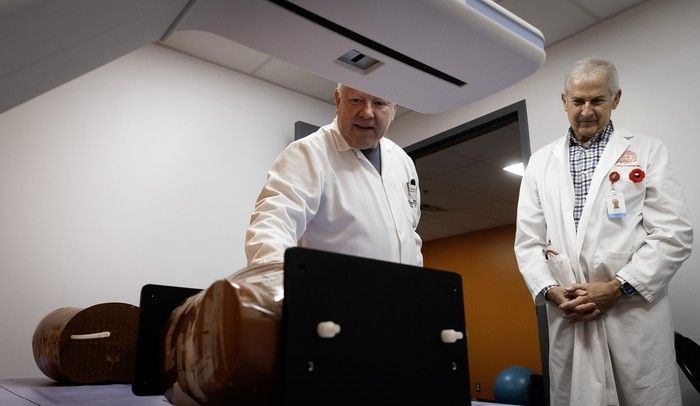
Vivifrail was introduced to McGill’s division of geriatric medicine in April of 2025 by the Simone & Edouard Schouela RUISSS McGill Centre of Excellence for Sustainable Health of Seniors: It is in use in a number of countries, but McGill is the first centre in Canada to adopt the Vivifrail program in practice, said Duque, director of the McGill Centre of Excellence. It started at the Jewish General and is now being used at other McGill hospitals as well, he said.
Vivifrail assesses the physical capabilities of older adults and provides simple customized exercises to enhance their balance and muscle strength. The program, which has five levels, was introduced in a hospital setting to jump-start its broader use across Quebec, Duque said, but exercises are done at home, five times a week, and results recorded in a diary.
While it is geared chiefly to frail seniors or those approaching frailty, Vivifrail is considered beneficial for all older adults, he said. Patients can be assessed in almost any office by a family physician or other clinician, with no special equipment needed, and the program’s resources are free to health-care professionals.
Its greatest benefits are when exercises comprise part of an overall care plan that includes balanced nutrition, suitable medication and precautions against falls, Duque said.
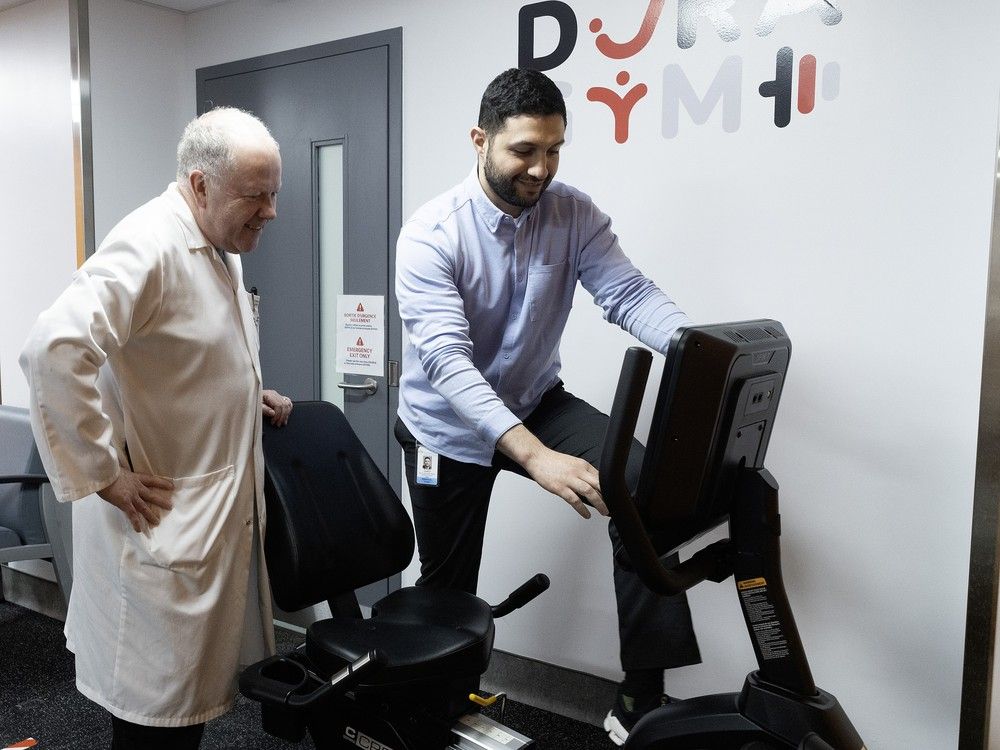
For older adults who have compromised mobility or functional frailty and cannot exercise on their own at home, a specialized supervised exercise program known as DURAgym was set up recently at the Jewish General. A shared initiative between the Schouela Centre of Excellence and the Lieberman geriatric centre, it features personalized sessions led by kinesiologists and intended to build strength, balance, flexibility and confidence.
DURAgym is intended for people in the community as well as geriatric centres, Duque said. Family medicine groups, CLSCs and day centres have shown interest and he would like to implement satellite gyms in other locations, he said. “This is exercise, not physiotherapy. It is supervised intervention.”
Epidemiological studies have consistently demonstrated a significant link between low levels of physical activity and an increased risk of falls among older adults — and it has been shown that community-based physical activity programs can be effective in reducing or preventing falls.
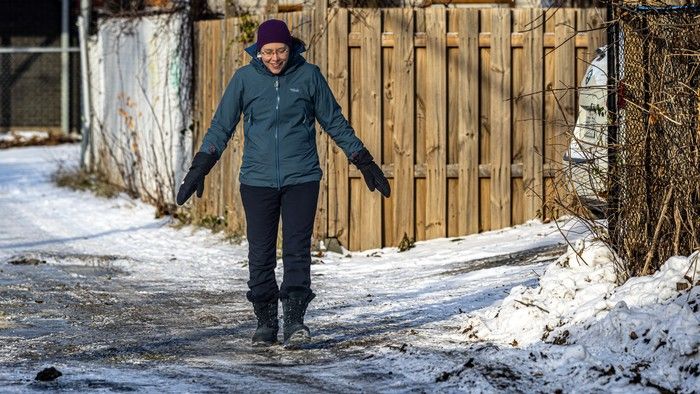
Walk like a penguin? How not to fall, including in winter
One long-established community-based fall prevention initiative for older adults is Viactive , a volunteer-led program aimed at Quebecers 50 and older and given at community centres around the province. Another is Stand Up! — a twice-weekly, 12-week, fall prevention program designed for autonomous Quebecers 65 and older. Known in French by the acronym PIED for Programme integré d’équilibre dynamique, Stand Up! features information capsules on how to reduce fall risks, group exercises to improve balance, strength and confidence — and simple exercises to do at home. In place since the early 2000s, the program is offered by health and community organizations throughout Quebec and, in Montreal, through all five CIUSSSes.
It is known that 35 per cent of falls among older adults lead to fractures, said Barbara Fillion, an occupational therapist and planning, programming and research agent with Montreal’s public health department heavily engaged in fall prevention — a subject on which she is acknowledged as an authority. The department, part of the CIUSSS du Centre-Sud-de-l’Île-de-Montréal, co-ordinates public health for the five Montreal-area CIUSSSes; one of her responsibilities is co-ordinating the implementation of Stand Up!
Even without significant injury, falls are significant factors in functional decline and loss of autonomy, Fillion said. If you have fallen, you might well develop a fear of falling, she said — and fear could make you become less physically active and, by extension, less strong: It’s a vicious cycle.
“We want people to be more confident, but to be more aware of what could lead to falls,” said kinesiologist Philippe Briand, who among his responsibilities leads Stand Up! programs through the CIUSSS du Centre-Ouest-de-l’Île-de-Montréal. He recently led a session with members of the Contactivity Centre , a community centre for adults 60 and older.
With age, systems like vision and proprioception — the capacity to know where your body is in space — decline, as do co-ordination and the motor and musculoskeletal system, Briand explained. Bone density and reaction time also decline with age, he said, but both can be stimulated with exercises and results can be significant if people exercise on their own three times a week.
The goal of Stand Up! is to improve balance, leg strength and confidence, he said. “We help people understand that staying active is important. In the class, we talk about risk factors and more. The goal is to have knowledge to prevent falls.”
Another benefit of a program like Stand Up! is that participating involves people in their community, Fillion said. In addition to the progressive exercises in the program, it prescribes at-home exercises and a plan for what to do once the program ends — whether it’s attending gym classes in the community or setting a goal of getting in a certain number of steps every day.
As the cohort of older adults grows across Europe and elsewhere, increases have been observed in the absolute number of deaths due to falls. But there is evidence from other countries to show that fall prevention initiatives have decreased death rates from falls.
In Japan, for instance, a slight decline in the death rate was recorded between 1997 and 2016; fall prevention policies in that country, where older adults make up nearly a third of the population, have included a focus on improved management of frailty and on efforts to treat loss of muscle mass and strength.
And in Finland, where a decrease in the death rate attributable to falls among older adults was observed between 1998 and 2020, interventions have included fall prevention programs focused on balance and strength training, specialized ortho-geriatric units for prompt surgery and post-acute care for hip fractures and continuing efforts to educate older adults and professionals about risk factors that contribute to falls.
Related
Popular Products
-
 Classic Oversized Teddy Bear
$23.78 -
 Gem's Ballet Natural Garnet Gemstone ...
$171.56$85.78 -
 Butt Lifting Body Shaper Shorts
$95.56$47.78 -
 Slimming Waist Trainer & Thigh Trimmer
$67.56$33.78 -
 Realistic Fake Poop Prank Toys
$99.56$49.78