Elon Musk Urges Young People To Study Arts, Sciences And Engineering In Ai Era
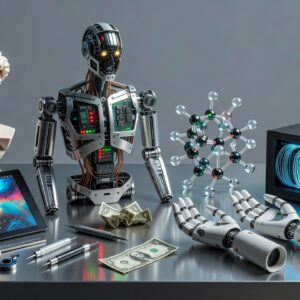
Elon Musk has offered pointed guidance to younger generations about the kinds of skills that will retain value even as artificial intelligence and humanoid robots become widespread in the workforce. Speaking in a recent interview, the chief executive of Tesla and SpaceX argued that money itself will matter less in the coming decades than the ability to contribute meaningfully to society through knowledge and creativity. He encouraged students to focus their studies on the arts, sciences, and engineering, fields he believes will remain essential regardless of technological disruption.
Musk’s comments come at a time when many Gen Z students face uncertainty about career prospects. Automation already handles routine tasks in manufacturing, customer service, and data analysis. Humanoid robots, which Tesla is actively developing through its Optimus project, could soon perform physical labor in homes, factories, and hospitals. In that environment, Musk believes traditional markers of success such as high salaries may lose some of their appeal. Instead, he suggests that personal fulfillment and societal contribution will define a rewarding life.
The billionaire emphasized the enduring importance of fundamental disciplines. He pointed to the arts as a way for people to express complex human experiences that machines may struggle to replicate authentically. Literature, music, visual arts, and theater help individuals understand emotion, culture, and narrative in ways that foster empathy and originality. These qualities, Musk implied, will distinguish human workers even when algorithms can generate text, images, or music on demand.
Sciences form another pillar of his advice. Biology, chemistry, physics, and related fields provide the intellectual foundation for solving real-world problems. Musk has long maintained that humanity must become a multi-planetary species to ensure its long-term survival. That vision depends on advances in rocketry, life support systems, energy storage, and materials science. Students who master scientific principles will be positioned to tackle challenges ranging from climate change to space colonization.
Engineering received particular attention in Musk’s remarks. He described it as the practical application of scientific knowledge to build functional systems. At Tesla, engineers design batteries, electric motors, and autonomous driving software. At SpaceX, they create reusable rockets that have dramatically lowered the cost of reaching orbit. Musk believes that engineering talent will stay in high demand because robots and AI systems themselves require skilled humans to design, maintain, and improve them. A humanoid robot may one day fold laundry, but someone must first invent the actuators, sensors, control algorithms, and safety protocols that make such actions possible.
The Tesla and SpaceX leader also touched on the shifting economics of work. He observed that abundance created by intelligent machines could reduce the pressure to pursue high-paying jobs purely for financial security. If robots handle most production and service roles, society might move toward different measures of success, such as scientific discovery, artistic achievement, or community impact. This perspective echoes ideas Musk has expressed before about universal high income in a post-scarcity world, though he has been careful to note that such a future remains distant.
Critics sometimes accuse Musk of promoting views that overlook immediate economic realities. Many young people carry student debt, face rising housing costs, and compete in tight job markets. For them, advice to study subjects without obvious short-term financial returns can sound tone-deaf. Musk acknowledged these pressures but maintained that the long-term trajectory favors those who build deep expertise in foundational areas. He suggested that financial rewards will eventually follow individuals who create genuine value, even if the path is not linear.
Musk’s own career offers a case study in applying scientific and engineering knowledge across industries. After earning degrees in physics and economics from the University of Pennsylvania, he pursued ventures in internet mapping, online payments, electric vehicles, renewable energy, and space travel. Each endeavor combined technical rigor with ambitious goals. The Fortune article reporting his latest comments notes that Musk sees education as preparation for a future where human ingenuity directs powerful tools rather than competes against them.
Parents and educators may find practical takeaways in Musk’s perspective. Rather than pushing students exclusively toward fields currently labeled as “safe,” such as software development or finance, they might encourage curiosity across multiple domains. A student passionate about literature could benefit from also learning basic programming or data analysis. Conversely, an engineering major might gain from courses in history or ethics that sharpen critical thinking and moral reasoning. Musk has repeatedly stressed the value of first-principles thinking, which involves breaking problems down to fundamental truths and rebuilding solutions from there. That approach works best when students possess both technical competence and broad cultural literacy.
The rise of humanoid robots adds urgency to these discussions. Tesla’s Optimus prototypes have demonstrated basic movements such as walking, grasping objects, and sorting batteries. Although current versions remain slow and limited compared with human workers, rapid progress in machine learning and sensor technology suggests faster improvement ahead. Musk predicts that millions of such robots could eventually exist, each capable of performing tasks that today require human hands and judgment. In that scenario, the economic value of purely physical or repetitive labor may decline sharply. What remains scarce, he argues, is the human capacity for invention, taste, and ethical decision-making.
Musk also warned against over-specialization too early in one’s education. He recommended building a strong base in mathematics, physics, and biology before narrowing into specific applications. This foundation allows adaptability when new technologies emerge. Someone trained only in today’s most popular programming languages might find those skills obsolete within a decade, whereas an engineer who understands underlying physics and control theory can pivot to new platforms more readily.
Beyond individual career strategies, Musk’s message carries implications for education systems. He has criticized aspects of current university models, suggesting that many institutions charge high tuition for degrees that do not deliver strong returns. He has advocated for more vocational training, online learning, and apprenticeships that combine theory with hands-on experience. At the same time, he supports continued investment in research universities that push the boundaries of knowledge. The tension between practical skills and theoretical exploration remains unresolved, yet Musk appears to favor an approach that values both.
His comments also reflect a broader philosophy about humanity’s future. Musk has spoken often about making life multi-planetary to protect against existential risks such as asteroid impacts or climate catastrophe. That project demands generations of scientists, engineers, and visionaries. If money matters less in an automated economy, then intrinsic motivation and collective purpose become central. Students who study the arts may help articulate why space exploration or sustainable energy matters on a human level. Scientists and engineers will supply the technical means. The integration of these perspectives, Musk suggests, offers the best chance for civilization to thrive.
Of course, not every young person aspires to build rockets or robots. Musk’s advice should not be read as a rigid template. Many fulfilling careers exist in healthcare, education, social services, and the creative industries. What unites these paths is the application of human judgment, compassion, and creativity. In a world of capable machines, roles that require genuine connection with other people may grow more valuable. A nurse who comforts patients, a teacher who inspires curiosity, or an artist who challenges assumptions all perform work that resonates on levels algorithms have yet to master.
Musk’s track record lends weight to his observations even when his predictions spark debate. Tesla has accelerated the transition toward electric vehicles. SpaceX has achieved routine orbital flights with reusable hardware. Neuralink explores direct brain-machine interfaces. Each initiative relies on teams of talented individuals educated in the disciplines he promotes. The companies also face criticism over working conditions, safety records, and market power, reminding observers that technological progress involves trade-offs. Young people considering these fields should weigh both the opportunities and the responsibilities they entail.
As artificial intelligence systems grow more sophisticated, questions about education and human purpose become more pressing. Musk’s recommendation to study arts, sciences, and engineering represents one prominent viewpoint. Others argue for stronger emphasis on emotional intelligence, civic engagement, or environmental stewardship. The most effective approach may combine elements from many perspectives. Students who cultivate adaptability, continuous learning, and ethical awareness will likely fare best no matter which technologies arrive first.
Musk concluded his remarks by expressing optimism about the future. He believes that technological abundance can free humanity to pursue higher goals than mere survival or material accumulation. Education that nurtures curiosity, rigor, and creativity prepares young people to participate in that future. Whether one agrees with every detail of his vision, the core idea remains relevant: certain forms of knowledge and skill retain their worth even when machines can perform many tasks better and faster than people. By focusing on disciplines that expand understanding and enable creation, today’s students can position themselves to shape the world that robots will help build rather than be replaced by it.
The conversation Musk has sparked invites reflection from students, parents, policymakers, and technologists alike. As societies decide how to prepare the next generation, the balance between technical training and humanistic education will play a decisive role. Musk has placed his bet on the lasting power of arts, sciences, and engineering to guide humanity through an era of intelligent machines. Time will reveal how accurately that bet aligns with the realities that unfold. For now, his message serves as a prompt for anyone charting an educational path in uncertain times: seek knowledge that enriches both the mind and the human experience, because those qualities may prove the most durable assets of all.
Popular Products
-
 Classic Oversized Teddy Bear
$23.78 -
 Gem's Ballet Natural Garnet Gemstone ...
$171.56$85.78 -
 Butt Lifting Body Shaper Shorts
$95.56$47.78 -
 Slimming Waist Trainer & Thigh Trimmer
$67.56$33.78 -
 Realistic Fake Poop Prank Toys
$99.56$49.78