Essential Bathroom Modifications For Seniors Can Minimize Falls In 2026
The bathroom is often the smallest room in the house, yet for aging adults, it poses the greatest risk to independence. Statistically, the majority of household falls occur near the tub, shower, or toilet, transforming a routine part of the day into a source of anxiety for seniors and their families.
However, maintaining a sense of autonomy doesn't necessarily require a complete architectural overhaul. By implementing strategic bathroom safety for seniors, you can mitigate risks and create a sanctuary that balances functionality with comfort.
This guide explores essential bathroom modifications and fall-prevention tips to make “aging in place” a safe, confident reality.
Essential Bathroom Modifications For Seniors to Minimize the Risk of Falls
1. Installing Grab Bars
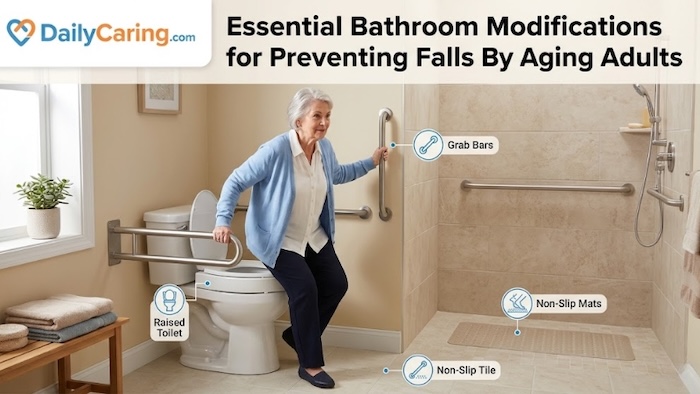
Installing grab bars is one of the most straightforward and effective ways to prevent falls by supporting balance and mobility control. They should be placed next to and inside the tub or shower, typically horizontally at arm height, and vertically beside the toilet.
Alternatively, floor-to-ceiling support poles can be used for 360-degree stability during transfers. It is recommended to have a clinical expert, such as an occupational therapist, assess the space and to use a professional installer to ensure the bars are safely secured to wall studs.
2. Adding a Raised Toilet Seat or Riser
Adding a raised toilet seat (or riser) helps individuals with weakened leg strength, stiff joints, or limited mobility get on and off the toilet without the fear of falling.
These risers typically add 2 to 6 inches in height, reducing the distance a person needs to lower themselves and stand back up. To further improve safety, look for risers with slip-resistant pads, a locking mechanism, and support arms or handles.
3. Upgrading to Slip-Resistant Bathroom Flooring
Upgrading to slip-resistant flooring helps mitigate hazards posed by water and soap. At a minimum, you should place a non-slip rubber mat or self-stick strips on the floor of the tub or shower.
For the main bathroom floor, safe materials include textured ceramic or porcelain tiles with a matte or honed finish, slip-resistant vinyl, rubber flooring, or cork, which provides both natural grip and cushioning in case of a fall.
4. Enhance Bathroom Lighting
Enhancing bathroom lighting is critical, as slips and falls are especially common during nighttime bathroom trips.
Ensure the shower area has good visibility and use moisture-resistant LED lights. You should also install motion-activated nightlights near the toilet and sink, and along the path from the bedroom to the bathroom.
5. Eliminate Tripping Hazards
Eliminating tripping hazards at doorways by installing a graded door saddle addresses uneven floor transitions, such as moving from a carpeted hallway into a tiled bathroom.
The graded saddle acts as a small ramp to smooth out height variations, which is particularly helpful for seniors who shuffle their feet or use walkers and wheelchairs.
VIDEO: The Aging-In-Place Bathroom for Safety
At a Glance: Essential Bathroom Safety Upgrades
When you are looking to improve home safety, it can be overwhelming to decide which modifications to prioritize first. This quick-reference guide highlights the primary benefits and optimal placement for the most effective safety upgrades, helping you build a safer environment with confidence.
| Safety Equipment | Primary Benefit | Best Placement |
|---|---|---|
| Grab Bars | Provides essential stability during standing, sitting, and stepping over tub walls. | Inside the shower, near the tub entrance, and beside the toilet. |
| Raised Toilet Seat | Reduces the distance to sit and stand, minimizing strain on knees and hips. | Secured directly onto the existing toilet bowl. |
| Non-Slip Surfaces | Prevents hydroplaning on wet tile or acrylic surfaces. | Floor of the shower/tub and on the main bathroom floor. |
| Motion Lighting | Eliminates disorientation during nighttime trips when vision is compromised. | Along the baseboards, near the doorway, and behind the toilet. |
| Shower Chair | Allows for safe bathing while seated to prevent fatigue-related slips. | Placed firmly inside the walk-in shower or bathtub. |
Note: For more detailed safety standards, refer to the CDC STEADI initiative guidelines on fall prevention.
Final Thoughts on Bathroom Design for Safety
Investing in senior-friendly bathroom design is about more than just hardware; it is about providing peace of mind and preserving dignity.
While the transition to using assistive devices or making structural changes can feel like a significant shift, the result is a home environment that supports longevity and health. For more ways to secure your living space, be sure to check out our comprehensive home safety checklist for aging adults.
By taking proactive steps today, you ensure that the bathroom remains a safe, private space for years to come. For further clinical guidelines on preventing accidents at home, the National Institute on Aging offers excellent resources on falls and fractures.
Health & Safety Disclaimer
The information provided in this post is for educational and informational purposes only and is not intended as professional medical advice, diagnosis, or treatment. Always seek the advice of your physician, occupational therapist, or other qualified health provider regarding home modifications or mobility concerns. Never disregard professional medical advice or delay in seeking it because of something you have read on this website.
The post Essential Bathroom Modifications for Seniors Can Minimize Falls in 2026 appeared first on DailyCaring.
Popular Products
-
 Gas Detector Meter
$311.56$155.78 -
 Foldable Garbage Picker Grabber Tool
$93.56$46.78 -
 Portable Unisex Travel Urinal
$49.56$24.78 -
 Reusable Keychain Pepper Spray – 20ml
$21.56$10.78 -
 Camping Survival Tool Set
$41.56$20.78