Standing Side Leg Raises With Bands And Variations

Standing side leg raises are a simple move that can seriously improve your hip strength, balance, and glute stability.
No gym needed. No complicated setup. Just you, your body, and maybe a resistance band.
I have been using this exercise with clients for years, and it never disappoints. It builds the muscles most people forget to train.
In this guide, you will learn what standing side leg raises are, how to do them correctly, which resistance bands work best, and what variations give better results.
By the end, you will have everything you need to add this move to your routine with confidence.
What Are Standing Side Leg Raises?
Standing side leg raises suit almost anyone, from beginners to seasoned athletes.
They are particularly beneficial for people who spend long hours sitting, as prolonged sitting weakens the hip abductors and tightens surrounding muscles.
Those experiencing hip tightness or general lower-body weakness will find this exercise a gentle yet effective remedy.
Older adults benefit from the balance component, which supports fall prevention and everyday stability.
Athletes use it to strengthen the hips for better performance and injury prevention. If you want to improve lateral hip strength, posture, or single-leg stability, this exercise is a practical addition to your routine.
Standing Side Leg Raises Benefits

This exercise does more than tone your legs. It builds real strength and stability where it matters most.
Improves Balance and Coordination
Every rep you do on one leg trains your body to stay steady. Your core kicks in automatically to stop you from tipping, making this a balance exercise as much as a strength one.
Builds Stronger Hips and Glutes
The glute medius and hip abductors get direct work with every lift. Stronger hips also protect your knees by stopping them from caving inward during movement.
Supports Better Walking and Stair Climbing
Hip abductors help you shift weight from one leg to the other with every step. When they are weak, you may notice a wobble or lean that makes walking feel more tiring than it should.
Helps Improve Mobility and Flexibility
Lifting your leg out to the side regularly keeps the hip joint moving through a range most people never train. Over time, this reduces stiffness and makes everyday movements feel more comfortable.
May Reduce Fall Risk and Lower-Body Weakness
Weak hip abductors are linked to a higher fall risk, especially in older adults. This exercise is gentle enough to do daily and effective enough to build real stability over time.
Supports Side-to-Side Athletic Movement
Sports like basketball, tennis, and soccer all rely on strong lateral movement. Standing side leg raises build the exact hip strength needed to power quick side steps and direction changes.
Standing Side Leg Raises With Resistance Bands
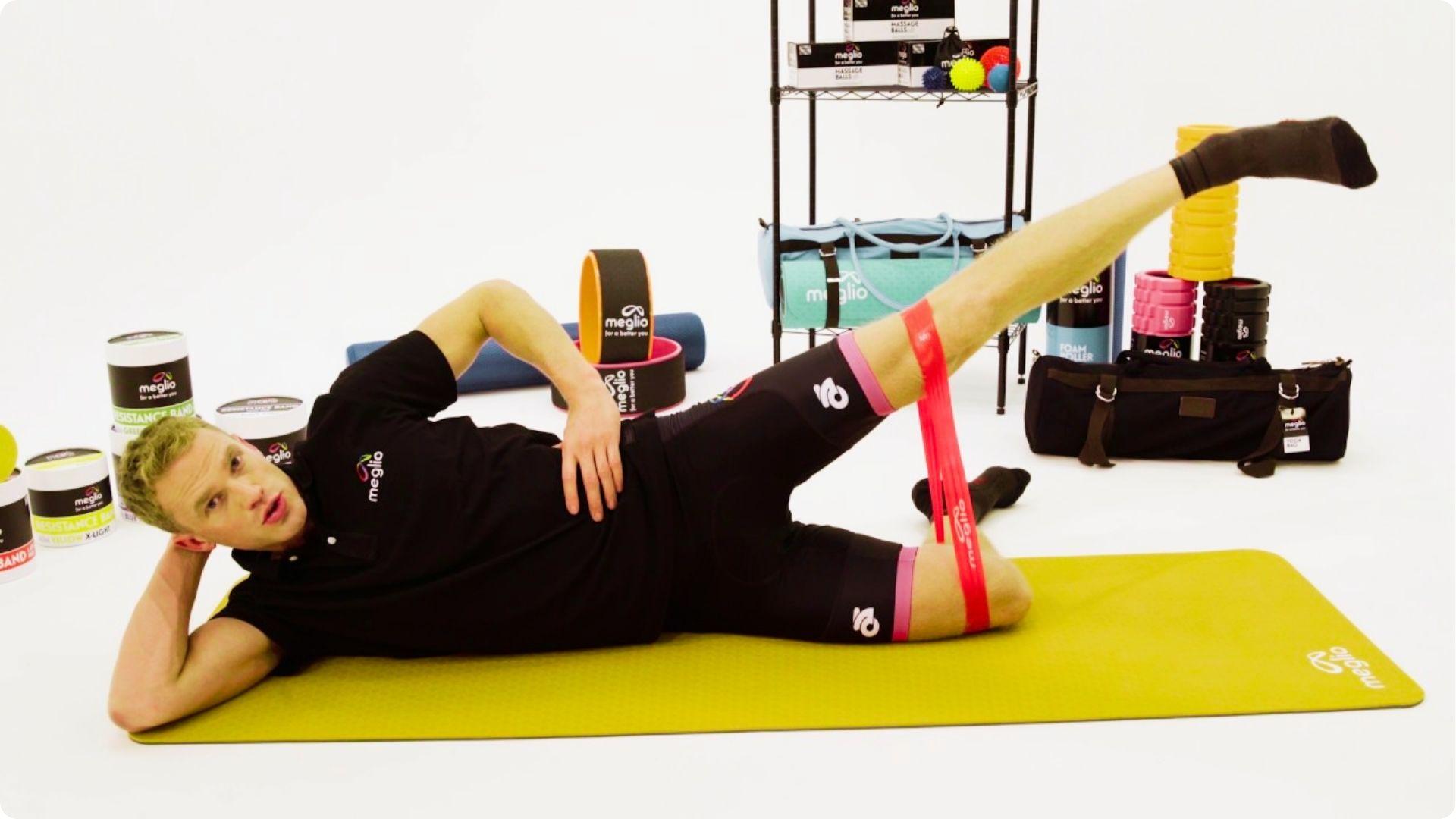
Adding a band to this move increases the challenge without adding weight or equipment bulk.
Benefits of Adding Resistance Bands
Bands create constant tension through the full range of motion, not just at the top of the lift. This leads to better muscle activation and faster strength gains compared to bodyweight alone.
Best Band Placement for Different Difficulty Levels
Placing the band just above the knees is easiest, below the knees is moderate, and around the ankles is the hardest. Start higher up and move the band lower as you get stronger.
Standing Side Leg Raises With Mini Bands
Mini bands loop around both legs and stay in place throughout the movement. They add consistent resistance with every rep and are one of the most practical tools for this exercise.
Resistance Band Standing Side Leg Raises for Glute Growth
The band should feel tight at the top of each lift for it to be effective for glute growth. Slow your reps down and squeeze the glute at the top to increase muscle engagement.
How to Increase Resistance Safely
Only move to a heavier band when you can complete all your sets with clean form. If your hip hikes up or your torso leans, the resistance is too high for where you are right now.
Best Resistance Bands for Beginners and Advanced Users
Beginners do well with soft fabric mini bands that sit comfortably on the skin without rolling. Advanced users can look for a full set of loop bands with multiple resistance levels to keep progressing over time.
Best Standing Side Leg Raises Variations and Progressions

Once you know the basic move, these variations keep your training fresh and more effective.
Front-to-Side Standing Leg Raises
You raise the leg forward first, then sweep it out to the side in one smooth motion. This hits both the hip flexors and abductors while also improving hip mobility across two planes of movement.
Side-to-Back Standing Leg Raise Variations
Lift the leg out to the side and then continue moving it behind you before returning to start. The backward portion brings the glute max into the movement for a more complete glute workout.
Standing Side Leg Raises in Multiple Directions
This version moves the leg forward, out to the side, and then behind you in one sequence. It challenges balance, coordination, and hip strength all at once without needing extra exercises.
Standing Side Leg Raises for Glute Growth

If your goal is building your glutes, this exercise can be a key part of your plan.
How to Increase Glute Activation
Slowing down your reps forces the glute to work harder than a quick swing ever would. Adding a one to two second pause at the top of each lift increases time under tension and improves muscle engagement.
Best Resistance Levels for Muscle Growth
Moderate to heavier bands with controlled reps tend to produce better size gains than light bands at high reps. The last few reps of each set should feel genuinely challenging while your form stays clean.
Slower Reps vs Pulses for Better Results
Slower reps build strength and size while short pulses at the top of the range increase burn and endurance. Using slow reps for your main sets and finishing with pulses gives you the benefit of both methods.
Combining Standing Side Leg Raises With Squats and Lunges
Squats and lunges target the glute max while side leg raises focus on the glute medius. Pairing them in the same workout builds a more balanced and complete lower body over time.
How Often to Train for Glute Development
Training the glutes two to three times per week with at least one rest day between sessions is enough to see real progress. Consistency over weeks and months matters far more than cramming in daily sessions.
Tips From Standing Side Leg Raises Exercise
Watching a good demonstration can fix your form faster than any written cue ever will.
- Keep your torso upright during the lift and avoid leaning to the opposite side.
- Lifting to a comfortable height only, forcing the leg too high breaks your form.
- Move at a slow and controlled pace, avoid swinging the leg out.
- Keep your standing foot flat on the floor throughout every rep.
- Pause briefly at the top of each lift to feel the glute engage properly.
Conclusion
Standing side leg raises have been a go-to in my own routine for a long time, and I genuinely think they are one of the most overlooked exercises out there.
They are simple, effective, and require almost nothing to get started. I noticed real improvements in my hip strength and balance within a few weeks of being consistent.
Start with bodyweight, add a band when you feel ready, and stick with it. If this guide helped you, drop a comment below, share it with a friend, or check out more exercises on the blog.
Frequently Asked Questions
What muscles do standing side leg raises work?
They mainly target the hip abductors and glute medius along the outer hip. The core and standing leg muscles also work to keep your body stable throughout each rep.
Are standing side leg raises good for glutes?
Yes, they are especially effective for the glute medius, which many exercises miss. Adding a resistance band and slowing down your reps makes them even more effective for glute development.
Do resistance bands make standing side leg raises more effective?
Bands add tension through the full range of motion, which increases how hard your muscles have to work. This makes the exercise significantly more effective for building both strength and muscle size.
How many standing side leg raises should I do daily?
Starting with two to three sets of twelve to fifteen reps on each side is a solid approach. You can do this daily with light resistance or every other day if using heavier bands.
Can beginners do standing side leg raises?
Yes, beginners can start with bodyweight only and hold a wall for balance support. A light band above the knee can be added gradually once strength and stability improve.
The post Standing Side Leg Raises With Bands and Variations appeared first on XcelerateGyms.
Popular Products
-
 Devil Horn Headband
$25.99$11.78 -
 WiFi Smart Video Doorbell Camera with...
$61.56$30.78 -
 Smart GPS Waterproof Mini Pet Tracker
$59.56$29.78 -
 Unisex Adjustable Back Posture Corrector
$71.56$35.78 -
 Smart Bluetooth Aroma Diffuser
$585.56$292.87