Tesla Optimus Robot Faces Major Hurdles In Dexterous Hand Development
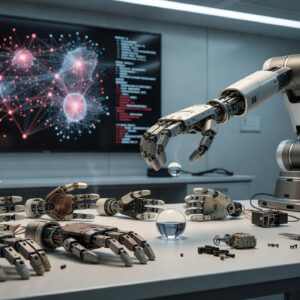
Tesla has encountered significant technical obstacles in developing hands for its Optimus humanoid robot, according to recent reports from industry observers. The company faces persistent challenges in creating functional robotic hands that match the dexterity and reliability needed for practical tasks. Engineers at Tesla have struggled to produce grippers capable of consistent performance across varied objects and environments, a limitation that has slowed the robot’s path toward useful deployment.
The difficulties center on the complex engineering required to replicate human hand capabilities. A typical human hand contains 27 bones, numerous muscles, tendons, and an intricate nervous system that allows for precise manipulation. Replicating even a fraction of this capability in a machine presents formidable problems. Tesla’s initial prototypes relied on relatively simple two-finger grippers that performed adequately for basic pick-and-place operations but fell short when confronted with objects of different shapes, textures, or fragility levels.
Futurism detailed how these hand-related setbacks have created bottlenecks in the overall Optimus development timeline. The publication noted that while the robot’s legs and torso have shown steady progress in balance and locomotion tests, the upper limbs and especially the hands continue to lag. Video demonstrations released by Tesla often avoid showing detailed hand interactions or edit out moments when the grippers fail to maintain their grasp.
This situation echoes broader patterns in robotics research. Companies worldwide have invested billions in humanoid platforms, yet hand technology remains one of the most stubborn barriers. Boston Dynamics, Figure AI, Agility Robotics, and others have all confronted similar issues. The human hand represents an evolutionary masterpiece refined over millions of years. Its combination of strength, precision, and tactile feedback proves extraordinarily difficult to duplicate with current materials and control systems.
Tesla’s approach to the hand problem has evolved through several iterations. Early designs featured rigid plastic components with limited degrees of freedom. Subsequent versions incorporated more flexible materials and additional actuators. The latest prototypes reportedly use a combination of tendon-driven mechanisms and embedded sensors intended to provide better feedback. Despite these refinements, demonstrations continue to show occasional drops, imprecise grips, and difficulty with tasks requiring fine motor skills such as button pressing or tool manipulation.
The implications extend beyond simple embarrassment for the company. Elon Musk has positioned Optimus as a cornerstone of Tesla’s future business strategy. During multiple earnings calls and public events, Musk described the robot as potentially more valuable than the company’s entire automotive division. The vision involves millions of units working in factories, warehouses, and eventually private homes performing useful labor. Without reliable hands, that vision faces substantial delays.
Manufacturing applications demand particular versatility from robotic hands. A factory robot might need to handle everything from delicate circuit boards to heavy metal components within the same shift. Current industrial robotic arms often solve this problem by swapping specialized end effectors between tasks. Humanoid robots, however, are designed to use the same appendages for all operations, mimicking human workers who use one pair of hands for diverse activities throughout their day.
The control systems required to operate advanced hands add another layer of complexity. Even if the mechanical structure achieves sufficient dexterity, the artificial intelligence must interpret sensor data and make split-second decisions about grip force, angle, and approach vector. Tesla has developed custom neural networks trained on video data to help the robot learn manipulation skills. These systems show promise in controlled laboratory settings but struggle with the unpredictable conditions found in real-world environments.
Material science presents yet another hurdle. Human skin combines toughness with sensitivity, allowing us to detect minute changes in texture while resisting wear. Robotic hands must balance similar properties using synthetic materials. Too soft, and the hand lacks durability. Too rigid, and it cannot conform to irregular objects. Finding compounds that survive millions of manipulation cycles while maintaining consistent performance has proven expensive and time-consuming.
Competition in the humanoid robotics space has intensified. Figure AI recently secured major investments from OpenAI and Microsoft, while Apptronik works with NASA on space-ready platforms. Agility Robotics has deployed its Digit robot in warehouse trials with Amazon. Each company approaches the hand problem differently. Some favor simpler three-finger designs that sacrifice versatility for reliability. Others pursue highly articulated five-finger models that more closely resemble human anatomy but introduce additional failure points.
Tesla maintains an aggressive public timeline despite these technical realities. Musk has repeatedly claimed that limited production of Optimus units could begin within the next few years. Internal documents and former employee accounts suggest a more cautious outlook. Several engineers who left the project cited unrealistic deadlines and pressure to demonstrate capabilities that the hardware could not yet support.
The hand challenge also intersects with broader questions about the future of work and automation. If humanoid robots eventually succeed, they could transform labor markets across multiple sectors. Manufacturing, logistics, elder care, and household maintenance represent obvious applications. Success depends heavily on solving the manipulation problem that has bedeviled robotics researchers for decades.
Academic institutions continue contributing foundational research that commercial developers like Tesla draw upon. Universities have produced important advances in tactile sensing, compliant mechanisms, and learning-based control. Yet translating laboratory breakthroughs into mass-produced, cost-effective components remains difficult. The gap between research prototypes and industrial products often spans years or even decades.
Cost represents a critical factor in Tesla’s strategy. For Optimus to fulfill its promised role as an affordable labor solution, the entire platform must reach price points accessible to businesses and eventually consumers. Sophisticated hands with numerous actuators, sensors, and custom materials drive expenses upward. Finding ways to reduce complexity while maintaining functionality becomes essential for commercial viability.
Power consumption adds another constraint. Each additional motor in the hand requires energy that must come from the robot’s battery pack. More powerful hands typically mean either larger batteries that increase overall weight or shorter operational times between charges. Engineers must balance dexterity against practical limitations of mobile platforms that cannot remain tethered to power sources.
Safety considerations further complicate development. A robot working alongside humans needs hands that can apply appropriate force without causing injury. This requirement demands sophisticated force feedback systems and fail-safe mechanisms. A hand strong enough to lift heavy objects must also be gentle enough to interact safely with people and delicate items.
Despite the current difficulties, progress in related fields offers reasons for measured optimism. Advances in machine learning have improved robots’ ability to learn from demonstration. New actuator technologies promise better power density and control precision. Novel materials with programmable stiffness could allow hands to adapt their properties based on the task at hand.
Tesla’s experience with automotive manufacturing provides some advantages. The company has extensive knowledge of high-volume production techniques that could eventually help scale robot manufacturing if the technical challenges are resolved. Its expertise in battery technology and electric motors also transfers well to humanoid platforms. The primary obstacle remains the intricate manipulation capabilities that separate laboratory curiosities from genuinely useful machines.
Industry analysts suggest that practical humanoid robots with reliable hands may still be five to ten years away from widespread deployment. During that period, specialized robots with task-specific appendages will likely handle most automated work. The appeal of general-purpose humanoids lies in their potential flexibility, but that flexibility depends entirely on solving the hand problem that Tesla currently struggles to overcome.
Recent demonstrations from other companies indicate that incremental improvements continue. Videos show robots folding laundry, pouring liquids, and assembling simple mechanical components. These tasks represent important milestones, yet they typically occur under controlled conditions with significant human preparation. True autonomy in unstructured environments remains elusive.
The Tesla Optimus project has generated substantial public interest since its initial unveiling. The promise of affordable humanoid robots captured imaginations across technology, business, and popular culture. That enthusiasm has sometimes outpaced technical reality, leading to disappointment when promised capabilities fail to materialize on schedule. Managing expectations while maintaining development momentum presents its own challenges for the company.
As Tesla continues refining its approach to robotic hands, the broader robotics community watches closely. Success or continued struggles at this prominent company will influence investment decisions and research directions industry-wide. The technical problems may appear narrow, focused on a specific component, but they touch upon fundamental questions about what machines can accomplish and how they might integrate into human society.
Engineers at Tesla and competing organizations persist in their efforts to create hands that work reliably enough for practical applications. Each iteration brings small improvements in grasp stability, tactile sensitivity, and control precision. Whether these incremental advances will accumulate fast enough to meet ambitious commercial timelines remains uncertain. The coming years will reveal whether the hand problem represents a temporary engineering hurdle or a more fundamental limitation on current approaches to humanoid robotics.
The situation highlights how even well-resourced technology companies can encounter unexpected barriers when attempting to replicate capabilities that humans take for granted. Walking, talking, and basic object manipulation seem simple until engineers try encoding those abilities into silicon, metal, and code. Tesla’s difficulties with Optimus hands serve as a reminder that the path from concept to functional product in advanced robotics often proves longer and more complicated than initial projections suggest. Continued research across multiple organizations will determine how quickly these challenges yield to persistent engineering effort.
Popular Products
-
 Classic Oversized Teddy Bear
$23.78 -
 Gem's Ballet Natural Garnet Gemstone ...
$171.56$85.78 -
 Butt Lifting Body Shaper Shorts
$95.56$47.78 -
 Slimming Waist Trainer & Thigh Trimmer
$67.56$33.78 -
 Realistic Fake Poop Prank Toys
$99.56$49.78