Canada's Accountant Shortage Is Starting To Add Up Despite Quieter Tax Season
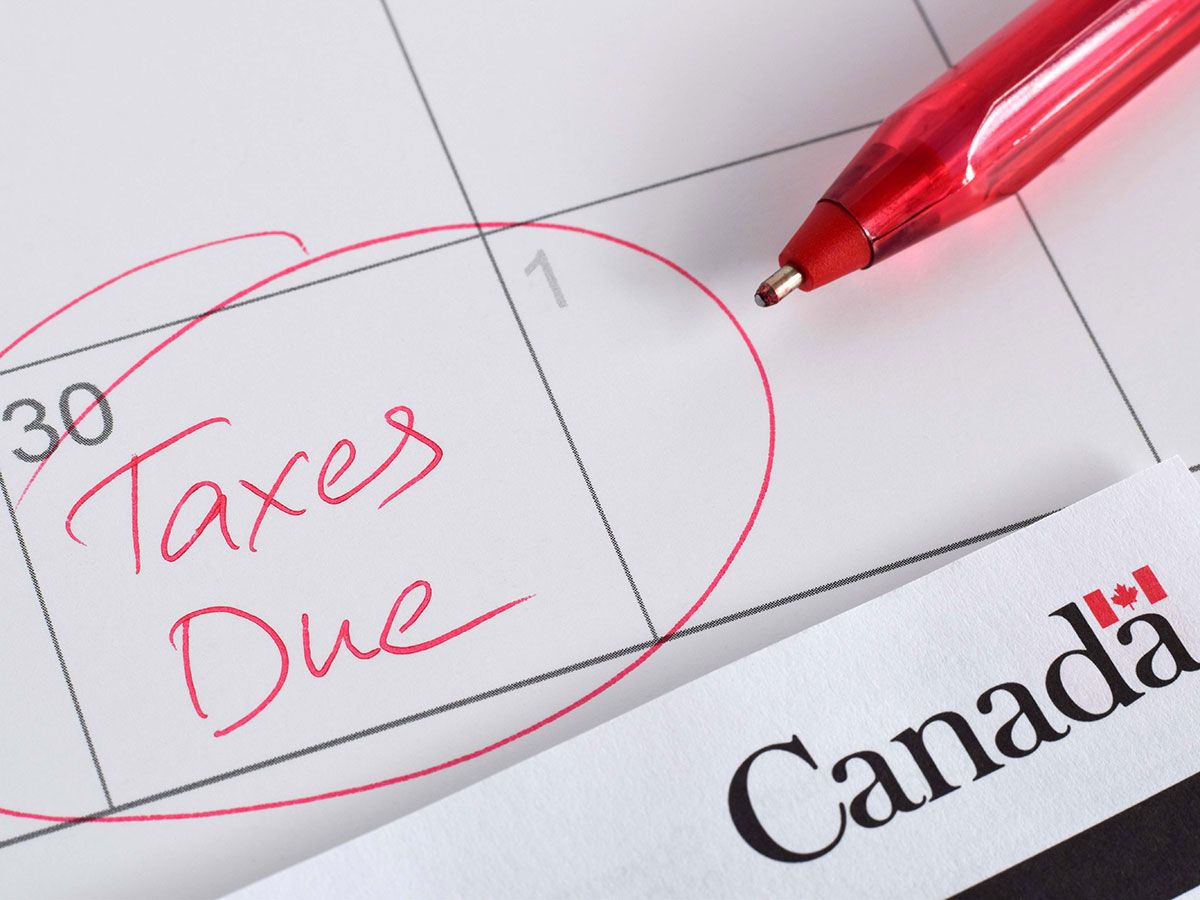
I was chatting with a colleague last week about tax season . “We’ll get it done,” he said. “But given the shortage of qualified teammates, it’s going to be tough. At least we don’t have the chaos of the last three years from the government … so far. Knock on wood.”
Knock on wood, that’s the state of tax administration in 2026: cautious relief and significant shortages of staff. But my colleague is right. Mercifully, the debacles of the last three years are non-existent this year: no capital gains inclusion rate fiasco, no bare trust uncertainty and no underused housing tax confusion, which was thankfully eliminated for 2025 in the last federal budget. The last three years of avoidable, policy-induced disorder were dumped onto a profession already running on fumes.
Is the silence indicative of a healthy tax system? No. More accountants are scrambling and simply hoping to get through tax season with minimal collateral damage. The shortage of qualified accountants is a structural problem that the chaos years obscured and a calmer tax season will not fix. The people inside the system are absorbing the strain, so you don’t have to see the cracks.
In 2023, 90 per cent of finance and accounting managers in Canada struggled to fill vacant positions . That dropped slightly to 86 per cent in 2025. What do firms do when faced with talent shortages ? Offer higher salaries, of course. Chartered professional accountant (CPA) salaries climbed 7.7 per cent between 2022 and 2024, outpacing inflation. Early career CPAs are now earning a median $92,000 within three years of attaining their designation.
Yet there are still shortages. The problem is a structural one and it’s not difficult to find the roots. The average Canadian accountant is 47 years old , five years older than the average worker overall. Why does that matter? It means retirements will hit the accounting profession sooner than most. In short, the accounting profession is not replacing itself when you consider entrants to the profession versus exits — retirements and deaths.
Universities and colleges across North America report declining enrolment in accounting programs. The pool of accounting graduates in the United States has contracted every year since 2015-16 and was down 7.4 per cent in 2021-22, 9.6 per cent in 2022-23 and 6.6 per cent in 2023-24.
The bleeding may be slowing, but the wound is not closed. It’s obvious students are attracted to other professions. Why? Tax and accounting are not viewed as sexy professions. I think it is, but maybe I’m weird?
The gap opening up is concentrated precisely where individual Canadians and small business owners need help most: tax planning and related compliance.
Will automatic tax filing and artificial intelligence (AI) help out? Automatic tax filing, especially the long-overdue expanded version that appears to be on its way, will take a load off certain low-income taxpayers and hopefully eliminate the need for tax preparers for those people. But it won’t materially impact the vast majority of accountants and the taxpayers they serve for quite some time yet.
Some AI providers are trumpeting that they can prepare tax returns — especially in the U.S. — but it will be a bit more time before AI can confidently prepare tax returns that can take a load off a strained profession.
Having said that, there are plenty of things AI can do to reduce the load of certain preparation elements and I’m aware of many practitioners and firms that are responsibly using AI to try to assist with the workload.
Let’s be clear about one thing: CPAs are critical to the administration of Canada’s tax system. Without them, the entire tax system collapses. Accordingly, any material strain on CPAs is certainly a national concern.
What should be done about it? I have some ideas.
First, it’s time to make the profession sexy again. For me, interest in the accounting profession started with a career day at my high school where a couple of practising chartered accountants came to discuss what being an accountant was all about. It grabbed my attention and the rest is history. These kinds of coordinated visits to high schools seem to have disappeared from the profession’s tool belt. It’s time to bring that back to plant acorns early.
Second, the provinces and federal government need to fix credentialing. The Mark Carney government has committed $97 million over five years to a Foreign Credential Recognition Action Fund , acknowledging in the 2025 budget that more than half of immigrants with a bachelor’s degree or higher are overqualified for their jobs.
However, that program is narrowly targeted at health care and construction. Canada has internationally trained CPAs who cannot practice because their credentials don’t survive the border crossing intact. Extending the government’s framework to professional services with the provinces’ cooperation — including accounting — is not a stretch and an obvious next step.
Third, reduce the compliance burden through meaningful tax reform . Our tax system has become a patchwork of politically motivated rules layered on top of each other. Policymakers need to recognize a simple truth: you cannot keep adding incomprehensible complexity to a system while the number of people capable of administering it is shrinking.
Fourth, stop the policy whiplash. The past few years have shown how damaging rushed and poorly executed tax changes can be. Stability and predictability are not exciting political talking points, but they are essential for a functioning system. Again, this policy whiplash can be avoided by engaging in serious tax reform.
A quieter tax season is a welcome relief, but it should not be mistaken for progress. Fragile systems eventually break. Let’s hope the wood my colleague is knocking on is sturdier than the system it’s quietly holding together.
If things do seem to run smoothly this year, don’t be fooled; it didn’t happen by accident. Kudos to my colleagues holding it all together.
Canadian Tax Foundation, former chair of the Society of Estate Practitioners (Canada) and has held many other leadership positions in the Canadian tax community. He can be reached at kgcm@kimgcmoody.com and his LinkedIn profile is https://www.linkedin.com/in/kimgcmoody.
_____________________________________________________________
If you like this story, sign up for the FP Investor Newsletter.
_____________________________________________________________
Popular Products
-
 Put Me Down Funny Toilet Seat Sticker
$33.56$16.78 -
 Stainless Steel Tongue Scrapers
$33.56$16.78 -
 Stylish Blue Light Blocking Glasses
$85.56$42.78 -
 Adjustable Ankle Tension Rope
$53.56$26.78 -
 Electronic Bidet Toilet Seat
$981.56$490.78