Carney's Fiscal Update Plays A Charming Tune, But Falls Off At The End
I was standing in the Cathédrale Saint-Vincent in St. Malo, France, with my 82-year-old French mother and sister on the day the federal government’s spring economic update was released. The plaque over the tomb of Jacques Cartier there, in translation, reads: “Here rests Jacques Cartier, native of Saint-Malo and the first discoverer of Canada, who died in 1557.”
It was a moving moment. Cartier was an explorer who took genuine risk, with no certainty of return, to chart a new world. Canada’s origin story is one of risk-taking, exploration and the courage to build something that did not yet exist.
That night, I read the update. The contrast was difficult to ignore.
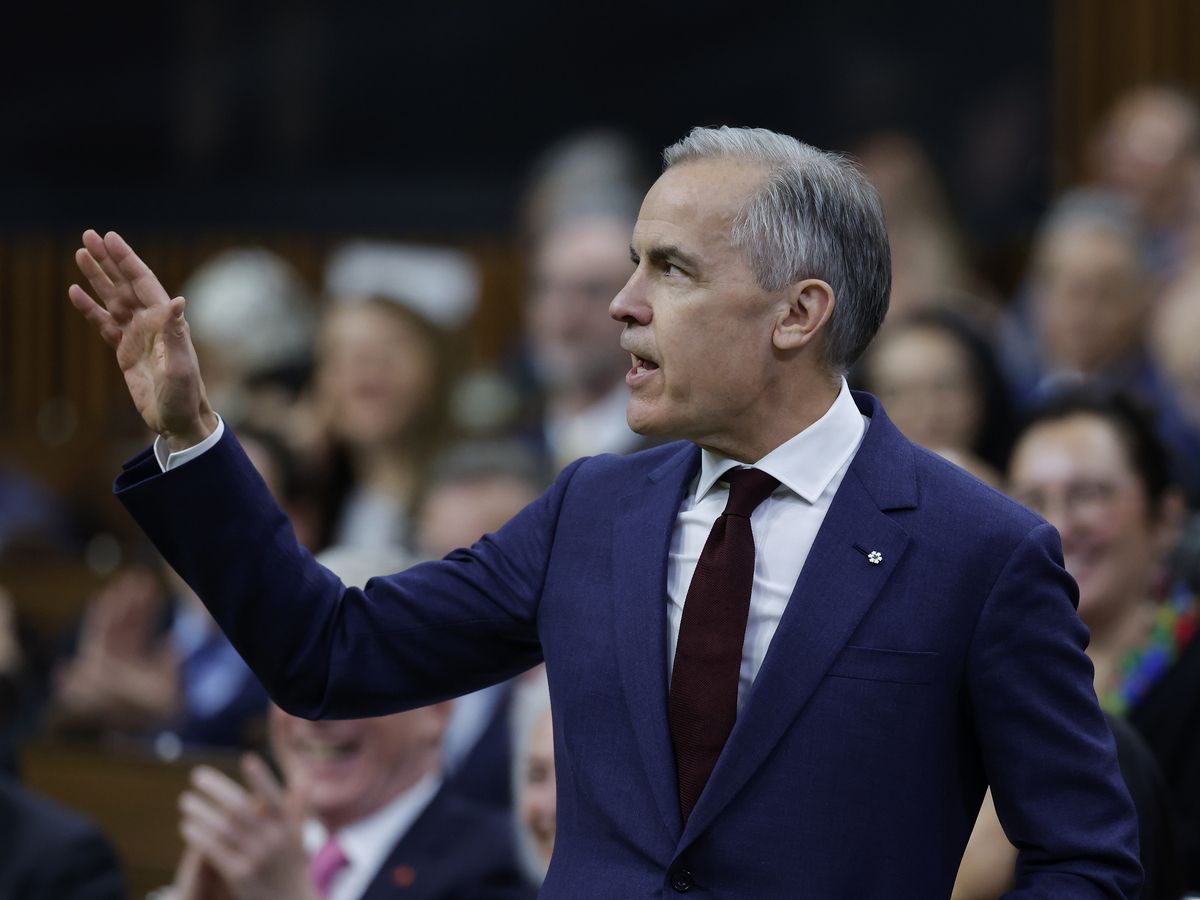
Mark Carney was elected on a promise of economic seriousness: the central banker who could face down Donald Trump and replace ideology with competence. The ridiculous Elbows Up branding worked. Like the classic Pied Piper story, many Canadians followed the tune.
The update does not vindicate the marketing.
The headline number is a projected 2025-26 deficit of $66.9 billion , better than the $78.3 billion forecast in November’s budget , but only because of windfall revenues. The update brags that this is the result of prudent fiscal management. It is not. A $66.9-billion deficit is history-making by any measure.
Worse, the update leans heavily on the deceptive accounting trick: the artificial split between capital and operating budgets. Under this framing, the government will “balance operating spending with revenues by 2028-29,” never mind that it will still run deficits of $53 billion to $63 billion every year through 2030-31.
Bondholders do not care which bucket Ottawa assigns the spending to . A deficit is a deficit. This is the kind of presentation that only fools the financially illiterate.
The boast about the ratio of debt to gross domestic product (GDP) is similar. The update trumpets Canada’s “10.2 per cent net debt-to-GDP ratio” against the G7 average of 101.8 per cent. That figure nets Canada Pension Plan (CPP) and Quebec Pension Plan assets against federal debt, but those assets are not available to the government and so this statistic is misleading to measure federal fiscal capacity.
Meanwhile, public debt charges will rise to $80.9 billion by 2030-31 from $54 billion this year. Federal health transfers to the provinces will be $57.4 billion next year, rising to $67.5 billion by 2030-31. Within five years, we will be spending more on servicing the debt than we transfer to the provinces for health care. This is fiscally irresponsible.
The tax measures are light , with the highlight being that the $10-million capital gains exemption for employee ownership trusts (EOT) will now be permanent. Proposed in 2023, the Parliamentary Budget Officer estimated this would cost the government $23 million over four years — a pittance. The update estimated the cost to be $205 million over six years. I don’t believe it.
The EOT regime is structurally unattractive for most business owners. To qualify, the entrepreneur must give up control while remaining exposed to meaningful repayment risk through vendor financing, an asymmetry that will deter most rational sellers and thus the pickup of this measure will be almost zero.
The update also announced that the Canada Revenue Agency will prioritize advance income tax rulings for “large-scale, nation-building projects.” A two-tier ruling system based on political importance rather than fairness is not a feature of a serious tax administration.
There are two bright spots, however. The base CPP contribution rate will drop to 9.5 per cent from 9.9 per cent, effective Jan. 1, 2027. The fair question is how the base CPP actuarial buffer became large enough to support this cut and whether the additional CPP layered on top beginning in 2019 deserves similar scrutiny.
The Disability Tax Credit process was also streamlined for individuals with certain long-lasting medical conditions — welcome and long overdue.
There are still important missing aspects. The Liberals’ Canada Strong 2025 election platform promised an “expert review of the corporate tax system.” That’s still nowhere to be seen. Canada has not had a comprehensive tax review since the Royal Commission on Taxation in the 1960s.
We are decades past due for the kind of Big Bang reform that economist Jack Mintz and others have argued for, and a government that markets itself as economically serious would have launched the promised review by now.
Also missing is the election promise to resurrect the 1970s-era multiple unit residential building tax shelter, a policy I have criticized and which the historical record shows was not needle-moving. Either the government has conceded the policy was bad or it ran out of fiscal room. Either way, a major housing-policy plank has disappeared without acknowledgement.
The broader fiscal picture is clear and ugly. I am hardly alone in saying so. Commentators who have been generally sympathetic to this government are now openly criticizing the update. It tells you something about the substance when the usual defenders are flinching.
- Here's why the government should cut expenditures and not hand out any more fiscal coupons
- Don't expect Carney's looming spring budget update to reflect the financial pain Canadians are feeling
Cartier’s Canada was built by risk-takers. A serious government’s job is to clear the path for them through comprehensive tax reform, disciplined spending and policies that attract capital and reward the entrepreneurs who actually build things.
A Pied Piper does the opposite. He plays a charming tune and only asks that people follow. The children who followed didn’t recognize the cliff until it was too late.
Canada wasn’t built by a marketing campaign and won’t be saved by one. Canadians need to stop following the music and start questioning it.
Kim Moody, FCPA, FCA, TEP, is the founder of Moodys Tax/Moodys Private Client, a former chair of the Canadian Tax Foundation, former chair of the Society of Estate Practitioners (Canada) and has held many other leadership positions in the Canadian tax community. He can be reached at kgcm@kimgcmoody.com and his LinkedIn profile is https://www.linkedin.com/in/kimgcmoody.
_____________________________________________________________
If you like this story, sign up for the FP Investor Newsletter.
_____________________________________________________________
Popular Products
-
 Electric Toothbrush & Water Flosser S...
$43.56$21.78 -
 Foldable Car Trunk Multi-Compartment ...
$329.56$164.78 -
 Mommy Diaper Backpack with Stroller O...
$111.56$55.78 -
 Ai Dash Cam with Front & Rear HD, GPS...
$295.56$147.78 -
 Smart Auto-Recharge Robot Vacuum Cleaner
$613.56$306.78