Cra Denies Deduction To Taxpayer Who Tried To Claim Auto And Work-from-home Expenses
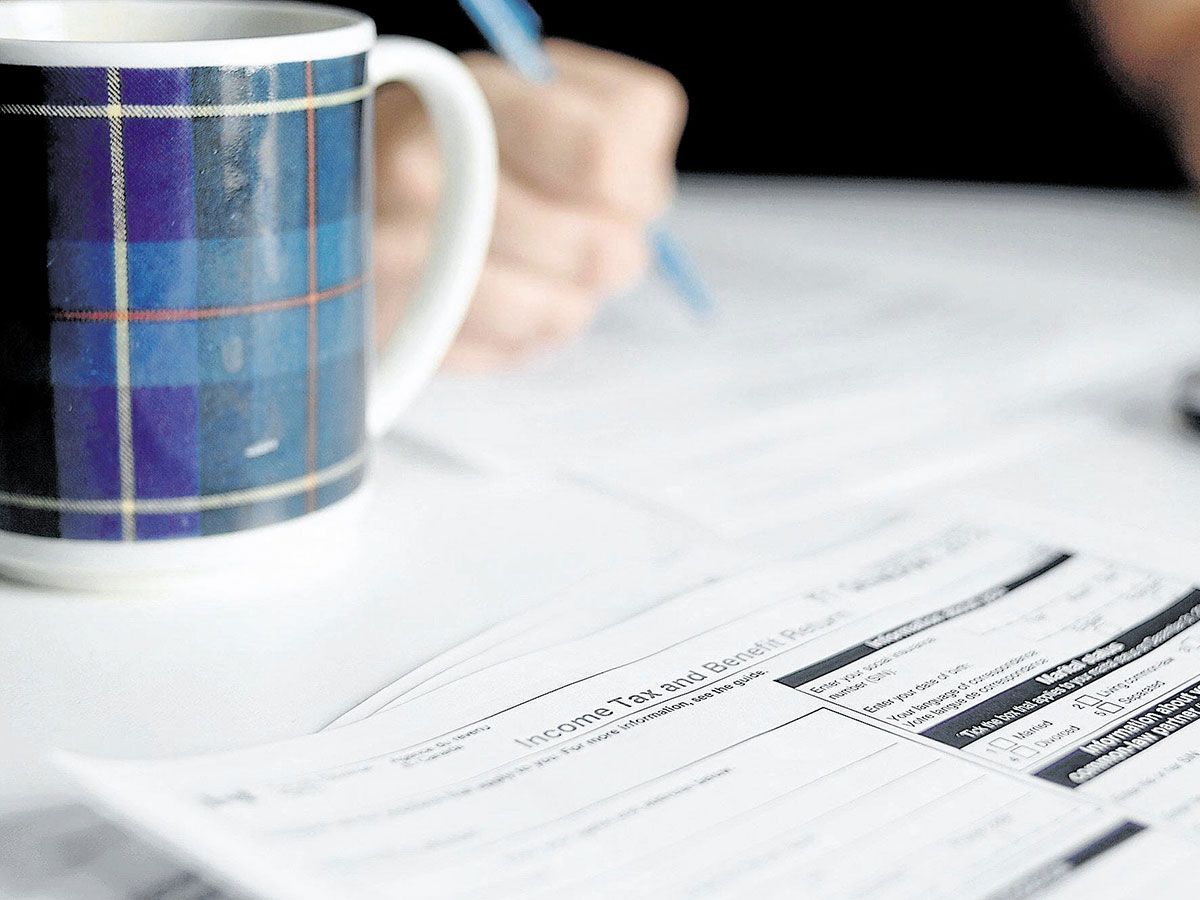
As an employee, you may be able to claim a deduction on your tax return for work expenses that you aren’t reimbursed for by your employer, for instance if you use your car for work or have home office expenses . To claim the deduction, you’ll need a properly completed and signed Canada Revenue Agency Form T2200 , Declaration of Conditions of Employment, from your employer.
Typical deductible employment expenses (if unreimbursed) for salaried employees can include: allowable motor vehicle expenses, out-of-town travel expenses, parking (other than at your employer’s place of business), office supplies, salary for an assistant (if required by your employer), office rent and work-from-home expenses.
A recent tax case, decided in late June 2026, involved a taxpayer who attempted to claim motor vehicle expenses, as well as work-from-home expenses, in 2021 and 2022, all of which were denied by the CRA.
The taxpayer lived in Kimberley, B.C., but was unable to find work close to home, so in February 2021 took a job as a controller for a company based in Salmon Arm, B.C. In November 2021, he changed jobs, and began working as a controller for another company, this time based in Kelowna.
For personal reasons, the taxpayer’s spouse was not willing to move away from Kimberley. As Kimberley is more than a five-hour drive away from Salmon Arm, the taxpayer decided to rent a small apartment in Enderby, B.C., which was close to Salmon Arm, to allow him to go into his employer’s office from Monday to Friday, as he was required to show up in person.
Similarly, after switching employers in late 2021, since Kimberley is more than a six-hour drive from Kelowna, the taxpayer subsequently decided to rent an apartment in Kelowna to enable him to go to his new employer’s office from Monday to Friday.
The taxpayer testified that, at all times, his home in Kimberley was his primary residence which he returned to one weekend per month while working in Salmon Arm, and once or twice each month while working in Kelowna.
The taxpayer claimed work-from-home expenses for a portion of his rent, hydro and internet expenses he incurred while living in Enderby and Kelowna. He also claimed automobile expenses relating to his travel between Enderby and Kimberley, and between Kelowna and Kimberley, taking the position that all of these expenses were incurred in the course of his employment. He argued that he couldn’t have worked for these two employers had he stayed in Kimberley during the week, and that moving his primary residence to Salmon Arm or Kelowna “would have been personally disastrous.” He added that his travel to and from Kimberley was a “reasonable expense as his primary residence and spouse were located in Kimberley.”
In court, the taxpayer produced Forms T2200 for both 2021 and 2022, one from each of his employers. The taxpayer admitted that he filled out these forms himself for signature by the relevant persons at the companies.
Both forms indicated that the taxpayer was required to pay his own expenses while carrying out his duties of employment. In response to the question “Did you normally require this employee to travel to locations that were not your place of business, or between different locations of your places of business, during the course of performing their employment duties,” the “no” box was ticked off on each form.
In response to the question “Did you normally require this employee to be away for at least 12 consecutive hours from the municipality and metropolitan area (if there is one) of your business where the employee normally reported for work,” the “no” box was also ticked off.
When it came to the question “Did you require this employee to pay for expenses for which they did or will receive a reimbursement,” the “no” boxes were ticked off. Furthermore, in response to the question “Did you require this employee to pay other expenses for which they did not receive any allowance or reimbursement,” the “no” boxes were also ticked off. Next to that answer, the taxpayer had added a handwritten note which said that he “had to be in the local Salmon Arm area to be in the Salmon Arm office Monday to Friday,” for the Salmon Arm job, with a similar note on the Kelowna T2200. The taxpayer testified that the handwritten notations were his, and that he had submitted the altered T2200s to his employers for signature.
In response to the question, “did this employee’s contract of employment require them to rent an office away from your place of business,” the “rent an office away from your place of business” language was crossed out by the taxpayer and replaced, in handwriting, by “required to be in the Salmon Arm office to perform the job duties,” with a similar notation on the Kelowna T2200.
- Student wins in court against CRA and avoids tax on student loan forgiveness
- CRA will clip your wings if you take a personal ride in the corporate jet
Finally, in response to the question “Did you require the employee to use a portion of their home for work,” the “no” box was ticked off for both forms.
Needless to say, the T2200 forms were not very helpful to the taxpayer’s case for deducting employment expenses, and the judge agreed.
When dealing with the deductibility of motor vehicle expenses, the judge noted that one of the requirements under the Income Tax Act is that the employee “must ordinarily be required to carry on the duties of the office or employment away from the employer’s place of business or in different places.” That was clearly not the case here.
The judge cited prior jurisprudence: “It is well established that travel expenses incurred by a taxpayer in travelling to and from his home to his place of work are considered personal expenses. They are not travelling costs encountered in the course of the taxpayer’s duties. Rather, they enable him to perform them.”
As for his rental accommodations in Salmon Arm and Kelowna, since the taxpayer was not ordinarily required to carry on the duties of his employment away from his employers’ places of business (or in different places), the rent and other utilities expenses he paid in both of these locations cannot be considered deductible employment expenses incurred in the performance of the duties of his employment.
While the judge “acknowledge(d) the difficult personal situation of the (taxpayer),” she was unable to rule in the taxpayer’s favour as he simply didn’t meet the conditions required under the Income Tax Act to deduct his employment expenses.
Jamie Golombek, FCPA, FCA, CFP, CLU, TEP, is the managing director, Tax & Estate Planning with CIBC Private Wealth in Toronto. Jamie.Golombek@cibc.com .
If you liked this story, sign up for more in the FP Investor newsletter.
Popular Products
-
 Put Me Down Funny Toilet Seat Sticker
$33.56$16.78 -
 Stainless Steel Tongue Scrapers
$33.56$16.78 -
 Stylish Blue Light Blocking Glasses
$85.56$42.78 -
 Adjustable Ankle Tension Rope
$53.56$26.78 -
 Electronic Bidet Toilet Seat
$981.56$490.78