Cra Refused To Cancel Tfsa Overcontribution Tax
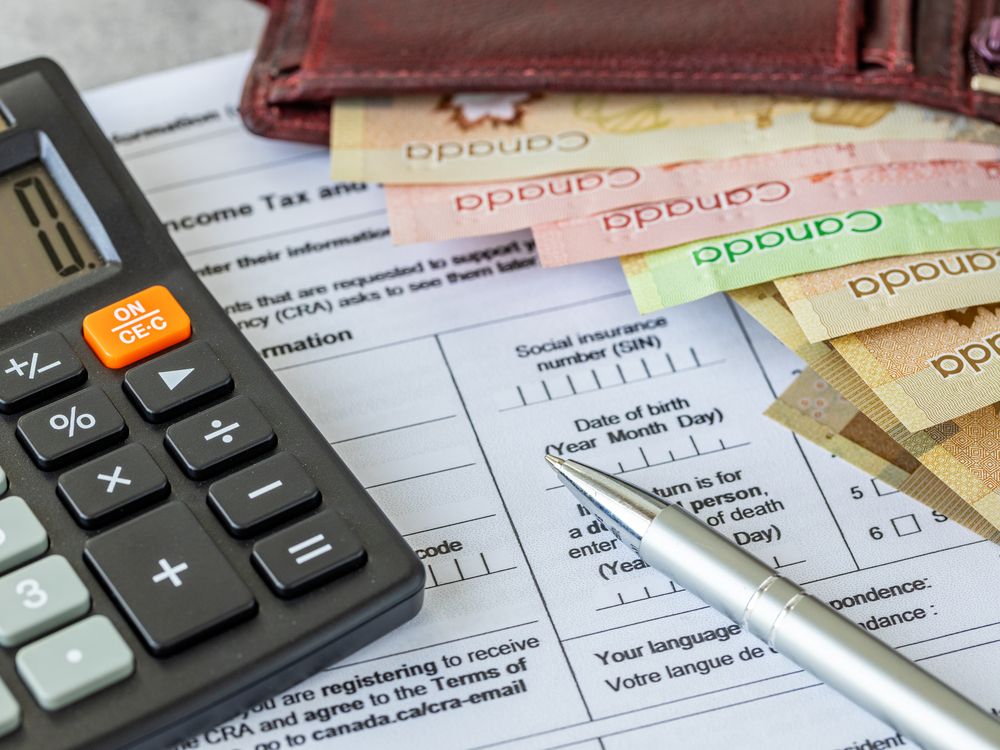
Canadians continue to run into trouble with their tax-free savings accounts ( TFSAs ), as evidenced by the steady flow of e-mails I get from readers complaining about being charged overcontribution tax by the Canada Revenue Agency for situations often beyond their control.
For example, just this week, a reader wrote to me about the troubles he was having dealing with his 86-year old mother’s TFSA overcontribution tax problem, owing to a bank reporting error (not CIBC, I was assured), that occurred when her spouse died. His mother was listed as the successor holder on her spouse’s TFSA , but the funds were transferred as a contribution leading to penalty tax.
Occasionally, a TFSA overcontribution tax dispute will reach the courts, which was the case with an Alberta taxpayer who faced off against the CRA in a Calgary courtroom last month. The taxpayer went to Federal Court seeking a judicial review of the CRA’s decision to deny him relief from the taxes and penalties imposed for his TFSA overcontributions.
The taxpayer’s TFSA troubles began back in 2021 when he opened multiple TFSAs. In May 2022 the CRA sent him a notice advising him that he had overcontributed to his TFSAs in 2021. The overcontribution tax is equal to one per cent per month on the amount overcontributed until it’s withdrawn (or until new TFSA room subsequently opens up in a future year). The notice advised him that he could correct the overcontribution by withdrawing the overcontributed amount immediately, and that if it was not corrected, he would be liable for additional penalty tax.
Unfortunately, the taxpayer didn’t receive the CRA’s overcontribution notice because he had not updated his mailing address with the CRA. As an aside, if you move, it’s important to notify the CRA of your change of address , which can be done in a number of ways, including online, by phone, by mail and even when you file your return (but only if you paper file, or you have your return filed electronically through a tax preparer or authorized service provider using EFILE). You cannot change your address when using NETFILE to file your own return.
The taxpayer had overcontributed to his TFSAs in 2022 and 2023 by about $142,000 and $162,000, respectively. As a result, he was subject to additional taxes and penalties of about $10,000 for 2022, and $25,000 for 2023.
In September 2023 the taxpayer wrote to the CRA requesting discretionary relief. The CRA declined his request. The taxpayer then submitted a second request, providing several explanations including his late awareness of the overcontributions, his lack of knowledge of the consequences of his overcontributions, his financial hardship and his inability to remove excess funds from his TFSAs because investment losses had depleted the accounts. He also expressed remorse and highlighted his good faith efforts to comply with CRA requirements.
In June 2025 the CRA again declined to provide relief. The CRA’s written decision indicated that the taxpayer “did not make a reasonable error because it was his responsibility to maintain records, review his statements, and request information if he needed it.” The decision also noted that he never corrected his overcontributions.
Under the Income Tax Act , for the CRA to waive or cancel all or part of the tax liability resulting from a TFSA overcontribution the individual must meet two preconditions. First, the individual must establish that the overcontribution was made based on a “reasonable error,” and second, the individual must correct the overcontribution “without delay.”
While the first precondition of reasonable error allows the taxpayer to put forward a variety of personal circumstances and explanations to establish a reasonable basis for an error, the second precondition requires that a correction for the overcontribution be made without delay.
The taxpayer took his case to Federal Court, challenging the CRA’s decision to deny him relief on the basis that it was impossible for him to correct the overcontributions by withdrawing funds that were no longer in his accounts.
As in prior judicial review cases, the federal court judge’s role is to determine whether the CRA’s decision was “reasonable” in the circumstances.
The judge reviewed the facts and evidence of the case, noting that the correction of an overcontribution is “a precondition to accessing tax relief under the (Act) … and the reasons for failing to make a correction are not relevant to the determination of whether a correction has been made.” As a result, the judge found that any shortcomings in the CRA’s explanation related to the impossibility of the taxpayer being able to correct an overcontribution due to the loss of the investments, “or any of his other explanations,” do not undermine the reasonableness of the CRA’s decision.
In court, the taxpayer admitted that no correction for his overcontribution was made. He nonetheless asked the CRA to relieve him from the requirement of making a correction to the overcontribution and to grant him tax relief since it was impossible for him to make a correction given the absence of funds in his TFSA account, which was depleted due to market losses.
Unfortunately, the judge stated that the legislation does not allow the CRA to make an exception to the requirement that a correction to an overcontribution be made before exercising its discretion to provide tax relief. The taxpayer was, in essence, asking the CRA to do something that it simply did not have the legislative authority to do.
In the end, the judge noted that the Act requires that a correction be made to an overcontribution prior to an exercise of discretion by the CRA to grant tax relief. Since the taxpayer was precluded from correcting his overcontributions due to a lack of funds remaining in the TFSA, tax relief was simply unavailable to him. As a result, the judge concluded that the CRA’s decision denying his request for relief was reasonable, effectively upholding the overcontribution penalty tax.
This is not the first time this issue has come up. You may recall a 2025 case in which a federal judge called this a “ perpetual tax trap ” for the unfortunate taxpayer, adding that it “appears to be inconsistent with (Parliament’s) intent.” Perhaps it’s time that legislators corrected this problem, by stopping the overcontribution tax if a taxpayer draws all TFSAs down to zero.
In the meantime, taxpayers who find themselves in a similar situation may be best advised to close out their TFSAs and either seek a waiver from the CRA for future overcontribution tax or consider seeking a remission order .
Jamie Golombek, FCPA, FCA, CFP, CLU, TEP, is the managing director, Tax & Estate Planning with CIBC Private Wealth in Toronto. Jamie.Golombek@cibc.com .
If you liked this story, sign up for more in the FP Investor newsletter.
Popular Products
-
 Electric Toothbrush & Water Flosser S...
$43.56$21.78 -
 Foldable Car Trunk Multi-Compartment ...
$329.56$164.78 -
 Mommy Diaper Backpack with Stroller O...
$111.56$55.78 -
 Ai Dash Cam with Front & Rear HD, GPS...
$295.56$147.78 -
 Smart Auto-Recharge Robot Vacuum Cleaner
$613.56$306.78