Do You Need To Tell The Cra If You Have Precious Metals Stored Outside Canada?
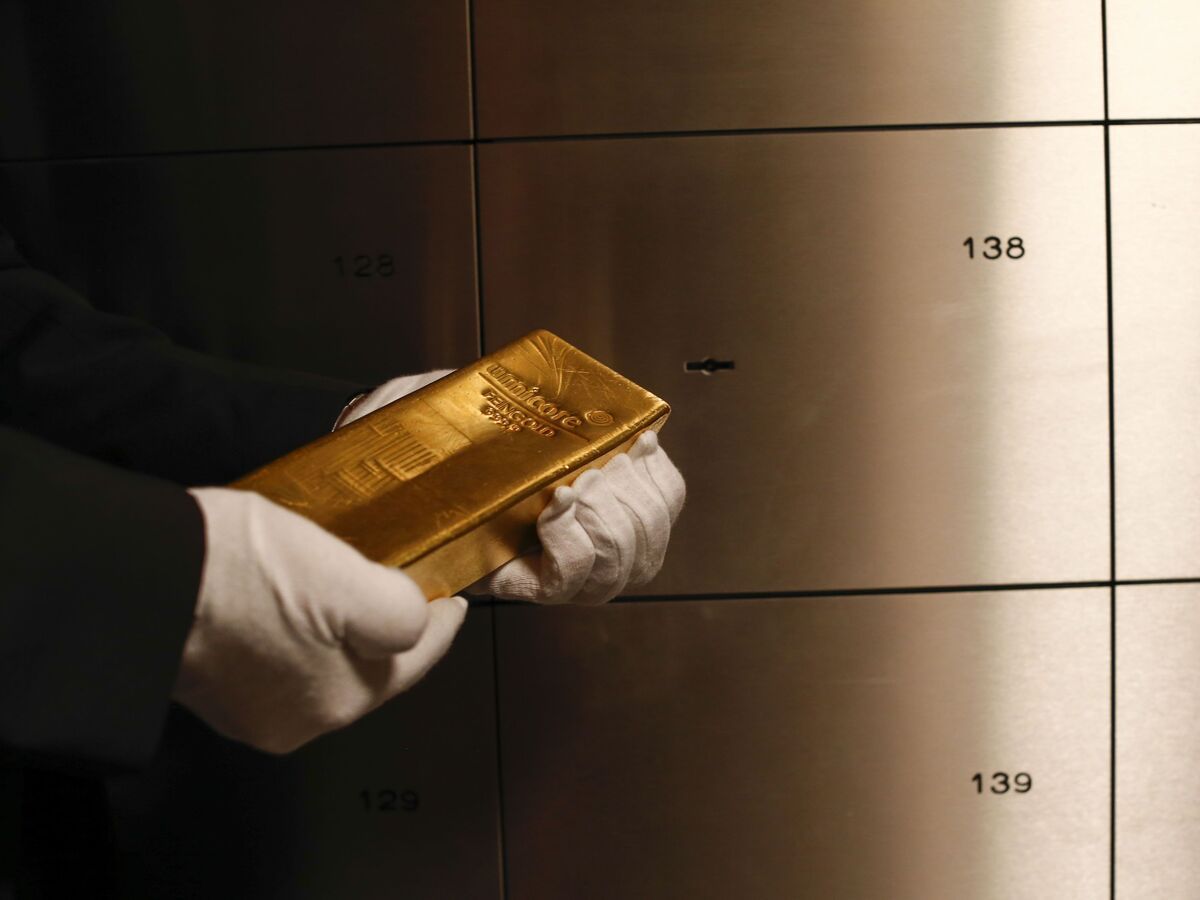
Are precious metal investments , such as gold or silver , stored in a vault outside of Canada considered foreign property, such that their mere existence must be reported annually to the tax man ? A new technical interpretation released by the Canada Revenue Agency this week suggests that investors who have a beneficial interest in physical gold or other metals may have an obligation to file Form T1135 , Foreign Income Verification Statement if the cost of their metals was more than $100,000 at any time in the prior year.
You’ll recall that we are required to report ownership of foreign property on Page 2 of the personal income tax return, which asks: Did you own or hold specified foreign property where the total cost amount of all such property, at any time in 2025, was more than $100,000? Yes or No. If the answer is yes, the return asks you to complete Form T1135.
If you fail to file the form, the late-filing penalty is $25 per day to a maximum of $2,500, plus arrears interest. If you fail to file the T1135 “knowingly or under circumstances amounting to gross negligence,” the penalty jumps to $500 per month for each month that the return is late, to a maximum of $12,000. After 24 months, the penalty becomes five per cent of the cost of the foreign property, less any penalties already assessed.
Foreign property includes a foreign bank account, as well as shares of widely-held foreign. corporations if held in a non-registered account. Personal use property, such as an Arizona vacation home, is excluded, as are any assets held in registered accounts such as registered retirement savings plans ( RRSPs ), registered retirement income funds ( RRIFs ) and tax-free savings accounts ( TFSAs ).
The taxpayer who wrote in to the CRA asking about the T1135 is a customer of a Canadian corporation which allows its clients to buy from or sell to the corporation various precious metals consisting of physical gold, silver, platinum or palladium by using the corporation’s online platform.
Each client is provided with a “holding,” which is the electronic record provided online to the client by the corporation evidencing the quantity of precious metals held by or on behalf of the client and stored in a vault outside Canada.
There are two possible ways for the taxpayer to own and hold the precious metals: as registered bars or as non-registered metals. The holding is evidence of the taxpayer’s ownership of the registered bars or in the case of non-registered metals, the taxpayer’s proportionate undivided interest in the weight of the metal. If the investor chose to invest in registered bars, the taxpayer can arrange at any time for the physical delivery or collection of the bars upon demand.
In the CRA’s recent technical interpretation, the agency distinguished between legal and beneficial ownership. Although beneficial ownership is not defined in the Income Tax Act, prior jurisprudence has recognized that its main characteristics include possession, use, risk and control. While determining beneficial ownership is a question of fact, the rights to possess, manage, control, derive income, use, dispose of, and susceptibility to the risk of loss are all relevant factors to consider.
The CRA noted that the holding assigned to the taxpayer is evidence of the title for each precious metal owned and stored in the corporation’s allocated vault location on behalf of the taxpayer. The precious metals recorded in the holding are reconciled on a daily basis by the corporation with the weight of precious metals stored at each vault. In addition, on a quarterly basis, the corporation’s external auditor performs a full audit to verify that the metals exist and the quantities are accurate.
As a result, there is a “direct, traceable and verifiable link” between the title as well as the ownership of the quantity of metals recorded in the taxpayer’s holding and the physical metals held in allocated storage in the vault on behalf of the taxpayer. The precious metals are held under a “bailment relationship” in a vault until sold or delivered according to the taxpayer’s instructions.
In Canadian common law, a bailment exists when personal property is delivered by one party (the bailor) to another party (the bailee) for a particular purpose, with possession transferred but ownership retained, and an obligation that the property be returned or properly accounted for once that purpose is fulfilled.
In this case, the “bailee” (the vault provider who has possession of the metals) holds the property on behalf of the “bailor” (the taxpayer) on the understanding that the property will be returned to the taxpayer once the bailment relationship is terminated according to their instructions. As such, bailment involves a change in possession but does not transfer legal title, which is retained by the bailor, while the bailee holds the goods in custody.
The CRA noted that despite the fact the taxpayer does not have possession of the metals, under the bailment relationship the taxpayer (as opposed to the corporation) has the rights to use, manage, control or dispose without interference. Furthermore, the taxpayer assumes the risks of loss such as those associated with valuation and price volatility.
The CRA therefore concluded that when the bars are registered, the taxpayer’s legal title attaches to identified bars situated in the foreign vault. When the holding reflects non-registered metal, the taxpayer holds a proportionate undivided interest in the weight of the metal situated abroad. In either case, therefore, the taxpayer bears the core attributes of beneficial ownership (i.e. control over sale/delivery, exposure to price risk and entitlement to proceeds).
- Three steps to make filing your tax return to the CRA less painful
- Warnings about AI and your taxes come from both the CRA and a judge
Given the physical nature of the registered bars and the fact that the taxpayer can arrange for the physical delivery or collection of the registered bars, the CRA said that the registered bars have a physical existence and therefore, can be considered tangible property situated outside Canada.
Similarly, if a taxpayer held a proportionate undivided interest in the weight of non-registered metal that is situated in a vault outside Canada, this is also tangible property situated outside Canada, and consequently can be considered an interest in foreign property.
As a result, the CRA concluded that a taxpayer who at any time in a tax year owns foreign property, including the precious metals described above, whose cost amount exceeds $100,000, would have a requirement to file Form T1135.
Jamie Golombek, FCPA, FCA, CFP, CLU, TEP, is the managing director, Tax & Estate Planning with CIBC Private Wealth in Toronto. Jamie.Golombek@cibc.com .
If you liked this story, sign up for more in the FP Investor newsletter.
Popular Products
-
 Large Wall Calendar Planner
$55.76$27.78 -
 Child Safety Cabinet Locks - Set of 6
$83.56$41.78 -
 USB Touchscreen Heated Fingerless Gloves
$75.56$37.78 -
 Golf Swing Trainer Practice Stick wit...
$21.56$10.78 -
 Golf Swing Training Belt
$41.56$20.78