Don't Treat Your Personal Finances Like The Government Is Treating Your Tax Dollars
Picture a couple whose paycheques don’t cover their spending, so they top up the difference on a home equity line of credit. One of them has an idea: split the budget in two. The mortgage payments, new roof and even groceries go into an investment column — after all, well-fed kids turn into productive adults. Move enough items and the everyday budget balances.
Problem solved, except the line of credit keeps growing and the bank still wants its interest.
A financially literate household would never do that, but the federal government has been asking Canadians to accept the same logic for 18 months and the Parliamentary Budget Officer (PBO) has, once again, shown just how easy the trick is to pull off.
Since the 2025 budget, the federal government has split its books into an operating budget and a capital budget and made balancing the operating budget by 2028-29 one of its key fiscal anchors. It’s an old accounting trick .
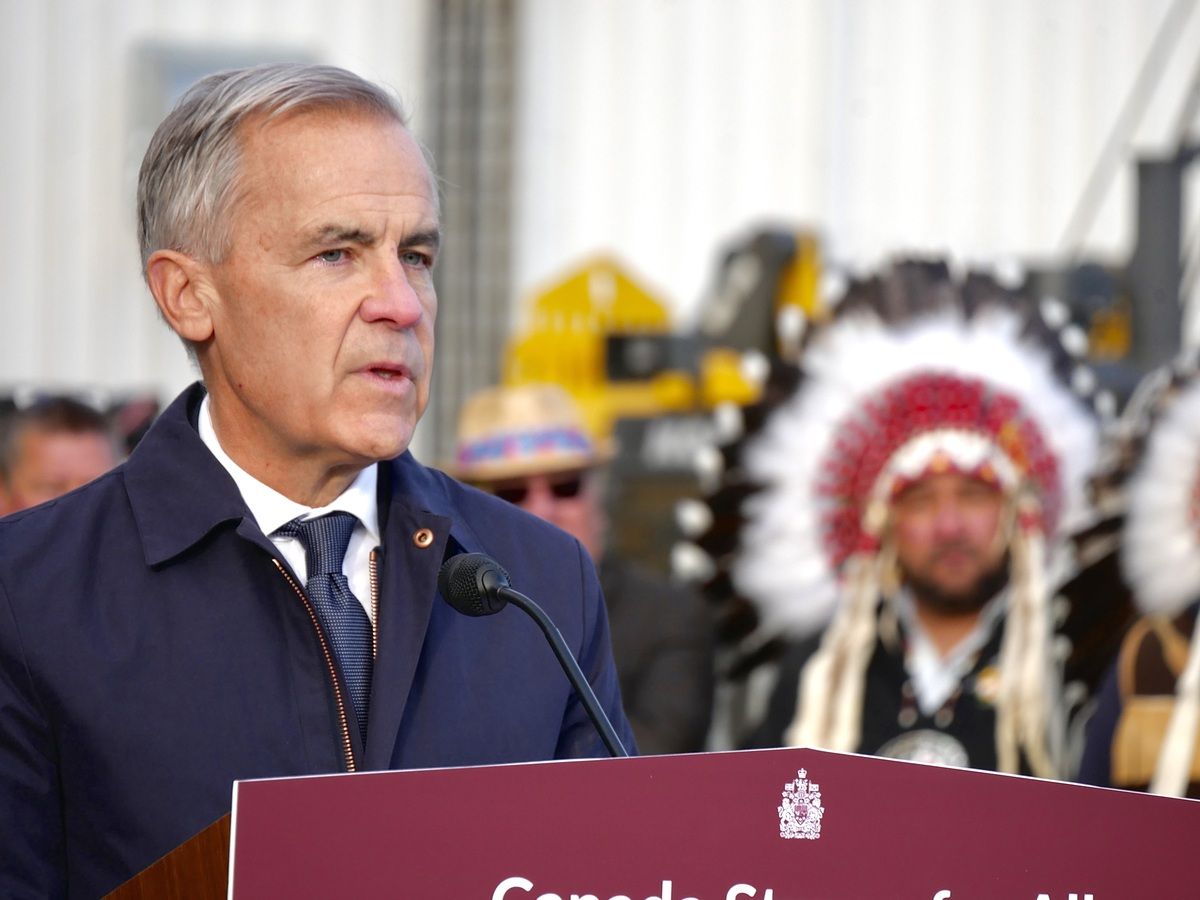
Prime Minister Mark Carney on Sept. 15 told the Canada Investment Summit the government is “on track to balance the operating budget next year, one year ahead of schedule.”
Nine days later, a PBO report said the operating budget won’t balance until 2029-30, missing the target by about $500 million in 2028-29, a rounding error on more than $500 billion of annual operating spending. The government could close that gap by cutting $500 million of day-to-day spending or simply relabelling it as capital.
“Classifying even a modest amount of spending as capital rather than operating, without any actual change in fiscal policy, may have been relevant to balance the initial operating budget fiscal track,” the PBO said.
When you control the definition, you control the date. As I’ve often said, why wait three years to achieve the fiscal anchor? Just move enough day-to-day expenditures to the capital budget to have the operating budget balanced and, voila, fiscal anchor achieved.
The ridiculously broad definition of capital makes this possible. The Department of Finance defines capital investment as “any government expense or tax expenditure that contributes to public or private sector capital formation.”
Under that definition, the Agricultural Clean Technology program is capital, while Agricultural Climate Solutions is operating, even though both support farm-level investment.
The PBO last November calculated that the federal government’s capital investment was overstated by about $94 billion compared with international practice. That’s the groceries being filed as an investment. Film tax credits, investment tax credits, corporate tax expenditures and production subsidies all count as capital, even though the PBO said none would be treated that way under international standards or in the United Kingdom, the government’s favourite comparator.
The U.K. at least pairs its operating/capital split with a debt rule: net financial debt must be falling as a share of the economy by 2029-30. Canada has no such limit.
The 2025 budget retired the debt-to-gross-domestic-product anchor and, as the PBO said, “there is not a similar constraint on total debt accumulation.” A spokesperson for Finance Minister François-Philippe Champagne nonetheless called the focus on operating spending a “stricter guardrail” than debt ratios.
Hardly. A guardrail a driver can move isn’t a guardrail.
Defenders of this policy will point out that businesses split operating and capital budgets all the time. True, but a business capitalizes assets that generate the revenue to repay what it borrowed; governments don’t. Whether borrowed money pays for a bridge or a bureaucrat’s salary, taxpayers ultimately repay it. Debt is debt is debt.
Why should this bookkeeping debate matter to your personal finances? Because relabelling doesn’t change a single dollar that has to be borrowed and debt comes with interest costs.
Public debt charges will be $58.7 billion this fiscal year, according to the spring economic update, which is more than the $53.4 billion the government expects to collect from the GST. Every dollar of GST Canadians pay, and then some, goes to interest before funding a single nurse, soldier or road.
Spread across roughly 41.8 million Canadians, that’s about $1,400 per person, or about $5,600 for a family of four. And it’s growing: debt charges are projected to hit $80.9 billion by 2030-31, a 38 per cent jump.
Interest is the least productive spending a government does, and it gets paid in one of three ways: higher taxes, fewer services or more borrowing that pushes the bill onto our children and grandchildren. It’s usually some combination of all three.
Is the increased debt going to investment? Nope. Since the 2025 budget, better-than-expected forecasts handed the government an extra $18.5 billion over five years. But it announced $173.3 billion in new measures, $126.8 billion of it day-to-day spending. The PBO calls that “the government’s own policy choices.” So much for spending less to invest more.
There’s another less obvious cost, too. Most of us learned the basics at our own kitchen tables: spend less than you earn and don’t pretend a debt isn’t a debt. Governments should model those habits, not teach Canadians that a deficit disappears if you rename it.
Balanced should mean balanced. Blurring that word makes the public worse at judging fiscal health. That is the opposite of financial literacy.
Ask the following when the fall budget lands: how much of any improvement in the operating budget comes from actual spending restraint and how much comes from programs migrating to the capital column? If the government can’t show that reconciliation, you have your answer.
Bondholders and credit rating agencies will be watching the total deficit and the debt. You should, too.
- Tax policy pauses show governments aren't getting things right in the first place
- Don't be fooled by the government's marketing of its 'mega' productivity deduction
Back at the kitchen table, the couple can call the groceries an investment if they like. The bank won’t care. It will send them the interest bill all the same, and if they don’t pay it, their kids eventually will.
Kim Moody, FCPA, FCA, TEP, is the founder of Moodys Tax/Moodys Private Client, co-host of Canadian Tax Matters, a former chair of the Canadian Tax Foundation and has held many other leadership positions in the Canadian tax community. He can be reached at kgcm@kimgcmoody.com and his LinkedIn profile is https://www.linkedin.com/in/kimgcmoody.
_____________________________________________________________
If you like this story, sign up for the FP Investor Newsletter.
_____________________________________________________________
Popular Products
-
 Classic Oversized Teddy Bear
$23.78 -
 Gem's Ballet Natural Garnet Gemstone ...
$171.56$85.78 -
 Butt Lifting Body Shaper Shorts
$95.56$47.78 -
 Slimming Waist Trainer & Thigh Trimmer
$67.56$33.78 -
 Realistic Fake Poop Prank Toys
$99.56$49.78