Garry Marr: Should You Buy A House In The Middle Of A Trade War?
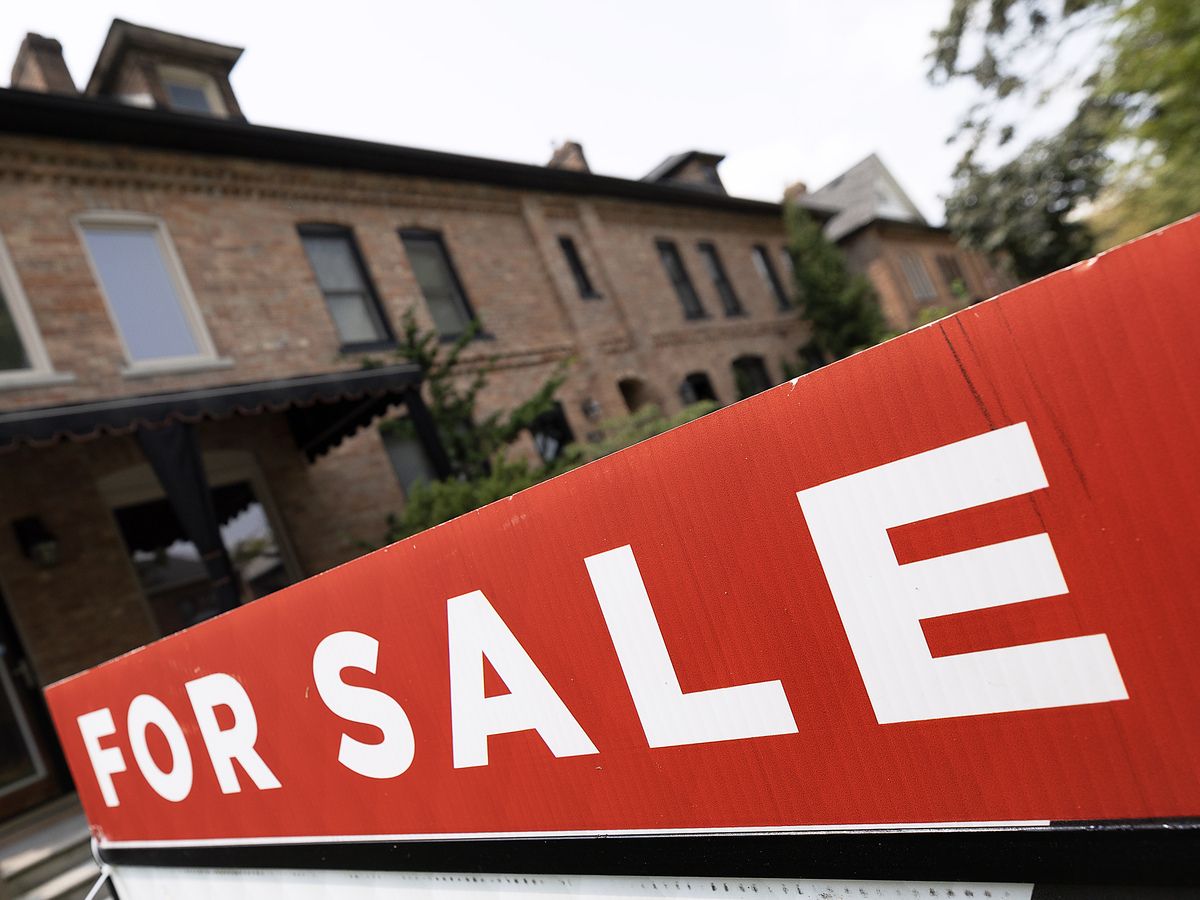
In the market for a home? You may ask yourself whether buying one in the middle of a trade war is a good idea.
The answer isn’t easy in a big and diverse country, with many different regional housing markets , and it only gets more complicated when you consider your own financial situation and how it might be affected by the escalating trade war between Canada and the United States.
One of the main issues for most people when buying a house is job security. People don’t buy homes unless they feel secure in their jobs. They can adjust expectations up and down depending on home prices and financing costs, but purchasing slows during a recession for good reason: You can’t pay the mortgage for very long without a job.
Another searing question for any prospective buyer is whether we have hit the bottom in home prices, something that is almost impossible to see until the market starts rising.
And another key issue that may be affected by an economy in the middle of a trade war is where interest rates may go for mortgage holders.
In terms of home prices, in Canada’s largest market, Shalabh Garg, an investment analyst covering financial services and REITs for Veritas Investment Research Corp., believes the Greater Toronto Area may be nearing bottom.
While he doesn’t see a massive rebound in housing prices in the Toronto market, Garg said prices just don’t have much room to drop anymore.
“When I think of the average GTA home, this is pretty much the bottom; it is not going to go down another 10 or 20 per cent,” he said. However, he added that major job losses might change his opinion.
Dropping prices may give homeowners a reason not to sell. As does their other sources of wealth.
“The trade war is getting more intense, but when you think about who owns the houses, it’s the majority of people who have most of their wealth outside real estate,” said Garg. These are the people who could likely better afford a downturn in the paper wealth of their home, he said.
He added that while homeowners’ housing wealth may have gone down, their financial assets, such as stocks, continue to climb. Indeed, the S&P/TSX 300 Composite index is up about 25 per cent over the past year.
Ultimately, many Canadian homeowners are looking at their retirement holdings and aren’t really worried about their house losing value, especially if they aren’t selling anytime soon, he said. “It doesn’t necessarily really force people to sell,” said Garg.
Of course it’s another story for people without many financial assets who have seen their wages lag inflation and their purchasing power declining. “That’s where the stress is today,” said Garg.
The average selling price of a home in the GTA was $993,410 in August, down 2.7 percent from a year ago, according to the latest stats from the Toronto Regional Real Estate Board. And TRREB president Daniel Steinfeld warned that, “if inventory tightens and home prices begin to rise, some buyers may face a trade-off between waiting for greater economic certainty and purchasing before prices move higher.”
Active inventory was down about 11 per cent from a year earlier, as new listings dropped more than 14 per cent during the period, according to TRREB. Those long-term owners with rising stock market portfolios have no reason to list a home.
Still, while the market may be tightening, there is no question that trade wars “might rekindle” fears about what is one of the biggest financial decisions for new buyers, said Robert Hogue, assistant chief economist at Bank of Montreal. “Those people might stay on the sidelines,” he said.
“But there are probably a lot more who don’t feel like they are impacted,” said Hogue, adding that some people have been holding off a few years to buy.
However, job security fears drive homebuying decision-making, Hogue said, pointing to the early 1990s, when a weak job market affected housing demand in places such as Ontario.
Today, however, “The unemployment picture is not rosy, but it’s not a horrible picture,” said Hogue. “With the trade war, there was the initial shock last year but now people see there is a lot of noise.”
Hogue expects people to look at the business they work for before deciding. Someone in the auto sector, for instance, may have a different viewpoint than elsewhere in the economy.
“But people have been delaying making a purchase for years now, and that pent-up demand is accumulating,” he said.
The other pressing issue for Canadians is interest rates, and Hogue doesn’t see variable rates, which are tied to prime, dropping even more, nor rising much.
Neil Drepaul, a broker and director at Canadian Mortgage Services, believes homeowners, many now facing renewals after pandemic-era rates fell below two per cent on five-year mortgages, will be making many decisions, from refinancing to taking out equity from their house based on job security.
If you still have your job and you are renewing, the good news is you will likely have no problems, although you will be facing a five-year fixed rate closer to four per cent, a rate that has jumped in the past few weeks.
“You are not going to have to be requalified on a renewal,” he said, adding he hasn’t seen financial institutions crack down on workers tied to some sectors.
During the COVID-19 pandemic, that wasn’t the case. Drepaul said underwriters looked at certain industries and held off loans.
“We are not seeing that yet, but in the months ahead they might look at the auto sector, the steel sector and say this is a risky client,” he said.
Credit hasn’t tightened yet, leaving consumers with high-ratio mortgages with less than a 20 per cent down payment able to get a floating rate as low as 3.5 per cent, a considerable 50-basis-point gap over locking in and one more thing for the new homebuyer to consider.
Phil Soper, chief executive of Royal LePage, one of the largest brokerages in the country, said the company’s own surveys show the number one reason people are not jumping into the market is uncertainty.
“It had nothing to do with interest rates or the price of homes but the behaviour of Americans and specifically the president,” he said. “It has been a material and very big drag on the market. The fundamentals are there for a stronger (housing market).”
Soper doesn’t dismiss concerns for people who work in the auto sector, which indirectly impact almost 500,000 people, but he points to places such as Alberta, where housing sales are still slow.
- Garry Marr: Here's why using your TFSA to fund a child's education could make sense
- Garry Marr: Shared home ownership was a feel-good trend. Now some are paying a big price
“There is just no reason for things to be slow there,” he said. “Economically it’s a boom, but emotionally it is hard to hear someone say someone is going to inflict damage on your country, and you wonder if it’s time to take on the burden of a mortgage.”
The reality is if you are ready to buy a house and you need to because of circumstances such as an expanding family, it probably makes sense to avoid thinking about the trade war in your decision.
On the other hand, if your job or income source could be imperilled because of trade issues, that may trump any purchasing decision.
• Email: gmarr@postmedia.com
Popular Products
-
 Smart GPS Waterproof Mini Pet Tracker
$59.56$29.78 -
 Unisex Adjustable Back Posture Corrector
$71.56$35.78 -
 Smart Bluetooth Aroma Diffuser
$585.56$292.87 -
 Enamel Heart Pendant Necklace
$49.56$24.78 -
 Digital Electronic Smart Door Lock wi...
$211.78$105.89