Garry Marr: Your New Government Neighbour And How It Might Affect The Value Of Your Condo
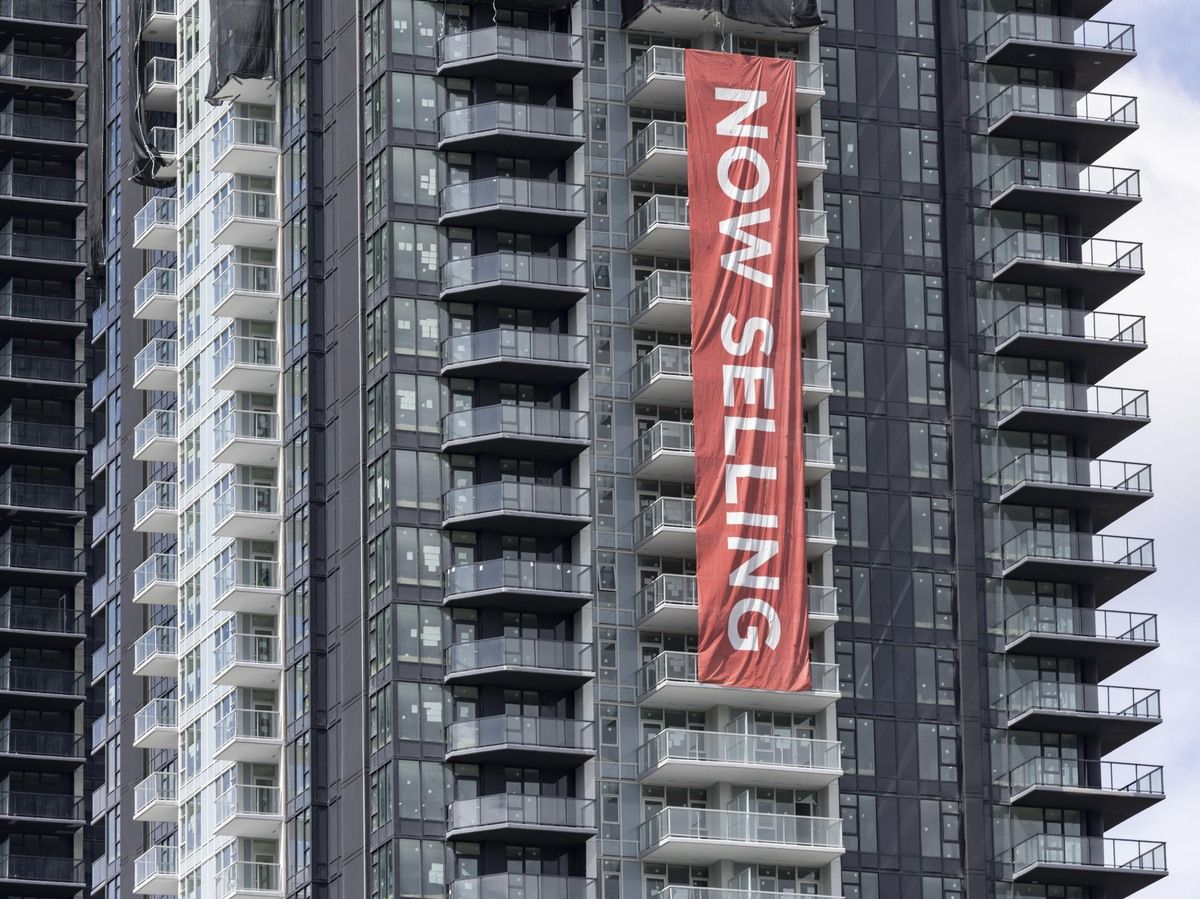
You bought your high-rise condominium at the top of the real estate market , and now government-led forces are looking to fill the empty units around you with affordable housing for lower-income tenants.
It sounds like your condo nightmare got even worse, but what if it helped?
The word bailout is being thrown around after Ottawa and British Columbia in June announced a $1.45-billion initiative to buy 2,200 unsold condos as part of a subsidized rent-to-own program designed to create affordable housing in the province.
Ontario had beaten them to the punch by announcing a plan in March that called for a Crown corporation to provide about $300 million in financing to privately held High Art Capital Inc. to launch a fund to buy $1.3 billion in blocks of newly completed, unsold condominium units across the Greater Toronto Area and convert them into long-term rental housing.
The goal for the Ontario fund is to buy about 2,200 units and convert them to rentals, of which 550 would be affordable , meaning they’ll have rents that are 25 per cent below local market rent or 30 per cent of median gross household income across the Greater Toronto Area.
Not talked about much in either announcement is the impact on people who have already bought units in some of these buildings and might have paid 30 per cent more than the government might pay today.
It is reasonable to assume Toronto-based High Art Capital and the initiative in British Columbia will both receive an additional discount for buying in bulk, but prices have already collapsed and builders were selling units at steep discounts relative to what was paid at the peak.
The policy argument for buying these units is that they are cheaper than building low-income housing. Some taxpayers might applaud that, but the people who already own units in these buildings might feel differently, with a critical question being whether the government is establishing a new, even lower price point by buying units at a bulk discount.
Ryan Roebuck, a managing partner at High Art Capital, said his group is now closing deals, but he can’t disclose details on how many, where or the prices, though the affordable units are not concentrated in any one location.
Ultimately, he sees his group’s purchase of units as beneficial to existing buyers because it clears some of the overhang in the Toronto market.
Condo research firm Urbanation Inc. has said standing inventory continues to rise. A record-high 4,295 new condos were completed and unsold in the Greater Toronto and Hamilton Area in the first quarter, more than double that of a year ago and nearly five times higher than two years ago.
“Unsold inventory is putting pressure on pricing, so we should see pricing improve after we are acquiring units in a building because we are clearing out inventory,” Roebuck said.
It’s not unusual to see half of a condo building’s units rented out by investors, and that continues to put downward pressure on rates. Toronto asking rents were $2,543 in June, down 1.9 per cent from a year ago, but they climbed 1.2 per cent from May, according to Rentals.ca.
“It almost becomes a race to see who can put in a tenant as fast as possible, and it puts pressure on pricing,” Roebuck said. “We lease up in a much more organized fashion.”
A bunch of subsidized units sprinkled throughout your building may be a sensitive topic, but will it really make it a different kind of building?
“The affordable units are good working people and they end up in this sort of missing middle,” he said. “We are talking about people like hospital workers, police officers or what I would call essential workers. They just don’t have that negative connotation.”
The other question is what High Art Capital is paying since it obviously has to get the best deal for its investors, so it’s probably not far from what developers would sell those units for anyway.
“It’s letting the market find its true equilibrium in terms of pricing,” Roebuck said.
Robert Hogue, assistant chief economist at Royal Bank of Canada, said pricing details will go a long way toward showing how the deal affects the market and that in the case of British Columbia, those have not yet emerged.
“They would be bulk purchases,” he said, adding it implies there would be some kind of discount. “We can’t have a definite opinion until we see what is worked out and what type of tenants will be there. It’s still premature. But from the developer perspective, it takes some inventory off their hands and gives them capital back so they can develop some new things.”
Not everyone is enthralled by the idea of government involvement in the market. Joshua Hunt, founder and chief executive of B.C.-based IGV Housing Ltd., which builds and finances housing , still supports letting the market run its course while creating better financing programs to let people enter the market.
“If I buy something and now it’s full of affordable housing, it has just basically stolen my equity and devalued my asset,” he said, adding that without full details of the plan it’s hard to predict the impact. “The government here sees an opportunity and solution to a problem. The challenge is that, if executed poorly, it will create a bigger problem. Is it a developer bailout? They can say it’s a liquidation sale, but the problem is someone is being liquidated.”
Hunt said a lot of the unsold condo housing in Vancouver is just product people don’t want, “and prices can just correct” based on demand for that product.
“Why do you want to buy a whole bunch of housing stock that wasn’t even built for the way people want to live,” he said about the smaller unsold units that dominate the market. “You can’t just buy that stock and say this is the solution for how people want to live. Not many families want to live in a (450-square-foot unit).”
Buying those units and forcing lower-income people into them will just destroy the equity of people who paid at the top of the market, he said.
- Garry Marr: It's time to get rid of the foreign buyers ban on housing, but don't expect it to save the market
- Garry Marr: Why tracking the return to the office is no longer a thing in Toronto
It’s all a bitter pill to swallow if you paid $1,200 to $1,600 per foot for your downtown Toronto condo, and these prices are now 30 per cent below that level, but the reality is that’s where the market is today.
Nathan Adorjan, a broker of record at Re/Max Condo Plus, said you were already facing a new reality if you were trying to sell your condo.
“It will have a negative effect, but those are the times we’re in,” he said about the falling prices. “The buyers are out there, but they want a certain price. They also want some insulation that they can see their way to the end and have some uptick.”
As for affordable housing filling empty condos, Adorjan said “if good people have a chance to grow,” it can help a building. An empty condo building is not necessarily a selling feature.
You might think the government shouldn’t be in the business of buying housing, but it won’t be the reason why speculative investment prices have collapsed so much.
• Email: gmarr@postmedia.com
Popular Products
-
 Put Me Down Funny Toilet Seat Sticker
$33.56$16.78 -
 Stainless Steel Tongue Scrapers
$33.56$16.78 -
 Stylish Blue Light Blocking Glasses
$85.56$42.78 -
 Adjustable Ankle Tension Rope
$53.56$26.78 -
 Electronic Bidet Toilet Seat
$981.56$490.78