Just Like A Dad Tax, Government Taxation Can Inspire Behaviour Changes — Both Good And Bad
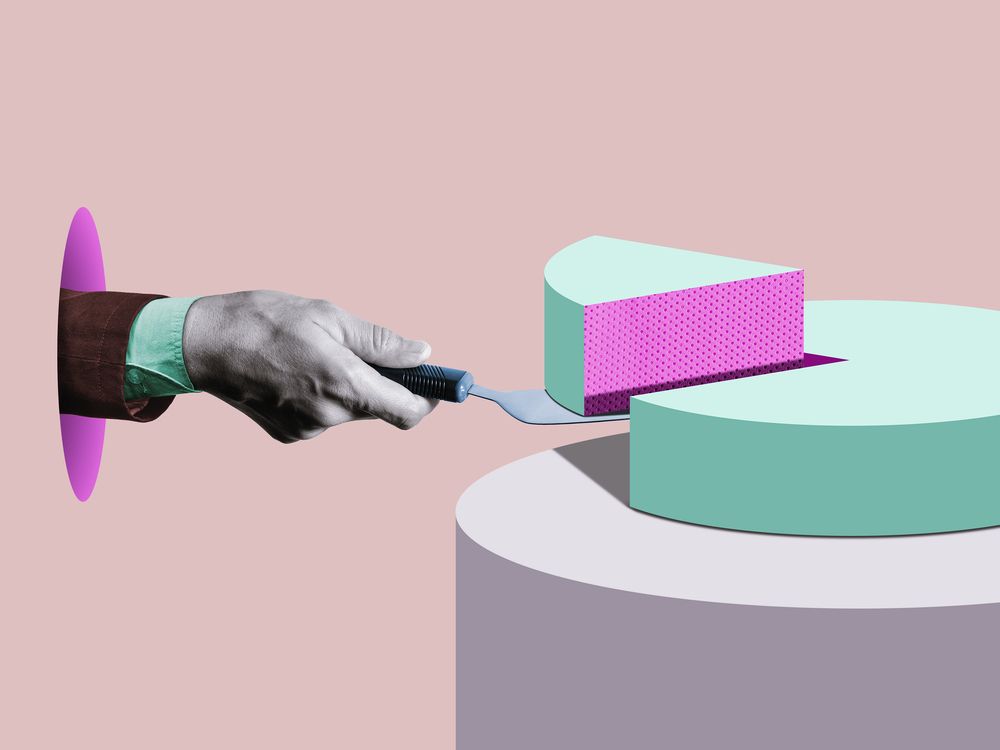
I used to impose what my kids jokingly called the “Dad tax” when they were younger. If we went out for dinner and they ordered something that looked particularly appealing, I would demand a small sample as my tax for paying the bill. Over time, they figured out how to avoid the tax by ordering things they knew I wouldn’t want. In other words, their behaviour changed.
Economists would recognize this instantly: behaviour changes when you tax something. In some cases, there are unintended consequences. That simple lesson — learned at the dinner table — has shaped tax policy outcomes and caused behaviour changes for centuries.
In Canada, high personal tax rates act as a repellent to success. California’s ballot initiative to tax billionaires is pushing such people out of the state. Washington State’s amendments to its capital gains tax for high-income earners have done the same. The Netherlands’ proposed tax on certain unrealized gains has the hallmarks of capital flight.
One of the most famous historical examples of a tax-influencing behaviour was the British window tax . Introduced in 1696 , the United Kingdom decided to tax homes based on the number of windows they contained. The logic: wealthier households tended to have larger homes with more windows, so it was a convenient proxy for taxing wealth.
But homeowners quickly adapted. Rather than pay the higher tax, many simply bricked up their windows. Entire streets of otherwise elegant Georgian homes became darker and poorly ventilated. The tax remained in place for more than 150 years before it was finally repealed in 1851, largely because of the public-health problems it helped create. The bricked-up windows remain today as a visible reminder of what happens when governments design taxes without considering incentives.
We are seeing similar dynamics play out today. For example, British Columbia recently introduced a series of tax increases as it struggles to finance rapidly growing government spending. The province’s fiscal outlook shows persistent deficits stretching years into the future, largely driven by program spending growth that has significantly outpaced economic growth.
B.C. has also recently begun losing residents to other provinces. More Canadians moved out of B.C. during 2023 and 2024 to other parts of the country — particularly Alberta — than moved in. That reversal of long-standing migration patterns is notable and reflects the growing pressures of high taxes, rising housing costs and overall affordability challenges.
Governments eventually face a basic arithmetic problem when they allow spending to grow faster than the economy that supports it. They only have three options: reduce spending, borrow more money or raise taxes. Politically, the third option is often the easiest, although it is a tough sell in an environment where affordability is already strained.
The federal fiscal picture points in the same direction. The latest federal budget revealed a deficit of $78 billion for this current year — fuelled by out-of-control spending — while projecting large ongoing deficits for years to come. Prime Minister Mark Carney frequently misleads and frames the spending as “investments,” but the fiscal mechanics remain unavoidable. Spending must eventually be paid for.
Interest payments on the federal debt are projected to reach roughly $55 billion this year and continue sharply rising in the years ahead. That outlay of money produces no public services and no benefits for Canadians.
If Carney gets his much-desired majority government, the pressure to raise taxes or create new ones will intensify. That is precisely why Canada urgently needs serious tax reform rather than a steady stream of new taxes layered onto an already complex system.
Last week, economist Jack Mintz and his colleagues released a report through the C.D. Howe Institute proposing “Big Bang” tax reform, a comprehensive restructuring of Canada’s tax system designed to improve economic growth, investment and productivity.
Among the key proposals are: major reductions in personal income tax rates ; the introduction of an optional simplified personal credit of $10,000 to reduce complexity; a five per cent reduction in corporate tax rates along with the elimination of many preferences, such as the small business deduction; and an option to introduce a corporate distribution-based tax model, like Estonia does , where corporate profits would be primarily taxed when they are distributed to shareholders rather than when they are earned by the corporation, which would encourage companies to reinvest earnings and expand productive capacity.
To help pay for the tax reductions and reform, Mintz and his co-authors propose to increase the GST by 2.8 percentage points or to introduce a new three per cent employer-paid payroll tax.
Significant tax reform should lead to behaviour changes. The authors say that in “the long run, the reforms could increase non-residential capital by roughly $140 billion and raise (gross domestic product) by approximately $79 billion (about 2.5 per cent), generating more than $26 billion annually in additional tax revenues while preserving Canada’s strong redistributive outcomes.”
This is exactly the type of behaviour shift Canada needs.
Canada’s current system does the opposite with high tax rates, endless targeted credits and politically motivated tax provisions that discourage investment, reduce productivity and drive capital elsewhere.
Without reform, governments facing rising deficits will continue searching for new sources of revenue. History suggests those searches rarely produce elegant solutions. Three centuries ago, British policymakers thought taxing windows was a clever way to raise money from wealthy homeowners. Instead, it encouraged people to brick up their windows.
My kids eventually figured out how to avoid the Dad tax by ordering food they knew I wouldn’t want. Tax policy works the same way. If governments continue to allow spending to grow out of control without meaningful tax reform, Canadians should expect increasingly creative tax proposals in the future.
Just like the window tax or the Dad tax, people will find ways to respond.
Kim Moody, FCPA, FCA, TEP, is the founder of Moodys Tax/Moodys Private Client, a former chair of the Canadian Tax Foundation, former chair of the Society of Estate Practitioners (Canada) and has held many other leadership positions in the Canadian tax community. He can be reached at kgcm@kimgcmoody.com and his LinkedIn profile is https://www.linkedin.com/in/kimgcmoody.
_____________________________________________________________
If you like this story, sign up for the FP Investor Newsletter.
_____________________________________________________________
Popular Products
-
 Enamel Heart Pendant Necklace
$49.56$24.78 -
 Digital Electronic Smart Door Lock wi...
$211.78$105.89 -
 Automotive CRP123X OBD2 Scanner Tool
$649.56$324.78 -
 Portable USB Rechargeable Hand Warmer...
$61.56$30.78 -
 Portable Car Jump Starter Booster - 2...
$425.56$212.78