Medicare Now Takes $202.90 A Month Straight From Your Social Security Check. These 3 Etfs Pay It Back
The post Medicare Now Takes $202.90 a Month Straight From Your Social Security Check. These 3 ETFs Pay It Back appeared first on 24/7 Wall St..
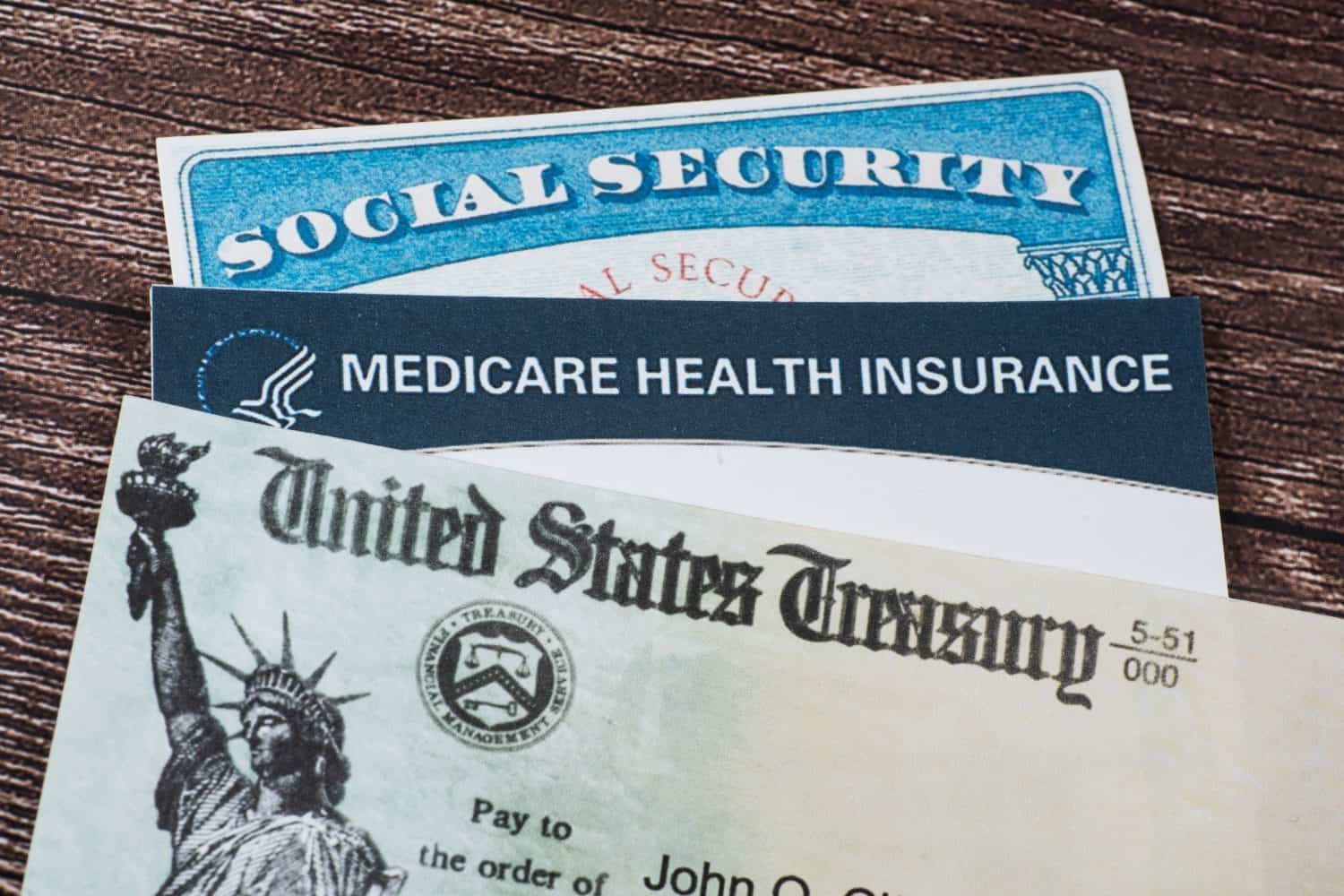
Your Social Security check does not really land at the number on your award letter. Medicare Part B takes $202.90 off the top. This occurs before the money ever hits your bank account, and for 2026 that premium jumped $17.90 from the $185.00 you paid in 2025. The 2.8% cost-of-living adjustment helped, but not enough. If you want that money back, you need assets that provide you a check every month or every quarter. Three exchange-traded funds do exactly that: the Invesco S&P 500 High Dividend Low Volatility ETF (NYSEARCA:SPHD), the Global X S&P 500 Covered Call ETF (NYSEARCA:XYLD), and the iShares Core High Dividend ETF (NYSEARCA:HDV).
The problem is simple and unforgiving. You owe Medicare $202.90 every single month, and that bill will almost certainly rise again next year. Meanwhile, your groceries, utilities, and prescription copays are all creeping higher, with CPI climbing from 323.291 in August 2025 to 332.568 by June 2026. A COLA that ticks up just once a year cannot keep pace with a bill that arrives twelve times. You need income that shows up on a schedule and grows over time.
SPHD: A Monthly Paycheck Built for Boring
SPHD holds the 50 stocks in the S&P 500 with the highest dividend yields and the lowest realized volatility. In simple terms: utilities, consumer staples, real estate, and regulated businesses that pay you to wait.
The fund pays a distribution every month, and lately those distributions have grown. The July 2026 payment of $0.21473 per share is roughly 40% to 50% higher than what shareholders collected in the same months of 2025. On a trailing 12-month total of $2.38571 and a share price of $52.35, the current yield sits in the mid-4% range, and shareholders have picked up a 12.28% year-to-date price gain on top of that.
The appeal for a retiree is the cadence. SPHD deposits cash every four weeks, which lines up almost perfectly with the Medicare debit. About 944 shares at the current distribution rate would fully cover the $202.90 premium each month.
XYLD: Turning Market Volatility Into Rent
XYLD owns the S&P 500 and sells one-month call options against it. You give up most of the upside in a raging bull market, and in exchange you collect the option premium as income. It is the richest paycheck of the three, with a trailing 12-month total of $4.334 and a forward estimate of $4.9056 per share against a price of $41.17. That works out to a distribution yield north of 10%, paid monthly.
The 0.60% expense ratio is higher than a plain index fund, but it is the price of admission for the covered-call mechanics. Put another way, on every $1,000 invested, Global X keeps about $6 a year, and you keep the rest working. Because XYLD trades income for growth, its 8.06% year-to-date price gain lagged both SPHD and HDV. However, that is by design, not a defect.
HDV: Quality Blue Chips With a Quarterly Kick
HDV takes a different approach. It screens the U.S. market for financially healthy companies with sustainable payouts, then loads up on names retirees already know. The top holdings read like a defensive playbook: Exxon Mobil at 8.42%, Chevron at 6.43%, Johnson & Johnson at 5.68%, AbbVie at 5.44%, and Procter & Gamble at 4.46%. With $13.57 billion in net assets, this is a heavyweight in the high-dividend category.
HDV pays quarterly, not monthly, which means you must plan around it rather than match it to Medicare. It distributed $3.910624 per share across 2025 and has already delivered $1.1154 year-to-date in 2026. The real story this year is the share price itself: up 20.04% since January 1, and up 151.79% over the past decade. That combination of appreciation and income is what long-term retirement money is supposed to do.
The Trade-Off
None of these funds is a free lunch. SPHD tilts heavily toward slow-growth sectors and will lag in a tech-led rally. XYLD’s covered-call strategy caps your upside during strong bull markets, which is why its five-year price gain of 46.18% trails HDV’s 76.76%. HDV pays quarterly, so the cash flow does not align with the monthly premium debit. And every one of them is subject to market risk, meaning they will drop when the market drops.
Used together, though, they solve the problem the headline poses. SPHD and XYLD hand you monthly cash to meet your needs. HDV supplies the quarterly ballast and the growth that keeps your purchasing power intact for the next decade. While Medicare will keep pulling $202.90 out of your check, these three funds are how you pull it back.
If You’ve Been Thinking About Retirement, Pay Attention (sponsor)
Retirement planning doesn’t have to feel overwhelming. The key is finding expert guidance, and SmartAsset’s simple quiz makes it easier than ever for you to connect with a vetted financial advisor. Here’s how:
-
Answer a Few Simple Questions.
-
Get Matched with Vetted Advisors
-
Choose Your Fit
Why wait? Start building the retirement you’ve always dreamed of. Get started today! (sponsor)
The post Medicare Now Takes $202.90 a Month Straight From Your Social Security Check. These 3 ETFs Pay It Back appeared first on 24/7 Wall St..
Popular Products
-
 Gas Detector Meter
$311.56$155.78 -
 Foldable Garbage Picker Grabber Tool
$93.56$46.78 -
 Portable Unisex Travel Urinal
$49.56$24.78 -
 Reusable Keychain Pepper Spray – 20ml
$21.56$10.78 -
 Camping Survival Tool Set
$41.56$20.78