Should Canada Cap Credit Card Interest Rates? One Expert Warns Of 'chain Reaction Of Unintended Consequences'
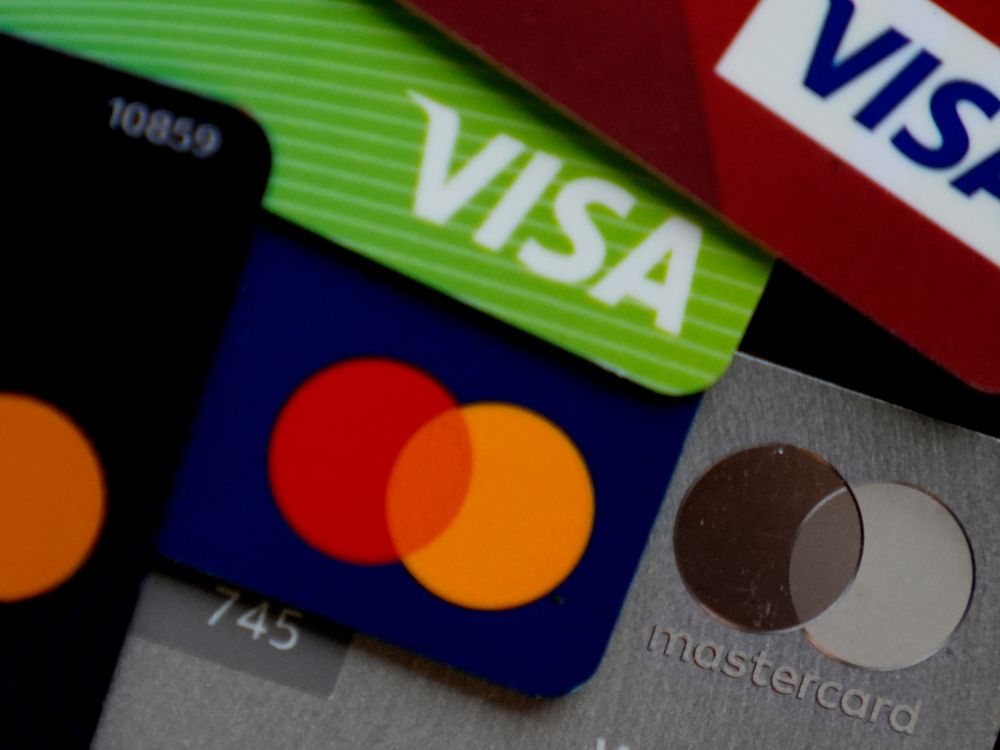
Canadian consumers might think that capping credit card interest rates would be a win for them, but some are warning that could spawn a slew of unintended consequences.
United States President Donald Trump set off alarm bells in the C-suites at some of the world’s biggest banks when he called out lenders to cap interest rates on credit cards at 10 per cent for one year by Jan. 20, a deadline that has come and gone without any changes.
JPMorgan Chase & Co. chief executive Jamie Dimon on Wednesday warned such a move would be an economic disaster, but said if Trump wants to test it, he should do so in Vermont and Massachusetts. Those two states are respectively led by Senators Bernie Sanders and Elizabeth Warren, who have both advocated for capping rates.
Meanwhile, Axios reported that Bank of America Corp. , the U.S.’s second-largest lender, was pondering offering a credit card with a 10 per cent cap.
Canadian banks, like most of their American counterparts, are not in favour of capping rates.
“Canada’s banks are responsive to the needs of their customers and actively propose financial solutions to meet them including a variety of low-interest credit cards to chose from,” the Canadian Bankers Association said in a statement.
But as Canadians continue to say they are struggling with their finances, could Prime Minister Mark Carney call for a similar cap and, if so, how would he go about it and what would it mean for consumers?
‘Chain reaction of unintended consequences’
Canadian banks set the interest rates for credit cards they offer, with rates ranging from 19.99 per cent to 22.99 per cent for standard cards, according to borrowing aggregator Rates.ca, and 4.99 per cent to 15.99 per cent for lower-interest-rate cards.
Ari Pandes, an associate professor of finance at the University of Calgary’s Haskayne School of Business, said interest rates are market driven and set at a level to account for the risks associated with different borrowers.
In the short term, he said lower interest rates might provide some relief to consumers, but that might not last.
“It’s a situation, like a lot of times with policies, that these policymakers don’t think about the chain reaction of unintended consequences,” he said.
For example, in the medium to longer term, Pandes said banks would likely cut back on lending if they weren’t allowed to charge the rates they deem appropriate.
“All of a sudden, as a credit card company, you are charging rates lower than is commensurate with the risk of the borrower. And so what are you going to do?” he said. “You’re just not going to let these people have credit cards or borrow from you because you can no longer charge a rate that is commensurate with their risk profile.”
The other possibility is that banks will cut back on people’s credit limits, lending them less than they currently do.
“If you’re capping interest rates, it might seem on the surface that you’re helping, but the longer-term unintended consequence is that you might severely restrict credit and borrowing capability for a lot of people,” he said. “That would be kind of my worry and concern there.”
‘Risk’ of increased user fees
Claire Celerier, an associate professor at the University of Toronto Rotman School of Management and Canada research chair in household finance, said the interest rates that banks charge are “competitive,” so c onsumers could be hit in areas other than restricted borrowing, including higher fees.
“My concern would be that if we decide to get this interest rate to a 10 per cent (cap), the risk is that banks are going to just increase user fees that people are much less aware of,” she said, specifically referring to the interchange fee — a charge banks pass on to merchants when consumers make a purchase.
The interchange fee, which she estimated is 1.5 per cent to two per cent in Canada, ends up getting passed onto customers. Late-payment fees could also rise to make up for the lost revenue from capped interest rates.
Celerier said the very people Trump said he wants to help could wind up losing access to credit cards and borrowing from other financial services with higher interest rates.
“In the short run, it might cut the supply of credit card debt to the low-income population,” she said.
Another risk for lower-income people is that the banks would get into the borrow-now, pay-later business, which also charges 20 per cent interest rates, she said.
‘Politically motivated’ changes to criminal interest rates
Canada has already grappled with some unintended consequences after it decided to change the Criminal Code on what constitutes a criminal interest rate, Paul Belanger, a partner in law firm Blake, Cassels & Graydon LLP’s financial services regulatory practice, said.
As of Jan. 1, 2025, the Criminal Code set the criminal interest rate at an annual percentage rate (APR) of 35 per cent, down from 48 per cent, with three exceptions covering business loans, pawnbroking loans and payday loans.
The change was “politically motivated rather than coming up through the public service,” Belanger said, adding that “there’s been a bunch of unintended consequences that arose from that. The legislation itself is very badly drafted and they didn’t try to do it in the way you would do it if you were a blank page.”
Belanger said Ottawa’s change wound up pushing people to payday lenders. Payday loan interest rates can run into the triple digits on an APR basis.
If the federal government wanted to regulate interest on credit cards, he said it could do it through the Bank Act, but it would only apply to federally regulated operations such as the Big Six banks that operate across the country. Otherwise, Ottawa would have no jurisdiction over provincial entities such as credit unions.
“You just don’t have the constitutional jurisdiction to do that other than through the criminal law,” Belanger said.
If, somehow, Trump’s idea on credit cards was to migrate north, he said it “would be as a result of political considerations overriding good economic policy.”
- Do you really want to bail out your kid from creditor problems?
- Credit delinquencies on the rise as Canadians' debt climbs to $2.5 trillion
• Email: gmvsuhanic@postmedia.com
Popular Products
-
 Adjustable Shower Chair Seat
$107.56$53.78 -
 Adjustable Laptop Desk
$91.56$45.78 -
 Sunset Lake Landscape Canvas Print
$225.56$112.78 -
 Adjustable Plug-in LED Night Light
$61.56$30.78 -
 Portable Alloy Stringing Clamp for Ra...
$119.56$59.78