Should Ottawa Couple Defer Cpp And Oas If They Retire Early Next Year?
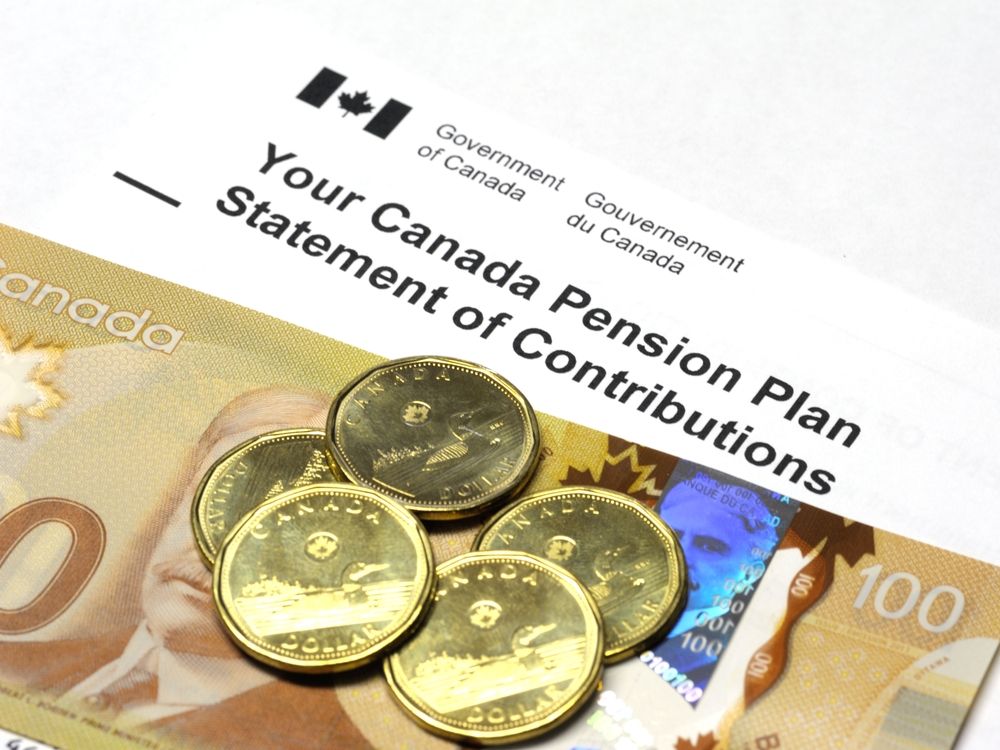
Could retirement really be just a year away? Arnold*, 56, and Heather, 60, are hoping the answer is yes.
The Ottawa-based couple have been running the numbers and scenario planning. They anticipate they will need to generate $118,730 after tax annually in retirement, which includes about $15,000 for travel. The empty nesters would also like to help their three young-adult children save for down payments on their first homes.
Arnold earns $125,000 a year before tax and Heather earns $100,000. They both have employer-based defined benefit pension plans that are indexed to inflation. If they retire next year, Arnold’s annual pension income will be about $48,000 (with a monthly bridge of $892 until age 65) and Heather’s will be about $40,000 (with a monthly bridge of $170 until 65) – not enough to meet their target retirement income. However, the couple wonders if their target income is an accurate reflection of the cash flow they will need to live comfortably for the next 30 years or more and if their budget calculations are accurate.
The couple’s investment portfolio includes $350,000 in self-directed registered retirement savings plans (RRSPs) invested in a range of exchange-traded funds (ETFs) across asset classes.
Their primary residence is valued at about $1 million with a $245,000 mortgage. They also own a self-sustaining rental property valued at $420,000 with a mortgage of $250,000. The couple will receive an inheritance of $150,000 in spring 2026, at which point they plan to list the rental property for sale. They want to use the inheritance and the proceeds from the sale to pay off the mortgage on their forever home. Additional funds from the sale of the rental property would be invested.
The couple is also concerned about how to best minimize tax. They plan to start withdrawing from their RRSPs before age 65 and defer Canada Pension Plan (CPP) and Old Age Security (OAS) benefits until age 70. “Is this a good strategy?” they wonder and, most importantly, are they on track to retire next year?
What the expert says
“Thanks to their large pensions, the good news is that if their desired lifestyle — $95,000 a year to spend in retirement — if correct (and that may be a big “if”), Arnold and Heather are on track to retire next year,” said Ed Rempel, a fee-for-service financial planner, tax accountant and blogger.
“There are two reasons to question this. First, they question it themselves. Second, it sounds like that is what they are spending now. With their current salaries, after tax and after allowing for 10 per cent of their salaries to go to their pension contributions, they should be bringing home about $140,000 a year total. If they are only spending about $120,000 a year (including their mortgage payment), then they should have been able to save about $20,000 a year in the past several years (unless they had unusual expenses). Have they been able to save it? If not, then they might not be happy with $95,000 a year to pay for a retirement lifestyle. Many people assume their cash flow needs in retirement will match their current spending while forgetting unusual expenses, such as buying a car every few years or modest home improvements or large trips or gifts to their kids,” he said.
Rempel suggested a good test of their retirement lifestyle could be not to touch their RRSPs and live only on their pensions. “If they can do that, then they can afford their desired retirement lifestyle.”
When it comes to their inheritance and what to do with the rental property, Rempel said selling the rental property and using the proceeds plus their inheritance to pay off the mortgage on their forever home is likely both the simplest option and best choice, especially since they are currently both in high tax brackets and the goal is to retire in the lowest tax bracket.
“They can use any additional money to maximize their RRSPs this year before they retire. If they retire sometime during 2027, then 2026 would be the last year with full salaries to get the maximum RRSP contribution refund,” said Rempel.
“If they would invest the money for growth, they could get a return significantly higher than their mortgage interest rate, but with them saying their current balanced ETFs are invested across asset classes, the return is likely to be similar after tax to their mortgage rate. Their mortgage would take about 14 years to pay off with their current payments, so these investments would need a decent return to cover their mortgage payments.”
If they do retire early, Rempel also agreed with their tax minimization strategy. “It is best for Arnold and Heather to start both CPP and OAS at age 70 and tap into their RRSPs to meet their cash flow needs not covered by their pensions,” which he expects to be about $20,000 a year.
“Deferring CPP from age 65 to age 70 gives them an implied return of 6.8 per cent a year, which is likely greater than the returns generated from their conservative balanced investments,” he said.
However, if they want to live only on their work and government pensions and leave their investments to grow, Rempel said they could each consider deferring only one of the government pensions to age 70. “If they go this route, there is a bigger benefit to deferring CPP than OAS,” he said.
“If they can live essentially off their pensions and government pensions and not touch their investments, then they should have about $300,000 that they can leave for larger additional spending like buying a car or taking a larger trip, to cover the potential cost of a retirement home in the future, and to help their adult children with their home down payments,” he said.
Rempel recommended keeping at least $100,000 or $200,000 for emergencies or for a potential future retirement home. “If they give away all their investments to their children and only have pensions, then they would have nothing to fall back on for cash-flow emergencies.”
- Maternity leaves made it hard for B.C. couple to save. They wonder whether to invest in ETFs or property?
- Is $15,000 for cross-border tax help too much?
*Names have been changed to protect privacy
Are you worried about having enough for retirement? Do you need to adjust your portfolio? Are you starting out or making a change and wondering how to build wealth? Are you trying to make ends meet? Drop us a line at wealth@postmedia.com with your contact info and the gist of your problem and we’ll find some experts to help you out while writing a Family Finance story about it (we’ll keep your name out of it, of course).
Popular Products
-
 Automotive CRP123X OBD2 Scanner Tool
$649.56$324.78 -
 Portable USB Rechargeable Hand Warmer...
$61.56$30.78 -
 Portable Car Jump Starter Booster - 2...
$425.56$212.78 -
 Electric Toothbrush & Water Flosser S...
$43.56$21.78 -
 Foldable Car Trunk Multi-Compartment ...
$329.56$164.78