The Abcs Of Rrsps And Tfsas: These Are The Basics That Canadians Need To Know
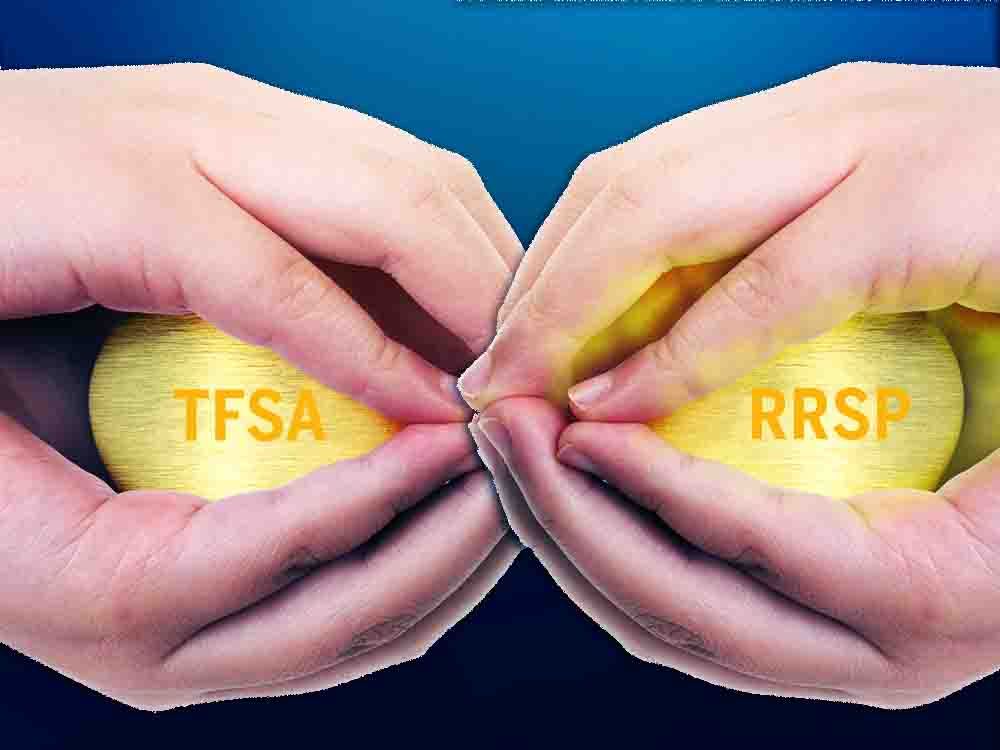

Do you know your TFSA from your RRSP? While both savings vehicles can help Canadians build wealth and plan for retirement, there are numerous differences in how they are structured. Here, the Financial Post explains how each account works, who is eligible and how you can use them to save for the future.
Who is eligible to contribute?
Registered retirement savings plans (RRSPs) are open to any Canadian resident with a valid social insurance number, provided you have started earning employment or business income.
While you can start at any age, you can only contribute until Dec. 31 of the year you turn 71, at which point the RRSP must either be converted to a registered retirement income fund (RRIF) or another income option (such as an annuity or taken out as a lump sum).
To start a tax free savings account (TFSA), you must be at least 18 years old or the age of majority in your province. You must be a resident of Canada with a valid social insurance number, although non-residents with a valid SIN can also contribute (but will pay one per cent tax for each month the contribution remains in the account).
There is no upper age limit at which you must stop contributing to a TFSA.
How much can you contribute?
The annual contribution limit for an RRSP depends upon your income in the preceding year. For 2026, the maximum amount is whichever is lower: 18 per cent of your earned income from 2025 or $33,810.
Unused contribution room carries over as well — younger Canadians may accumulate a significant amount of unused room in the early stages of their careers, which then can be tapped later when they are in higher income brackets.
If you are part of a company pension plan, your contribution and carryover room will be reduced by a pension adjustment (PA) for the previous year. The PA is calculated by your employer and is the value of the benefits you earned in the preceding year under your employer’s registered pension plans (RPP) and deferred profit sharing plans (DPSP).
Note that some employers offer company-sponsored plans or group RRSPs and may match contributions, which also count toward your contribution limit.
For a TFSA , the maximum amount you can contribute depends on the current year’s dollar limit and your personal TFSA contribution room.
The limit for 2026 is $7,000, bringing the cumulative lifetime contribution limit to $109,000 since the TFSA was launched in 2009.
If you have made a withdrawal in the past, that amount will be added to your contribution room, but not until the following calendar year.
You can contribute to your TFSA at any point during the year, but the RRSP deadline for contributions to count toward the previous year’s tax deductions is 60 days past Dec. 31. The deadline for your 2025 tax return is Mar. 2, 2026.
What are the tax differences?
Both are tax-sheltered accounts, which means your contributions and earnings grow tax-free while they are in the accounts.
With an RRSP, your contributions are made from pre-tax dollars, meaning you receive a deduction that allows you to reduce your taxable income. This leads to immediate tax savings.
However, when funds are withdrawn from an RRSP they are taxed as regular income.
To take advantage of the tax benefits, financial advisers say it is ideal to contribute to an RRSP when you are in a higher tax bracket (during peak earning years) and to withdraw when you are in a lower tax bracket (in retirement).
TFSA contributions on the other hand come from after-tax dollars and are not deductible. But when it comes time to withdraw funds, they do not count against income and are entirely tax free.
Amounts that are withdrawn can be recontributed in the following calendar year, also tax free.
What else should I know?
The RRSP has additional features that can be helpful to Canadians with specific financial needs.
The Lifelong Learning Plan allows Canadians to withdraw up to $10,000 annually ($20,000 total) tax-free to finance full-time education or training for yourself or your spouse. Withdrawals must be repaid within 10 years to avoid tax penalties.
First-time homebuyers can also withdraw up to $60,000 tax-free through the The Home Buyers’ Plan, to be put toward the purchase of a first home. You have 15 years to pay the funds back into your RRSP, but if you don’t meet annual minimums, the amount is added to your taxable income.
U.S. dividend-bearing assets are subject to a 15 per cent withholding tax on dividends when held in a TFSA, but not if they are in your RRSP.
TFSA holders should be wary of overcontributing to their accounts: Any excess contributions will be taxed at one per cent per month as long as they remain the account.
• Email: slouis@postmedia.com
- Garry Marr: Borrowing to fund your TFSA or RRSP is tempting — but is it worth the risk?
- How to invest in your TFSA versus your RRSP to boost returns and reduce risk
Read more from our TFSA vs. RRSP series
Check back every day this week for the latest from the series and find them all here.
- TFSA vs. RRSP: How Canadians from gen Z to the baby boomers can get the most out of their savings
- TFSA vs. RRSP: Avoid these TFSA and RRSP mistakes to keep the CRA off your back
- TFSA vs. RRSP: Garry Marr: Borrowing to fund your TFSA or RRSP is tempting — but is it worth the risk?
- TFSA vs. RRSP: How to invest in your TFSA versus your RRSP to boost returns and reduce risk
Popular Products
-
 Adjustable Shower Chair Seat
$107.56$53.78 -
 Adjustable Laptop Desk
$91.56$45.78 -
 Sunset Lake Landscape Canvas Print
$225.56$112.78 -
 Adjustable Plug-in LED Night Light
$61.56$30.78 -
 Portable Alloy Stringing Clamp for Ra...
$119.56$59.78