What Happens To What's Left In An Resp After The Kids Have Finished Their Education?
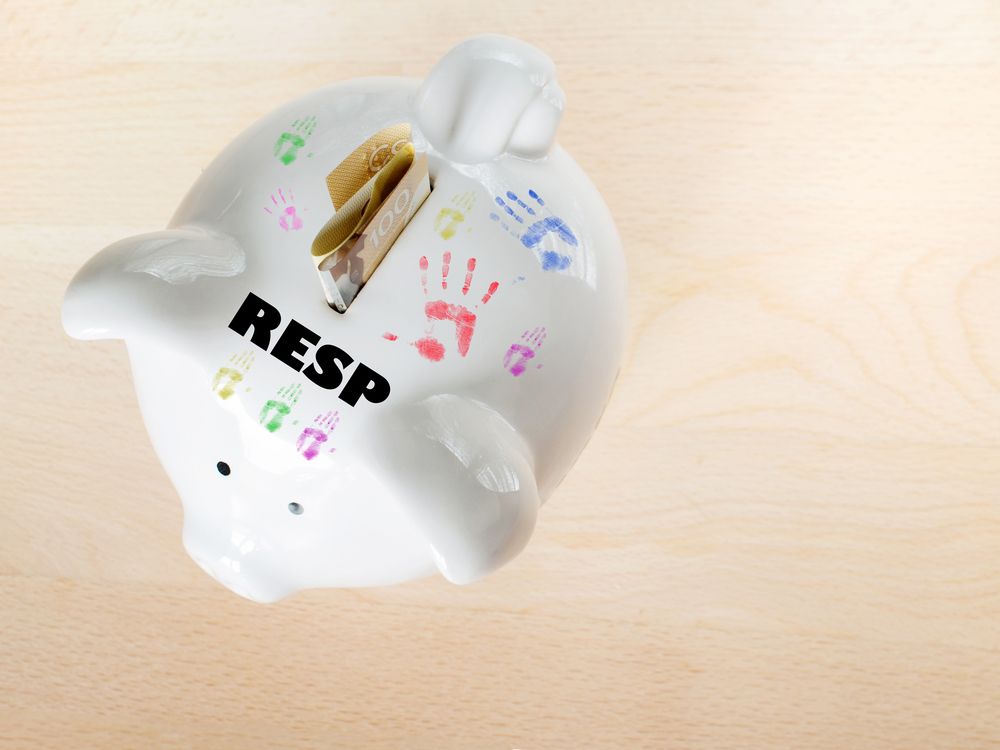
Q. What happens to the remaining balance in a registered education savings plan ( RESP ) account after the kids have finished their education? Could I keep it open and continue to invest the money before the time limit expires and I have to withdraw it? What are my options and which is the best one in my case? —Lily
FP Answers: RESPs are the best way to save for a child’s post-secondary education . An account holder can withdraw funds from the account if there is a remaining balance after a child has completed his or her education. You can keep the account open for up to 35 years from when it was established, Lily. In the case of a disabled beneficiary who qualifies for the disability tax credit, there are five additional years.
Although you can keep the funds invested on a tax deferred basis in the account, it may be better to consider transferring the balance to another registered account or withdrawing it, depending on your financial situation.
The balance in an RESP account is comprised of contributions to the plan, grants and bonds received from the government, and investment income from the plan’s investments. RESP withdrawals for a child include Post-Secondary Education (PSE) payments or Educational Assistance Payments (EAP), which I will describe in more detail. Your financial institution keeps track of these for you and can provide the breakdown on request. Depending on the institution, this information may be provided on your regular statement.
The PSE payments are straightforward. They are non-taxable withdrawals that can be taken at any time by the subscriber and come from the original contributions. If you currently have a PSE balance, you should be able to simply request a withdrawal with no tax consequences. These withdrawals can be taken prior to, during, or after a beneficiary attends post-secondary school.
The EAP payments are withdrawals of the grants, bonds, and investment income that the account has accumulated over the years that it has been opened. EAPs are taxable withdrawals that are usually best taken when a beneficiary first starts their post-secondary studies.
We often recommend EAPs be taken earlier in a beneficiary’s study period as this is most likely the period where they have the lowest taxable income from all sources. Since the first $15,000 or so of income isn’t taxable in Canada, most students, even with a part time job, may be able to withdraw a portion or all of their EAP in a given year tax-free.
Once the RESP can no longer be used for education expenses there are restrictions on how the funds can be withdrawn, Lily. The PSE balance can be withdrawn, as stated above, tax-free. But the EAP balance is treated differently if a child is not a qualifying student. You can only withdraw the accumulated income in the form of an Accumulated Income Payment (AIP). The government grants and bonds, if they remain, are repaid to the government.
AIPs can be withdrawn from the RESP as income to the subscriber, as opposed to EAPs that are taxable to the student. Not only is the payment taxable, but there is also a 20 per cent penalty tax. AIPs can be transferred directly to a registered retirement savings plan (RRSP) account on a tax deferred basis if the account holder has sufficient RRSP contribution room. The maximum RESP to RRSP transfer is $50,000.
In most cases, Lily, paying a 20 per cent tax is not advisable. And the longer you wait, the more of a tax hit you might have on withdrawal. If you are expecting a lower income year in the near-term, maybe there is a case for waiting. But otherwise, you may want to close the account sooner rather than later.
If you don’t anticipate having much RRSP room for the transfer going forward, either because you are no longer earning employment or self-employment income, or you are in a pension, that limits the RRSP transfer strategy. The Canada Revenue Agency (CRA) does allow for overcontributions of $2,000 to RRSP accounts without incurring penalties, so that could help a bit. But using an RESP as a tax shelter once you no longer have post-secondary costs for a beneficiary may not be advisable.
- Should Margaret buy a condo or beef up her investments with her $275,000 inheritance?
- Jennifer’s CPP, OAS and pension may not be enough income. Will RRSP, TFSA and other assets allow her to retire?
Andrew Dobson is a fee-only, advice-only certified financial planner (CFP) and chartered investment manager (CIM) at Objective Financial Partners Inc. in London, Ont. He does not sell any financial products whatsoever. He can be reached at adobson@objectivecfp.com.
Popular Products
-
 Classic Oversized Teddy Bear
$23.78 -
 Gem's Ballet Natural Garnet Gemstone ...
$171.56$85.78 -
 Butt Lifting Body Shaper Shorts
$95.56$47.78 -
 Slimming Waist Trainer & Thigh Trimmer
$67.56$33.78 -
 Realistic Fake Poop Prank Toys
$99.56$49.78