'quad God' Ilia Malinin On The 'invisible Battles' That Cost Him A Medal
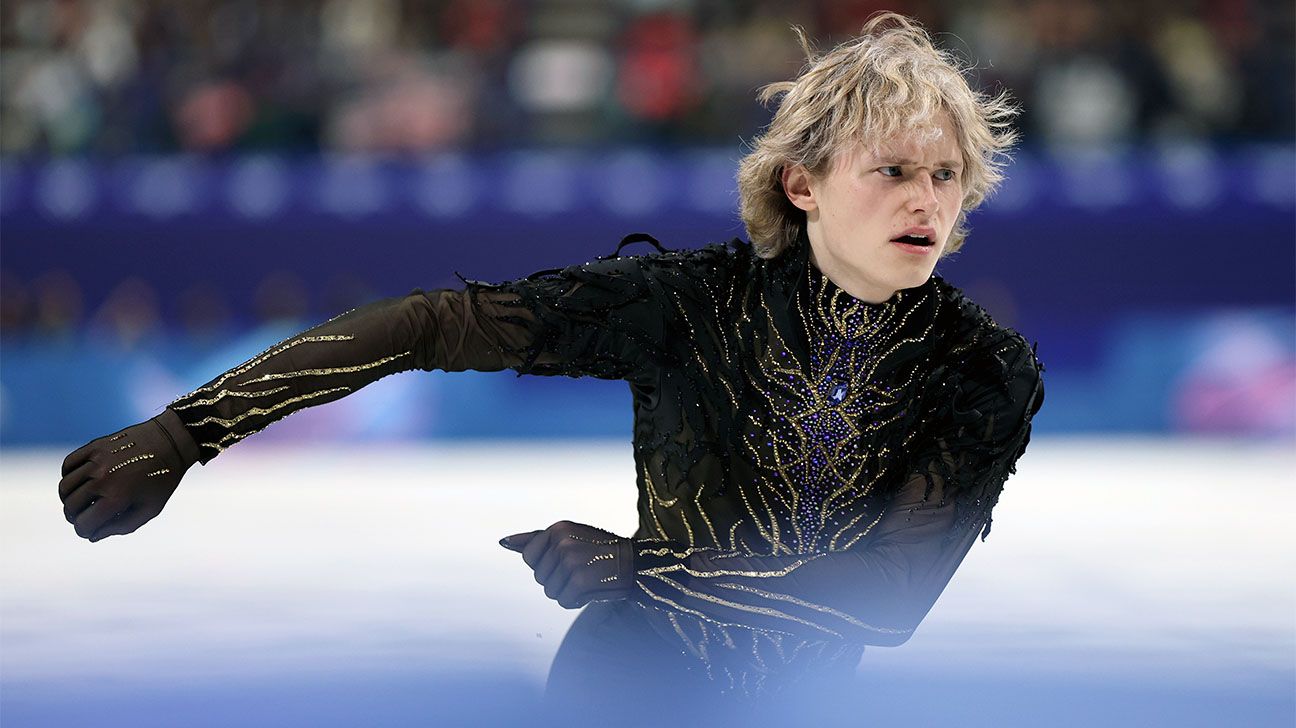
- Ilia Malinin, the “Quad God,” finished 8th in the men’s figure skating finals at the 2026 Winter Olympics after falling twice.
- In an Instagram post, Malinin alluded to the pressure of the Olympics, which affected his performance.
- Simone Biles, the most decorated gymnast of all time, said she understands the pressure Malinin has experienced.
Ilia Malinin, a 21-year-old Team USA figure skater, was favored to win gold at the 2026 Winter Olympics in Milan Cortina.
However, the “Quad God” ended up finishing eighth in the men’s figure skating finals after falling twice during his performance.
On February 16, Malinin addressed his performance in an Instagram post, alluding to the “invisible battles” he was facing amid Olympic pressure. He said he was experiencing negative thoughts before he stepped onto the ice.
“On the world’s biggest stage, those who appear the strongest may still be fighting invisible battles on the inside,” Malinin wrote.
“Even your happiest memories can end up tainted by the noise. Vile online hatred attacks the mind and fear lures it into the darkness, no matter how hard you try to stay sane through the endless insurmountable pressure. It all builds up as these moments flash before your eyes, resulting in an inevitable crash.”
Why couldn’t Malinin handle Olympic pressure?
Malinin entered the Winter Olympics as one of the most dominant competitors in elite-level figure skating.
He won two consecutive World Championships before the Games in Milan, as well as three straight Grand Prix finals and U.S. Championships.
The self-proclaimed “Quad God” is the only skater to land a quadruple axel during competition. He is also the first skater to land seven quad jumps in a single performance.
“All of this pressure, all of the media, and just being the Olympic gold hopeful was a lot,” Manlinin told NBC News.
“It was too much to handle,” he said.
What is sports performance anxiety?
Sports performance anxiety, or sports anxiety, is a common occurrence among athletes.
A 2019 review estimates that anywhere from 30–60% of athletes experience it.
It involves experiencing symptoms of anxiety during a competitive or sport-related moment.
According to the Yerkes-Dodson Law, athletes who excel or reach peak performance are immediately met with a high level of stress that could negatively impact their performance.
“Historically, we believed the ‘right’ amount of anxiety was like a U-shaped curve — too little, not good, just enough — ideal, and too much also not good,” said Alex Dimitriu, MD, double board certified psychiatry and sleep medicine specialist, and founder of Menlo Park Psychiatry & Sleep Medicine.
“More recent research seems to point to any cognitive anxiety before an event being maladaptive, which basically means, the calmer you are before and during the ‘performance,’ the better,” Dimitriu told Healthline.
Mental signs of sports performance anxiety include:
- intense fear of failure
- disrupted focus
- overthinking or forgetting how to do things that come naturally to you
- doubt that you can win or in your abilities
In a TODAY show interview on February 17, Malinin opened up about the pressure he experienced during the men’s figure skating final. “Honestly, it’s not a pleasant feeling, is the most honest way to say it.”
“So many eyes, so much attention. It really can get to you if you’re not ready to fully embrace it. That may be one of the mistakes I made; I was not ready to handle that to the fullest extent,” he said.
Although performance anxiety can be crippling, there are strategies to overcome it. Dimitriu offered the following:
- Recognize it. Become aware when anxiety levels are too high, and there are concerns for performance degradation.
- Work with a sports-savvy mental health expert. Cognitive behavioral therapy (CBT) can help with performance-related thoughts and behaviors and challenge them.
- Train mentally like you would physically. Practice mindfulness, deep breathing, and visualize how you would handle a mistake if it happened.
- Develop consistent pre-performance routines. Warm-up, cues, music, self-talk, and meditation can all help ground the system.
Malinin receives praise, support from Simone Biles
American gymnast and four-time Olympic gold medalist Simone Biles, the “GOAT,” told People that she had privately reached out to Malinin because she could relate to what he was going through.
Biles had a similar experience during the 2020 Tokyo Olympics. She developed a case of the “twisties,” which forced her to bow out of the competition.
The twisties are a phenomenon in gymnastics when an athlete loses their sense of spatial awareness and body control mid-air. Some other sports may refer to this type of mental block as the “yips.”
Biles knew firsthand how Olympic pressure can impact performance, so she spoke with Malinin about how to recover.
“I’ve definitely had a chance to bump into him,” Biles said in a February 17 interview on the TODAY show.
“I’ve sent him messages on Instagram as well, obviously, it’s all been private because I know what he’s going through and I know most athletes might not be able to relate, and it’s really, really hard to watch,” she continued.
Biles shared with People that she has hope for Malinin’s athletic future. “I see him coming out on top after this,” Biles said. “We’re all just cheering for him.”
Popular Products
-
 Sevich Hair Growth Essence Spray
$28.99$19.78 -
 Sevich Hair Fiber with Applicator Set
$40.99$27.78 -
 Whitening Cream Glutathione Body Lotion
$256.99$178.78 -
 Sevich Keratin Repair and Scalp Care ...
$21.99$14.78 -
 Essential Oils Set for Diffuser & Mas...
$58.99$40.78