About 20 Per Cent Of Gen Z And Millennial Canadians Still Spank Their Kids. Is That Even Legal?
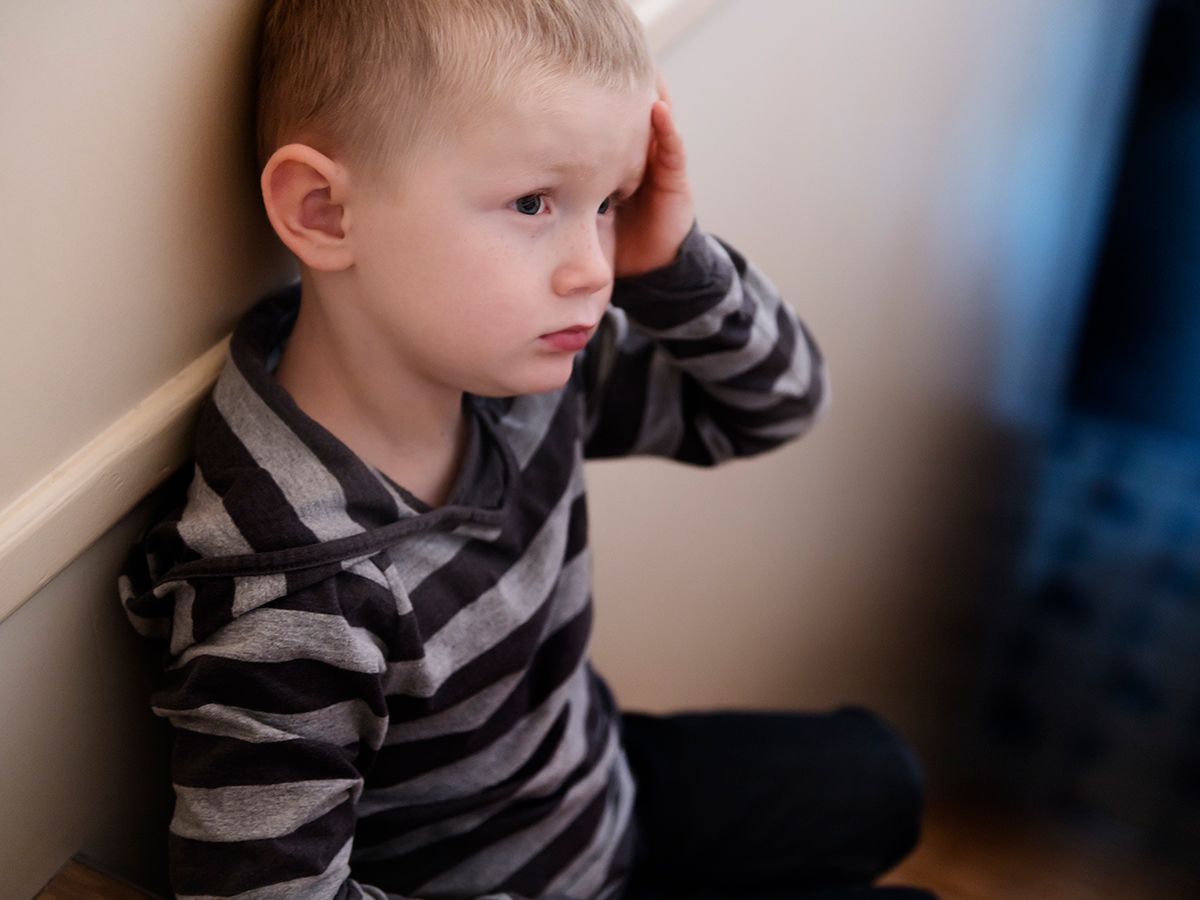
Spanking isn’t a bygone, outmoded form of parenting in Canada, according to a new study that finds a sizeable proportion of millennial and gen Z parents are spanking their kids.
When asked whether they have ever spanked their child or children on their bottom with their hand, about 20 per cent of younger parents aged 18 to 27 (gen Zs) and millennial parents (ages 28 to 42) said “yes.”
“Having a history of being spanked as a child was associated with increasing odds of spanking one’s own child,” the researchers report in the Canadian Journal of Public Health.
When the team explored beliefs around spanking, 15 per cent of the nearly 4,000 adults surveyed agreed with a statement that spanking is necessary to properly raise a child.
Overall, “the prevalence of spanking history among Canadian adults is high,” with more than half (55.6 per cent) of respondents saying they were spanked at least three times during childhood, the researchers reported.
Nearly a quarter said the spanking left a mark or bruise “or caused lasting physical pain.”
The findings support abolishing a section of the Criminal Code that makes it legal for parents to spank children ages two to 12, the researchers said.
Not only has mounting literature linked spanking with the same harms as physical abuse, “no research has ever found that spanking is related to beneficial outcomes for children’s health and development,” the team wrote.
“There are no arguments to keep (the law) and there is no argument to hit children,” said first author Tracie Afifi, a University of Manitoba professor and Canada Research Chair in child adversity and resilience.
“All the science is against it.”
The study is the first to provide a national detailed picture of spanking.
While the data suggest a downward trend, the prevalence of spanking remains high, Afifi said. “We’re moving in the right direction, but not nearly quickly enough.
“That means there are still a lot of children who are exposed to this type of physical discipline.”
At least 70 countries or states have legally abolished all corporal punishment of children. When Afifi talks to global audiences, “people are shocked that Canada isn’t a leader in this area. They say, ‘I don’t understand. Are you sure Canada still has a law that allows this?'”
There have been more than a dozen private members’ bills and legislative attempts over the years to repeal Section 43 of the Criminal Code, a contentious passage that reads that every parent or person standing in the place of a parent “is justified in using force by way of correction” toward a child if that force doesn’t “exceed what is reasonable under the circumstances.”
While upholding the provision in 2004, the Supreme Court clarified that parents and caregivers can’t spank a child younger than two or older than 12. They can’t use objects like rulers or belts. The spanking can’t involve slaps or blows to the head, or anywhere on the body so hard as to leave a mark.
Parents also can’t be motivated by “anger,” “frustration” or an “abusive personality.”
“I would like to know who is hitting their child if they’re not angry,” Afifi said.
The amendments have not had any impact on protecting children, and most parents don’t know the rules, she said. “Even if those rules were followed, that doesn’t protect the children in any way.”
There are multiple arguments supporting repeal, Afifi and her co-authors said, including that the law infringes on a child’s fundamental rights to live free from violence.
Parents who spank aren’t necessarily bad parents, she stressed. “They’re just using old, outdated information, old parenting advice that we gave 40 years ago.” Spanking is also ingrained in some cultures and religions, and through generations. “Older generations would encourage new parenting generations, ‘This is how you raise children,'” Afifi said, influences that can be hard to move away from.
Most parents who spank “are probably very loving parents,” Afifi said. “But we need to educate them that this is actually harmful. It has high risks and no rewards.” Studies have associated spanking with risks of physical injury to the child, risks of escalating violence, risks of developmental, behavioural and mental health problems, substance use, fractured parent/child relationships, higher levels of anti-social behaviour in children and lower executive functioning.
“In some cases, light hitting becomes more aggressive, because that’s what the parent thinks: ‘I need to hit the child harder or more often in order for this to work,'” Afifi said. While it might work in the short term, and in the moment, spanking doesn’t correct behaviour in the long term, she said, “and smaller taps can turn into more severe physical violence.”
Arguments that parents will be thrown in jail if the law is repealed haven’t been borne out in the experience of other countries. Sweden was the first country in the world to ban all physical punishment against children in 1979, and other countries have since followed. “We have decades of data,” Afifi said. “People think that, “Oh, now, if I spank my child I’m going to jail.’ And that’s not what happens.'”

The intention is to change the culture, educate and intervene earlier with families experiencing more stress who need more resources, she said.
Her team used data collected from all Canadian provinces from a 2024 research study. The sample included 3,767 people aged 18 to 49.
For the generation X cohort (people aged 43 to 49 at the time data were collected), 45 per cent said they have spanked their own child.
Fewer millennial (22 per cent) and gen Z parents (18 per cent) said they have spanked their kids. While the numbers have fallen, “they’re still high, and there’s no real difference between gen Z and millennials,” Afifi said.
“They’re probably having their parents — the children’s grandparents — encouraging them to do it. ‘This is what you have to do’ and making them feel they’re doing the right thing.”
Nearly one quarter of those who reported being spanked as a child said it left a mark or caused pain, suggesting that, even with the limits in the law, people are going beyond those limits. Of those who were spanked, mostly mothers and fathers (75 per cent) did the spanking, followed by grandmothers (12 per cent).
Overall, 28 per cent of parents of all ages in the survey reported spanking their kids — two per cent reported spanking daily, eight per cent weekly, seven monthly and 78 per cent less than monthly. The remaining said they didn’t know.
More than half of the parents in the survey had a household income of $100,000 or more; 40 per cent had a university degree.
Many people who are pro-spanking are rooted in old ways of thinking, Afifi said. “They may have spanked their own children and think there’s nothing wrong with it. ‘My children turned out great.’ It’s hard to change their way of thinking no matter how much evidence or data you provide.”
Canada could invest in more positive parenting programs that teach parents less harmful and more effective ways of disciplining children that doesn’t include hitting, Afifi said.
“It’s not that there are no rules — there are rules and expectations and part of that is communicating what your expectations are and if they violate that or if they make decisions that are really poor decisions, it’s important they understand what they did is wrong, and why, and what they should have done differently. And if consequences are required, that’s OK. That’s life. There should be consequences, but the consequences shouldn’t include hitting or physical force,” Afifi said.
“But we need to let kids make mistakes and learn what is OK and not OK without being physically hit.”
National Post
- Is it legal to spank a child in Canada? Yes, but there's a new push to change that
- Chris Selley: Spanking is already 'banned' enough as it is
Our website is the place for the latest breaking news, exclusive scoops, longreads and provocative commentary. Please bookmark nationalpost.com and sign up for our daily newsletter, Posted, here.
Popular Products
-
 Ashwagandha & Black Cumin Seed Oil
$43.56$21.78 -
 Shilajit Capsules for Strength & Vita...
$43.99$29.78 -
 Pre-Workout Supplement for Strength, ...
$43.99$29.78 -
 Centrum Multivitamin for Energy, Immu...
$43.99$25.78 -
 Bee Venom Capsules for Joint Support ...
$43.56$21.78