Are You A Night Owl? Your Cardiovascular Disease Risk May Be Higher
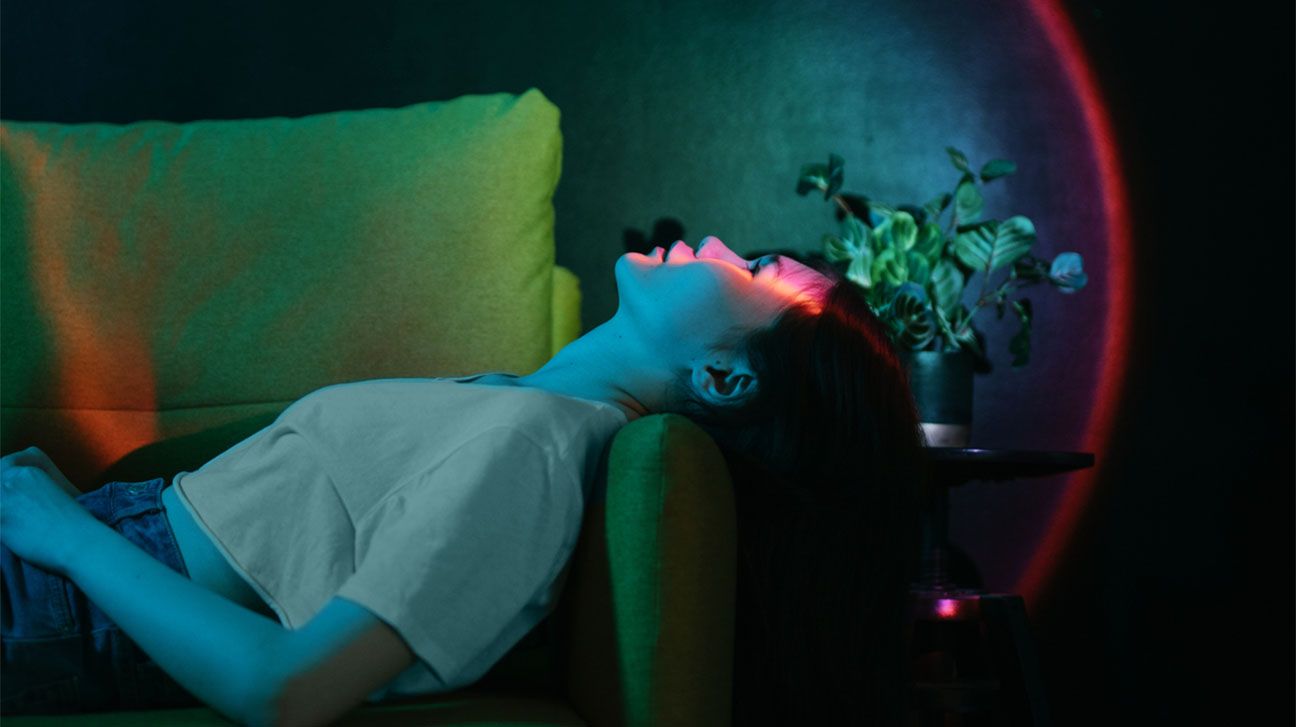
New research suggests that night owls may have a higher risk of cardiovascular disease. Image Credit: Ani Dimi/Stocksy
- Night owls, people who tend to go to bed later, may be at greater risk of heart attack and stroke.
- New research suggests that night owls had poorer cardiovascular health than those with more traditional sleep schedules, largely driven by smoking, sleep, and lifestyle factors.
- Those risks are mostly modifiable, meaning night owls and shift workers can take concrete steps to protect their heart health.
Self-described “night owls” may have worse cardiovascular health and a higher risk of heart attack and stroke than people with more traditional sleep patterns, new research suggests.
In a new study published on January 28 in the Journal of the American Heart Association, researchers investigated the relationship between chronotype, cardiovascular disease (CVD), and common risk factors such as nicotine use, sleep, and physical activity levels, as defined in the American Heart Association’s Life’s Essential 8 framework.
Chronotypes are broad categories that describe people’s sleep–wake patterns based on their internal biological clock, also known as circadian rhythm.
Researchers have long known that disrupted or insufficient sleep has widespread effects on the body, including on heart health, but whether a person’s chronotype plays a role has been less clear.
While only a minority of people identified as “night owls” — those who favor both a later bedtime and wakeup time — that preference appears to be associated with worse cardiovascular health. The effect was even more prominent in women. Meanwhile, morning people or “larks” generally had better heart health.
However, there is a silver lining: most of that risk appears to stem from modifiable factors rather than from an individual’s chronotype itself. In other words, no matter when you go to bed, there are meaningful steps you can take to improve your heart health.
“The key point is not that chronotype is ‘good’ or ‘bad,’ but that being a ‘night owl’ often travels with a less favorable heart-health profile,” Sina Kianersi, DVM, PhD, a postdoctoral research fellow at Brigham and Women’s Hospital/Harvard Medical School and first author of the study, told Healthline.
Kristen Knutson, PhD, a volunteer expert with the AHA and associate professor of sleep medicine at Northwestern University Feinberg School of Medicine who wasn’t involved in the research, said the findings were “good news.”
“It means that night owls have ways to reduce their risk of CVD,” she told Healthline.
The study has broad implications for improving heart health, not just for night owls, but also for shift workers, and underscores the importance of addressing modifiable risk factors.
Night Owls have 16% higher risk of heart attack, stroke
Researchers analyzed health data from more than 300,000 adults in the United Kingdom using a large medical database known as the UK Biobank.
The cohort included adults ages 39 to 74 who had not had a heart attack or stroke at baseline. Participants were predominantly white, and just over half were female, with an average age of 57.
The data included self-reported chronotype, with participants asked to describe themselves as “definitely morning,” “definitely evening,” or somewhere in between. Most participants (67%) identified as the latter, an intermediate chronotype. About one in four identified as a morning person, while only 8% identified as night owls.
Individuals were also assigned a heart health score based on Life’s Essential 8, a framework developed by the American Heart Association to define cardiovascular risk using eight modifiable factors. It includes behavioral components such as diet and sleep, as well as biological measures such as blood pressure and cholesterol. Using the framework, individuals receive a score based on these factors that indicates their risk of cardiovascular disease.
After nearly fourteen years of follow-up, the night owls of the cohort had a 79% higher prevalence of poor overall cardiovascular health as defined by Life’s Essential 8 compared to the intermediate chronotype. Moreover, that translated into a meaningful increase in heart attack and stroke risk: 16% higher than the intermediate group. Night owls had worse scores in six out of the eight risk factors that make up Life’s Essential 8.
In contrast, the “definitely morning” people had a 5% lower prevalence of poor heart health scores in comparison to the intermediate chronotype.
The research does not lay the blame for CVD risk and poor heart health at the feet of an individual’s chronotype, but rather points out that night owls are more closely linked with unhealthy behaviors.
Nicotine use had the largest impact on heart health. It was responsible for more than one-third of the CVD risk associated with being a night owl. Poor sleep was behind that, being responsible for about 14% of the risk.
“If someone identifies as a night owl, our findings suggest it is especially important to pay attention to overall cardiovascular health,” Kianersi said. “For individual risk, the biggest drivers are still the basics, such as blood pressure, cholesterol, blood sugar, nicotine exposure, physical activity, body weight, diet, and sleep health.”
How night owls can protect heart health
Heart disease is the leading cause of death for Americans, killing two people every three minutes.
Knowing your chronotype could be useful as part of a cardiovascular disease prevention strategy, especially if you consider yourself a night owl. The study suggests that it is the risk factors associated with being a night owl, not when you go to bed, that drive poorer cardiovascular outcomes.
“We can’t change the circadian rhythm, because it is intrinsic and not really changeable. Instead, we can concentrate on these modifiable risk factors,” said Eleanor Levin, MD, clinical professor of cardiovascular medicine at Stanford Medicine. Levin wasn’t involved in the research.
Life’s Essential 8 spells out exactly how to achieve good heart health. Those recommendations are even more important for night owls.
Life’s Essential 8 makes the following recommendations about reducing CVD risk:
- stopping smoking
- being more active
- getting healthy sleep
- managing weight
- controlling cholesterol
- managing blood sugar
- managing blood pressure
- eating better
Making lifestyle changes to support your heart health makes a difference. A new report from the AHA estimates that up to 40% of U.S. deaths related to cardiovascular disease could be prevented with optimal Life’s Essential 8 scores.
For shift workers who must work hours that interfere with traditional sleeping hours, experts have some additional tips.
“Overnight schedules can create circadian misalignment, meaning the internal body clock is out of sync with sleep, meals, and daily routines,” said Kianersi.
Levin cautions that shift workers need to be wary of lost sleep and make up for it:
“If you develop a sleep debt over several nights, you’ve got to get extra sleep sometime during the day,” she said.
Additionally, she recommends making sure to keep healthy food and snack options available and to limit junk food both at home and while on shift. Wearable fitness trackers can also be helpful, according to Levin, which can not only track daily steps but also warn users of heart conditions such as atrial fibrillation. However, these should not replace medical evaluation and care.
“The practical message is to protect consistent, sufficient sleep as much as possible and stay proactive about overall cardiovascular health,” Kianersi said.
“We are also actively studying whether a mismatch between chronotype and work schedule further increases cardiovascular risk, but more research is needed before drawing firm conclusions about specific chronotype and shift-work combinations.”
Popular Products
-
 Stainless Steel Tongue Scrapers
$33.56$16.78 -
 Magnetic Waist Twisting Disc Body Tra...
$53.99$36.78 -
 Rechargeable Electric Face & Beard Tr...
$47.99$32.78 -
 Adjustable mini Exercise Bike
$300.98$240.78 -
 Height Adjustable Electric Chair Lift...
$400.99$289.78