Cryonics As Cause Area

TLDR: Cryonics should be considered as part of a diversified portfolio of altruistic projects. I estimate, using ~3% chance of revival and a modest post-revival lifespan (~20,000 years), that current biopreservation is roughly on par with top GiveWell charities in terms of QALYs per dollar. Scaled up, it could plausibly be dozens of times better. There are various complications, of course, but it still seems reasonable that cryonics complements rather than competes with things like AI-safety work. It may even ease pressure to race toward superintelligence as people’s only hope of not dying.
Meta: I’m Max Harms, long-time researcher at MIRI,[1] rationalist, EA, and cryonics enthusiast. After doing a deep-dive on Nectome, a brain preservation startup, they hired me to write some additional pieces on cryonics (by which I mean both “traditional cryonics” and the aldehyde-based preservation used by Nectome).[2] The ideas in this essay are ones I have believed for many years, and I was the one who pitched the idea to Nectome.
Part 1: Diversification
Common wisdom in investment circles is to have a diversified portfolio — to not put all your eggs in one basket. This is wise for two reasons:
- Money is not utility. The difference between being broke and having a million dollars is much, much bigger than the difference between having 100 million and 101 million. Double-or-nothing usually has negative expected value, even if it’s neutral in expected money. We often assume that humans are logarithmic in how much they value money, even though that’s an oversimplification, because it’s a reasonably simple way to reflect the nonlinearity.
- Opportunities for investment are usually limited in how much money they can absorb, and that investment cap is generally above what you can currently invest (unless you’re already wealthy). Since the returns for the ultra-wealthy are capped, it’s less important to become wealthy as soon as possible and relatively more important to become wealthy at all. Thus, even someone with a linear value of money will often want to behave conservatively, and diversify their portfolio.[3]
I think it’s also wise to have a diversified “charitable portfolio.” In other words, to see donations through the lens of investment, and to not be all-in on a single strategy, even if it seems to have the highest expected-value on paper.
An obvious objection to this idea is that investments are supposed to pay back later, but donations aren’t. And indeed, some donations are akin to consumption. But many donations are set up to make the world richer, as a whole, even if they don't return that value to the donor in particular. Easing a hospital patient’s suffering, perhaps by turning it to bliss with strong painkillers, is very good. But keeping that person from needing to go to the hospital in the first place, and allowing them to work more hours, is probably much better. Even if their momentary experiences at work are worse than being blissed out on opiates, their job creates value for others, and their income can be re-invested, producing gains that grow and grow, dwarfing any momentary anguish.[4] Well-targeted donations, in short, can be a way for humanity to invest in the highest-return opportunities, by dropping the constraint that the donor has to be the one to capture the returns.[5]
There are also more philosophical arguments in favor of charitable diversification, put forward by people such as Holden Karnofsky, Nick Bostrom, and Toby Ord.[6] I personally have found value in arguments by thinkers like Scott Alexander on why it's good to be less consequentialist,[7] and I see this kind of conservatism as going nicely with the virtue of wholesomeness. As such, in addition to devoting my career to AI alignment, I have become something of an ethical vegetarian,[8] donated to offset my lifetime carbon emissions, supported concerns for model-welfare, engaged politically, and have hopefully saved the lives of many children by donating to Helen Keller International. I reflectively endorse each of these actions, even knowing that some of them are necessarily going to turn out “more optimal” than others.[9]
Now, to be clear, I am not suggesting that one should ignore efficacy when donating, any more than an investor who's trying to diversify should ignore expected return when building a portfolio. Rather, I think it's good to donate in a way that's weighted by impact, but with non-extreme weights, and with an eye towards finite, wholesome opportunities that complement one's main cause area. This might mean they are particularly valuable in worlds where your main charity turns out to be bogus, or that they provide a social/psychological effect that helps you and your community cultivate virtue in a way that's hard to get from donating elsewhere.[10]
Changing my diet and donating to animal welfare charities has, I believe, given me a variety of benefits, including the ability to say that I try to follow deontological limits around harming those weaker than myself, and to not flinch away from, or become as numb to, the horrors of the modern world for many non-humans.
It is through this lens that I would like to approach the main topic of this essay: life extension via biostasis, a.k.a. cryonics.[2] I believe that support for biostasis, as a way to make the world better, fits nicely into a portfolio of charitable causes, especially for longtermists and those who advocate for slowing down the pace of AI development.
Part 2: Cryonics
Before we talk more about the synergies and tradeoffs between biostasis and other causes, we should take a moment to reflect on human[11] preservation in itself, and why it might be a good way to help others. Many words have been written elsewhere about the science, philosophy, and logistics of biostasis, and I encourage those with objections on those layers to follow those links and engage with that earlier writing. Here, I want to ask the simple question: how cost effective is it, in terms of expected good, to put someone into cryosleep?
The amount of good depends, of course, on one's moral theory. Those who are concerned with duty-based imperatives of filial piety might believe, for instance, that it's of primary importance to care for one's parents. Another lens might investigate the motives of those involved. But the most interesting angle for our purpose is probably utilitarianism, with its focus on increasing aggregate happiness and reducing total suffering.[12]
The most standard unit for cost effectiveness is the Quality-Adjusted Life-Year (QALY).[13] On this measure, saving the life of a young person is better than saving the life of an elder because the youth gains more years of life as a result. And healing someone who is chronically sick is good, even if it doesn't make them more productive or live longer, because it improves the lived experience of however many years they have left.
Assuming it has any reasonable chance of working, cryonics naively looks extremely promising in terms of QALYs/$. At the most naive level, we get a Pascal’s-wager type argument that says that a person who is revived in the future could be uploaded into a digital paradise where they experience a eudemonic existence for a subjective eternity. Multiplying things out, this near-infinite utility beats any normal prospect of extending individual life or reducing suffering, even given a very low likelihood of success.
Some people accept this reasoning, and try to make it add up to normalcy by discounting future lives. (We’ll talk about discounting near the end of the essay.) But I prefer to avoid these kinds of infinities altogether, and try to reason from more conservative assumptions, instead.[14] What if we assume that the world of the future will be better, but not that much better than our own? What if revived people still face risks of dying, such that our own statistics are a reasonable starting point? If that kind of back-of-the-envelope math still produces a baseline that’s better than other options, we feel more confident that it’s worth putting attention towards. Then, after being even more careful, and reasoning holistically about whether anything important is missing from our numerical analysis, we can act.
Future Risks
To start, we must assume that any world capable of reviving someone from cryosleep and healing their diseases (including senescence) will also naturally have technologies to further improve life and wellbeing far beyond what our world has to offer, just as our world offers far more than anything an ancient king might've dreamed possible. Currently, young people in high-income countries have a quality adjustment weight of about 0.9, due to sometimes being sick. In the interest of being conservative, let’s say that those who wake up in the glorious future should only expect to have 1.5 times as good a life as today’s healthy, young baseline.

The same assumptions that allow for revival into a healthy body also naturally imply something like biological immortality. If someone dies of old age[15] and is revived in the year 2200 in a way that brings them back to health, they aren't going to be at much risk of, say, cancer, since the same technologies that can make an old person young again should also be able to cure cancer and fix most other health issues. Even if they fall prey to some rare, pernicious form of disease, they could presumably return to stasis until medical technology also finds the cure to that disease.
Thus, we can multiply our 1.5 coefficient with the preserved person’s expected future lifespan in order to estimate the expected utility. We can estimate the lifespan by multiplying the expected lifespan after revival with the chance of revival.
To get an expected lifespan post-revival, we need to ask what primary sources of mortality will be present for the humans of the far-future. My sense is that there are six:
- Accidents like vehicle crashes, where the victim dies so unexpectedly that they can't be rescued.
- Homicides and wars.
- Starvation or otherwise running out of resources necessary for survival, perhaps due to lack of economic opportunities.
- Being mentally healthy, but nevertheless choosing to die, perhaps as a form of self-expression, or simply because of a feeling that one’s life is boring and/or complete.
- Lethal diseases that fundamentally can't be cured.
- Some health problems might strike without warning and kill very quickly, such as brain hemorrhages.
- Some diseases might be so hard to fix that even a civilization with every possible technology doesn't think it's worth it, either for economic or philosophical reasons (e.g. severe mental illnesses where healing involves rewriting who the person is).
- Large-scale natural disasters like asteroid strikes or gamma-ray bursts.
Let’s go through these in turn.
Accidents
Let’s set aside drug overdoses[16] and car crashes[17] as problems that are likely to eventually be mostly solved. This leaves an accident rate of about 0.0035% deaths/year[18] among healthy adults in wealthy countries. There's some reasons to expect this to be lower in the future. Many of these deaths are due to men drowning or falling, often while drunk, which we might imagine could be prevented by monitoring using e.g. robots. Society seems to be focusing more on safety as the world gets safer, so there could be a feedback loop that drives this risk very close to zero.
But also maybe safetyism is bad? Maybe taking risks is part of living a good life? 0.0035% seems to me like a reasonable estimate of the long-run death rate from accidents, given the uncertainty around how normalized risky adventures will become.
Homicide and War
Setting aside the USA,[19] the homicide rate in wealthy countries tends to be about 0.001%. It's easy to imagine this being much lower, thanks to better medical responses, better law enforcement, and better social support. Still, it works as a reasonable bound. Not so bad.
But war… War is spooky. Over the last 100 years, 1–3% of all deaths were a consequence of war, depending on what counts as a consequence. Roughly a third of these deaths come from WWII. Since then, war has been less lethal, and often contained. If the future continues along this trend, things could ultimately be almost entirely peaceful. But trends can change, and the world could become even more violent! It's very hard to predict where things will shake out, especially not knowing some fundamentals about the technological end-game and the resulting equilibrium for world-order.
My best bet is that deadly wars will mostly stop being a thing, deep into the future, since advanced agents and organizations will be better able to make win-win arrangements and settle things through more efficient contests. Still, there’s a lot of uncertainty. I'll revisit the topic of war in more depth when writing about whether cryonics is likely to work.
Starvation and Poverty
Looking at healthy people in wealthy countries, this is clearly less than 0.001% for our purposes.[20] But we live in an era of exponentials, where food is unprecedentedly abundant, and where most people on the street are not very likely to freeze. If the population doesn't grow more rapidly than our rate of accumulating resources, this level of abundance is sustainable, and other risks dominate. Science and technology will likely be able to adapt to the challenges of the universe, and it seems feasible to allow an abundant, massive, human civilization to flourish for billions, if not trillions of years.[21]
But what if our ability to acquire resources doesn’t keep up with population growth? Spreading out into the cosmos might work for a while, but it’s not hard for an exponentially-increasing population to outrun the diminishing returns, once the stars have been colonized and so on. This Malthusian condition was roughly the standard for most human existence, and might set in again, perhaps due to some repugnant conclusion winning out, or simply as a tragedy of the commons. Many people immediately jump to worrying about this kind of overpopulation when considering life-extension technology. There’s a logic to this, and it’s worth not dismissing it out of hand, but I think a close examination suggests that there’s less to fear here than one might initially expect.
First, consider that cryonics is unlikely to create a major population crisis for the simple reason that cryopreserved people can be left un-revived if there aren’t (currently) enough resources to support them. In fact, the possibility of stasis makes it plausible that groups of people could coordinate to time-share the world, allowing a fixed amount of land and productive capacity to effectively grow in terms of how many people it can support, by trading off against how long those people are awake per century (or whatever).
Second, while it is reasonable to be concerned about how long the universe can support a multiplying population, almost all of that population consists of future people, not present people, and thus the scarcity comes from future generations. Even restricting ourselves to stars within the Milky Way, each person currently on earth could have over ten star systems (assuming there aren’t any aliens to grab them before we do). And of course, things get truly insane when considering the potential of the entire reachable cosmos. When considering this vastness, abandoning the tiny few people who have already been born for fear that they’ll use up space if they don’t die begins to feel silly and cruel.
Third, people who were born early probably have a unique value, such that it’s worth preserving at least a bunch of us for the same reason that preserving ancient libraries is good for the sake of future generations. It would be insane to burn every book that’s over a century old, out of a fear of running out of space on bookshelves. From this perspective, it seems plausible that people from this century might be naturally employed, in a universe with billions of worlds, as celebrities and keepers of historical memory.
No, the idea of there being lots of humans doesn’t seem like a huge concern for the wellbeing of cryopreserved people, and we probably shouldn’t include scarcity concerns in our lifespan estimates. Rather, the most worrying thing is probably the prospect that all humans will naturally be unable to gather resources because our species has become obsolete, and gets out-competed by artificial intelligences embodied in robots, bio-engineered posthuman species, or similar. We will return to this fear when considering whether cryonics is likely to work at all.
Boredom and Completion
Because we’re modeling accidents, conflicts, and poverty as distinct categories, we should exclude counting people here who are the victims of fate in one way or another, or who give up their lives to protect those who would otherwise be victims of fate. Rather, this category is for people who are healthy, psychologically normal, and who nevertheless choose to die.
Do these people even exist? Wanting to die is nearly always seen as a strong indicator of depression. If the person continues to find moments of joy, day after day, and is generally wise and well-adjusted, why are they suicidal? Some people imagine that life would simply become objectively boring after enough time, such that there’s no level of mental health that would find continued existence to be valuable. But these arguments usually come across to me as ignorant about how extremely rich the universe is, in terms of fun areas to explore,[22] and how plastic the mind is likely to be.[23] Even if things get stagnant now and then, there’s also the possibility of traveling into the future, either via spaceflight or something like cryosleep, such that one can choose to only ever live during “interesting times”.
For a wise person to choose death (say, for the sake of art), it's almost definitionally true that they get more expected value out of dying than from the rest of their nearly-immortal existence. Thus, we get a lower bound on the value of life if we ignore it as an option.[24]
Inescapable Diseases
What about diseases that can’t be cured, even in the limit of technological maturity?
This strikes me as unlikely to be that much of an issue. Even brain hemorrhages are usually caused by things like aneurysms and clots that are detectable in advance of being a crisis.
In general, saying “this can’t ever be done” has a poor track record. It might take hundreds or thousands of years of super-intelligent minds working at inhuman speeds in laboratories that we cannot imagine, but eventually all the relevant medical technologies will be found. For example, while the full extent of nanotechnology is unclear, machines that can fit into cells and detect things that are going wrong are definitely possible — we’re made of such “nanomachines” after all.
In the technological limit, there's also a real chance of mind uploading being a thing. It seems plausible to me that cryo-preserved people will wake up after having been scanned into a software emulation, rather than having their biological body restored. Once becoming a digital being, uploaded people could very likely back themselves up (i.e. save a copy of themselves) at regular intervals, such that any health issues are trivially avoided simply by restoring a healthy checkpoint whenever things start to go wrong and intervening to fix the issue in code.
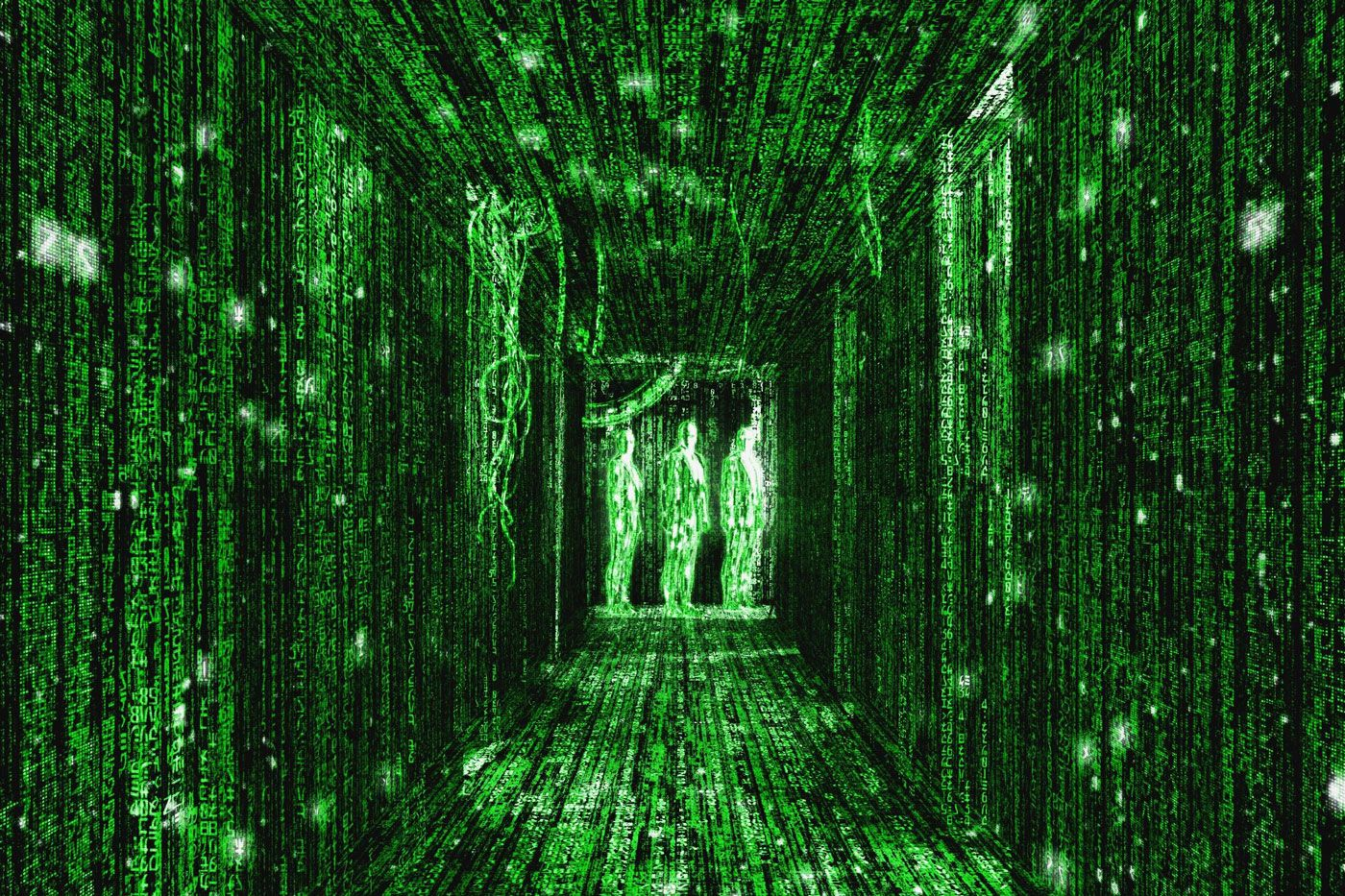
If Agent Smith doesn’t need an organic body, why do you?
In addition to the health benefits, uploading potentially eliminates risk of accidents and makes it extremely inexpensive to sustain someone. Instead of needing ~2000 (kilo)calories of specially-shaped biomolecules every day, a person might live in a subjective utopia while using nothing more than the energy provided from a square millimeter of a solar panel.[25]
A common objection to such scenarios is to object that an uploaded mind wouldn't “really” be the person who was scanned. The software might behave identically, but the person would “actually” be dead. As you might deduce from my scare quotes, I don't find this very convincing, but it's a pernicious divide. The good news is that the analysis works fine even if we restrict ourselves to only allowing biological humans. The possibility of uploading just increases the potential upside.
Speaking of identity, however, there do seem to me to be two sources of “death” that might be inescapable, regardless of whether someone is digital or organic: psychological drift and stagnation. If we imagine someone lives for millions of years, continuing to grow and learn the whole time, the mind that comes out of the end of that period might be so different that it makes sense to say that the person who went in has ceased to exist. And likewise, if someone spends millions of years repeating the same old routines, tracing familiar paths, and being stuck in their ways, is it fair to say that they're just as alive as someone who is changing?[26] Thankfully for the sake of analysis, these thorny philosophical dilemmas are probably not the bottleneck for our expected-lifespan estimates, unless it turns out that the risks from accidents and violence are extremely low.
Natural Disasters
Our final category of risk is from natural disasters. In 2011, the Tōhoku earthquake and tsunami killed about 22,000 people. The 1995 Kobe earthquake killed over 6,000. These outliers are a remarkably large part of the mortality rate in Japan, with the long-run risk from geophysical disasters being ~0.0007% per year, despite most years having very few deaths. But even that’s not very much compared to our other sources of risk, and not everyone lives in Japan. If we include all other high-income countries, it drops to about 0.00001% per year — a rounding error. And surely the rate will continue to fall, thanks to improved infrastructure technology and advance-warning systems.
But perhaps, since we’re thinking about very long timescales, we need to look bigger, and consider threats like supervolcanoes, asteroid strikes, and gamma-ray bursts from supernovae. In Chapter 3 of The Precipice, Toby Ord gives estimated base rates, which we can combine with guesses about probability of death given that disaster to get a rough handle on the risk.
Hazard | Ord’s base rate (avg. century) | Per year | Rough likelihood of dying | Annual death rate |
Supervolcano Eruption | 1/200 | 5e-5 | 4% | 2e-6 |
Toba-class Eruption | 1/8,000 | 1.3e-6 | 25% | 3e-7 |
<1/200,000 | <5e-8 | 1% | 5e-10 | |
1-10km asteroid impact | 1/6,000 | 1.7e-6 | 10% | 2e-7 |
Comet impact | 1/120,000 | 8e-8 | 12.5% | 1e-8 |
>10km asteroid impact | 1/1,500,000 | 7e-9 | 57% | 3e-9 |
Gamma-ray burst | 1/2,500,000 | 4e-9 | 1% | 4e-11 |
Total | 2.5e-6 |
In other words, these kinds of threats are maybe a little bit more of a problem than normal natural disasters, and account for maybe 0.00025% of long-run deaths, if we assume that they cannot be mitigated by advanced technology and planning. Taking away that conservatism, I think civilization will almost certainly find ways to protect people from these, such that the long-run risk is basically zero.[27]
But Will Cryo Even Work?
Given all these considerations, and neglecting the possibilities around uploading, what should we expect for the lifespan of someone who is revived from cryo into a semi-peaceful world? If we add up 0.0035% from accidents + 0.001% from homicide + 0.0005% from other causes, we get an annual chance of death of 0.005% per year. Expected lifespan is then simply the reciprocal of this mortality rate: 20,000 years. If the equilibrium of technological maturity has lots of deadly wars, it might be closer to just 100 years. In the limit of utopian goodness, it might be billions of years or more.
But before we can multiply things out to get an estimate of QALYs/$, we still need to evaluate the chance that someone who is cryopreserved will even make it to the glorious future. If cryonics doesn’t work, it doesn’t matter for our purposes whether revived people would eventually live for thousands of years.
First, there are basic objections about the philosophy of human preservation. Consider those who fall into frozen lakes, have their brain and heart shut down, then recover. Perhaps they “actually died” in that process and the person who recovered “wasn’t them.” Or maybe it’s possible to temporarily become inanimate like that, but it necessarily stops being “you” after some amount of time. (How long?) Maybe it’s possible to have your tissues shut down from being at ice-water temperatures, but it “stops being you” if things get colder than that. (Why?) Maybe putting chemicals in tissues to preserve them, then taking those chemicals out, produces a different person. (Do chemicals like propofol do this? Why would cryoprotectants be different?) I am broadly unconvinced by these objections, and won’t lend them much weight here. I encourage doubters to stare into the abyss of personal identity and come to the correct conclusions.[28]
More worrying, from my perspective, are pragmatic concerns about whether our attempts to preserve people today are good enough. Indeed, we should be worried that traditional cryonics does not adequately preserve the fine-grained structures of the brain, and an unacceptable amount of ice forms in practice. Not all biostasis companies are equally good on this front. From my perspective, Nectome looks to be the best, having clearly demonstrated high-quality preservation of the whole brain such that individual synapses are visible.
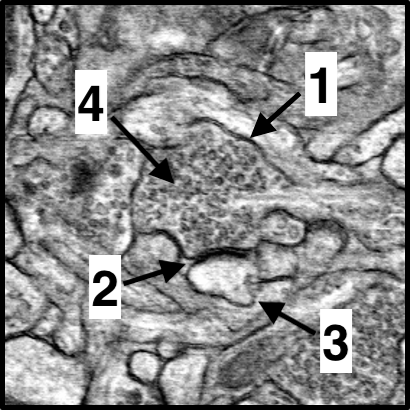
Electron microscope image of a synapse in Nectome’s prize-winning work. The synaptic bouton (1) holds a bundle of dark, circular vesicles (4) that are waiting to push neurotransmitters into the synaptic cleft (2) so that they can affect a neighboring dendrite (3).
Alongside the concerns about current preservation technologies being insufficient, one might be concerned that future revival techniques won’t be pragmatically possible, even if they’re possible in theory. Like the philosophical concerns, this doesn’t strike me as that worrying. In the fullness of time, many things will become possible, and there are no physical laws that prohibit cryonic revival.
But even if we believe that biostasis is possible, both in theory and in practice, many risks remain. The organizations preserving the people could fail due to war, civilizational chaos, or plain economic reasons. These fears get worse if you think that technologies for revival are a long way out, or if you think that war, chaos, and incompetence are likely.
Not all biostasis companies are on equal footing here. Traditional cryonics, for example, relies on a steady supply of liquid nitrogen, and there are real dangers of preserved people warming up even part-way, such as from shattering due to thermal gradients. Nectome’s methods, by contrast, look like they can keep information intact even at room temperature, and are thus more robust to a temporary disruption (including being transferred to a new caretaker). In some cases, people preserved by Nectome may be able to be passively stored in colder parts of the world (e.g. the arctic) with no energy footprint or need for maintenance. If a great-power war breaks out, people preserved in this way might be safer than anyone, since bombing rural tundra has no strategic value, and preserved people don’t need to worry about famine.
Perhaps the most worrying prospect is that of transformative AI. Where a new World War might lead to hundreds of millions of deaths and disrupt supply chains for years, losing control of the planet to inhuman optimizers might literally destroy everything we hold dear, including the people who have been preserved in hopes of a better tomorrow. This should be a concern not just for cryonics, but any long-term project to build a better world. I wrote an earlier essay about this, in which I argue that the prospect of an AI catastrophe does not mean cryonics is unimportant.
Cryonics matters in the shadow of transformative AI for the same sorts of reasons that helping starving children matters. If we drop everything to pour 100% of ourselves into reducing catastrophic risk from AI, we will have guaranteed the catastrophe of everything getting dropped. Roughly 60 million people will die in the next year — about two souls every second. We should make room in our hearts and in our portfolios to try and save them alongside the world as a whole.
Reducing existential risk might still be paramount. It is for me. But the AI situation is very dicey, and it’s hard to donate in ways that clearly make the world better, there. An AI organization that seems clearly good today, might turn out to push us towards the apocalypse tomorrow. Other charitable opportunities do not have this problem. Saving lives is good, regardless of what world will come next.
And actually, there may be a way in which cryonics also indirectly has a positive effect on reducing existential risk. Many of the people driving AI and other transformative technologies forward see it as like a wager, where they are imposing a risk to the world in exchange for a chance to save people from an otherwise inescapable fate of suffering and death. But this is, in the context of cryonics, a false dichotomy.[29] Instead of seeing transformative AI as the only way to avoid dying, these accelerationists might see that their chances of immortality are higher if we go slowly, invest in technologies like cryonics, and don’t build super-intelligence yet.
For the sake of conservative estimation, I’ll ignore this potential upside to cryonics. Instead, moving forward, I will compare cryonics against other cause areas, under an assumed condition of no existential catastrophe. This could happen because of a pause in AI technology, or because AI simply goes well.
Part 3: Costs, Benefits, and Comparisons
Let’s return to the back-of-the-envelope estimate for how many QALYs a dollar of cryo will buy.
Suppose that, even assuming no existential catastrophe, we’re very pessimistic about the prospect that people who are preserved today will get revived in the future, such that there’s only a 1/30 chance. Multiplying that by 1.5 and by 20k expected years of life gives a rough estimate of 1000 QALYs per cryopreservation.
Standard estimates for a top GiveWell charity suggest a ballpark of approximately 0.01 QALYs/$ (ie $100 per QALY), meaning that (even under our conservative, pessimistic assumptions) cryonics would be comparably good if it cost $100,000 per cryopreservation. And, as it turns out, the true cost of cryonics today is pretty close to this! Plans range from around $29k[30] to $250k. This perspective, in other words, suggests that getting someone preserved is more effective than donating to a top global poverty charity.
There are, however, several issues with this estimate, in both directions. We’ve addressed some of them, like the prospect that the future might be more dangerous or more safe than our current world. Or consider that our assumption of 1.5 quality weight could be a massive underestimate of the joy of living in a technological paradise.[31] But the most important objection is probably that this comparison is apples-and-oranges. The estimates for anti-malaria charities or Helen Keller International are based on assumptions that the children (and others) who are saved from disease and malnutrition will have lives that resemble the people in their communities, and that they’ll have normal human lifespans. But if we’re allowing for all this speculation about lifespans of thousands of years, shouldn’t we also see the people in poverty that are saved from dying this year as potentially getting to live for a very long time in a technologically advanced world?
Indeed, this is part of why I still donate to alleviate global poverty. If technologies like transformative AI are about to radically extend human lifespans, such that children who are saved this year will naturally go on to have utopian futures, then the approximately $4k price tag for saving a child in a developing country is clearly better than the tens of thousands needed to preserve someone with the hope of future revival.
But this makes two important assumptions, that might turn out wrong:
- Poor people in the developing world might not get radically extended lifespans by default, even conditional on AI not causing a catastrophe, because it could turn out that technological development continues at a more historically-normal pace, rather than exploding into a wild singularity. This normal future could be the result of a natural slowdown, due to diminishing returns from scale, or it could be from a global pause on AI.
- It could still be worth saving the lives of children for a variety of reasons, of course. Even using our narrow QALY-maximizing model, those children might grow up to become cryonics consumers. But it would make the comparison more apples-to-apples.
- The price of biostasis might drop, and the chances of its success might rise, if it gets more support.
I find this second point particularly appealing. The unit economics of human preservation do not suggest that the price tag of $100,000 per person is anywhere close to what we can expect from a world where cryonics has gone from this niche oddity to a mainstream option with millions of consumers each year.
Cryonics at Scale
Much of the cost from cryonics comes from the need to preserve people indefinitely. When someone buys a preservation, they need to put down enough money so that the company can take care of the preserved person using only the expected interest. If it takes $2.2k/person/year for the facility, cooling, legal fees, and so on, then a fund getting a 4% real return each year will need $55k up-front, just to cover the upkeep.
But the economies of scale are very favorable here, especially for a company like Nectome which doesn’t need liquid nitrogen or specialized containers. A back-of-the-envelope calculation I did in April indicates that $10/person/year is a reasonable guess for where things might end up at large scale, meaning the up-front investment for indefinite upkeep would be in the ballpark of a couple hundred dollars.
The chemicals and equipment involved in the procedure are already fairly inexpensive, and will likely come down to costing on the order of $1k/preservation. Much more expensive are the labor costs of a team of specialists. But because the preservation procedure is a one-day event, it seems likely that these costs will be less than $8k. And finally, there is likely to be a decent amount of logistical and transportation costs, probably in the ballpark of $5k (in countries like the USA, at least).
All together, in a world where biostasis has entered the mainstream, and scaled over many years to have efficient, at-scale operations, I think $15k/person is a reasonable estimate for the most affordable (but still reasonably high-quality) services. If we think — due to the technology and institutions maturing — that there is a coin-flip chance of such a preservation working, then under our earlier math we get 0.6 years of life per dollar — sixty times the (naive) estimate for current global poverty charities.
The picture is even better, actually, since the vast majority of these consumers, presumably, are paying for the preservation with their own money, rather than being supported by donors.[32] And not only would this money be otherwise going to things like graveyards, it would otherwise be spent on end-of-life medical care. In the United States, routine, in-home hospice care — not counting additional medical care, which can be extremely expensive — costs around $200 per day. The option of biostasis could likely then pay for itself many times over by giving people a way to choose life that doesn’t involve pushing futilely against the end in an effort to buy a few more frail months or years (at best). Extra capital that’s freed up from end-of-life spending could then go to better causes, enriching and strengthening the world.
Cryonics is not yet large-scale, and the path to it is uncertain. For one reason or another, companies in the space have traditionally been extremely conservative, operating on some mix of shoestring budgets, almost no advertising, and corporate structures that discourage growth. Nectome’s much more ambitious goal of making biostasis mainstream has been a breath of fresh air, from my perspective. I think they have a lot of opportunities ahead, particularly in emerging markets where there aren’t strong religious concerns, such as China and surrounding countries.

Chinese culture broadly looks favorably on longevity, and has a somewhat more favorable view of the pursuit of immortality (though it’s complicated). One of the more prominent traditional deities, Xiwangmu, is said to own a peach garden which grants immortality to those who consume the magical fruit.
What About Discounting?
Some readers will have had a nagging objection ever since I framed the cost-benefit analysis in terms of expected lifespan: what about temporal discounting? A dollar in hand today is clearly better than the promise of a dollar next year, even if we’re 100% certain that the dollar will arrive. Some of this is due to the capacity to invest the money, and the way that inflation means that the purchasing power of a dollar decreases with time. But aren’t we also supposed to intrinsically value things in the immediate future more than we value things that are a long way off? Don’t humans prefer a vacation next month to a similar vacation next year?[33]
This is a common assumption in everything from economics to reinforcement learning, and is often framed as “exponential discounting,” where each future timestep is intrinsically worth some fraction (e.g. 0.999) of the one before it. And indeed, if we are exponential discounters, we should strongly prioritize immediate concerns, and neglect impacts on the far future — even major ones.
But this is wrong for several reasons. Let’s start with the observation that humans do not actually do exponential discounting. Rather, real-world preferences mostly map onto a hyperbolic curve, rather than an exponential. (Even in rats and pigeons.) This is important because (in contrast to exponentials) hyperbolic curves mostly flatten out, such that people do still care a little bit about what will happen in the far future, and that amount of caring barely diminishes over time.[34] Intuitively, we see this in something like a psychological “near mode” and “far mode”. People care a lot about what’s going to happen to them in the next few minutes, next few days, and next few weeks, and they have a lot of preference here for immediate pleasure and delayed pains. People care less, but still care a decent amount, about things that will happen in years, decades, and even centuries, but have far weaker concerns about whether these future good things happen a little sooner or a little later, and put more weight on the quality of the things themselves.
For straightforwardly life-maximizing hyperbolic discounters,[35] the gains for having a newborn who would counterfactually die at age 1 instead live to be 80 are less than the gains for having a newborn who would counterfactually die at 80 live to be 20,000.[36] Humans vary in how steeply they discount, but using figures from one survey,[37] the typical gain from getting a “cryonics lifespan” is around 32% more than the gain from giving an infant a normal lifespan.[38] This is, of course, far less than the ~250x factor that one gets from a 20,000 year expected lifespan, and thus makes biostasis look maybe 0.5% as appealing as before.[39]
But is it really correct to discount like this? Exponential discounting, at least, has the property of being time-consistent. If you prefer paying price X on Tuesday for Y benefit on Wednesday, then you’ll continue to have that preference even as the time for paying approaches. Hyperbolic discounting, on the other hand, leads to preferences predictably reversing. For example, someone might initially agree to pay a price down the line, then change their mind as the payment-time arrives. (We see this in conversations about lifespans, where young people say things like “I’d be okay dying at 80” then predictably express a desire to live much longer once they’re in their 70s.)
And, more fundamentally, are discount curves like this… ethical? Do the lives of future people really matter less because they’re in the future? It might make sense to prioritize money and resources that are in the past, since they naturally have a bigger investment return, but when we’re thinking about raw wellbeing, as an end in itself, it seems a bit perverse to reason that way. Indeed, one can easily see longtermism as a rejection of this kind of discounting, at least when weighing things ethically.
Among the many ways in which supporting cryonics could lead to a better world, we should not neglect the way that it can help bring people out of thinking purely about the present moment. It’s easier to bring people on board with longtermism in general if they expect that they or people they share the world with might live to see it. How much better might our world be if people focused on sustainable, long-term improvements to the world?
Part 4: The Bottom-Line
There’s an old saying in rationalist circles that when doing an analysis like this, you should stare, long and hard, at the numbers and then, once they make sense, you should throw the numbers away and go with your gut. I don’t think the explicit analysis in this post should be convincing on its own, but rather it demonstrates that, at least under certain assumptions, biostasis passes some basic sanity checks about being an effective way to extend people’s lives. But we should also step back and ask whether there are other concerns that haven’t been addressed, perhaps because they’re harder to make explicit or formal. Does it feel wholesome? Might it have positive or negative higher-order effects? What would your grandmother think?
Imagine if you found out that Benjamin Franklin, Leonardo da Vinci, or even just some random Roman citizen from the year 26 had somehow survived to our present day. Would you want to meet that person? Would their survival fill you with excitement and joy?
Right now, cultures, languages, and traditions are going extinct alongside the generations that grew up in them. How much value is lost, for the entire world, with each passing year? What if we could hold on to those beloved parents and grandparents? Isn’t that a world with more hope?

Even from the perspective of trying to reduce near-term suffering, cryonics seems to have things to offer. By letting people who are mortally-ill choose the time and place to say goodbye, they gain dignity. The dream of a beautiful tomorrow brings hope and comfort. And it is a less-painful, more humane “death” than just about anything else on offer.
At the end of the day, once I set the math aside, I feel compelled to support cryonics, not just from a place of self-interest, but from a sense that cryonics fits into and complements a broad portfolio of ways to make the future go well for everyone. It feels like a kind of investment in the future — a way to bury precious time capsules of human existence, like seeds in the frost, waiting patiently for the spring.
As such, not only have I bought cryonics plans for my parents and other immediate family (they’re really not so expensive when paid for in advance or with life insurance!), but I also try to write and speak about the opportunities available. Nectome is a for-profit business, which helps with their plan to radically grow and change the world (e.g. through investment and advertising), but most cryonics companies are non-profits that survive in large part from individual donations. Regardless of whether you’re a potential cryonics consumer, an investor, or a large-scale donor, I encourage you to join me in trying to change how our culture relates to death, and help people live to see a beautiful tomorrow.
A word from my sponsor: Nectome is currently running a sale of $29k “discount cards” that allow someone to purchase their services (for themselves, a loved one, or even a stranger) at a discount that grows with time. Those who hold their cards for ten years get 100% off. For more, I suggest checking out the retrospective recently posted on their blog, and/or contact them at hello@nectome.com.
- ^
This essay is written in an entirely personal capacity and I am not here representing MIRI in any way.
- ^
Cold temperature is a natural way to preserve tissue; it’s why we put meat in the refrigerator! But the word “cryonics” also invokes the concept of temperatures in the negative hundreds of degrees (“cryogenics”), around the point where gasses like nitrogen condense into liquids. These ultra-cold temperatures bring a host of issues (most notably ice) that demand using chemistry to further protect tissue. Nectome primarily uses chemical fixatives (aldehydes) to preserve tissue, which allows storage at normal freezer temperatures or even room temperature, and is thus “not cryonics” in some technical senses. I think this is a little silly. The word “cryonics” is so synonymous with longevity via biostasis that I’m using it here in a way that includes Nectome, despite the fact that they only store at below-freezing, not liquid-nitrogen temperatures. To read more about the nuances around temperature, check out my mega-essay Nectome: All That I Know.
- ^
These two reasons are secretly the same reason. The nonlinear value of money is a reflection of how purchases in general, whether stocks or apples, are diminishing (or capped) in how much expected utility per dollar they can provide. The second point is really just a special case of the first, but I make it explicit to show that even if you don’t assume logarithmic value of money, as long as each specific opportunity is limited, there’s still a natural reason to be risk averse.
- ^
“Momentary anguish” makes an important assumption: that the pain of the hospital visit isn’t traumatic in a way that leads to a lasting psychological wound on the patient. It can definitely be a wise investment to avoid this kind of long-term damage.
- ^
There was a surge of interest in micro-lending a couple decades ago, exemplified in Muhammad Yunus’ 2006 Nobel Peace Prize. The idea that the developing world can do just as well with an explicit loan as with a cash transfer, if not better, is very appealing. But a collection of studies circa 2015 showed that the average effects of these sorts of loans are close to zero. While finance in developing economies is certainly important, and sometimes a place where philanthropists can help, it’s not a replacement for other forms of assistance. If the typical recipient were a solid investment, the private sector is usually happy to foot the bill. Collecting can be a huge logistical overhead, and it invites moral hazard if there's no punishment for losing the money. Restricting money to those who are likely to repay is exactly the kind of restriction that a free donation can sidestep, and thus outperform, in terms of value per dollar.
- ^
There are also many arguments against diversification, especially at the level of the individual donor. Steven Landsburg, James Snowden, and Sam Bankman-Fried have all argued against diversification. These arguments tend to center on the idea that there are no meaningful diminishing returns when donating at the scale of the individual, and that in practice, people use finite donations to slake their appetite for altruism in a way that allows them to feel good with giving less. (Others, like Brian Tomasik, have presented good arguments both ways, while ultimately settling on the importance of diversification.)
I entirely agree with the pragmatic concern of focusing too heavily on what feels good, and not enough on the actual impact. We must be vigilant. But the notion that individuals only donate on the linear margin neglects the decision-theoretic correlation between donors (which is often as simple as plain social influence; where I give influences where you give). If it makes sense for society as a whole to pursue a diversified strategy, then we can get that diversification both through having different people donate to different charities or by having individuals diversify. If the dollars are allocated identically, it’s likely to be better for individuals to diversify for reasons like cultivating a wide range of concerns (and getting more warm-fuzzies!). Different people, in fact, donate differently, so the pressure on individuals to diversify is lessened, but we should not ignore the way in which we act in unison (whether deliberately, or incidentally).
- ^
Or more accurately: less naively consequentialist. I am broadly convinced by the heart of consequentialism — that it’s coherent to numerically weigh counterfactual worlds (or histories), and that normative principles ultimately ground out in preference for worlds with a higher score, even if things get more complicated in practice.
- ^
My dietary choices are kinda complex. I still eat clams and shrimp, for example. While I am not very concerned with invertebrate welfare (except cephalopods!), and it would be hard for me to entirely cut seafood from my diet, I am happy that some people pay attention to such things, and have spent many hours reading Brian Tomasik, Bentham’s Bulldog, et cetera. As a compromise position (to hedge my moral strategy!) I have donated enough to the Shrimp Welfare Project that I believe my lifetime impact on such creatures is net-positive, even if it turns out that my work in avoiding unfriendly AI isn’t relevant.
- ^
As part of prioritizing wholesomeness, I’m also an advocate of “ineffective altruism” for EAs. I give money to my friends and family. I give money to theaters and museums. I (occasionally) give money to beggars. I think doing so is good for my community and my soul in a way that really matters, even if the first-order, utilitarian impact isn’t as large as my other donations. (TBC, outside of EA circles I centrally try to promote effectiveness in giving. But I find that it sometimes helps if it’s not framed as zero-sum, and I can still wholeheartedly commend people on their donations to normal charities.)
- ^
Arguendo: “Cultivating virtue”? Surely you aren't saying that the point of charity is to make yourself a better person. The point is to do good works!
Aristotle: No. The point is to do good. And it is good to attend to the effect on the character of the donor, even while the main focus is (and should be) on the welfare of the recipient. A man who scourges himself and becomes base in one year, even when looking to help others, will cease to be of help to anyone in the next.
- ^
Nectome and some other companies do perform similar procedures on non-human animals, most notably dogs. I’m focusing on human preservation in this essay because it’s less controversial, but I think there is some case to be made that cryonics is good for other animals, and that there are potentially huge upsides to animal wellbeing if the technology becomes large-scale. (My guess is that it’s not directly competitive, as a cause area, with ending factory farming, for those focused on nonhumans.)
- ^
“Increase happiness, decrease suffering” is technically specific to hedonic utilitarianism. Preference utilitarianism (which I’m actually more favorable towards) says “increase preferred states, decrease dispreferred states.” But in addition to that being much less punchy, it also doesn’t matter much for our purposes, since concretely, people want happy lives and disprefer suffering and death. For a similar reason, focusing on deontological or virtue-ethical frames mostly matches the utilitarian calculus, since the various metaethical theories tend to converge except in specific edge-cases. It’s virtuous to strongly consider how to do the most good according to utilitarianism, et cetera.
- ^
QALYs are, unfortunately, defined a bit perversely in the literature. Like Disability-Adjusted Life-Years (DALYs), they’re nearly-exclusively focused on health, and neglect other aspects of wellbeing. An alternative, WELLBYs, theoretically tracks broader life-satisfaction, but in ways that I still take issue with. (Self-reports on 10-point scales are super arbitrary! People mostly don’t have the ability to internally locate how good/bad their lives are in some objective sense, and instead report based on lazy comparisons that suffer from massive anchoring effects, such as comparing how they remember feeling at various times in their lives, or comparing themselves to neighbors.) In this essay I’m going to pretend that QALYs track gestalt wellbeing and not stare too hard into the abyss. Feel free to complain about this in the comments; I would love a better practical metric.
- ^
The big problem with reasoning about really large utilities (even non-infinite) is that you are running on corrupted hardware, such that even if the particular analysis you’re doing is valid, you will become vulnerable to agents (including yourself) that want to put you into Pascal’s muggings in order to control you. To defend against this, it’s good to have a utility function that saturates quickly (i.e. you hit diminishing returns on causes and want to have a diverse portfolio!), which will naturally put most of your attention on skeptical epistemics — “How do I know that this supposedly big number is real?”. From this angle, conservative estimation is about trying to get a handle on the probability of something at least pretty good, since the gains from “pretty good” to “extremely good” aren’t that big, once the diminishing returns are factored in.
- ^
People don’t actually die from “old age”; they die from things like multiple organ failure or whatever. This is an important point in that senescence (ageing) is really just an accumulation of many specific problems, each of which can be seen as something like a disease, so curing all diseases includes curing ageing, in the limit. Still, so many things go wrong as a result of senescence that it’s still a reasonable shorthand to say that people die from getting old.
- ^
Drug overdoses and poisoning are the leading cause of accidental death in young American adults, in contrast to places like Italy or Japan. This is partly because America has more of a drug addiction problem, and partly because the US is more likely to treat such cases as accidents, rather than suicides. In the far-future, with the advent of powerful medical technology, it’s unlikely that drug addiction will be as much of a problem, and pervasive intelligence (eg smart pill bottles) promises to eliminate most of the remaining true accident risk.
- ^
Cars are mostly dangerous due to human error and bad infrastructure (e.g. lack of sidewalks and poorly-set speed limits), both of which we should expect to disappear in the future as our built environments improve and machines take over the task of driving. Despite some shady statistical practices from the analysts who work for Waymo, fully-autonomous vehicles really are much safer, and promise to become even more safe as human drivers stop being the norm.
- ^
Looking at EU data, people aged 25–29 have a rough accidental death rate of 11/100,000 (0.011%), a transport accident rate of 5.5/100,000, and an accidental poisoning rate of 2/100,000. Subtracting the latter two from the former gives 0.0035%.
- ^
The USA is an outlier in terms of violence compared to places like Canada, Japan, or the EU. Hopefully future societies can do better!
- ^
The CDC says people aged 15-34 have a hypothermia death rate of <0.5/100,000. The death rate from heat is comparably low, at 230 deaths out of about 89 million people in that age range = 0.26/100,000. Starvation/malnourishment is even rarer, at maybe 0.03/100,000 for young people. Most of these are due to some combination of bad health and drug use, which are likely to be solved with time.
- ^
Red dwarf stars, which are common in the galaxy and last trillions of years, produce enough radiant energy to sustain human-habitable space stations. More speculatively, civilization could starlift brighter stars (like Sol) to make them dimmer, stir dim stars to allow stellar cores to last longer by consuming more fuel, or possibly even convert stars into near-undying black holes, which can serve as power-sources in a variety of ways.
- ^
Let’s set aside questions of whether one can have a worthwhile existence simply from “boring” pleasures, like eating delicious but familiar foods every day. If “fun” requires novelty, might we run out of novel things in the deepness of time? This worry, to my ear, resembles John Stuart Mill’s fear in his autobiography that the space of all melodies is finite, and that existing musicians had already found the best, leaving no room for another Mozart.
He later treated that worry as a symptom of depression, rather than a serious argument, and the math of combinatorics makes this clear. While extremely short collections of notes drawn from a finite set will run out, real music involves continuous waveforms created by the overlay of all kinds of instruments, demonstrating variations in octave, harmony, timbre, phrasing, and more. If our definition of music is broad — say a collection of notes on sheet music at most 3 minutes at 120 bpm — then it would take approximately 10^2809 years to listen to all possible songs back-to-back. That’s around 10^2709 times longer than it’ll take for all the ordinary matter to decay, all the black holes to evaporate, and the universe to become a nearly-empty void (assuming certain physics). Most things are like this. Even if you read a book each minute, information theory says that it’ll take you thousands of orders of magnitude longer to read every book than to listen to every song, even if we cap the length of the books and demand that they make sense. Artifacts, organisms, and ecosystems are obviously even more complex than songs or books, to say nothing of computer programs, cultures, or worlds.
The bottleneck is not our ability to find novel things, but rather to appreciate them as novel. We can imagine a very dull person who reads book after book and just thinks to himself “it’s all the same!” I’ll address this in more depth in the next footnote, but here I want to emphasize that it’s definitely not all the same in objective terms. We will have truly unique experiences on offer for as long as we desire.
I recommend the Fun Theory Sequence to those who want to read more.
- ^
Perhaps we won’t run out of things to do so much as run out of caring. Once you’ve seen a million dramas, perhaps it is natural to simply cease to care about the characters, even if their situations are unique and would be engaging to a younger mind. But to this I say: we can make our minds young, just as we can make our bodies young. There is nothing magical about caring, and if we choose it, we can reshape ourselves to avoid this fate of jaded numbness. We already do something like this with antidepressants. If someone stops finding the things they used to love as engaging, we see this as sickness, not a sign that the time has come for them to leave the world. And with medical technologies of the future, surely we could shape and target this kind of intervention with precision, allowing us to sustain focus, love, and attention on precisely the parts of the world that we deem worthy.
Would this kind of mind-alteration be a violation of some natural order? Would it erase who we are? I don’t think so. We change our minds from the inside all the time, without such concerns. I am both the statue and the sculptor. And choosing how my mind works can be a powerful way of becoming self-actualized, even if there are perils. Operating on the mind from the outside will add to the perils, but it won’t fundamentally change the ethics.
We'll talk more about self-modification under “inescapable diseases.”
- ^
If we’re willing to consider weirder things, we should also think about the possibility of options that are death-like, but which preserve important aspects of the person, such as being transformed into a child again, and having your old memories archived for that child to access once they grow up, or fusing minds with someone else. The notion of dying versus not-dying may reveal itself to be a false dichotomy, such that the whole exercise of calculating a mortality rate comes off as philosophically confused. Still, if these options are better than normal existence, we should model them as having at least as many units of utility as a normal lifespan.
- ^
The brain probably requires around 10^16 operations per second for a functional emulation. The Landauer limit is 3e-21 J/bit at room temperature. Reliable switching probably needs many bits per operation, but also we might be able to run colder than room temperature, so let’s say 10^16 * 10^-19 = 10^-3 Joules per subjective second. (Reversible computing might drive it even cheaper still.) A patch of sunlight generates a little over 10^-3 Joules per second per square millimeter. This assumes no day-night cycle and near-peak efficiency, which I think is reasonable when imagining space structures in the distant future. (If more energy is needed, you can also get closer to the sun.) Thus, the head of a pin is big enough to support approximately one (emulated) dancing angel.
- ^
My best guess, having spent a decent amount of time thinking about it, is that personal identity is a psychological and social construct that doesn’t carve reality at the joints very well once we start getting into the edge cases of advanced technology. “Is this person alive or dead” or “are these two instances of a human the same person or not”, under this view, don’t have objectively correct answers any more than “is cereal a kind of soup” has an objectively correct answer. Things simply are, and we choose the categories based on whether they capture what we care about. Some people, I think, will care about their future selves continuing to grow and change, while others will focus on being faithful to some invariant properties over time. Still, even if personal identity turns out to mostly be a social/psychological construct, the value of preserving information persists.
- ^
Some readers may fear that there are risks that are not well accounted for in the historical data because they create an anthropic shadow. I find anthropic shadow arguments to be generally very weak. If there were truly a large source of such risks, we should see a lot of close calls, which we don’t. Some like to argue that close calls are also pressured by anthropics that selects for observer moments in worlds with lots of inhabitants. If a disaster kills 99% of all people, wouldn’t that mean you were less likely to observe that you were in that timeline? I think this is confused reasoning, and it is easily falsified by observing that the universe that you’re in could have a lot more people. See this essay for my more general thoughts on anthropic reasoning.
- ^
Namely, mine. ????
- ^
It’s also a false dichotomy in the absence of life extension technology, since there is still a question of speed and caution. Even those who take a person-affecting stance that we must try to save the lives of existing people by building god-like AI should recognize that it may be reckless to charge towards the technology at full speed, rather than taking, say, a couple decades, to really figure out alignment and avoid the pressures of the current arms-race.
- ^
The Nectome discount card isn’t the only option for those seeking cryonics at about this price. For those who need cheap biostasis soon, I recommend the Cryonics Institute (~$29k) or Sparks Brain Preservation ($45k, or about $36k if you sign up at least two years in advance).
- ^
It may also be worth considering S-risks where future beings create something like hell, and the quality of future life is extremely negative. I don’t think that these kinds of futures are at all likely, but for those who are more concerned, it may be worth noting that Nectome allows people to specify conditions under which their remains are to be destroyed, such as if a tyrannical world government appears to be forming.
- ^
Donors could definitely still be involved in allowing it as an option for the poor, of course.
- ^
Some people think that discounting is necessary to save you from infinite utility reasoning that leads to Pascal’s mugging and all the rest. This is false. You need some way to bound utility, but it doesn’t have to be (and shouldn’t be) temporal discounting. For instance, suppose you have a utility function with a maximum value of 1, and you want to maximize the number of years of life that people live. One way of doing that is to get 0.5 utility if at least 1 trillion years of life happen across all people, then 0.25 additional utility (ie 0.75 total) if there are 10 trillion years of life, and an additional 0.125 (0.875 total) if there are at least 100 trillion, and so on. In other words, something like U(x) = 1 - 0.5^(1+log⏨(x)). (This sort of function has the problem of being unbounded going towards zero, but we can ignore/patch that.) Looking at the history of Earth, you might guess that humans are the only people, and we’ve collectively lived maybe 2 trillion years, so that’s 0.594 utils. If someone offers you 100 trillion extra life-years in the distant future at the cost of 99 trillion life years in the immediate future, you’ll go for it! No discounting factor! But if someone offers you a lottery of 50% chance of infinite additional life years or 50% of zero additional years, versus a sure-thing to get 100 trillion life years, you’ll go with the sure thing because U(102) > 0.5*U(∞) + 0.5*U(2). Robust to infinite wagers! Easy.
- ^
Hyperbolic discounting is usually described with a utility coefficient of g(t) = 1/(1+kt), where k is the governing parameter for the degree of discounting. If we imagine a man who thinks that getting the same (extrinsic) reward next year is half as good as getting that reward today, then k=1/year, and the hyperbolic model suggests he’ll find a two-year delay to make things ⅓ as good, and a nine-year delay makes things 1/10 as good. At a delay of nearly one-thousand years in the future, he’ll think things are approximately 1/1000 as good, even when comparing one decade to the next. “One-thousand-and-two years or one-thousand-and-twenty-two years — it’s almost the same to me!” By contrast, an exponential discounter uses a utility coefficient of g(t) = e^(-kt). Fitting the same discount-next-year-by-half preference to an exponential man gives an assumption that two years away is ¼ as good, and three years away is ⅛ as good. At one-thousand years the exponential discounter sees the value as almost zero. And, perhaps more importantly, they continue to sharply discount, such that a reward after one-thousand-and-two years is worth one million times as much as a reward after one-thousand-and-twenty-two years, much as they find that a reward today is a million times as valuable as a reward after twenty years.
This contrast is also apparent in the way that exponential discounting means a fixed reward each year (to infinity) has a finite value, whereas a hyperbolic discounter sees it as having infinite value.
- ^
Humans definitely aren’t so straightforward. For instance, we care a lot more about kids not dying than we do about adults, even when the adult life-gain is greater.
- ^
To model this, let’s assume that all life is equally rewarding, and we use a hyperbolic discount curve 1/(1+kt). We then can compare a definite integral that starts at t=1 and goes to t=80, against another that starts at t=80 and goes to t=20,000. The indefinite integral is equal to ln(1+kt)/k, which means a definite integral from t_0 to t_1 is ln((1+kt_1)/(1+kt_0))/k. The natural log is monotonic and increasing, so to determine which is higher, we need only consider whether (1+20,000k)/(1+80k) is larger or smaller than (1+80k)/(1+1k). By algebra, this is the same as comparing 1+20,001k+20,000k^2 with 1+160k+6,400k^2. Since 160 < 20,001 and 6,400 < 20,000, it does not matter what k is. The cryonics lifespan is better.
- ^
The Kirby monetary choice questionnaire uses amounts under $100 and delays under 200 days, so anyone with a revealed preference that discounts faster than k=0.25/day or slower than k=0.00016/day gets rounded off to those extremes. In practice, only a few percent of respondents fall beyond the edges (though some people, like drug addicts, clearly have steeper discount rates). I’ll be using a point-estimate of k=0.012/day, which is the geometric mean of the Myerson et al. survey. This translates to k=4.38/year.
- ^
Combining the assumptions from the last two footnotes, the integral from a mortal lifespan is ln((1+80*4.38)/(1+4.38))/4.38 = 0.954. The integral from the cryonics lifespan is ln((1+20,000*4.38)/(1+80*4.38))/4.38 = 1.26. Thus the ratio of the gains is 1.32.
- ^
There is also a concern that the estimated 20,000 years of life should be even further discounted because there is a delay before they are lived, making even the first year of extended life a deferred reward — and potentially greatly deferred if you expect it to take centuries or millennia for cryonic revival to become possible. This raises yet another wrinkle in the temporal discounting story: do people discount based on sidereal time or subjective time? That is, if we assume that someone does not experience the passage of time in cryosleep, then will they reason that the reward of getting to see the future will happen almost immediately, since they won’t subjectively experience the wait, or will they treat it as in the distant future, because the rest of the universe will change without them. I don’t know of any practical studies measuring whether humans discount one way or the other, and my guess is that most people simply haven’t thought about it enough to have a consistent answer (though sleep makes such questions a somewhat everyday affair, so I might be wrong). My sense is that insofar as exponential discounting is correct on the grounds of opportunity costs, then it should track sidereal time, and insofar as discounting is more like a hedonic preference, we should override it when weighing morality. But I’d love to hear from readers who think that temporal discounting is legit: is sidereal or subjective time the right measure?
Discuss
Popular Products
-
 Wireless Caregiver Pager Calling System
$138.99$100.78 -
 Infrared Heat Lamp Therapy Floor Stand
$147.99$55.78 -
 Adjustable Slant Board Calf Stretchin...
$176.99$99.78 -
 Body Scrub Massage Brush
$43.99$29.78 -
 Lumbar Support Seat Pad
$103.99$71.78