Doctors Dismissed Her Digestive Symptoms As Diet-related. It Was Crohn’s Disease
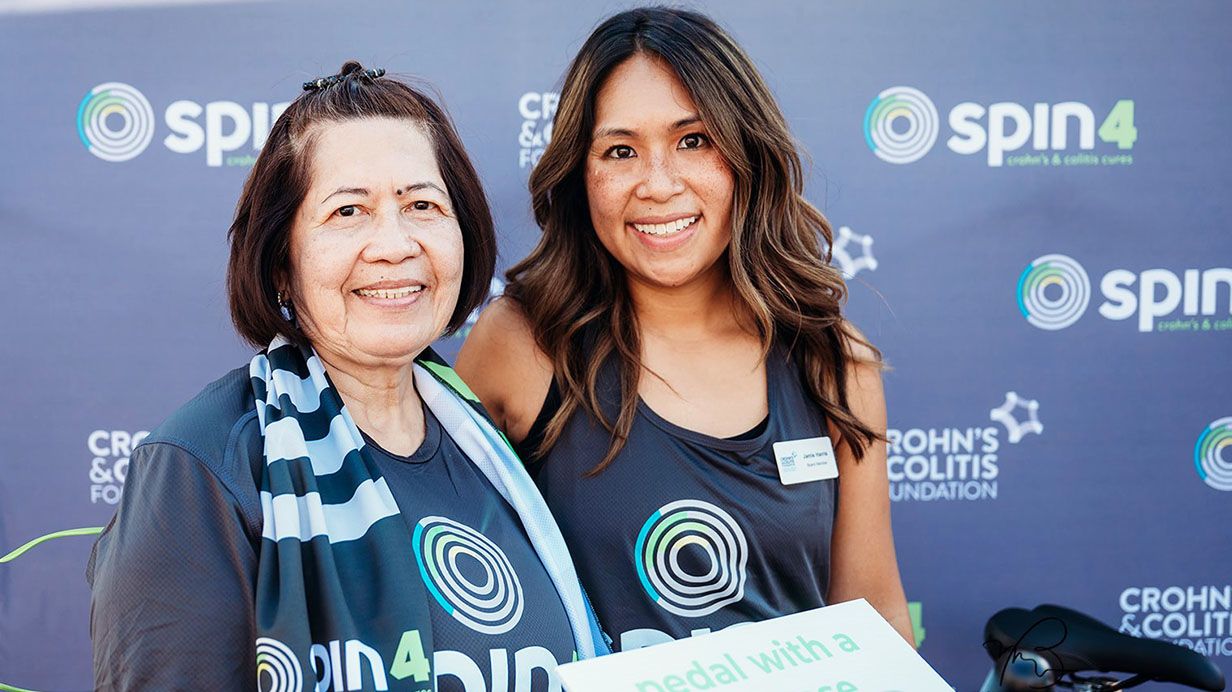
- Jamie Harris was in her 20s when she was diagnosed with Crohn’s disease.
- She shares her journey from symptoms and diagnosis to finding effective treatment to help raise awareness.
- Harris wants others to know that persistent symptoms like frequent bathroom trips, fatigue, or abdominal pain aren’t always due to diet.
In 2010, Jamie Harris was living her best life in her 20s. She was in graduate school pursuing her teaching certificate and dating the love of her life.
“It was a fun time in my life…I went on a trip to London with my boyfriend, who now is my husband,” she told Healthline. “I went to the bathroom, and I didn’t know if it was from travel, but I had blood in my stool.”
When she got home from the vacation, her symptoms continued, including an intense stomachache.
After seeing her general practitioner, he told Harris to add more fiber and psyllium husk to her diet. However, the sharp pain in her stomach continued for a year. She also started losing weight.
At this point, Harris was student-teaching and shared her concerns with one of her own teachers, who urged Harris to go to the emergency room.
“They ran the blood tests and were like, ‘Wow, your white blood cell count is way elevated,’ and then they ran further tests, and then that’s when I got referred to a GI doctor,” Harris said.
The GI doctor officially diagnosed her with Crohn’s disease, a chronic, relapsing inflammatory condition that can affect any part of the gastrointestinal tract.
“Crohn’s disease can present as superficial or deep ulcers (canker sores), and if left untreated, it can progress to bowel damage, including a buildup of scar tissue—what we call strictures or fistulas—which are connections between one loop of bowel and another loop of bowel or a connection from the bowel to the skin,” Emanuelle Bellaguarda, MD, Gastroenterologist and Associate Professor at Northwestern University, told Healthline.
Harris’s first year of navigating the diagnosis was difficult physically and mentally.
“It was like I kind of went into a little depression. I’m supposed to be at the peak of my life, and it wasn’t that anymore,” she said.
While food matters, it’s not the only factor
When Harris began experiencing symptoms, her mom, who was a registered dietitian for 40 years, suggested that she may have an intolerance to gluten.
“I started cutting back on [certain] foods, and my mom told me to keep a food journal, which I did, but I felt like everything was hurting my stomach,” said Harris.
She also tried the BRAT diet (Bananas, Rice, Applesauce, Toast) for a while.
“And then I was just so limited because every time I ate, I felt like I would have a stomachache, so I did try to manage through diet, and then it’s kind of bad, but I just stopped eating because it was so painful, and that’s when I lost 20 pounds,” Harris said.
While eating healthy is important for gut health and may improve symptoms such as diarrhea and bloating, Bellaguarda said there are no studies showing that diet alone can heal the inflammatory burden associated with Crohn’s disease or prevent its progression.
How to effectively manage Crohn’s disease symptoms
Bellaguarda said treatment of Crohn’s disease depends on its presentation, a patient’s comorbidities, and prior medications.
While doctors know more about Crohn’s disease today than they did 10 years ago, there is still no cure.
“So, when we think about a treatment plan for Crohn’s disease, we focus on a two-step approach to therapy,” said Bellaguarda.
The first step is to get patients well symptomatically and heal the bowel back to normal or stabilize the progression of the disease. The second step is the maintenance phase.
“We continue the medication that worked to get them well as their maintenance therapy,” Bellaguarda said. “Fortunately, we do have many effective medications to get patients well and keep them well, including biologic agents such as Omvoh or small molecule agents such as JAK inhibitors.”
Initially, after Harris was diagnosed, she tried different pill medications to manage her condition, which masked some symptoms.
“I never felt fully 100%. And what doctors like to do is they won’t move you onto a new medication until one fails or they don’t see improvement,” she said.
After two years of trying medications, she started getting infusion therapy. Today, she receives the infusion every six weeks.
“Before, infusions would take like four to six hours [which felt] like the whole day. But now with the options, they’re a little bit faster, so I can go on with my life and day,” Harris said.
She also exercises regularly and follows a Mediterranean diet, both of which help manage her symptoms.
“I’ve had the disease for 16 years; I know my trigger foods,” said Harris. “I don’t like to mix a lot of ingredients, so it’s very, very plain, very bland, but there are times when you fall off the wagon.”
She shares her story to help others living with Crohn’s disease
“Sixteen years ago, I didn’t know anyone who had this disease, and it was very lonely. I felt isolated. I couldn’t relate to anyone,” she said.
That changed after she got involved with the Crohn’s & Colitis Foundation. She is currently a member of the foundation’s Board of Directors.
“Now that I’ve shared my story and I tell people and I fundraise for it, it’s more common than you think. It’s not really a sexy disease; not everyone wants to talk about bowel movements or stool. But there are millions of people who suffer from it, and I don’t want other patients to feel alone,” said Harris.
She urges others to advocate for themselves if they feel like something isn’t right. To spread the message, she teamed up with the medicine company Lilly.
“It took two years to get my diagnosis. I felt like I was suffering for all of that time, and sometimes I thought it was in my head, like, am I making this up?” she said.
As real as the condition is, she said, those who have it can live a full life.
“It’s not the end of your life. You will move on. I’ve always been a positive person, but there’s hope,” she said.
Bellaguarda agreed. “We expect our patients to have a healthy, normal, and fulfilling life,” she said.
When Harris was first diagnosed, she worried her boyfriend wouldn’t stay with her or that her life would be over. The uncertainty of whether treatment would work was also unsettling.
“But now I try not to think like that. I hope there’s a cure in my lifetime, and I just try to live everyday life and be positive about it and [know that] life will go on,” Harris said.
As a mom, she shares her condition with her daughter in hopes of normalizing it and showing that she can still thrive with Crohn’s.
“I’m very open with my daughter that I have IBD,” she said. “We try to follow clean eating, so, of course, if I’m eating it, my daughter, by default, has to eat it, but it’s just about being healthy and listening to your body.”
Popular Products
-
 Rechargeable Electric Face & Beard Tr...
$47.99$32.78 -
 Adjustable mini Exercise Bike
$300.98$240.78 -
 Height Adjustable Electric Chair Lift...
$400.99$289.78 -
 Portable Under Desk Elliptical for Se...
$290.99$202.78 -
 Invisible Rechargeable Hearing Aids w...
$160.99$111.78