Letter From The Editor-in-chief: Is Worrying About Sleep Keeping Us Awake?
- A new study analyzing wrist tracker data from 95,000 people found that higher amounts of REM and deep sleep were linked to a lower risk of 83 diseases combined, including dementia, hypertension, and Parkinson’s.
- Nearly 70% of Americans say anxiety disrupts their sleep – and for some, the sleep trackers meant to help may be making it worse, a phenomenon researchers call orthosomnia.
- Healthline’s Editor-in-Chief Robin Hough shares why he’s taking the data, leaving the anxiety, and still setting his alarm for a very insistent 8-year-old.
As a busy, sleep-deprived, middle-aged father of two young kids, including an irrepressible 8 year old ball of energy who is, without fail, up and ready to take on the world at 6 o’clock every morning (usually with a steady stream of questions about dinosaurs, the natural world and the origins of the universe in his back pocket), do I really need another set of headlines informing me that not only am I falling short in getting the requisite 40 winks a night but I’m also at risk of 83 diseases into the bargain?
Apparently, I do.
Another day, another headline-grabbing sleep study lands, this time linking a greater amount of sleep – specifically sleep of the rapid eye movement (REM) variety, also known as dream sleep – to a lower risk of dozens of diseases.
What a 95,000-Person Study Reveals About Sleep
The recent study published in PLOS Medicine found that REM sleep is linked to a lower risk of 83 diseases, including dementia, Parkinson’s, and multiple sclerosis (MS). As an added bonus, the study also found that a higher amount of deep sleep was associated with a lower risk of seven health conditions, including depression and type 2 diabetes.
So far, so alarming for a self-confessed “bad sleeper”.
Yet also fairly unsurprising. The accepted science, combined with anecdotal experience, has long told us that the right amount of good quality sleep corresponds directly with improved short and long-term health outcomes, both mental and physical. Evidence suggests that 7-9 hours of sleep per night is typically the sweet spot for a healthier life. Where this particular study differs from those that have come before is that scientists used wrist trackers to gather much more detailed information over a multi-year timeline about participants’ sleep stages, including irregular sleep patterns and variations in sleep duration. The findings were drawn from real-world data from more than 95,000 participants in the UK Biobank database.
Orthosomnia: When Tracking Your Sleep Causes Anxiety
Now, as the aforementioned and self-proclaimed VBP (very busy person – if you know, you know), who works long hours across UK and US timezones for the day job whilst serving as a sub-par encyclopedia for the real boss (the aforementioned 8 year old) outside of work, the general demands and pressures of daily life are more than sufficient to make consistently good sleep something that is all too often out of reach.
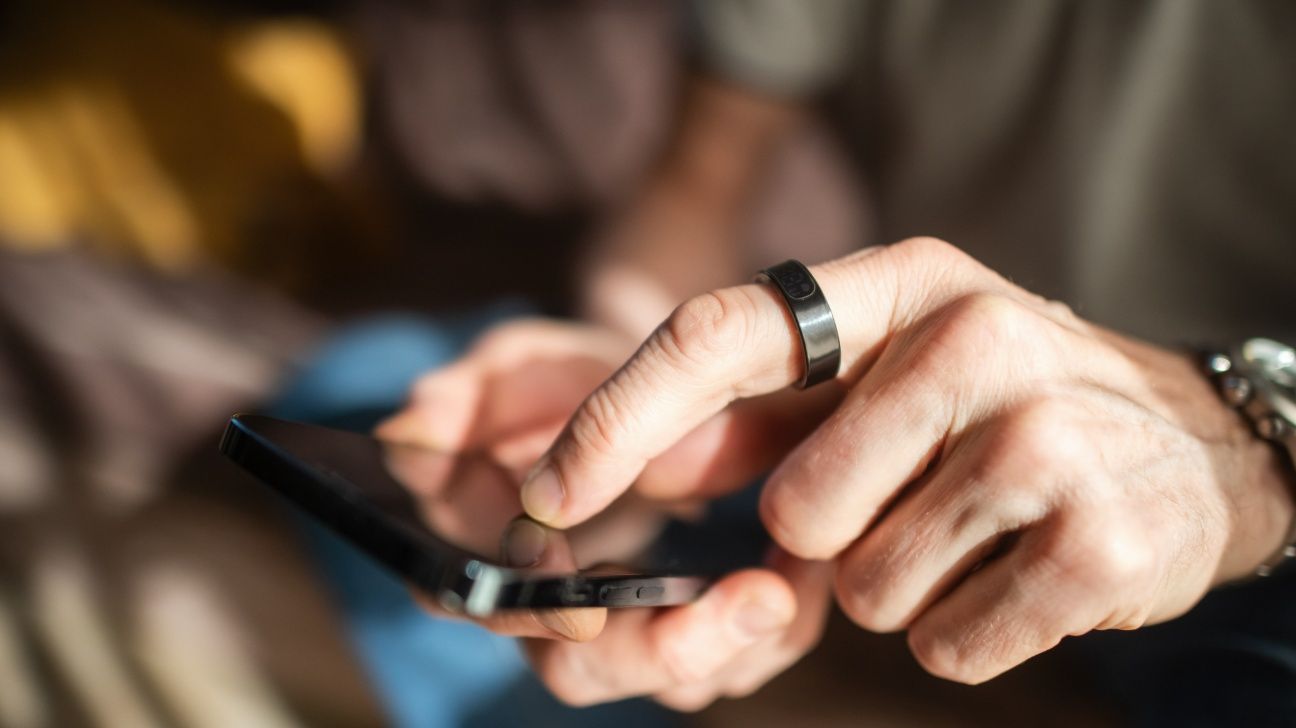
I know this to be true because the wearable I use reminds me of the fact with cold, hard data on a daily, if not hourly, basis. One of the first things my wife and I do each morning (after fending off existential questions from a third grader) is hawkishly plug into our Oura app to trade sleep scores and discuss what did or didn’t contribute to our invariably bad or, very rarely, good night’s sleep. Deep sleep, REM sleep, resting heart rate, heart rate variability, latency, even sleep debt – a laundry list of data points that we pore over in a futile attempt to make our sleep consistency optimal whilst living a life that doesn’t readily allow for it. Scientists have even given this phenomenon a name – Orthosomnia – where the anxiety of analyzing and perfecting sleep scores actually disrupts rest and intensifies poor sleep, and in the most extreme cases, insomnia.
It turns out we’re not alone. Results of a Gallup poll from 2024 – with the rather on-the-nose headline “Americans sleeping less, more stressed” – showed Americans report averaging 6.5 hours of sleep per night, comfortably below the recommended baseline of 7+ hours. Perhaps more tellingly, in a survey from 2024, the American Academy of Sleep Medicine found that nearly 70% of Americans report losing sleep due to anxiety.
Which brings me back to my original point. Anxiety-induced stress makes for the perfect bedfellow (pun intended) for a bad night’s sleep. The kind of anxiety-induced stress that can be both caused and amplified by obsessing over wearables data and a steady torrent of sleep-related content that aims to scaremonger rather than inform.
Why Empathy Matters in Health Information – and in Sleep
In fairness to the UK Biobank study, it is unequivocally important and unique research steeped in actionable real-world data and peer-reviewed medical science. And yet we live in a world increasingly awash with AI-generated content, sporting sensationalist headlines and powered by algorithms designed with an inherent imbalance to engage rather than empower. In that environment, gold-standard scientific work like this is all too often reduced to the lowest common denominator.
If you’ll indulge a minor tooting of our own horn here, this is precisely the inverse of how the team of wonderfully talented editorial misfits at Healthline Media thinks about and creates health information. We take research-backed science and our embedded clinical rigor and apply it to every aspect of our work. But we never lose sight of the fact that behind every study, there’s someone lying awake in the early hours running the math on their own risk factors, and that what they need in that moment is recognition that we are all at different stages on that journey, and a helping hand along the path to better health.
Life isn’t linear, sleep isn’t linear, and health is certainly not linear. Some nights I’ll get my seven hours. Plenty of others I won’t. And that is ok. Because either way, my alarm clock has a favorite dinosaur and a nonnegotiable 6 a.m. start time, and no peer-reviewed study or scary headline is going to change that. So I’ll take the data and the empathy, leave the anxiety, and see you all again at dawn.
If there’s something keeping you awake at night, or you just want to learn more about the wonderful world of sleep, we have a wealth of science-backed information at our dedicated Sleep Health hub.
Robin Hough is the Editor-in-Chief of Healthline, and in addition to this regular Letter from the Editor column, he can be found every other Saturday in our Healthline Daily newsletter. He’ll soon be launching a dedicated Letter from the Editor newsletter coming to an inbox near you later in the fall.
Popular Products
-
 Psyllium Husk Supplement for Digestio...
$28.99$19.78 -
 Electric Heating Shoulder & Knee Vibr...
$93.99$64.78 -
 Sevich Hair Fiber Regrowth Spray With...
$53.99$36.78 -
 Sevich Chebe Hair Loss Treatment Set
$73.99$50.78 -
 Super Fenugreek & Rosemary Hair Regro...
$117.99$81.78