Mediterranean Diet May Lower Stroke Risk In Females, Study Says
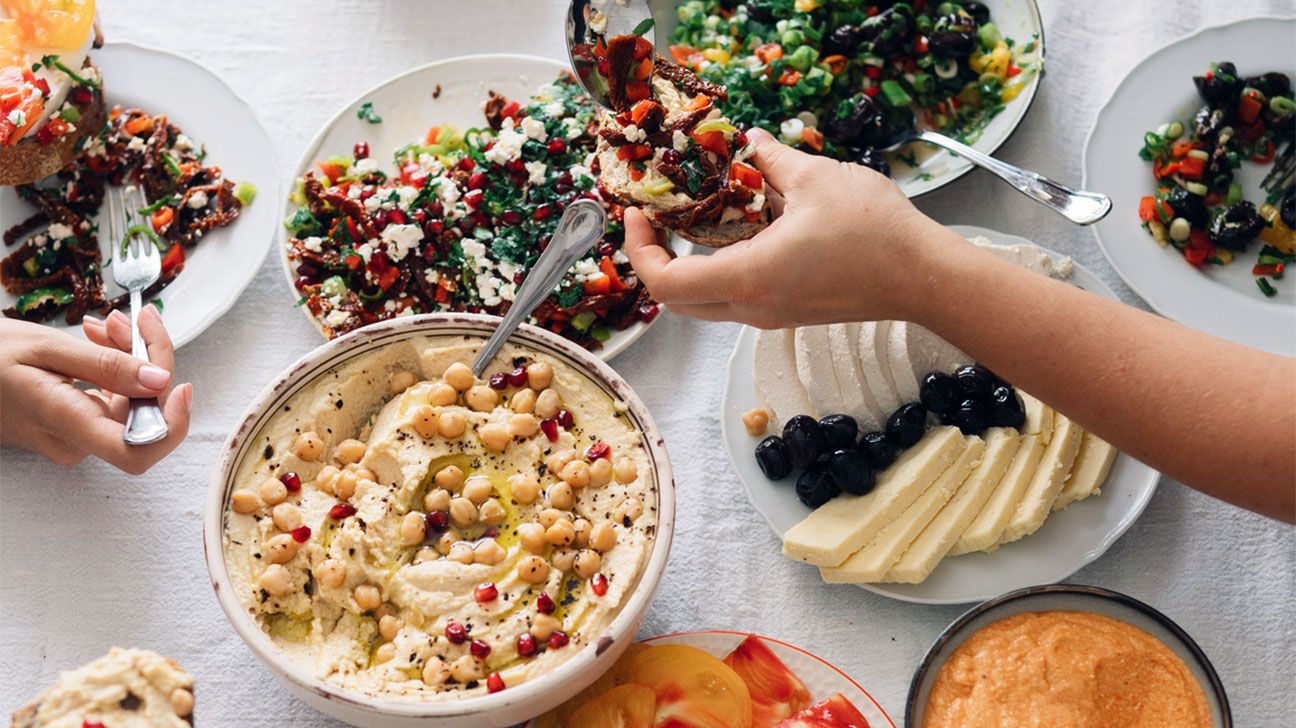
Adherence to a Mediterranean diet may help reduce the risk of stroke in women, according to a new study. Image Credit: Adrian Cotiga/Stocksy
- A new study shows an association between the Mediterranean diet and a lower risk of stroke in females.
- Those who most closely followed the diet were 18% less likely to experience a stroke.
- The Mediterranean diet emphasizes vegetables, legumes, fruits, fish, and olive oil, and a reduced intake of dairy, red meat, and saturated fats.
The Mediterranean diet typically involves eating whole foods, such as fruits, vegetables, whole grains, and lean protein, while limiting processed foods.
Following the Mediterranean diet doesn’t involve calorie restriction. This healthy eating pattern involves general guidelines you can incorporate into your daily routine.
“A Mediterranean diet is typically low in saturated fat and emphasizes fruits, vegetables, and whole grains, said Jennifer Wong, MD, board certified cardiologist and medical director of Non-Invasive Cardiology at MemorialCare Heart and Vascular Institute at Orange Coast Medical Center in Fountain Valley, CA, who was not part of the study.
“This aligns closely with the heart-healthy dietary pattern recommended by the American Heart Association (AHA), which may help explain why it is associated with a lower risk of stroke,” Wong told Healthline.
A new study found that following a Mediterranean diet was associated with a reduced risk of all stroke types among women. The results were published on February 4 in Neurology Open Access, an official journal of the American Academy of Neurology.
“Our findings support the mounting evidence that a healthy diet is critical to stroke prevention,” Sophia S. Wang, PhD, professor in the Division of Health Analytics at City of Hope Comprehensive Cancer Center in Duarte, California, and one of the study authors, said in a press release.
“We were especially interested to see that this finding applies to hemorrhagic stroke, as few large studies have looked at this type of stroke,” she continued.
Mediterranean diet lowers overall stroke risk by 18%
The study involved 105,614 females, with an average age of 53, who had no history of stroke at the start of the study.
Each participant filled out a questionnaire about their diet. They were each given a score of one to nine, depending on how closely they followed the Mediterranean diet.
Particpants were given one point for consuming over the average population in each of the following categories:
- vegetables
- fruits
- whole grain cereals
- legumes
- olive oil
- fish
They also received a point for consuming a moderate amount of alcohol and eating lower-than-average amounts of meat and dairy products.
The highest-scoring groups scored between six and nine points. This accounted for 30% of participants. The lowest group scored between zero and two points. This accounted for 13% of participants.
Lower risks of ischemic, hemorrhagic strokes
The participants were followed for 21 years. During this time, 4,083 strokes occurred, including:
- 3,358 ischemic strokes
- 725 hemorrhagic strokes
The research team adjusted for certain factors that may affect stroke risk, such as smoking, physical activity, and high blood pressure.
They found that those in the highest-scoring group were at an 18% lower risk of having a stroke than those in the lower-scoring group. This group was also 16% less likely to experience an ischemic stroke and 25% less likely to experience a hemorrhagic stroke.
“These findings are consistent with previous studies linking the Med diet with a reduced risk of heart attack and stroke,” said Kristin Kirkpatrick, president of KAK, Consulting, LLC, a dietitian at the Cleveland Clinic Dept of Department of Wellness & Preventive Medicine in Cleveland, Ohio, and a senior fellow at the Meadows Behavioral Healthcare in Wickenburg, AZ. Kirkpatrick wasn’t involved in the study.
She told Healthline the results are not surprising, as the components of the Mediterranean diet are often associated with improved longevity and reduced risk of mortality from all causes in females.
“Stroke is a leading cause of death and disability, so it’s exciting to think that improving our diets could lessen our risk for this devastating disease,” Wang said in the press release.
“Further studies are needed to confirm these findings and to help us understand the mechanisms behind them so we could identify new ways to prevent stroke,” the study author continued.
Mediterranean diet boasts many health benefits
Research has shown that the Mediterranean diet is associated with multiple health benefits, such as:
- improved vascular health
- lower inflammation
- reduced metabolic risk factors associated with stroke (i.e., blood pressure, high lipids, and elevated blood sugar)
“A Mediterranean diet has been associated with a lower risk of hypertension and diabetes, as well as reduced inflammation,” Wong said. “Since these are key risk factors for atherosclerotic disease, this eating pattern may help lower the risk of heart attacks and strokes.”
Indeed, a 2024 review found that a Mediterranean diet can help reduce the risk of major cardiovascular events.
The healthful eating pattern can also significantly lower the incidence of heart attack and stroke. The review noted that the Mediterranean diet may act as both a primary and secondary prevention for cardiovascular disease.
However, the authors wrote that more research is needed on the association between a Mediterranean diet and cardiovascular events and disease.
Additionally, the Mediterranean diet may also have positive effects on the risk of developing diabetes and metabolic-related conditions.
Research has also shown that the Mediterranean diet may also help lower the risk of overall cancer mortality and incidence, especially incidence of colorectal cancer, breast cancer, and prostate cancer.
Another added benefit of the Mediterranean diet is its potential to help minimize the risk of mental health conditions, such as cognitive decline and depression.
Other ways to lower stroke risk
The Centers for Disease Control and Prevention (CDC) states that it may be possible to help prevent stroke by making healthy lifestyle choices.
The federal health agency lists the following to help reduce stroke risk:
- maintain a moderate weight
- choose healthy food and drinks
- get regular physical activity (aim for at least 150 minutes of moderate-intensity activity each week)
- limit alcohol consumption
- quit or avoid smoking
- manage cardiovascular risk factors, such as cholesterol, blood pressure, and heart disease
- manage diabetes or your risk for diabetes
- take any recommended medications
You can also speak with your healthcare team about the best ways to lower your risk of stroke.
Popular Products
-
 Sevich Keratin Repair and Scalp Care ...
$21.99$14.78 -
 Essential Oils Set for Diffuser & Mas...
$58.99$40.78 -
 3D Mini Digital Pedometer
$75.99$52.78 -
 Rechargeable BTE Hearing Amplifier
$95.99$66.78 -
 Wireless Caregiver Pager Calling System
$138.99$100.78