Menopause Estrogen Patches Are In Short Supply. What Are The Alternatives?
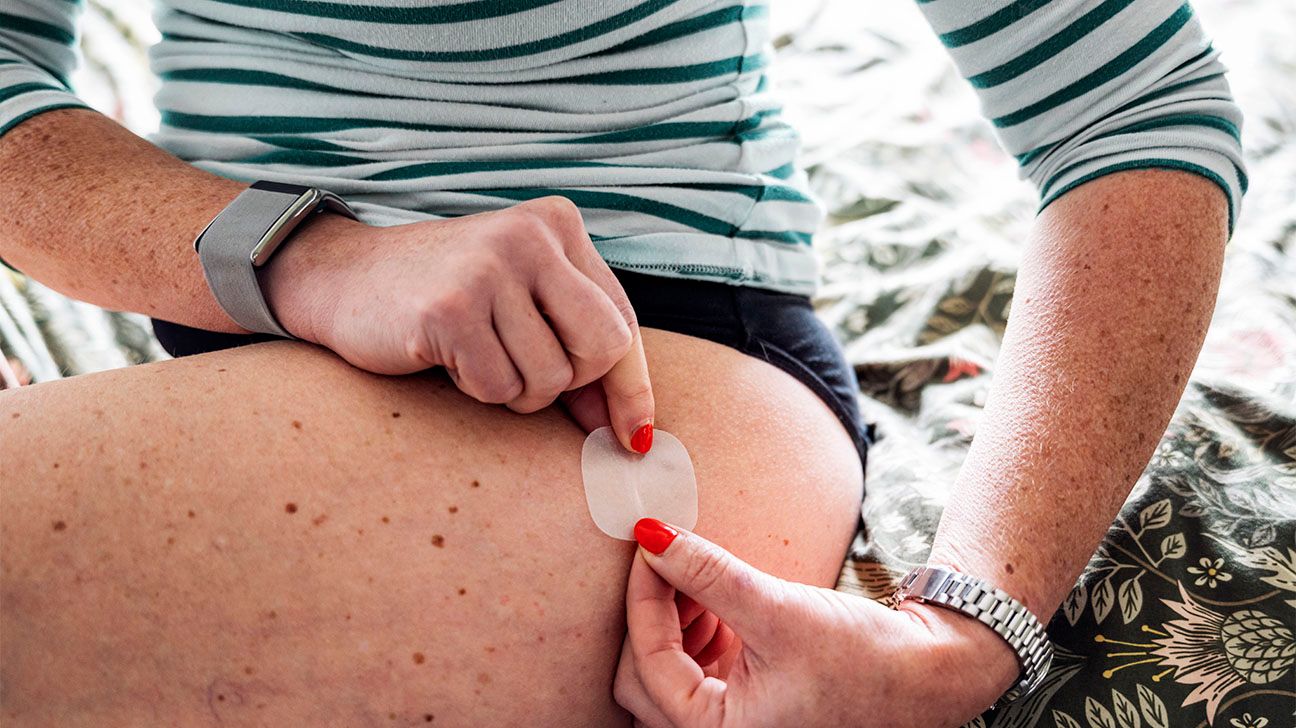
- The FDA’s removal of long-standing black box warnings on hormone therapy products triggered a prescription surge and supply shortage.
- All five patch manufacturers are running at full capacity but still falling short of demand, HHS told Healthline — though the federal health agency has not declared an official national shortage.
- Women unable to find patches have several effective alternatives, including estrogen gels, sprays, and oral tablets, all of which treat menopausal symptoms while bypassing the supply crunch.
Women across the country are walking into pharmacies and hearing the same frustrating message: their estrogen patches are on backorder.
Reuters reports the shortage affects major manufacturers and could last up to three years.
Estrogen patches are a common form of hormone replacement therapy (HRT), or menopause hormone therapy (HT), alongside pills and other delivery methods.
Right now, a combination of surging demand, supply chain problems, and limited manufacturing capacity has left many women shopping around at different pharmacies, switching brands and dosages, and, in some cases, going without, Reuters reported.
With more than 1 million U.S. women beginning menopause each year, according to the National Institutes of Health (NIH), the impact of a shortage has the potential to be widespread.
Here’s what’s driving the shortage, why menopausal females benefit from estrogen patches, and what alternatives can help alleviate symptoms.
Why are estrogen patches so hard to find right now?
The demand for estrogen patches has outpaced supply, and manufacturers are struggling to catch up.
Prescriptions for estrogen-based HRT have surged, according to an analysis by health data company Truveta. Patch use specifically increased by more than triple between 2018 and early 2026.
Among women ages 45–54, prescribing rates jumped 184%, and in February 2026, roughly 1 in 20 women in that age group had an estrogen-based HRT prescription, the Truveta data showed.
Several forces drove that growth. In November 2025, the FDA began removing some of the strongest safety label warnings from certain HRT products.
The warnings had been in place for more than two decades following the 2002 Women’s Health Initiative study, which raised concerns about cardiovascular and cancer risks.
The Food and Drug Administration (FDA) said it initiated the labeling changes after a comprehensive review found the warnings overstated the risks for many women, particularly those who start therapy near the onset of menopause.
“We removed the black box warnings on hormone replacement therapy to tell women the truth about the short-term and profound long-term public health benefits of hormone replacement therapy,” FDA Commissioner Marty Makary, MD, said in a presentation to FDA employees on April 1.
“Demand for hormone replacement therapy has surged since our announcement,” Makary said.
G. Thomas Ruiz, MD, an OB-GYN at MemorialCare Orange Coast Medical Center in Fountain Valley, CA, said the shift has been dramatic in his own practice.
“As soon as the FDA changed its black box warning… I got so many patients who are no longer fearful,” Ruiz told Healthline. He added that the biggest concern holding women back had been breast cancer risk — a fear rooted in the original Women’s Health Initiative findings.
Sarah Prager, MD, an OB-GYN at University of Washington Medical Center, said that she’s seen the same trend.
“I have seen a huge uptick in patients requesting estrogen as part of menopausal hormone therapy,” Prager told Healthline, adding that she has noted patients are having a difficult time accessing patches.
“Our field is starting to catch up on how helpful estrogen can be, how safe it generally is, and how early we could/should be starting mHT for patients to help with symptoms,” she said.
Estrogen patch manufactures face hurdles
On the supply side, manufacturers are facing hurdles.
A spokesperson for manufacturer Sandoz told Reuters the FDA’s November decision “created unprecedented demand that cannot fully be met at present,” and that the company has shipped additional supplies to the United States to help ease shortages. Amneal and Viatris also told Reuters they are working to boost supply.
The U.S. Department of Health and Human Services (HHS) told Healthline the FDA isn’t at the point where it will declare an official shortage.
Saying in a statement, “currently all 5 manufacturers are reporting they are continuing to manufacture at full capacity, and they are working to keep up with the increased demand that’s occurred. We are working with all of the manufacturers on ensuring that supplies meet demand and will continue to offer our assistance on anything they need to increase supply.”
HHS added that if the product falls into a national shortage, the FDA will post availability information on its website, along with planned timelines from the companies, and that compounders could make the product in accordance with all applicable laws.
“Currently, it is not in shortage,” HHS said. “We continue to monitor supply and are offering our assistance to the manufacturers with anything needed to increase supply.”
Estrogen patch alternatives
Ruiz said that while hot flashes and other vasomotor symptoms return quickly without estrogen, longer-term benefits like bone density protection take months to be affected.
Going off the patch temporarily brings discomfort, but symptoms will improve once estrogen resumes in any form, he said.
Ruiz said several alternatives remain available, noting that oral estrogen tablets and estradiol creams and gels can all treat menopause symptoms effectively. The gels and creams, he noted, are “a little less convenient in that you have to do a daily application.”
Experts recommend the following options, all of which a healthcare professional can help evaluate:
- Try other pharmacies: Independent pharmacies may have different supply chains than large chains. The FDA explains that chain pharmacies negotiate directly with distributors, while most independent pharmacies negotiate through buying groups that bid their distribution needs to distributors.
- Ask your doctor about a different patch: Doctors may also be able to prescribe a different patch brand — such as a once-weekly option instead of a twice-weekly one — as a short-term bridge. Ruiz noted the weekly patch “seems to be available,” but cautioned that “it often falls off before seven days,” which can create refill timing issues with insurance.
- Estrogen gels or sprays: Products like EstroGel, Divigel (gels), and Evamist (spray) also deliver estrogen through the skin and bypass the liver. They carry a similarly lower risk of blood clots as patches.
- Oral estrogen tablets: These are widely available and affordable. They effectively treat hot flashes and other systemic symptoms.
- Vaginal estrogen creams, rings, or inserts: For women whose main symptoms are vaginal dryness, itching, or burning, a localized vaginal estrogen product may actually be a better fit. These products treat symptoms directly and carry an even lower risk of serious side effects.
Doctors say the right choice depends on a person’s specific symptoms, health history, and what’s available right now.
More females are pursuing HRT now than in previous decades, and the industry is shifting to meet that demand.
“50 million women have been denied hormone therapy or never offered it, or talked out of it over the previous 22 years because of the fear machine scaring women away from it,” Makary said in his presentation. “And the FDA is guilty.”
In the meantime, experts recommend refilling prescriptions early and maintaining close contact with a provider well-versed in menopause care.
Popular Products
-
 Stainless Steel Tongue Scrapers
$33.56$16.78 -
 Magnetic Waist Twisting Disc Body Tra...
$53.99$36.78 -
 Rechargeable Electric Face & Beard Tr...
$47.99$32.78 -
 Adjustable mini Exercise Bike
$300.98$240.78 -
 Height Adjustable Electric Chair Lift...
$400.99$289.78