Why Andy Burnham’s Plan To Get Rough Sleepers Inside This Winter Makes Sense
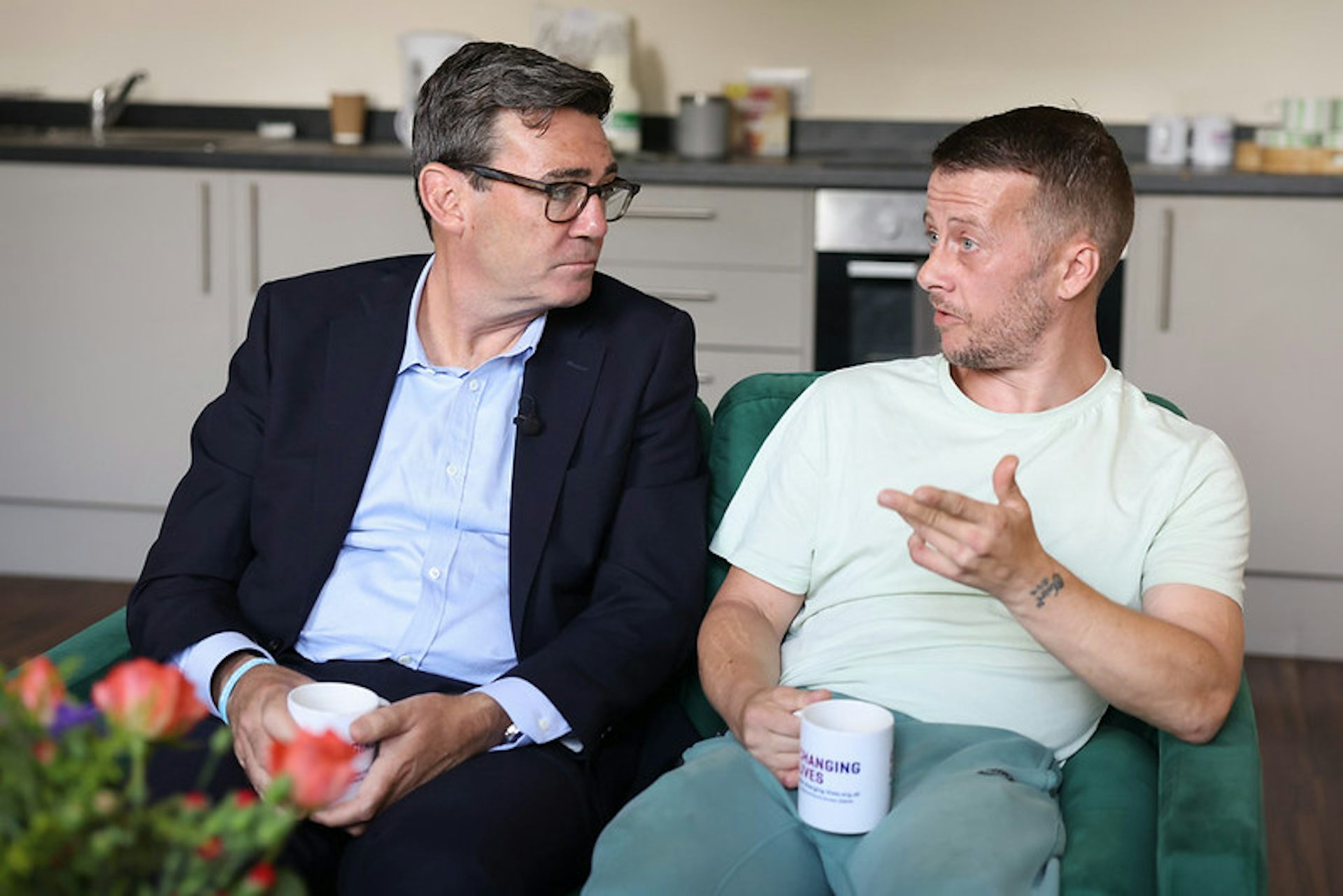
Prime Minister Andy Burnham has pledged to bring people who are sleeping rough in England into temporary accommodation for Christmas. While this is a good move, and should be happening across the rest of the UK, more needs to be done quickly to help people who are homeless.
Winter is a dangerous time for people to be living on the streets. So while it’s not perfect, Burnham’s plan, backed by a £442 million funding boost, may save lives.
I work with people experiencing homelessness and using associated services to find ways of helping. People who are homeless in the UK frequently tell me that this was not a choice they made. It happened because it was a safer option than the places they lived in.
But being homeless means they often have as many health problems as people 40 years older than them. Cold weather makes lots of their problems – things like breathing conditions, for example – worse. Danny, a homeless man, told me:
We have very bad health. At an average age of 43, most of us have eight different chronic health problems. These include physical problems like breathing difficulties, leg ulcers and chronic pain from injuries like broken bones. Mental health problems are also very common, including PTSD, anxiety, and depression. On top of that most people who are homeless use drugs or alcohol to cope.
Unlike people living in their own houses, one in four people facing homelessness are not registered with a GP. And those who are registered can have difficulty getting to a surgery to have their problems seen to.
Quick fix that’s hard to resist
There is also the problem of keeping the same GP when people are moved around a lot. People living in temporary accommodation, for example, hostels or low-cost B&Bs, are frequently asked by their providers to move to different accommodation. This may be in a different part of their city or area.
It means the care of their health problems is fragmented in the community, leading to more frequent trips to A&E or even self-medicating with street drugs for pain or mental health problems.
Along with a team of pharmacists and nurses working with homelessness charities, we meet people on the streets of Edinburgh to help with their unmet health and wider needs. This approach is called PHOENIx and is being tested in a study to see if it reduces overdoses and drug deaths.
Being homeless means someone faces a much higher risk of overdosing from street drugs. The people facing homelessness that I work with tell me that they know using street drugs is risky but often they do not have treatment or support that keeps the reasons for using them (trauma, pain, boredom and being targeted by dealers) at bay.
Also, they say that having untreated chronic conditions means cheap street drugs can offer a quick fix that is hard to resist, particularly if they don’t have any support or alternative activities. Another homeless man, Fraser, told me:
Most of us live in temporary accommodation with lots of other people who are homeless. Drug-dealers know where to find us, and keep knocking on our room doors offering street drugs. That’s often the only people who knock our doors.
This raises another important point. Getting everyone off the streets and indoors may not work for all. Being homeless can also mean living in re-traumatising accommodation – such as hostels, for example – for too long. Danny told me:
The noise, boredom and lack of opportunities, sitting in a room all day (often the only option because our health problems are so bad), and hopelessness makes matters worse. Sometimes it is safer to sleep on the street and risk getting frostbite in the winter than stay in a dead-end hostel. Women in hostels are even worse off and even more vulnerable than men.
The good news is that Andy Burnham appears to know these problems. Acknowledging the fact that rough sleeping is now so common it “feels like part of the scenery” and offering short-term solutions such as getting people into accommodation for winter is a great start.
Then, the hope is that those who recover and go on to find long-term accommodation can give something back to those who are not yet ready. This is called “lived-experience peer support”. Homeless people need a new approach that offers them opportunities to relive their lives – often lives that were upended when they were much younger.
The other hope is that once everybody who wants to be is indoors this winter, Burnham will go one step further and look at the peer support approach. To have support from those who have been on the same journey, and survived, can help people to live normal lives again, away from homelessness.
University of Edinburgh Centre for Homelessness and Inclusion Health receives funding from UKRI for the PHOENIx randomised controlled trial.
Popular Products
-
 Psyllium Husk Supplement for Digestio...
$28.99$19.78 -
 Electric Heating Shoulder & Knee Vibr...
$93.99$64.78 -
 Sevich Hair Fiber Regrowth Spray With...
$53.99$36.78 -
 Sevich Chebe Hair Loss Treatment Set
$73.99$50.78 -
 Super Fenugreek & Rosemary Hair Regro...
$117.99$81.78