Young Girls Are Obsessed With Flawless Skin, But They Are Falling Deep Down The Cosmeticorexia Rabbit Hole
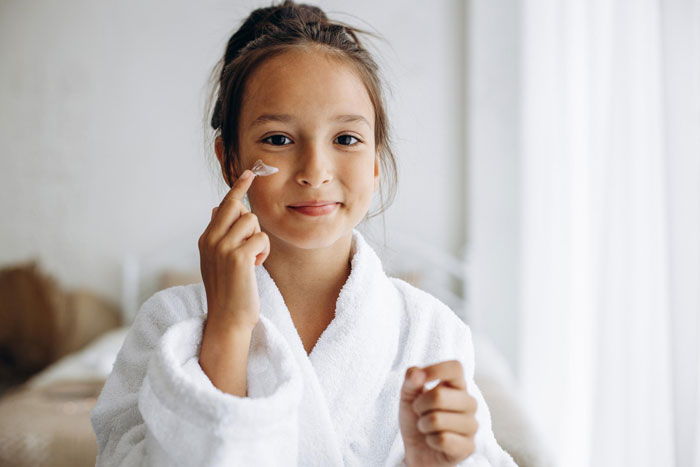
It takes one hell of a marketing drive to convince you that you need something you already have. Your kid doesn’t need a professional skincare routine, but they’re feeling pressured to adopt one. They’re glued to their phone screen, bombarded with social media content telling them that they need flawless skin.
Brands, influencers, content creators, and yes, even pre-teens and teens, are shamelessly pushing the idea on socially anxious young girls that if they buy expensive products, copy extensive skincare routines, and erase every imperfection, they too can be happy and loved.
They’re being sold self-care, but what they’re really getting is compulsive behavior, low self-esteem, hypercriticalness, and extreme nervousness. It’s big business. But as a parent, you can’t protect your child from everything.
Obsessions with beauty at the cost of everything else can affect anyone. Body dysmorphia, the looksmaxxing community, and social media filter dysmorphia are proof of that. But because skincare is normalized in society, protecting vulnerable girls becomes more difficult when your culture and economy reinforce these ideas. Peer pressure doesn’t help. And it leads to wrecked health and spent savings.
Children are being taught that flawless skin is something they need to earn rather than something they naturally have, contributing to a growing mental health concern
Image credits: Petro Seniv 888 / Magnific (not the actual photo)
The pursuit of perfect skin can quickly become a cycle of anxiety, compulsive behavior, and declining self-esteem
Cosmeticorexia, aka dermorexia, is the culturally reinforced obsession with flawless skin. Young people are excessively and compulsively using cosmetic products and procedures that might be age-inappropriate. Thanks to social media, marketing, and influencer content, they believe that multistep skincare routines are ‘normal.’
Research shows that this phenomenon gained traction through the medicalization of beauty, the growth of the ‘cosmeceutical’ markets, and social media rewarding routine-based and appearance-focused posts. Increasingly, kids are exposed to this content, and it leads to physical and mental health challenges.
Kids begin developing compulsive grooming behaviors and constantly monitor their appearance. What’s more, this behavior can physically cause irritation and allergic reactions.
Children who have higher rates of social media use and dependence are more likely to compare themselves to others. This leads to worse positive body image, while social media is full of content creators who make a living promoting and reviewing beauty routines and products.
“Psychologically, appearance-centric routines may reinforce preoccupation with perceived imperfections, amplify social-comparison stress, and entrench compulsive checking, purchasing, and grooming behaviors. For some individuals, skincare becomes an avoidant coping strategy: rituals may temporarily reduce anxiety while maintaining cycles of vigilance and dissatisfaction,” Italian researchers Alberto Stefana and Giovanni Damiani emphasize.
Cosmeticorexia can overlap with body dysmorphic disorder and obsessive-compulsive disorder. These cosmetic practices can also exacerbate skin changes, which creates a self-reinforcing, escalating cycle.
There are no easy antidotes to cosmeticorexia, aside from education for families, clinical supervision when considering medical procedures, and focusing on minimalist, age-appropriate routines.
According to Grace Collinson, from the Butterfly Foundation charity, there has been a rise in young patients distressed about their appearance, focusing on their skin, and obsessing with flawlessness and eliminating imperfections. Other worrying behaviors include skin picking, anxiety, low self-esteem, eating disorders, and mirror checking.
Image credits: Poko Skincare / Unsplash (not the actual photo)
The pressure to buy more skincare products is fueling a rapidly growing industry built around younger consumers
It would be naive to assume that content creators are posting skincare routines just out of the goodness of their hearts. For many of them, the topic they’re passionate about is a way to earn cash.
For instance, as reported by the BBC, Ellie-May has been using and advertising skincare on social media since she was just 8. This has become the main source of income for her family, which collectively makes over £50,000 ($66,207 or €57,806) per year, posting content online.
This is just the tip of the iceberg. Hundreds of young girls, sometimes as young as just 3 or 4 years old, are posting skincare and makeup content. They’re doing ‘get ready with me’ videos, as well as clips about ‘after school’ skincare. Often, they opt for products with anti-aging ingredients.
“Women in their 30s and 40s have long been targeted by skincare companies, telling us that aging is a problem and selling us a solution. But this is a marked shift. Now young girls are being put under that same pressure,” says Brooke Erin Duffy at Cornell University.
Meanwhile, dermatologist Professor Damiani at the University of Milan notes that young clients who display cosmeticorexia are obsessed with mobile phones, spend hours watching skincare videos on social media, use up to 10 different skincare products daily, and refuse to socialize without wearing makeup.
All of those products, from cleansers and toners to primers, moisturizers, serums, eye creams, face mists, etc., cost a pretty penny. Great for brands and influencers. Not so great for anxious young consumers who don’t even earn their own money.
Image credits: user17960589 / Magnific (not the actual photo)
Dermatologists say many children already have healthy skin, making powerful anti-aging products unnecessary and sometimes harmful
According to NHS consultant dermatologist Dr. Jean Ayer, the irony is that kids and teens have already got the Korean “glass skin” look that so many people crave. “When you’re little, your skin is in perfect condition. Your skin barrier—which keeps toxins out and keeps moisture in—is beautifully preserved… That’s youth, that’s the beauty of skin. At best, they don’t need these products. At worst, they contain harmful ingredients that can damage delicate young skin.”
One of the most powerful ingredients is retinol, which boosts collagen production and speeds up cell turnover. Not only do kids already have this process happening, but extra retinol can overstimulate their skin. Meanwhile, dermatologists are seeing more young patients with receding front hairlines, potentially due to facial cream use.
According to psychologist Stefana, who studied cosmeticorexia with Damiani, children might struggle accepting their true image. “The children who become obsessed with skincare tend to be driven by what they see on social media. So their self-esteem becomes based on how many likes they get or what people have said in their comments.”
Naturally, it is much easier to market alleged miracle products instead of pitching a balanced lifestyle, as the latter requires more effort. According to Precedence Research, the global skincare market size, valued at $178.63 billion in 2026, is projected to nearly double by 2035, reaching $340.25 billion.
Creams and moisturizers dominate the market, accounting for 35% of total revenue in 2025. The female segment generated a whopping 72% of the market revenue that year. However, the male segment is predicted to experience the fastest growth over the next decade.
For context, the entire global beauty and personal care market is projected to generate a mind-blowing $698.38 billion in 2026, with the personal care segment worth $302.98 billion.
However, it’s not like everyone is sitting idly by. Researchers and mental health organizations are sounding the alarm. Meanwhile, Italian regulators are investigating luxury beauty company LVMH, which owns Sephora and Benefit Cosmetics, for its use of “particularly insidious” and “covert marketing strategies” to (allegedly) sell beauty products to young girls, including kids under 10.
Image credits: syda_productions / Magnific (not the actual photo)
Healthy skin is far more important than flawless skin, yet social media often encourages people to confuse the two
To be clear, nobody is advocating ignoring your skin’s needs. You should absolutely take care of your skin so that it, in turn, can take care of you. But skincare—the type that is actually healthy—looks different from buying lotions worth hundreds of dollars, a dozen-step bedtime routines, and pore-less looks in photos.
Good skincare is a small part of an overall healthy lifestyle. Or, to wax poetic for a moment, if you just focus on surface-level beauty, you’re building your life on a sandy beach, as the tide is rolling in.
Your skin—made up of the epidermis, dermis, and hypodermis (subcutis)—plays a vital role in protecting you. It is the largest organ of the human body, and it is the first line of defense against many threats. Long story short, life without skin is unimaginable.
Your skin defends you from bacteria, toxic substances, moisture, and sun rays, insulates you from the cold, cushions your muscles and organs against physical impacts, regulates your body’s temperature, and synthesizes vitamin D.
Your skin contains blood and lymph vessels, hair follicles, sweat glands, fat, connective tissue, and the nerve endings that you feel sensations like pain, itching, pressure, heat, and cold. It also prevents dehydration.
You can tell a lot about a person’s age and health by changes in their skin color or structure. This judgment is instant and is one of the reasons why some people are so obsessed with the appearance of healthy skin, not necessarily health itself.
Depending on your height and mass, your skin, the largest and heaviest organ, can weigh between 3.5 and 10 kilograms (7.5 to 22 pounds), about a seventh of your total body weight.
What’s more, your skin has a surface area of 1.5 to 2 square meters. Yet, at its thickest point, it is a mere few millimeters thick. Younger people and men generally have thicker skin than older individuals and women. What’s more, its thickness depends on the body part that it covers.
The epidermis, the outermost layer of skin, is constantly renewing itself. New cells move to the surface within around 4 weeks, then harden and die off. Your epidermis replaces around 40,000 old skin cells that are shed every single day.
The dermis, the middle layer of the skin, is made up of tough, elastic collagen fibers that make your skin strong yet stretchy. Meanwhile, the subcutis, aka the hypodermis, is primarily composed of fat and connective tissue, serving as a shock absorber and insulator.
Image credits: magnific / Magnific (not the actual photo)
Taking care of your skin has far more to do with everyday habits than expensive beauty routines
If you notice any sudden changes in your skin, you should immediately reach out to your doctor. For example, you should be worried if your moles change in size, color, or shape, new moles appear, or you have an unexplained rash or condition.
Meanwhile, you have to accept the fact that you will not stop aging. You will lose collagen and elastin. However, you can slow this process with healthy habits. There are a few very simple but effective ways to take care of your skin. You don’t need extensive routines to get good results.
For one, take care of your hygiene. Shower regularly. Apply moisturizing lotion. Wash your face with a gentle cleanser. Apply sunscreen daily. Get in the habit of checking your skin and moles for any irregularities.
How you wash yourself matters, too. Opt for warm rather than hot water, limit your shower time to around 5 minutes, and avoid using strong soaps and detergents. And when shaving, use creams, lotions, or gels to protect yourself.
Changing how you eat matters, too. Ideally, you want a balanced, varied diet with plenty of lean protein, fruits and veggies, fiber, omega-3s, and whole grains. Meanwhile, stay hydrated by drinking plenty of water.
Research varies, and experts disagree on the exact amount, but you should aim to drink around 2 liters every day. Others suggest that you aim for more, from 2.7 liters to 3.7 liters per day. Your lifestyle, level of physical activity, and environment will affect how much you need.
Furthermore, you need to get plenty of sleep, get adequate exercise throughout the week, and don’t forget to stay social to maintain the relationships that keep your stress levels lower.
Image credits: magnific / Magnific (not the actual photo)
A balanced diet, good sleep, exercise, and sun protection do more for your skin than miracle products ever will
According to registered dietitian Ellie Coles, there is a “complex interplay of genetic, environmental, and lifestyle factors” affecting your skin. Your diet, one part of the puzzle, is something you can optimize to reduce blemishes, dryness, and lines. That being said, you need to stay grounded: there are no miracle cures or foods.
“The good news is that the advice is very similar to general healthy eating recommendations. A well-balanced diet that includes a variety of nutrient-dense foods can have a significant positive impact on skin health,” Coles told the BBC.
You want to aim for foods rich in omega-3 fatty acids, which support hydration and have anti-inflammatory properties, and opt for a diverse range of fruits and veggies loaded with vitamins, minerals, and antioxidants. These help with repair and renewal.
Something else to include in your diet are zinc-rich foods like shellfish, broccoli, and legumes, which protect your cells from damage and improve wound healing.
Meanwhile, when you reduce the amount of refined sugars that you consume, you’re reducing inflammation. This way, you are avoiding skin irritation, discomfort, redness, acne, and psoriasis. Large quantities of fat are sometimes linked to inflammation, too. Opt for low-fat dairy items instead.
Moreover, you should focus on overall gut health, including fiber and probiotics. But a good diet alone won’t improve your skin if you neglect sleep and live a stressful life.
It’s not just about what you do. What you don’t do matters, too. For instance, avoid tanning because it ages and damages your skin, and increases the risk of skin cancer. Try to reduce stress as much as possible.
And don’t smoke or use tobacco products because nicotine and other chemicals increase your skin aging rate. Not only does smoking damage the collagen and elastin in your body, but it also reduces blood flow, starving your skin of oxygen and nutrients. The proverbial evil cherry on top is an increased risk of various cancers.
Typically, avoid staying out in the sun between 10 in the morning and 4 in the afternoon because this is when the sun’s UV rays are strongest. Aside from the obvious—sunscreen—wear protective clothing and stay in the shade. You need to opt for sunscreen with a sun protection factor of at least 30.
Diet-wise, avoid heavily processed foods and snacks, added sugar, sodas, alcohol, and refined carbohydrates.
Image credits: prostock-studio / Magnific (not the actual photo)
People have chased youthful, flawless skin for thousands of years, but moderation has always been the healthier approach
There is nothing wrong with wanting to look beautiful, so long as you stay grounded. Human beings are hardwired for social connections and relationship-building. We want to be loved, adored, and respected by the members of our ‘tribe’ because that’s how we thrive and survive. And thanks to the halo effect, looking beautiful leaves a good first impression and makes you seem smarter, more skilled, and kinder than you might be. In other words, beauty (or its perception) can translate into real power and clout.
This focus on beauty is a tale as old as time. This modern-day obsession with flawless skin is nothing new. Rather, it is a continuation of (literally) age-old habits. Typically, young-looking, pale, soft skin was prized throughout history, and treatments were an odd mix of actually healthy choices and harmful trends.
Your Stone Age ancestors used cosmetics. The Ancient Egyptians used skincare to signify status and wealth, not just for aesthetics. The Ancient Greeks used oils and serums to beautify their skin and to keep it healthy.
In Medieval times, ointments and serums were used to nourish, cleanse, and soothe the skin, while face masks were used for purification. During the Renaissance, the obsession with pale complexion intensified as a way of signaling that you were noble.
Image credits: kmarina / Magnific (not the actual photo)
Wanting to take care of your skin is a good thing, but moderation is key. There is a lot of wisdom in not overdoing your skincare routine. Not only are you protecting your self-esteem and your skin, but you’re also being economical with your time and hard-earned money.
What’s more, you’re sending a clear message to everyone that you feel comfortable being yourself. You do not need to look photoshopped to feel fulfilled or to live a high-quality life. It is okay to look ‘normal.’ Cosmeticorexia, just like looksmaxxing and body dysmorphia, is most dangerous when it affects kids and teens who are still developing.
If your beauty habits dominate your personality, you feel anxious when you can’t finish your routines, and you feel worthless compared to social media influencers, it is time to take a step back. Preferably with the help of trusted family members and a supportive therapist.
What truly matters is being genuinely healthy, not just creating the illusion of flawless skin for first impressions. Listen to your body’s needs. Speak to your doctor before making any radical life changes. And if you’re struggling with skin issues like acne, get in touch with a dermatologist.
Your healthy habits will become the foundation of a quality life, and glowing skin will be a pleasant byproduct. Your body and mind will thank you for it. But explaining this to your kids will be a challenge.
Popular Products
-
 Ashwagandha & Black Cumin Seed Oil
$43.56$21.78 -
 Shilajit Capsules for Strength & Vita...
$43.99$29.78 -
 Pre-Workout Supplement for Strength, ...
$43.99$29.78 -
 Centrum Multivitamin for Energy, Immu...
$43.99$25.78 -
 Bee Venom Capsules for Joint Support ...
$43.56$21.78