Brookdale, Vantage Point Leaders Weigh In On Senior Living Industry ‘hot Takes’
Is middle-market senior living impossible? Is AI helping or hurting marketing? Will an operator ever deploy a humanoid caregiver robot? Do older adults actually want what operators are selling?
These questions often inspire spirited discussions among senior living operators, and they were a topic of conversation at the RETHINK Conference in Philadelphia, co-hosted by Senior Housing News and its sister publication, Skilled Nursing News.
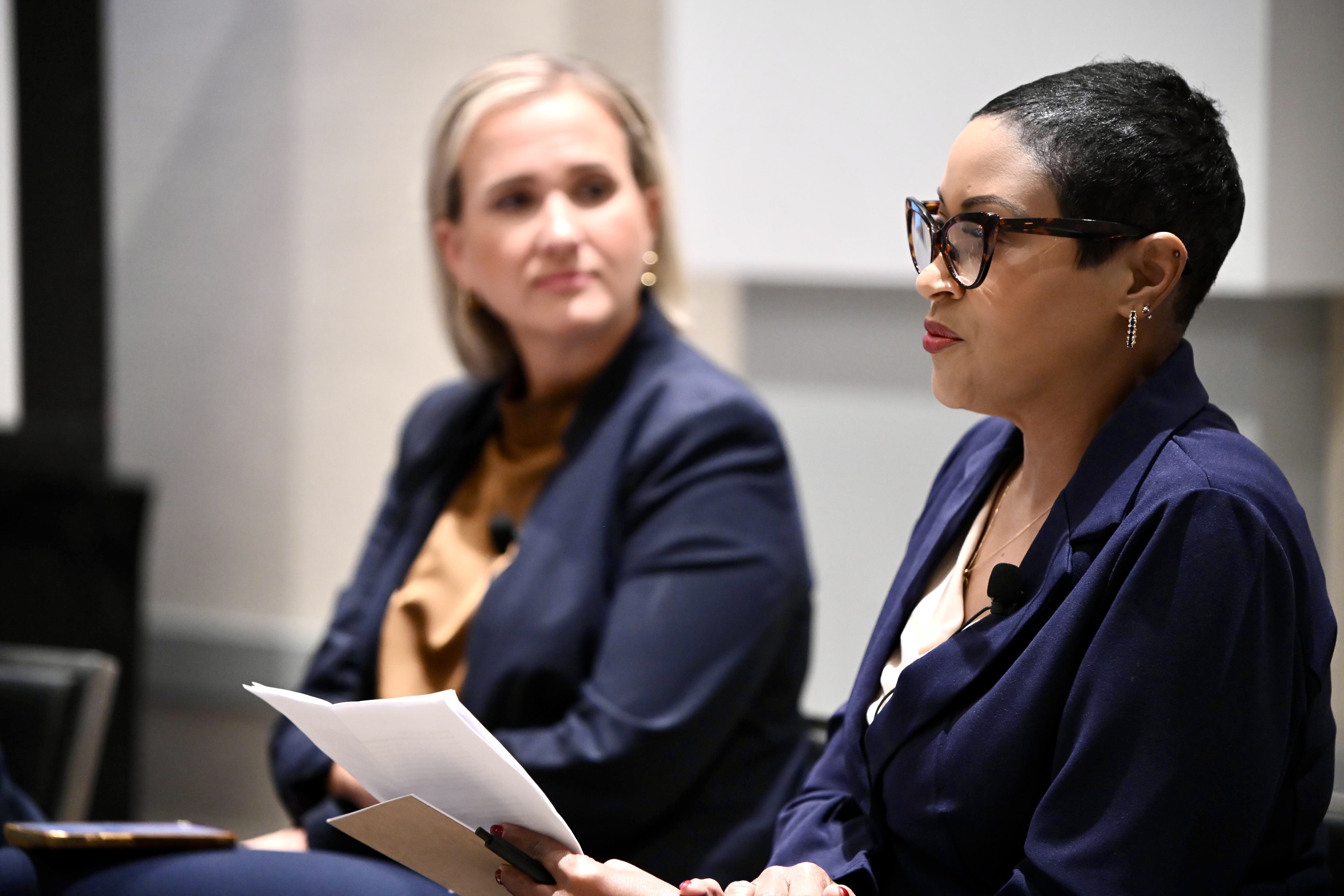
During the event, Brookdale Senior Living (NYSE: BKD) Senior Vice President and Chief Clinical officer Camille Jordan and Vantage Point COO Kate Sammler weighed in on 10 “hot takes” delivered in a rapid-fire format.
What follows is a transcript from the RETHINK stage, edited for length and clarity:
Hot take 1: Middle-market rental rates for assisted living and memory care are impossible to achieve.
Jordan: I agree and disagree. Middle-market assisted living and memory care is impossible if we retain the same labor model, amenities, the package and the expectations that our prospects have. We have to redesign the building. We have to have smaller units, unbundled services, recreate the technology and the service model, while protecting the people and systems responsible for the safety of the residents. So, middle market senior living isn’t impossible. Middle market senior living built in a luxury type model is impossible.
Sammler: I agree it is impossible in that luxury model that I think we spend so much time marketing to prospects and families. I think it is possible and it will be possible in the future, but it’s next to impossible given our current climate. In any cycle of senior living, more than half of our cost is labor. So, you have to pay a fair wage to the employees who are working in our communities, and when you have the right balance, you can have maybe a little bit more of a stripped-down concept with a different style: culinary, activities, all of that. But in this current market, I think it is next to impossible, if not impossible. Interest rates are so high right now. The cost to develop all of those extenuating factors right now is making it such that middle-market today, in my opinion, is impossible for me as a developer and an operator. But in the future, I think it will become more of an option.
Hot take 2: Millions of older adults won’t be able to move into their preferred assisted living communities in the years to come.
Jordan: I agree, and the keyword is “preferred.” The coming shortage will not simply mean that they can’t find a unit, it just may not be in the right location at the right price that they can afford. It’s not only about available apartments. We have older adults that are coming in with more chronic diseases and cognitive mobility concerns, so we also have to be able to cater to their care needs, not just their apartment or living needs.
Sammler: I live in this Mid-Atlantic market. Everything is a product that 70% of seniors can’t afford. It’s the high-end. It’s the the luxury, the high-dollar. So, I think the middle-market that we just talked about, they’re going to be unable to find their preferred apartment or their preferred community in the market area. People in these primary market areas, they’re going to have to look at tertiary markets to be able to find something that’s affordable if we can’t solve that affordability puzzle in these primary market areas.
Hot take 3: The boomers and their families have unrealistic expectations about what senior living is and who it’s for.
Jordan: I’m going to agree and disagree with this one. We often market senior living as resort-style living while avoiding candid conversations about our workforce limitations, pricing, resident experience, and how that changes as a community rises. I think our prospects are not unreasonable to expect autonomy, transparency. They want good food. They want responsive service and competent care. What may be unrealistic i expecting all of that in middle -market and expecting unlimited labor to be available. Their expectations aren’t the problem. I think it’s the gap between what is marketed in the operating model, and we need to be able to set clearer expectations before a prospect moves in.
Sammler: I agree, but we created the problem, right? Our marketing teams, who are building the collateral, delivering the websites, putting the Google keywords and the Google ads together — we created the problem. It’s our responsibility to shift the narrative a little bit, especially when you’re talking about higher levels of care. My company, we develop full-service retirement communities, so we really target resort-style independent living. We have a responsibility to do a great job in marketing that independent living resort-style community as needs increase. I think we have a responsibility to better educate the market before they select our communities or see our assisted living and memory care. To know that you’re not going to get an independent living product in an assisted living community and a memory care community, you can find similar threads, but the expectation moving to a more medical model. Expectations need to shift with that.
Hot take 4: AI overviews and AI-powered searches are not good for assisted living marketing strategies
Sammler: I cut my teeth in our company from a marketing perspective. So, I shift to look at how it can help the discovery process and help prospective residents get through the funnel faster. I think it does a lot for qualifying leads sooner. It puts more of the access in the prospective residents’ hands, so that they can do more research ahead of time.
I think the caveat is AI isn’t right 100% of the time. We went through a problem a few months ago with one of our communities that showed that our starting rates were $3,000. There was a huge discrepancy between what the AI engine said and what our actual rates were.
We had our salespeople coming to us all the time saying they’re thinking this is affordable housing. We are not, we’re luxury. What is going on here? We found out that they that AI engine because we were marketing a semi-private apartment, they took our starting rate of $6,000 for a semi-private unit and split that in half. So, your teams must really be paying attention to what AI is putting out there, and you must stay ahead of it.
Jordan: I disagree with the statement that it’s not good for assisted living marketing. Within our company, we have a wide range of classifications, so we may go high-end or we may have smaller models and memory care. I think that families are using more AI to research their needs, whether it be for memory care or care options.
Our marketing teams need to adjust to that. AI searches are not going away for families. It may reduce website clicks, but we have to be a trusted local authority for what is being printed. Just as you said, you might have prospects jumping for $3,000 and it’s not accurate. But I do feel like it has its place in our marketing strategies.
Hot take 5: Assisted living operators can do substantially all of what SNFs can do these days.
Sammler: I think the keyword there is “substantially” So, I would agree with that, however, we can’t do everything.
As a licensed personal care home in Pennsylvania, for example, we can’t do significant wound care, but we can bring in a third-party vendor to manage that. So, in a personal care environment or an assisted living environment, there are things that we still cannot do for an assisted living resident who might be at a higher acuity level. If a family is willing to bring in a third party and many times pay for that out of pocket, we’re able to triage that resident and care for them through the end of life. But that might start with a little extra hands-on help a day where we can’t provide that wound care intermittently all the way up to the end of life, where they may need to bring in 24-hour, private-duty care to keep them comfortable. If a family can afford that type of investment, then we can largely do what a skilled community does. I think the threshold, the ceiling, is getting higher, but we’re just we’re not there yet.
Jordan: As assisted living, we’re managing higher acuity every day. But I think we’re not clinically equivalent to skilled nursing, and we shouldn’t try to be. We have different SNFs and have different nursing coverage. They have different reimbursement models, rehab capabilities, documentation — all of the requirements are so different from a federal level for skilled. While we can perform similar tasks and we can replace some SNF stays, as to Kate’s point with a third-party, we can’t simply declare ourselves a SNF because we don’t have the supporting clinical system to do that. Again, we can manage more acuity than we once did, but it must be supported by the right staffing, licensure systems, and not confidence alone that we can do it. But I do think, to your point, the third-party, if a family is willing to do that, we can help proactively and hopefully mitigate SNF stays. But we can’t do the clinical capabilities that SNFs can do.
Sammler: Can we accommodate a person who may have a higher acuity level that would otherwise qualify for skilled? Should we, or do we even want to? We were for a long time, especially during COVID and through the post-pandemic phase, looking at ways that we could build our occupancy by holding residents longer and also accepting a more high-acuity resident. Now that occupancy levels are rising, I think we’re going to start seeing a shift to operators looking at whether a person is truly the right fit for our community; and how, if they’re not, how can we support them through a transition to a higher level of care than what we can safely provide? Because I think we also have a responsibility for that too.
Hot take 6: Tomorrow’s residents won’t want shared or smaller units.
Sammler: What a resident and family member wants when they start looking at a community is a lot different than what they need or what they will eventually end up in.
Right now, we can’t provide enough two-bedroom apartments in assisted living. They come in wanting that truly residential, home-like apartment, and they think that a two-bedroom is going to be that fit because it’s the biggest. They can bring their curio cabinet, their dining table, all of those things. But what you find quickly is, as you may come in on the more independent living side of assisted living, your costs are going to slowly creep up as your acuity level rises, and I think families realize pretty quickly that hey, this two-bedroom might have looked great on paper, but I need to start looking at rebalancing the unit size to fit with the care delivery and the medication management that my mom now needs. So, we’ll always need those smaller apartments and the semi-privates, but the desirability factor will stay the same.
Jordan: I disagree. I think privacy will always remain a priority for our prospects, but affordability will eventually force some honest conversation about space. Smaller units can work if you preserve their dignity, mobility and safety. Shared units also benefit some residents who are coming in, because they have loneliness, or they’ve lived alone for a long time. Of course compatibility and resident choice is also still essential. So, I think clinical design should also consider their fall risk, infection qnd cognitive needs, and other clinical needs that our residents are coming in with. So I do think the acceptance of smaller units will depend on choice pricing, compatibility and whether the overall environment feels dignified for the resident.
Hot take 7: There will never be a true “caregiver robot” for assisted living in our lifetimes.
Jordan: I disagree. I don’t think we’ll see a humanoid, and I don’t necessarily want a humanoid robot independently replacing any of our frontline caregivers. But I think robotics will increasingly assist with lifting, mobility, care delivery, and fall-prevention.
We cannot replace the observation and judgment of an actual human with any type of robotics. The human relationship will always remain essential.
So, I don’t think that we’ll see the humanoid replace people. But the best technology that can come into our industry will allow our frontline caregivers to spend more time with the residents and become more efficient.
I was on another panel recently and they asked, “What would be your dream wish for AI or robotics?” Our med passes — zero errors. If somebody could invent a more efficient way to deliver medication administration to get our frontline workers back to spending time with residents, and simply what they come to do, that would be my dream device, product or robot.
Sammler: The Servi robot: How many communities are still using them? They’re like a niche. But have you looked at ROBEAR, [a nursing home robot used to lift residents] in Japan? Japan has invested huge, insane amounts of money — public money — into robotics because their wave of aging is even greater.
Will ROBEAR ever replace a hands-on human? No. I think you’re always going to need somebody hands-on to kind of manage the human element of it, but in terms of assisting a person up, where otherwise it would require a two-person assist, I totally see that happening in the next five years or so.
Hot take 8: The senior living capital stack itself is broken and incentivizes the wrong things, such as profitability, occupancy, margins, versus outcomes and care for residents.
Jordan: I agree and disagree with this. Profitability is necessary. We’re in a profit-based business, but we’re also in a needs-based business. So profit can’t be the only definition of performance. Occupancy can increase while also care delivery can decrease.
So, I think we’ve got to make sure that we’re establishing clinical outcomes, workforce stability and resident satisfaction as key indicators of profitability and performance. A healthier capital stack will incorporate clinical outcomes, employee retention, associate and resident satisfaction.
Sammler: I do think that, in certain instances, it is broken, especially with the types of communities that are really attractive right now. There’s a specific time horizon on the investment, five to seven years, that a new capital partner day one is going to be looking at things like margins. And they push the operator to meet and exceed those goals. So that I think, at its core, it is broken because it puts resident safety, satisfaction, below profit. I think that if you’re an operating partner who’s thinking strategically, you can tie some of those incentives and the performance to satisfaction to clinical outcomes, and I think you can help kind of bridge the gap between the margins and quality of life.
Hot take 9: Assisted living operators are not actually competing against living at home.
I disagree. We’re absolutely competing for the same residents. The clinical question is whether home is the safest or the right place for an individual to be sustained. You have issues like caregiver burden, residents that just aren’t safe to be at home. It’s not always equivalent to care settings, but we do compete for the same decision, and that’s, ‘Should we keep mom or dad at home or should we move them to assisted living or memory care?’ Home can be safe and appropriate, but the question still remains whether they have coordinated, affordable, and sustainable care.
Sammler: I agree with Camille, but I think our stronger competitor is really the adult child who is trying to make it work even before they bring the home care in, because the home care is part is the is the middle point of the ultimate progression to assisted living. I think that can help create a feeder, so to speak, for assisted living communities. But it’s the adult daughter who’s just trying to figure out how to make things work with mom and working with brothers and sisters and their own kids, on how they can support their grandparent. That’s our biggest competitor: is the the adult child at home that’s trying to figure everything out.
Hot take 10: More government oversight and direct care reimbursements are coming for assisted living.
Jordan: I agree with this, and in some pockets across the United States, we’re seeing that greater oversight is going to be inevitable because we’re serving residents with greater clinical complexity.
Arizona, for example, is paying more attention to staff competency around memory care. More attention is being paid to assessments, medication management, emergency response. That’s not just in skilled nursing, it’s in every sector. So, public reimbursement will likely expand through the state Medicaid for assisted living memory care, rather than arrive as a national federal benefit.
I know there’s a lot of discussion right now about federal oversight, which in an assisted living community we do not want. I came from a skilled world and with any type of funding, whether funding or federal funding, comes greater reporting responsibility anf intensive audits around the care and services that you are providing and delivering. So, I think staying a state-based model is where we need to be. But I do feel like with you see more in the news — different litigations and things coming that regulators are looking at — that there will be more coming around the competency of our frontline caregivers and the type of work that people deliver.
Sammler: For better or for worse, there is more regulation coming. That’s for sure. I think the benefit is that it will help solve a little bit of this affordability if it can bring some better waiver programs and things to states that historically don’t have any waiver program, like Pennsylvania. But the risk here is that senior living, I think, is now the most attractive commercial real estate investment right now, and there are a lot of new entrants to the market. There are a lot of executives at the top of the publicly traded companies that are making a lot of money right now.
If you’ve heard Bob Kramer talk, he’s very focused on this right now. He says that the “Elizabeth Warrens of the world” are salivating right now because they are not going to let a CEO of a healthcare business make that kind of money, and so we need to prepare for the blowback of that, and that’s going to come with more regulation I think.
The post Brookdale, Vantage Point Leaders Weigh In On Senior Living Industry ‘Hot Takes’ appeared first on Senior Housing News.
Popular Products
-
 3-Phase Digital Programmable Timer Sw...
$253.99$176.78 -
 PAR30 LED Flood Light Bulbs
$97.99$67.78 -
 WiFi Smart Thermostat with App & Voic...
$174.99$121.78 -
 4-Drawer Vertical Filing Cabinet
$1,269.99$759.78 -
 Vertical 4- drawer Metal Filing Cabinet
$423.99$295.78