Friday Essay: We’re All ‘political’ Now – But Can That Lead To Real Change?
It was the summer of 2024 in Carindale, Queensland. I had gone to a salon for lashes and somehow found myself inside a political monologue.
The gen Z eyelash artist was white, university educated, hit hard by COVID, barely getting by. She was also fiercely anti-vaccine – and devoted to Donald Trump with the confidence of someone who had found, at last, a story that made the chaos cohere.
I mostly listened. Her world had too many moving parts: lockdowns, debt, work that did not pay enough, institutions she didn’t trust, online spaces she did. Trump gave shape to it by supplying villains, certainty and, most importantly, structure. I lay there with my eyes taped up, which is perhaps the ideal posture for receiving a monologue about the end of liberal democracy.
A year and a half later, reading Belgian historian Anton Jäger’s Hyperpolitics, I kept thinking of her.
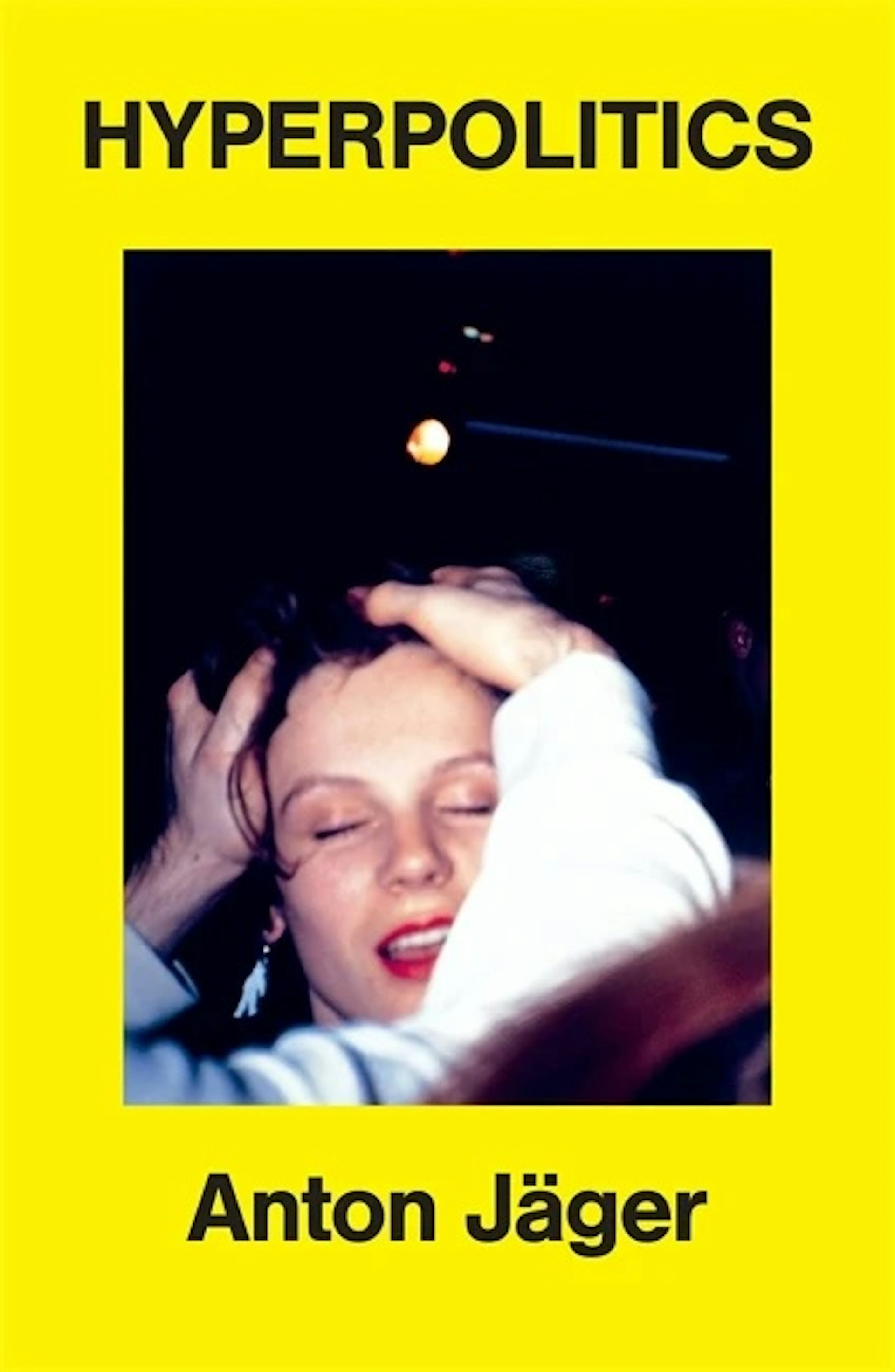
Review: Hyperpolitics by Anton Jäger (Verso Books)
Hyperpolitics names a world in which everything is political, yet politics is rarely durable. Private life comes with public meanings attached: the cola you drink, the person you date, the family member you cut ties with, the school your child attends, the vaccine you take (or refuse).
Jäger names the atmosphere of our time with real force. What he does less well is explain who has been formed by this atmosphere.
The young eyelash artist in Carindale was not apolitical or disengaged. She had read enough, watched enough, absorbed enough, distrusted enough to assemble a complete worldview.
But she was also saturated with causes, enemies, instincts and explanations. What she lacked was any durable institution – the parties, unions, churches or civic associations past generations turned to – through which all that political energy could become power.
So, politics is everywhere. Power is nowhere in particular. That is the condition Hyperpolitics captures.
Hyperpolitical youth
As a youth researcher, I see this world all the time. In many advanced democracies, the sexes are moving apart politically, with young women becoming increasingly progressive and young men increasingly right-wing, widening the modern gender gap.
Here in Australia, this is reflected in dating and intimate relationships, too. For example, in a Triple J Instagram poll in 2022, 57% of the respondents said differences in voting would be a deal breaker.
Some young people are finding sympathy in places once considered politically marginal, including Pauline Hanson’s anti-immigration messaging in Australia – though the Greens are the most popular party for young voters, who are also the least likely of any age group to support the major parties. And yesterday, high school students around Australia took time out of classes to protest Hanson.
While some young men are drawn towards online communities reviving ideals of traditional masculinity, young women are driving new forms of feminist, environmental and social justice activism. Notably, though, some young men are turning towards religion, searching for certainty, belonging and purpose.
Australian gen Z is the first generation in history where men are more religious than women. At face value, this trend seems opposite to Jäger’s point of declining religious institutions – but this drive back to religion is about affiliation or belonging; it doesn’t reflect attendance at religious institutions like churches, synagogues or mosques.
All in all, politics arrives through algorithms before it reaches institutions. It is no longer something young people do: it’s something they inhabit.
Mass politics belonged to the 20th century
Hyperpolitics is a short book, under 100 pages. At times, it feels more like an extended essay than a full historical account. It is also beautifully written; sometimes too beautifully: Jäger’s prose can be elusive, even serpentine, and he relies on a very educated reader to keep pace with the literary and philosophical references. That gives the book its charge. It also makes it less open than it could be.
Still, the concept is powerful.
Jäger’s key claim is we have moved through several political ages. Mass politics belonged to the 20th century, when parties, unions, churches and civic associations organised people into durable blocs. Postpolitics arrived after the Cold War, when citizens retreated into private life and technocrats handled the hard business of governance.
Antipolitics followed the 2008 financial crisis: mass protests – like Occupy Wall Street to protest economic grievances in the US, and the Indignados movement featuring anti-austerity protests in Spain – paved the way for populist anti-elite sentiments in most of the Western world.
Hyperpolitics then arrived around the Trump-Brexit moment, argues Jäger. Politics re-invaded everyday life, in a world of weaker social and political organisations.
Political parties have lost members, churches have emptied pews, unions have weakened, and various civic associations have dissolved, he writes. In their stead, online life offered a replacement, with almost no barriers to entry and almost no cost of exit. Join a Telegram channel. Follow a political influencer. Retweet a thread. Post moral outrage. Leave when bored.
One could argue that this is participation. But it’s rarely organisation.
I think Jäger’s periodisation is elegant. Too elegant. He knows this, admitting political periods are never clean. Yet, the book often treats hyperpolitics as if it appears “somewhere in the middle of the 2010s”, as he puts it, amid Trump and Brexit. That “somewhere” does a lot of work. Perhaps because it did not appear in the same year for all countries, and definitely not for the same reason.
To me, this question is glaring: what caused hyperpolitics to arrive in the mid-2010s? Was it the rise in populism? Was it digital media? Was it the immigration crisis in the West? The aftershock of austerity, the pandemic, war, inflation, climate breakdown, the spread of smartphones, the long death of civic life? Or was it the entrance of a new political generation into the electorate?
In Australia, a country largely spared the worst effects of the financial crisis, hyperpolitics arrived around the same time as elsewhere in the Western world. But the reasons lie less in economic shock (though that’s a factor) than in the emergence of a generation who encountered politics through networks, platforms and identity conflicts, rather than through traditional institutions.
It’s neoliberalism, stupid
As a self-proclaimed Marxist, Jäger was never going to treat neoliberalism as a neutral background condition. Nor should he. Neoliberalism hovers all over the book. It explains the hollowed-out state in the Western world, featuring the weakened major parties, the marketised citizen, and the low-trust public sphere.
But Jäger never quite makes it carry the full causal weight. It’s a missed opportunity.

Neoliberalism did more than shrink the state. It remade the relationship between democracy and economic power. With a preference for less government interference, neoliberal regimes insulated markets from the sovereign state. It weakened unions.
Neoliberalism converted public goods into private investments. (To name a few instances in Australia: its national airline, national bank, gas, electricity and public transport.)
It also taught citizens to experience failure as personal – for example, by presenting housing insecurity as an individual problem, rather than a collective one to be solved politically.
Without being able to rely on governments, institutions, or even a stable job or housing, the good citizen was no longer someone embedded in collective life, but someone adaptable enough to survive without it – someone resilient, flexible, entrepreneurial and always ready to leave. That is the genius and cruelty of neoliberal freedom: most damningly, it made exit feel like freedom.
Admittedly, Jäger alludes to the ills of neoliberalism. Falling real wages, rising costs, housing pressure, the decline of unions, the collapse of churches, the emptying out of parties and the accelerating loneliness of civic life.
He sees the “hard but hollow” environment of neoliberalism very clearly. But the narrative – to explain how the hyperpolitical era came about – feels underdeveloped. Hyperpolitics appears as the next phase in a sequence, instead of the expected political style of a society trained in individualisation, short-termism and exit.

My reading of Hayek’s Bastards, by Canadian historian Quinn Slobodian, helps sharpen what Jäger leaves blurred.
Slobodian argues younger generations of neoliberal leaders did not merely protect markets from democracy. Many came to view democratic demands – for things like economic redistribution, civil rights, feminism, environmental regulation and social equality – as threats to the competitive order they valued.
In response, they sought intellectual and institutional ways to shield markets from popular pressure: through international economic rules, or hard monetary constraints, or appeals to supposedly natural biological differences between people.
The result is a politics where a more educated and informed generation of citizens has the tools to grapple with politics, but not to change it.

This is also where I thought of British Labour Party politician Liam Byrne’s work on Why Populists are Winning. Populists succeed because they turn dislocation into narrative.
They name enemies, and promise a return to secure times of the past. They also turn insecurity into a feeling of betrayal: where neoliberalism individualises failure, populism narrates the failure as a consequence of being robbed by identified “enemies”.
In his 2017 inaugural address, Trump famously blamed establishment elites for the financial hardships of those struggling.
More recently, this week, Pauline Hanson encouraged struggling Australians to blame migrants for what they have lost:
That’s why your rent exploded, your pay went backwards, and your kids can’t buy a home. It’s why hospitals are turning away sick people.
(At yesterday’s protests, National Union of Students president Felix Hughes responded directly to this idea: “"International students are our classmates, not our enemies. They are not responsible for the housing crisis or the cost of living.”)
Most importantly, populism offers structure.
For that young artist in Carindale, Trump gave her that structure. He gave her a plot: telling her who had lied, who had benefited, who had stolen her future. This is the part liberal analysis often misses. It’s not so much that populism persuades with policy, but that it supplies a home for people who no longer trust the old homes.
Of course, in practice, populism doesn’t deliver the freedom its followers crave. We know all too well it can be cruel, racist and misogynistic, often turning real insecurities into fantasy politics. But it understands the human need for structure in a way technocratic liberalism, with its fondness for expert management and market-based solutions, does not.
‘Polarised, paranoid, and zero-sum’
I was excited to read Jäger’s historical analysis because it resonated with a concept from my own area of research on political disengagement among young people in OECD countries: “the fluid citizen”.
The fluid citizen is mobile, educated, precarious, expressive, digitally networked, morally alert and weakly attached to older institutions. They do not withdraw from politics. They flow through it, moving between causes, identities, platforms and affiliations with extraordinary ease.
They can be intensely attached, then – poof! They can be morally certain, then exhausted. They can join a protest, sign a petition, share a post, boycott a brand, leave a church, block a relative, vote for a populist, abandon a party, start again next week.
English political theorist and economist, Harold Laski, wrote in 1916: “whether we will or no, we are bundles of hyphens”.
He meant human beings are associative creatures who are formed through ties. Citizen-worker. Believer-sceptic. Voter-consumer. Friend-stranger. Online self-offline body.
Today, the hyphens remain, but the glue has thinned, along with our institutions.
Jäger is very good on this part. He shows how hyperpolitics depends on a decline in durable association. He also captures the market logic of this political style.
Hyperpolitics has the rhythm of financial markets and digital media: short cycles, rapid reactions, constant switching, low patience for slow work. Unlike German economist and sociologist Max Weber’s image of politics as slow, disciplined “drilling through hard boards”, hyperpolitics is fast, reactive and poorly suited to long-term transformation.
The curious thing, Jäger tells us, is that this does not make politics less emotional. Actually, it makes politics more emotional. Outrage moves faster than organisation. Moral identity travels more easily than collective strategy. People can feel deeply attached to a political moment without being attached to the structures that might make the moment count.
This is the paradox at the heart of the book. Citizens are more politicised than before, yet less embedded in the institutions that once turned agitation into power.
But Jäger misses the generational opening.
Millennials appear in his account as the children of post-politics who became politicised through disappointment. They grew up with the promises of education, meritocracy, mobility and globalisation. Then came the 2008 global financial crisis, student debt, austerity, the housing squeeze and the collapse of stable adulthood.
The politics of Occupy – mass anti-elite protests fuelled by economic grievances – makes sense here. These were the “biographically blocked”: educated people whose cultural capital had lost market value.
Gen Z: children of neoliberal ruins
Millennials are the children of neoliberal promise. I argue gen Z are different: they are the children of neoliberal ruins. They were born after the promise had curdled, but before any new structure of belonging had arrived.
They did not move from political sleep into political awakening. They are coming of age during and after Trump, Brexit, climate emergency, #MeToo, Black Lives Matter, pandemic lockdowns, inflation, war and the platformisation of ordinary life, with the ubiquitousness of apps like Amazon and Uber. That means politics has always been in the atmosphere for them.
This is why hyperpolitics became fully legible only when Gen Z entered the electorate. They inherited increasingly marketised education (epitomised in Australia by $50,000 arts degrees and the rise in private schooling), precarious work, housing impossibility, shattered trust and a public sphere built for permanent reaction. They are fluent in moral-political language. They are suspicious of institutions. They are comfortable with rapid switching between causes and identities.
And as I observed with the Carindale eyelash artist, they are also searching for structure.
Some find it in climate politics. Some find it in anti-vaccine politics. Some find it in mutual aid. Some find it in Palestine solidarity. Some find it in traditional religion. Some find it in the manosphere. Some find it in Trump or One Nation. Some find it in national revival. Some do not find it at all.
The fluid citizen is not automatically progressive.
Too many accounts of youth politics treat young people as a moral bloc waiting to save democracy. (That is sentimental.) Gen Z can be radical, reactionary, emancipatory, conspiratorial, solidaristic, nihilistic, devout, angry, lonely, funny, cruel. Sometimes in the same week.
This fluidity has no fixed ideological destination either.
Race and gender also need a deeper place in this story. Jäger recognises #MeToo and Black Lives Matter as central episodes in the hyperpolitical age, noting such movements
showed that the demands of groups long marginalized under mass democracy had reached a tipping point.
Yet, he uses gender and race as examples, where they should be more than that. They need to be treated as forces that helped constitute the present.
The politicisation of everyday life has not happened in a neutral public sphere. It has happened through fights over bodies, borders, police violence, sexual harm, migration, care, family, reproductive rights and recognition. Feminist scholars have long argued “the personal is political”: experiences often treated as private are shaped by larger relations of power and inequality.
So, to say “everything is political” means something different if your body has always been treated as a public problem, as is often the case for women, queer and trans people.
Loneliness is part of the story
Jäger’s book is haunted by the problem of form.
He knows political intensity is not enough. Hyperpolitics may re-enchant public life, especially for subjects left empty by post-political consumer society, but enchantment is not organisation. Yes, it can give purpose, create a rush of belonging, turn the feed into a battlefield and turn the private self into a political project. Then what?
Loneliness is unfortunately a part of the story here. Declining friendship, falling marriage rates, sexual alienation and social isolation are not side issues. They help explain why politics becomes a substitute site of belonging.
Consumer capitalism makes private life more comfortable, while thinning out collective life. The home becomes easier to inhabit and harder to leave with streaming, delivery apps, drugs, online communities. As sitting alone became less boring, civic life paid the price.
This is where Jäger’s Marxist instincts are useful. Collective life had to be thinned out so markets could move further into the spaces once occupied by association. Parties became cartel parties – which have shifted from representing citizens (“voice”) to focusing on controlling and managing power (“management”). Unions and churches lost members. The left lost the structures – such as unions – through which it once connected grievance to power.
Marx’s allegory of peasants as “potatoes in a sack” becomes strangely relevant here. Isolated people can be added together without becoming a collective actor. People can vote the same way. They can rage at the same enemy. They can repeat the same slogan. But they do not automatically become a force.
What is missing, Jäger suggests, is what Marxist philosopher Antonio Gramsci called the “modern prince”: not an individual ruler, but a political organisation capable of turning scattered grievances and aspirations into a coherent collective project.
Parties and movements once played this role, transforming private frustrations into public action. Today, citizens can voice their anger instantly, but often lack the organisational vehicles needed to convert that energy into lasting political power.
The right has often adapted better to this terrain. It offers belonging without asking for the slow discipline of egalitarian organisation. Atomisation becomes identity. Insecurity gets an enemy. Old forms return with new voltage: nation, family, masculinity, religion, race.
We can see this in movements as varied as Trump’s America First nationalism, European anti-immigration parties, and the online manosphere, each transforming diffuse anxieties about economic and cultural change into stories about who belongs and who threatens the social order. Some are ugly. Many work.
The left faces a tougher problem. It needs durable solidarities and a structure that can outlive the rush of the moment. Jäger sees this clearly. He maintains left hyperpolitics can fill streets, flood feeds, change the mood, then disappear while the machinery of power remains intact.
In the US, Bernie Sanders electrified a generation of young Americans, but twice failed to win the Democratic nomination. Former UK Labour leader Jeremy Corbyn expanded his party’s membership and transformed political debate, but was defeated electorally.
Occupy, Black Lives Matter and the climate strikes all succeeded in changing what people talked about and how they talked about it. Yet each confronted the same challenge: transforming moments of extraordinary mobilisation into durable political power.
Different histories. Different stakes. Same structural question. How does intensity become institution? How does moral force become power? How does the crowd survive Monday?
It’s not all about the West
Here, I want to push Jäger harder. His subtitle is “extreme politicisation without political consequences”. Brilliant phrase. Painfully accurate at times.
It captures the feeling of scrolling through catastrophe while rents rise, wars continue, emissions climb and the same interests keep winning.
But always? No. Intensity without organisation rarely produces durable power. Rarely. Not never.
The youth of Bangladesh brought down a repressive leader in 2024: she fled the country following weeks of protests. The recent Cockroach Movement in India, fuelled by a youth jobs crisis, brought down the education minister. These are just two examples of many youth-led revolts across the world.
Gen Z mobilisation can shock regimes. It can force resignations, shift public discourse and alter the tempo of politics. None of this fits neatly into a Western story of expressive agitation without consequence. These movements are not always left-wing, liberal or democratic either. Youth power has no guaranteed moral direction.
Jäger’s Western frame narrows the story. His world is full of weak unions, empty churches, cartel parties and disillusioned voters. Real enough, but not universal. In many places, youth mobilisation does more than express frustration. It frightens states.
Platforms such as Facebook, WhatsApp, Telegram and TikTok become infrastructure when older institutions are blocked, captured or distrusted, serving as spaces to organise protests, circulate information, coordinate action and build political communities.
Hyperpolitics often lacks durable organisation, yes. It burns hot and fades. But it can still change norms, topple leaders, intensify polarisation, discipline institutions, humiliate elites, revive religion, repackage masculinity and drag private life into public contest. Consequence does not always have to look like a party membership tally.
Sometimes it looks like a young woman in a beauty salon who has absorbed a whole counter-world.
Sometimes it looks like a university student who has taken bullets and become a symbol of a resistance that helped dismantle a seemingly immovable regime.
These are not the citizens of the old mass parties. I firmly believe they are fluid citizens: politically saturated, organisationally untethered, moving through networks, identities and causes with a speed older institutions struggle to match. They may not build durable organisations, but they have the potential to transform what people believe, fear, reject and demand.
The question is what comes next.
What happens when a generation socialised in hyperpolitics goes looking for structure? What happens when distrust of institutions meets a craving for authority? What happens when belonging travels through platforms before it reaches parties, churches, unions or states? What happens when the loneliness of post-political consumer life meets the moral intensity of permanent crisis?
We are already finding out.
Intifar Chowdhury does not work for, consult, own shares in or receive funding from any company or organisation that would benefit from this article, and has disclosed no relevant affiliations beyond their academic appointment.
Popular Products
-
 Smart Bluetooth Aroma Diffuser
$585.56$292.87 -
 WiFi Smart Video Doorbell Camera with...
$61.56$30.78 -
 Wireless Waterproof Smart Doorbell wi...
$20.99$13.78 -
 Wireless Remote Button Pusher for Hom...
$65.99$45.78 -
 Digital Coffee Cup Warmer with Temp D...
$88.99$61.78