How Riverland Turns 55+ Connectivity Into New-home Sales
Do placemaking investments truly translate into sustained momentum in home sales over the long life cycle of a large-scale development? It’s an enduring question for homebuilders and master-planned community developers.
At Riverland in Port St. Lucie, Florida, GL Homes makes a case that they do.
The 4,000-acre active-adult master-planned community has sold more than 4,200 homes since launching in 2018 and is ultimately expected to reach roughly 11,000 homes at full buildout. As GL Homes recently unveiled Valencia Vista, the newest neighborhood within Riverland, company leaders point to a deliberate strategy centered on physical and social connectivity — creating places where residents can meet, interact and build community.
“The Paseo is much more than just a pathway, and the connections are much deeper than just getting from point A to point B,” Ryan Courson, GL Homes’ Division President of St. Lucie County, told HousingWire TBD. “The Paseo was designed with open green spaces, lush landscaping, and shaded seating areas to create an environment where neighbors can connect with one another. The Paseo is the heart of Riverland and represents what Riverland is all about, which is a fully connected lifestyle.”
That philosophy is embodied in two signature amenities that have become central to Riverland’s identity: the Paseo Greenway and one of the largest private pickleball complexes in Florida.
Together, they serve as what community developers often seek but rarely achieve at scale – people connectors for people who value such connectivity going in or grow to value it in time.
The business case for connection
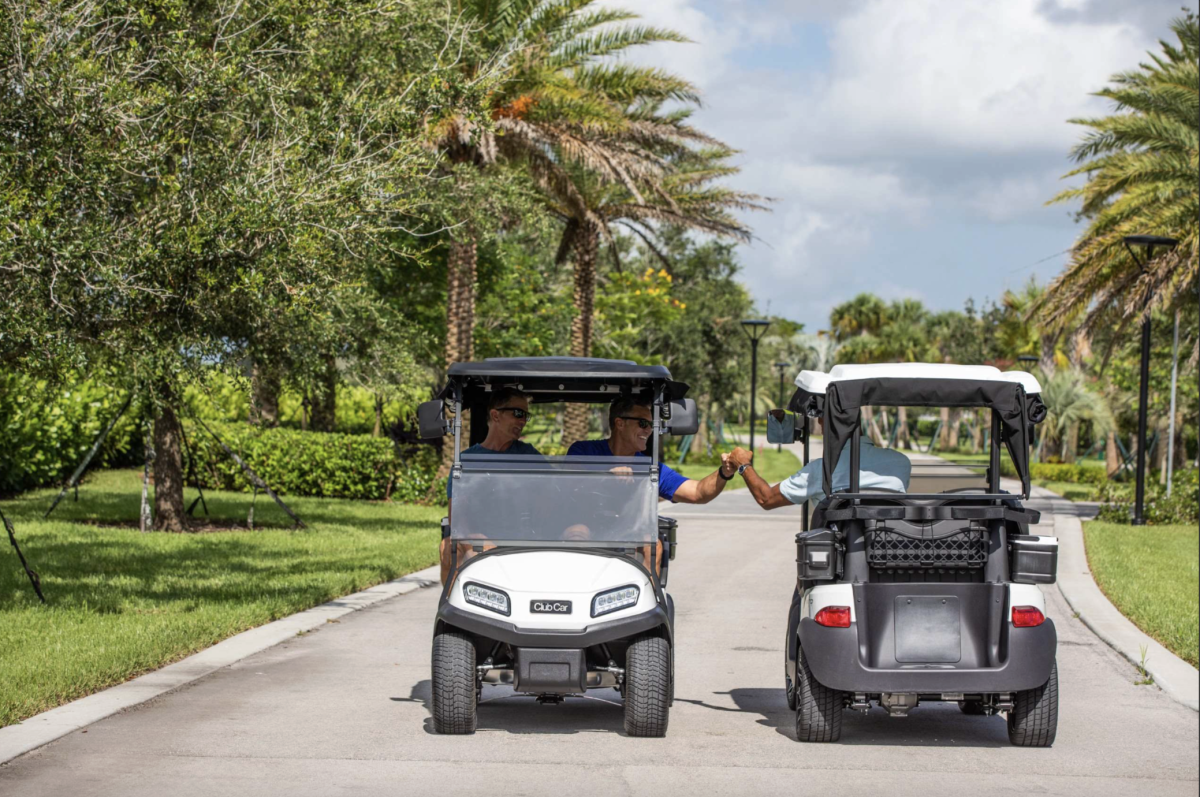
Riverland’s Paseo Greenway stretches more than two miles through the community, linking neighborhoods, amenities and gathering spaces through landscaped pathways and trails.
Developed early in the community’s evolution through a public-private partnership with the City of Port St. Lucie, the Paseo was designed not only as a recreational feature but as connective infrastructure. Working with city officials, GL Homes incorporated tunnels beneath major roadways, allowing residents to travel the pathway by foot, bicycle or golf cart without crossing busy streets.
The partnership also included the development of a 12-acre public park, with GL Homes contributing land and coordinating public access points. Riverland maintains the pathway system while the city owns and operates the adjacent park.
For GL Homes, the value of the Paseo extends beyond mobility.
The company views the greenway as the physical framework that helps foster resident interaction, community engagement and a stronger sense of place across a development that will eventually encompass thousands of households.
Pickleball as a community-building engine
If the Paseo serves as Riverland’s connective tissue, pickleball has become one of its most powerful social magnets.
Riverland currently features 53 resident-only pickleball courts and plans to expand to 85 courts in the near future, creating what GL Homes believes will be among the largest private pickleball complexes in Florida and potentially the nation.
“It’s no secret that pickleball is wildly popular, especially in active adult communities,” Courson said. “It is by far the highest participation activity at Riverland. We experience over a thousand court reservations per week.”
The scale of participation reflects a broader shift in active-adult community design.
Rather than emphasizing passive amenities traditionally associated with age-restricted communities, today’s buyers increasingly prioritize wellness, activity and opportunities for social engagement.
“One of the biggest lessons or trends we’ve learned at Riverland is the 55+ demographic is more active than ever before, with a major focus on health and wellness,” Courson said. “Also, the Riverland buyer is looking for vibrant spaces to socialize with friends and neighbors.”
That lesson has shaped Riverland’s amenity strategy from the outset. In addition to pickleball, residents have access to tennis and bocce facilities, a 51,000-square-foot fitness center, indoor and outdoor pools, personal training services, restaurants, arts programming and neighborhood social clubs featuring poolside dining, sports lounges and event spaces.
Positioning Valencia Vista for growth
The emphasis on connectivity and community building has struck a chord with buyers in a new-home market landscape otherwise rife with uncertainty and buyer hesitation.
Riverland has recorded more than 120 home sales during the past two months, and GL Homes’ June grand opening of Valencia Vista attracted nearly 1,000 visitors.
The newest neighborhood enters the market with the advantage of being part of an established master-planned community rather than relying on future promises. Prospective buyers can already experience the amenities, social infrastructure and lifestyle offerings that have helped Riverland generate more than 4,200 home sales to date.
About half of Riverland’s buyers relocate from outside Florida, drawn by Port St. Lucie’s growth, relative affordability compared with many South Florida markets, and the community’s lifestyle-focused positioning. Homes currently range from the mid-$300,000s to the upper $800,000s.
While broader housing market conditions remain challenging, Courson believes the active-adult segment continues to demonstrate resilience.
“Not only is the active adult segment more resilient, but they are also less likely to put their lives on hold for short-term, external events impacting the market,” Courson said. “They still want to move forward with retirement plans and live in a place like Riverland.”
For GL Homes, that resilience is being supported by a development strategy that treats connectivity not simply as an amenity, but as a bedrock business driver.
With thousands of homes still to be sold over the coming years, Riverland’s next phase may offer a useful blueprint for how large-scale master-planned communities can translate placemaking investments into long-term absorption success.
Popular Products
-
 Smart Bluetooth Aroma Diffuser
$585.56$292.87 -
 WiFi Smart Video Doorbell Camera with...
$61.56$30.78 -
 Wireless Waterproof Smart Doorbell wi...
$20.99$13.78 -
 Wireless Remote Button Pusher for Hom...
$65.99$45.78 -
 Digital Coffee Cup Warmer with Temp D...
$88.99$61.78