Senior Living Executive Forecast 2026: Industry Still Not Ready To Serve Boomer Generation
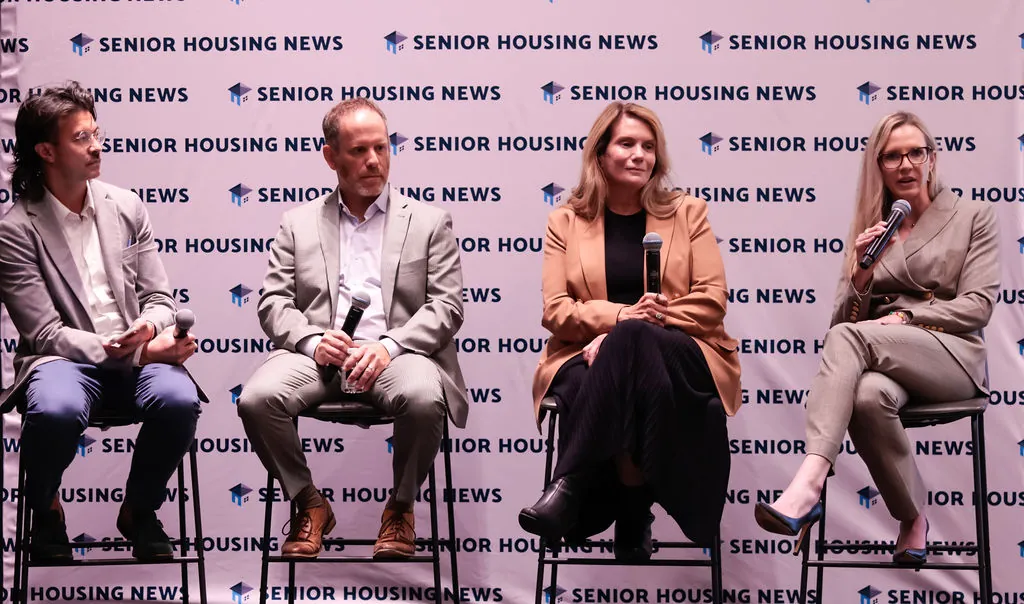
In 2026, the oldest boomers are turning 80. Senior living operators still may not be ready to serve them, according to the industry’s leaders.
For one, the senior living industry is still mired in development woes at a time when demand is only growing. In fact, the number of senior living units in some markets is shrinking. As operators grapple with resident preferences and outdated operating models, they are retooling their playbooks to accommodate the wave of demand at their doorstep.
Even so, the challenges of senior living operators today could hurt their ability to attract the next generation of older adults into communities, many of which were built decades ago.
Lifespace Communities CEO Jesse Jantzen put it bluntly: The industry is not yet ready to accommodate baby boomer demand even as some operators are “far better positioned than others.
“Boomers are rewriting the rules — and they won’t wait for us to catch up,” Jantzen told Senior Housing News.
But it’s certainly not all gloom and doom ahead, either. Operators that can succeed in the challenges of 2026 may well find themselves with a new tested blueprint for growth and operations. Bright spots this year include continued rising occupancy, ability to hire new talent and a willingness to adopt technology to improve operations in all departments.
Senior Housing News caught up with a wide range of senior living executives to examine industry sentiment heading into 2026, and this article is the first installment in a two-part series highlighting their thoughts in their own words.
Nick Stengle, CEO, Brookdale Senior Living
During the last decade, our industry has been describing the demographic tailwind associated with baby boomers. Active Adult benefited from this tailwind nearly a decade ago as baby boomers began turning 70 years old. Now, as the oldest in this generation turn 80, assisted living will encounter the same growth in demand. What many in the industry didn’t anticipate was the record-low inventory growth and the historically low level of new construction starts. Both of these realities are driven by rising construction and borrowing costs which, in turn, directly lead to the inability to underwrite acceptable returns on new development.
The intersection of the supply and demand trends is manifesting itself in many markets tipping over 90%+ occupancy and NIC projecting overall occupancy, across all their tracked markets, reaching 91%+ in 2026. These high occupancy levels are expected to become the norm nationwide for many years to come.
For Brookdale, this means we will be even more focused on our key initiatives: operational excellence, optimized capital allocation, and strategic pricing discipline.
As a company of 34,000 people caring for nearly 50,000 residents, Brookdale is first and foremost an operating company. This is reflected in how we’ve structured our organization. After a 10-year absence of a single leader over operations, we now have a chief operating officer. Our COO leads six newly formed regions, each led by a dedicated operational leader and regional leadership team that encompasses all the key functions (sales, clinical, dining, resident experience, finance, HR, talent acquisition, and asset management).
In effect, Brookdale has become a combination of six regional companies of roughly 100 communities each. This structure brings our company’s operational focus and execution closer to each market, to each community, and to each executive director. Simultaneously, we can leverage our national scale to provide the resources–both capital and people–to effectively support these six regions.
While Brookdale is an operating company first, we are also the third largest owner of senior housing real estate in the United States. In other words, Brookdale is an operating company built upon a foundation of real estate. With record-low development and new construction starts, senior living real estate is entering a period of scarcity. Concurrently, the average age of existing senior living real estate will keep rising across the industry. As a result, we will take a more focused approach to deploying our capital to attract new residents and continue delighting our current ones. This represents a more intentional approach to community renovations, upgrades, and repositioning. Rather than doing piecemeal projects, we will target markets and neighborhoods where investment will help differentiate our product. In effect, we will deploy our capital in a narrower, deeper, and more strategic way. We will focus on areas where we can achieve the strongest returns, rather than spreading resources thin across all communities, many of which are already in markets with 90%+ occupancy.
Fundamentally, Brookdale’s pricing strategy balances the delivery of exceptional service to our residents to drive occupancy, while also ensuring we remain an employer of choice through competitive compensation and associate satisfaction. As occupancy rises past 80% and into the 90%+ range, we will gain greater pricing flexibility. This will allow us to continue improving quality and investing in our communities as the need to offer discounts to attract new residents declines. Concurrently, we will be better positioned to offer targeted incentives to boost occupancy and net operating income in communities where occupancy has remained below 70%. In effect, 2026 will be a very active year in advancing a more disciplined and dynamic pricing strategy based on specific market conditions. Our goal, both in the near term and long term is to ensure that rate growth outpaces expense growth, all while continuing to deliver quality care to our residents.
Brookdale’s focus on these key initiatives will best position us to thrive in a dynamic market. As demographics shift, we remain dedicated to delivering high quality care and service to our residents, while investing thoughtfully in our communities and teams. We are confident that these priorities will not only drive continued growth for Brookdale, but also set the standard for quality and innovation in senior living.
Chris Bilotto, CEO, Diversified Healthcare Trust
As we enter 2026, we are encouraged by the strong growth in our Senior Housing portfolio, driven by powerful demographic trends and disciplined execution. The U.S. population aged 80 and older is projected to grow at an annual rate of 4.1% over the next 15 years, creating sustained demand for senior living communities and supporting meaningful occupancy gains across our SHOP portfolio. This demographic tailwind, combined with supply constraints from elevated construction costs and moderating pricing growth in select markets, positions our portfolio for long-term success.
Over the past several years, DHC spent over $250 million dollars renovating and repositioning its communities, modernizing amenities and enhancing the resident experience. We also sold 37 non-core or underperforming properties to best position the balance of DHC’s portfolio in order to capture outsized market share and drive NOI margins meaningfully higher over the next several years.
In 2024 and 2025, we partnered with eight operators—five new and three existing—to broaden coverage, leverage regional expertise, and densify operations in key markets. This strategy serves as a catalyst for DHC’s performance going forward, enabling centralized purchasing to reduce costs, sharing best practices, and lowering overtime and agency labor expenses, all while delivering exceptional resident care and value. We also expect the expansion of ancillary services across our communities to further increase occupancy and elevate resident care.
Additionally, DHC continues to invest in technology initiatives that streamline workflows, improve resident safety and satisfaction, and reduce administrative burden. Our partnerships have advanced automation, enhanced lead tracking, and refined marketing strategies for personalized engagement, which is strengthening our competitive edge.
Looking ahead to 2026 and beyond, the combination of strong demographic tailwinds, a renovated and strategically aligned portfolio, and increasing operational efficiencies positions DHC to deliver meaningful NOI growth and long-term value for our stakeholders.
Phill Barklow, President, Experience Senior Living
The first baby boomers turn 80 in 2026. Is the senior living industry ready to meet that demand next year?
Quite frankly, no. In many ways we are utterly unprepared. To start, we don’t have nearly the number of units that are required to keep up with the growing demand that the boomers will bring over the next few decades. We also generally don’t have the unit sizes and mixes that the boomers have made it clear that they would need to make a proactive choice to move into senior living.
The boomers want to be active, have incredible freedom of choice on how they spend their time (amenities), and they want purpose and connection with their peers and other generations. We also don’t have anywhere close to the amount of people needed to serve this population. The vast majority of the communities that are operating in the United States were built over 10 years ago and, quite frankly, were designed for a different generation – not just a different generation of seniors, but a different generation of the resident’s adult children and a different generation of team members. Unfortunately, this makes most of the current supply functionally obsolete. Recruiting top talent continues to be our primary focus. Although it isn’t discussed enough, we still have a stigma around us as an industry as being nursing homes.
The pandemic didn’t help that stigma as the majority of what was reported on only highlighted the bad stories that unfortunately happened during that time. What I saw was quite the opposite- although it was a scary time for all of us, our communities were more connected than ever and going through the pandemic as a team.
Senior living is a beautiful blend of real estate, hospitality, healthcare and entertainment. We need to draw from all these industries and try to find folks that are studying to work in each industry and teach them about how they can have a good career in our industry. All of that being said, we are where we are as an industry.
Development continues to be quite challenging because of cost, and acquisitions aren’t as cheap as they used to be. There are more capital partners interested in the space than ever before, yet many have seemed to struggle on where to break into the space. With the current interest rate environment, I see this trend continuing.
If rates come back down materially in 2026, as some predict, I think we will have the perfect storm for our industry to grow at a significant pace (albeit short of demand). With the immediate need for so much new supply, especially in dense urban markets with challenging barriers to entry, we need an easier path to entitlements and tax incentives to make these projects work. The bigger question to me is what happens to the middle market needs. A large percent of the boomers will simply be unable to afford senior living but will have the medical and emotional needs to live in a communal setting for care.
Our industry needs to lead the way in that discussion, and work with key stakeholders to come up with a plan to address the “silver tsunami” together. If we do not work together on a holistic approach, our hospital system will be overrun with patients that can easily have their needs met in an assisted living or memory care environment. We also need to be at the table to discuss how to solve the caregiver and nursing crisis that has been in the healthcare industry for the last decade or so. It needs to be a comprehensive approach to include fast-tracking education for nurses/CNA’s and immigration reforms for these critical jobs.
Jesse Jantzen, CEO, Lifespace Communities
The first baby boomers turn 80 in 2026, and the question I hear most often is simple: Is the industry ready?
My candid answer: not yet — but some operators are far better positioned than others. Those that have spent the last several years investing in operational discipline, portfolio modernization, and workforce stability will capture disproportionate share as demand accelerates. Others will discover that demographics alone do not fix a weak product or operating model. Demand is real.
Readiness is uneven. Boomers are not approaching senior living the way their parents did. Whether they are considering a Life Plan Community or a rental model, they are comparing us not just to each other, but to hospitality brands, residential real estate, health and wellness services, and technology-enabled solutions that bring support directly into the home.
At Lifespace, we look at the entire journey — often years of consideration — not just the move-in date. Boomers will not reward operators simply for being available. They will gravitate toward communities that deliver experience, autonomy, and a clear sense of value for the financial commitment they are making.
What we hear consistently:
- They want choice, not a prescribed path
- They want personal experiences, not generic programming
- They want a holistic wellbeing approach without being defined by it
- They want confidence that today’s lifestyle connects seamlessly to tomorrow’s needs
- Hospitality fluency, digital fluency, and healthcare coordination are becoming baseline
- expectations — not differentiators.
I see three structural gaps that will define winners and losers over the next several years.
First, product fit: Many communities were designed around a more traditional view of retirement. Boomers arrive with different expectations around work, travel, family roles, and daily routines. Communities that feel rigid, clinical, or dated will struggle.
Second, workforce capability: The wage spiral has slowed, but labor scarcity is structural. The challenge now is less about filling positions and more about building teams capable of delivering a more sophisticated, hospitality and wellness driven experience — while coordinating care across higher-acuity needs.
Third, capital and operating discipline: Construction and capital costs remain high, and operators are still absorbing years of wage and operating inflation. That reality is forcing a higher bar for execution. Experience-led providers will thrive; undisciplined operators will not.
Growth in 2026 will be strategic, not a construction boom.At Lifespace, growth is focused on strengthening communities, expanding mission impact, and building long-term resilience.
That means: Reinvesting in our existing portfolio — expanding independent living where demand supports it, modernizing health centers and common spaces, and elevating dining and amenities so they feel relevant to the boomer cohort. Disciplined acquisitions, not growth for its own sake — targeting communities where we can bring a stronger operating model, cultural alignment, and experience focus
Expanding services and adjacent businesses that support health, wellness, independence, and aging well across the full continuum. The common thread is simple: growth must enhance the resident experience and strengthen the platform, not just add units. Residents are very clear about what they don’t want. They walk away from anything that feels prescriptive.
What they respond to is a community that feels built for how they want to live:
- Real social connection
- Dining that looks and feels like the restaurants they already enjoy
- Technology that works without friction
- Wellness and longevity support that fits into daily life
At Lifespace, Net Promoter Score has become one of our clearest signals of whether we are getting this right. Twelve of our communities already score in the excellent range, and the remainder are within a few points. What matters most is inspired action: residents recommending us to friends and family — and those referrals translating into move-ins.
Over the past three years, we’ve strengthened our operational muscles around revenue management, workforce alignment, culinary programs, lifestyles programs, and sales execution. As occupancy rises, that discipline becomes leverage. The next phase of margin recovery comes from precision, not shortcuts:
- Better occupancy forecasting and pricing discipline
- Smarter scheduling and productivity tools
- Continued capital investment rather than hollowing out the experience
- Competitive monthly fee growth must be paired with tangible value.
Workforce shortages aren’t the core issue anymore — capability is. We cannot deliver a higher standard of hospitality and wellness without stable, capable teams. Our focus now is on nurturing innovation aptitudes in our leaders and teams, strengthening internal mobility, and simplifying systems so nurses, supervisors, and managers spend more time with residents and teams — and less time on administrative friction.
Some of our strongest leaders have grown from within and scaling that pipeline is a strategic priority.
Technology should remove friction, not replace human connection. We are investing in systems that improve scheduling, communication, and care coordination, and in analytics that help us anticipate demand and deploy resources more intelligently. We are also exploring practical uses of AI to take repetitive work off team members’ plates — so human judgment and relationships stay at the center of the experience.
I’m optimistic about where this industry can go. Demand is accelerating, and boomers are pushing us toward a more active, engaged model of senior living that — if executed well — will prove successful for both residents and operators.
My priorities for 2026 are clear:
1. Strengthening margins through better execution, while enhancing experience
2. Differentiate through modernized dining, wellness, and shared spaces
3. Deepen leadership capability at the community level
Boomers are rewriting the rules — and they won’t wait for us to catch up.
I expect a widening split between experience-led operators and capacity-led operators. Experience-led organizations will earn occupancy and pricing power through consistency, integration, and execution for long-term sustained success. Capacity-led operators will rely on discounts and concessions and while they may have short-term success they will struggle with a tenuous long-term future.
Demographics alone will not save a weak product.The real question is whether we are building communities older adults will actively choose — even before they know how to articulate what they want. If we answer that honestly, this industry can thrive. If not, demand alone won’t carry us.
Alan Butler, CEO, Erickson Senior Living
As we enter 2026, the first Baby Boomers are turning 80—a milestone that underscores the urgency and opportunity before us. The question isn’t whether demand will rise; it’s whether we, as an industry, are prepared to meet it with products and services that truly resonate with this generation.
At Erickson Senior Living, we’ve spent decades building communities that provide stability, wellness, and connection. Today, we’re building on those fundamentals while evolving to meet the expectations of a more active, health-conscious, and tech-savvy customer. Boomers want more than a place to live—they want a lifestyle that supports their independence, well-being, and sense of purpose.
Our robust pipeline reflects this commitment. In late 2025, we opened The Grandview in Bethesda, Maryland, our first-ever vertical living community. The first residence building is nearly sold out, and the second will open in 2026, setting a new standard for urban senior living.
In 2026, we will also open two new sales centers: at Oxford Hills, our new community in Clarksville, Maryland, and at Ava Lakes, in Boynton Beach, Florida. In Florida, construction continues on Emerson Lakes, our community under development in Sarasota, which will welcome its first residents in early 2027.
Looking ahead, over the next five years, we anticipate adding more than 5,000 residences to our inventory. This includes new communities in high-demand markets such as California, Arizona, Tennessee, Colorado, and the Mid-Atlantic, as well as expansions at existing campuses to meet growing waitlist demand. These projects represent billions of dollars in investment—a clear signal of our confidence in the future of this industry.
The biggest challenge in 2026 will be to balance affordability with rising costs. Inflation and construction expenses remain headwinds, and most seniors live on fixed incomes. We’re tackling this by leveraging scale, operational efficiencies, and innovative design to deliver exceptional value without compromising quality. Our people and culture also remain a top priority; we’re continuing to invest in career development and initiatives that foster engagement to attract and retain top talent in a competitive labor market.
We are inspired by the opportunity to redefine what senior living means for Boomers. From expanded fitness and wellness amenities—think pickleball courts, meditation gardens, and cutting-edge equipment—to concierge-style health care and enhanced home health support, we’re creating environments where residents can thrive. We’re also embracing technology to simplify daily life and strengthen connections.
The leaders in this next era won’t be those who simply build more communities—they’ll be those who innovate relentlessly to meet evolving expectations. Seniors aren’t looking for “care” in the traditional sense; they’re looking for a lifestyle that feels aspirational, not institutional. Providers who fail to adapt will find themselves left behind.
Finally, we must continue educating the market. Too many older adults remain isolated at home, unaware of—or resistant to—the benefits of community living. At Erickson, we hear time and again from residents who say, “I wish I had moved sooner.” In 2026, it’s our responsibility to make sure more people hear that message. What we do matters—and now, more than ever, it’s time to lead.
Alain Champagne, President and CEO, Le Groupe Maurice
The aging of the population is reaching a critical milestone, as the first wave of baby boomers turns 80 in 2026. This demographic shift is not only increasing demand for senior housing, but also changing expectations.
For Le Groupe Maurice, this represents an opportunity to adapt our offering to these evolving needs by designing living environments that support healthy aging, independence, and social connection, while remaining responsive to broader societal expectations.
While needs continue to evolve, some fundamentals remain unchanged. Seniors consistently express a strong desire to socialize, and the positive impact of social engagement on physical and mental health is well recognized, in Québec and elsewhere. This principle remains at the core of our residential model.
Our adaptation to evolving expectations is concrete and ongoing:
- A greater focus on longevity and well-being, through living environments and programming that promote active and healthy aging.
- A long-term commitment to environmentally responsible development, reflected in the design and construction of our residences.
- Stronger integration within local communities, encouraging interaction, openness, and a sense of belonging beyond the residence itself.Reinforced EDI principles, reflecting a more diverse aging population.
The year 2026 will be decisive for the future of Le Groupe Maurice, driven by major projects that further position us toward an inspiring and sustainable future. Our greatest opportunities lie in growth initiatives in both Quebec, and Ontario—a brand-new market for us and our first expansion into a new province—aimed at responding to the increasing demand for innovative senior housing solutions. These projects will focus on resident-centered services and high-quality living environments, designed to support seniors’ expectations in terms of health, autonomy, comfort, and social engagement.
We will maintain our role as ambassadors for better aging, actively contributing to evolving perceptions of aging and leveraging our voice to combat ageism. In addition, adapting our services to the evolving needs of older adults remains a top priority. Our goal is to create environments where today’s and tomorrow’s residents can thrive, preserve their independence, and maintain an exceptional quality of life.
At the same time, the senior housing sector continues to face significant challenges, including rising construction costs, increasing regulatory complexity, and home care services that remain vastly underfunded. These pressures place substantial financial and operational strain on operators and risk weakening an already fragile ecosystem. Continued collaboration with public authorities and clearer, more streamlined regulatory frameworks will be essential to support sustainable development and prevent continued closures of existing residences.
In summary, 2026 promises to be a pivotal year for Le Groupe Maurice: expanding thoughtfully in Quebec and into a new market, advocating for senior-friendly public policies, and innovating in anticipation of the evolving needs of future residents. These efforts aim not only to support our growth, but also to help shape a senior living industry that reflects and anticipates the evolving expectations of an aging population that will continue to rapidly grow in the years ahead.
Laurie Schultz, Principal and Co-Founder, Avenue Development
It is a common gut reaction in our industry to look at a challenging market cycle and say: “We’ve been down long enough. History tells us things will improve, the demographics are on our side, so let’s just buckle up for the next growth spurt.” But 2026 is different. This won’t be a traditional recovery, and the consumer we are chasing is no longer following a predictable pattern. If we want to capture the “golden wave” of Boomers, we have to stop looking at the past for our playbook.
This past fall, I attended HLTH in Las Vegas, one of the healthcare industry’s largest and most influential conferences. While I expected to find common ground with other leaders on the importance of senior living in the healthcare landscape, I walked away stunned by the discussions—or lack thereof. The demographic story of an aging population was touted in nearly every session, with a consensus that the broader healthcare ecosystem is unprepared. Yet, senior living was almost entirely absent from the conversation. The only notable mention came from a Kaiser representative who stated bluntly, “COVID killed the nursing home.”
If thousands of healthcare executives still label our entire industry as “the nursing home,” we have a fundamental branding crisis. We cannot be the solution for boomers if the gatekeepers of healthcare don’t even see us in the room.
Our biggest challenge in 2026 isn’t the community down the street; it’s the competition from consumers aging at home. The new competitor is the digital living room. A rapidly intensifying suite of digital tools—AI health coaches, digital companions, and virtual care coordinators—is poised to capture our already minimal market share at a fraction of the cost. While we often tell ourselves that technology adoption is slow in our target market, that philosophy is changing overnight. We cannot bet the future of our industry on “slow adopters” when the alternative to senior living is becoming more sophisticated and accessible by the day.
I am incredibly optimistic about our ability to reinvent living environments that compel residents to proactively move by providing housing with supportive services. There is a place for higher-acuity care, but as an industry, we must transition traditional senior living from a hospitality mindset to a healthcare identity.
At Avenue, we are planning for 2026 with a mix of excitement and caution. Our first Viva Bene active adult community in St. Peters, MO outside St. Louis, surpassed our lease-up expectations this year. This success wasn’t just about “housing”; it was about creating a preventive health journey. By expanding our WellVB healthcare partnerships, we will allow residents to customize their wellness experience. Our strategy moving forward focuses on psychographics over demographics. We are looking for residents who value longevity and proactive health, not just those who reach a certain age. We will continue to target two Viva Bene community starts in the next twelve months, but are cautious on pre-development investment given the continued selective capital market environment.
We have to be honest: development in both senior living and active adult sectors has fundamentally altered. In both development proformas and operational budgets, rental rates are strong and renewal increases are robust both in terms of rate and occupancy. Lease up time frames however are elongated, and coupled with initial rate pricing incentives, it’s more difficult to achieve yield in development.
For development to truly return, sales valuations and velocity must increase enough to tip the scales from acquisition back toward new construction. Many are waiting for interest rate cuts or a drop in construction pricing to act as a “magic lever.” While these would help, they are modest changes at best. Labor availability hurdles will continue to keep costs high regardless of materials pricing. The real catalyst for growth in 2026 will be the consumerization of housing. By developing products that meet Boomer expectations for lifestyle and health integration, we will drive the rental rates necessary to match the demographic influx and attract new capital to the industry.
Larry Gumina, CEO, Ohio Living
We’ve been getting ready for this tidal wave of demand, but some organizations are more prepared than others! The Medicare Hospital trust fund will be overwhelmed with this influx of our aging baby boomers, so I believe we’ll see a continued shift to Medicare Advantage plans, and increased value-based strategies within Medicaid, like PACE.
Those of us, in addition to growing their traditional portfolios, who are embracing value-based services strategies, like our Ohio Living owned Perennial Advantage Plan(s), primary care partnerships with Curana Health, and our PACE partnership with the McGregor Foundation, will be more prepared than others.
I believe innovation will be the keystone of sustainability – growth is inevitable if you want to stay relevant. What we’ve known over generations, change is constant. Those organizations who can effectively adapt to changes with the marketplace will be the survivors. Start new business lines with revenue diversification, expand your scope of services to serve more. We recently introduced a Medicare Advantage Prescription Drug plan to serve more “off campus” older adults. Our strategy is simple: if we can introduce ourselves earlier as they live off campus in their homes and support their aging experience on their terms, we can create a trusting relationship that will stay for life. Getting it right will be the key; I’ll keep you posted and let you know how we make out.
What happens when an organization, within any industry, fails to grow? They begin to spiral and fail. We created and introduced a new strategic plan this year predicated on accretive growth and workforce optimization. I’m excited for the growth within our emerging markets, the recent repositioning of our balance sheet which enables us to grow in those markets, the strong trust index of our talent base and our recruitment/retention strategies. 2026 is all about execution of those strategic initiatives!
The aging population with fuel demand and strong top line revenue performance, the workforce demands/wage pressures will tighten margins, and the scaling or consolidation of our industry is a tide that cannot be stopped. Operating complexities will continue to increase, access to capital will be critical for growth and operating efficiencies will continue to be ever so important.
The post Senior Living Executive Forecast 2026: Industry Still Not Ready to Serve Boomer Generation appeared first on Senior Housing News.
Popular Products
-
 Self-Watering Planters with Water Lev...
$432.99$301.78 -
 Sunset Lake Landscape Canvas Print
$225.56$112.78 -
 Soft Velveteen Travel Throw Lap Blanket
$257.99$179.78 -
 Cotton Cushion Cases
$150.56$90.78 -
 One-Way Mirror Window Film Privacy Tint
$407.99$284.78