Small Homes, Big Opportunity: Inside The Growth Of Residential Assisted Living In 2026
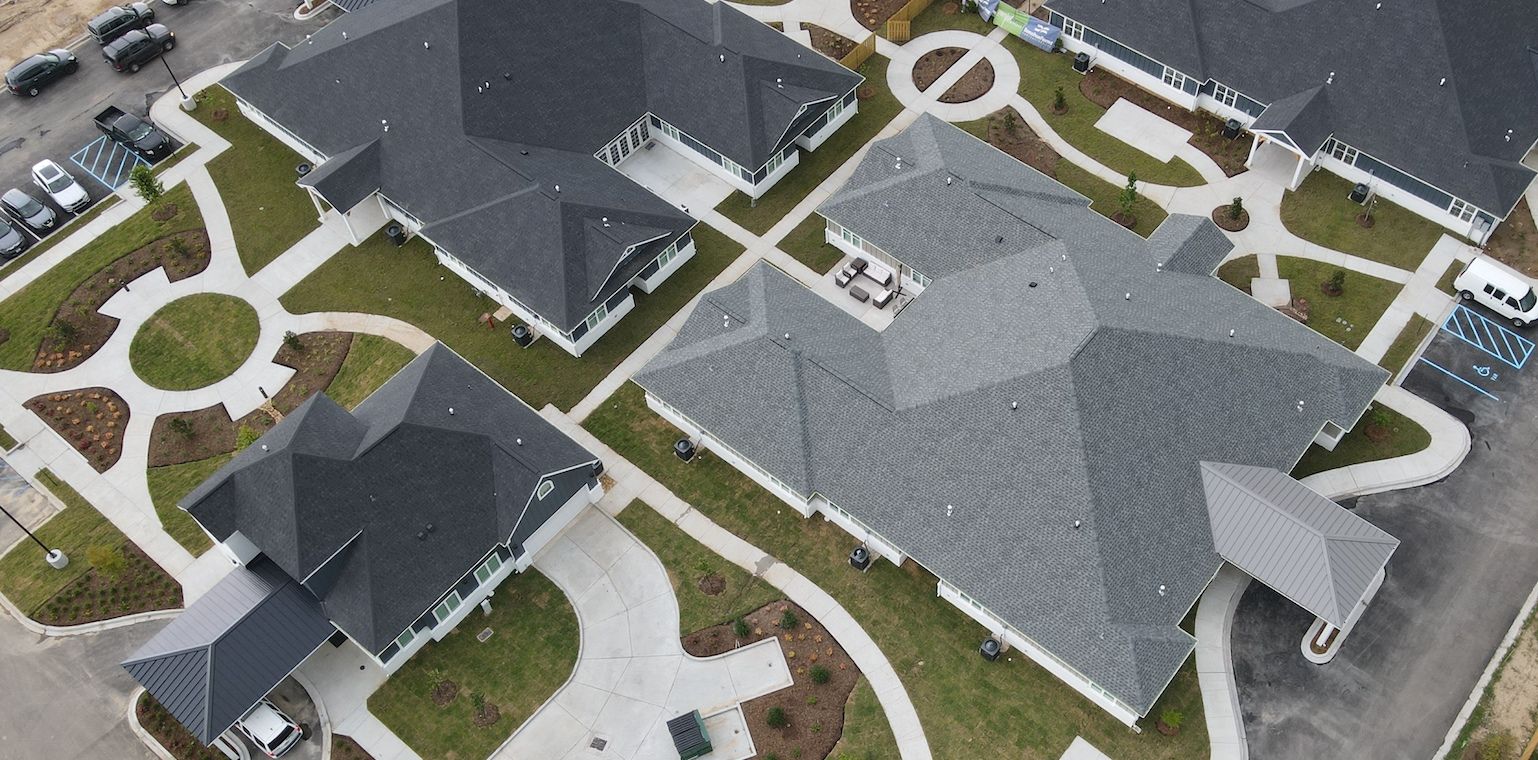
Operators of small-home style residential senior living communities are in 2026 building boutique senior living models they believe will serve the boomers well.
With smaller unit counts in residential settings, operators of residential assisted living communities believe their biggest value to residents lies in personalized care, higher staff-to-resident ratios and a home-like feel.
Bob DeClue, CEO of small-home operator Harmony Homes, views the sector akin to staying at an Airbnb compared to staying at a Marriott hotel, two different options with distinct benefits. Like Airbnb, a small-home community can be luxurious or humble and more affordable depending on your desired price point and preferences.
“This is a necessary alternative, and residential assisted living will grow both as a middle-market solution and as a boutique, luxury option,” said Harmony Homes CEO Bob DeClue.
In February, St. Louis-based Harmony Homes announced a partnership with developer Sansone Group, to include residential assisted living homes within a broader, age-restricted 55-plus development in the St. Louis area. The 11-acre site will include five residential assisted living-licensed homes managed by Harmony.
Harmony operates residential assisted living properties in a neighborhood setting through its sister company, Aspen Valley. Harmony aims to scale through larger neighborhoods of residential assisted living homes within broader developments.
Dallas-based The Sage Oak clusters communities near one another to share staffing efficiencies and create a more “boutique” product overall, according to Sage Oak CEO Loe Hornbuckle. Sage Oak invests “dynamic” culinary offerings and emphasizes personalized care and life enrichment programming.
“The main evolution of the business is that the gap between the best and the worst is wider than it’s ever been,” Hornbuckle said.
As of 2022, there were 32,200 residential care communities, according to the Centers for Disease Control and Prevention (CDC). The sector is experiencing consolidation even as “mom and pop” residential assisted living operators stand up properties in neighborhood settings.
For example, in February, Gilbert, Arizona-based Majestic Residences acquired Avendelle Assisted Living’s 17 residential assisted living properties. Majestic now oversees 34 communities after the company’s co-founding in 2020 by CEO Chuck Bongiovanni. Families and older adults seek out residential assisted living options that feel “safe, comfortable and personal,” an alternative to large-scale assisted living.
“When we say ‘residential assisted living,’ we’re talking about something very specific, a real home environment, highly personalized care, and a much more intimate setting for seniors. It’s less institutional and far more relationship-driven,” Bongiovanni said.
Consolidation of residential assisted living is “likely to continue,” Shepherd Premier Senior Living CEO Brandon Schwab told SHN, as regulatory and staffing challenges mount. But well-run operators who can “clearly articulate their value proposition” while maintaining service quality “will find a strong niche.”
In the last six years, the sector has become a viable option as older adults sought smaller settings for their opportunities for personalized care in “more intimate settings” with the “agility” to offer socialization while providing care, Wellpointe CEO George Kutnerian told Senior Housing News. Wellpointe is the largest provider of residential assisted living properties in California, according to the National Investment Center for Seniors Housing and Care (NIC).
“Today, residents and families are more aware of the small-home setting, including the approachability and human connection that are its hallmarks. People may like to visit a resort, but they want to live in a home,” Kutnerian said.
Wellpointe communities are co-located in residential neighborhoods, and are able to create a “greater level of community” through allowing residents to maintain routines and build relationships with neighbors similar to those they had while still living in their original homes.
Residential assisted living staffing ‘relationship-driven, less task-oriented’
In order for residential assisted living communities to thrive, they must have frontline staff capable of being universal workers alongside licensed care staff.
“Staffing is more relationship-driven and less task-oriented,” said MD Senior Wellness co-founder Raj Kalra, who recently opened a memory care community within a 55+ neighborhood in Santa Rosa, California, known as Aroha Memory Care.
It requires a “higher level of versatility” from staff, needing employees to be “comfortable with both caregiving and contributing to the overall home environment,” Kalra said. That makes training and developing culture within a property “critical.” This consistency has helped Aroha residents who came to the property from larger senior living settings and were previously withdrawn thrive in a more intimate environment.
“We’ve seen meaningful improvements across multiple areas, including reduced medication use, fewer falls, increased engagement, improved mood, and greater alertness,” Kalra added.
Staff are providing care, but also create the “daily rhythm of the home,” focusing on engagement and communication with families,” Bongiovanni said. This makes staffing within residential assisted living homes “a more holistic role.”
“Roles are often segmented and specialized,” Bongiovanni added.
Wellpointe relies on a “holistic caregiver model” in contrast to the departmental staffing approach larger senior living communities use, with a minimum staffing ratio of one staffer for six residents. The operator flexes that ratio as high as 3 staff to 6 residents depending on care needs, Kutnerian said. Residents have thrived in these higher-touch settings.
For example, at a Wellpointe community, a new resident who arrived feeling resentful and resistant to leaving her longtime home experienced a profound change after forming an immediate connection with a fellow resident. To Kutnerian, this illustrates how a more intimate setting provides unique opportunities for residents to find new purpose and thrive.
Caregivers in residential settings are “household anchors” and Harmony Homes relies on staff-to-resident ratios between 1:4 and 1:8, with the provider seeking out employees that are able to connect emotionally with residents, according to DeClue.
By relying on multiple communities near one another, The Sage Oak aims to find a “Goldilocks principle,” between engagement and care with having 30 to 60 residents nearby to create scale and build engagement between properties, Hornbuckle noted. This range helps to maintain the intimacy of and home-like feel these properties market to prospective residents. In his view, a house with only a few residents can be too small for socialization and services, while a 200‑bed community is too large and impersonal, so tightly grouped small homes hit the “just right” mix.
Small-home trend only accelerating
The public profile of small-home senior living communities has grown in recent years as families had a “visceral preference” for lower density environments after the Covid-19 pandemic, DeClue said.
“This started to push consumers towards environments where normalcy, front porches and family-style dining are the baseline,” DeClue said. “It’s an anti-institutional movement in some ways.”
Demand for smaller, more intimate settings is continuing to grow, Bongiovanni said. He noted that events in the last six years have only accelerated trends “that were already happening and brought them to the forefront.” Today, families often wait longer to transition a loved one into assisted living, Bongiovanni said, as the sector becomes more focused on acuity and care delivery.
“Telehealth, remote monitoring, and better communication tools are now expected,” Bongiovanni said. “Families want visibility, and operators need efficiency, it’s no longer optional.”
Families today also expect a higher level of accountability and engagement, while also needing increased communication about the status of their loved one in a community, Kalra said.
“By integrating lifestyle medicine principles into memory care, we’re addressing not just clinical needs, but also cognitive, emotional and social well-being,” Kalra added.
This boutique, personalized concept is “gaining market share” as older adults want quality care, engagement and personalized services, driven by the baby boomer demographic, Hornbuckle said.
“[The baby boomers] place a very heavy emphasis on personalization and most people do find it easier to feel like you’re part of a family in a house of six to 20 people versus if you’re in a 200-bed, multi-story facility,” Hornbuckle said.
By placing residential assisted living properties within broader, age-restricted and master-planned communities, it creates a “natural continuum of care” and allows residents to transition to a higher level of care without “leaving the community they know.”
“That community is incredibly valuable, both emotionally and practically,” Bongiovanni added.
Technology has helped create “smart home” environments within these intimate settings, as operators create a network of devices in a home that are capable of breaking the “black box” that has typically been associated with assisted living as operators can provide more details to families regarding a loved one’s stay, Kutnerian said.
This makes the offering one that is “no longer merely a fringe alternative, but one that is a “foundational model” for high-quality, affordable housing and care for dignified aging now and into the future,” Kutnerian added.
The post Small Homes, Big Opportunity: Inside the Growth of Residential Assisted Living in 2026 appeared first on Senior Housing News.
Popular Products
-
 Adjustable Laptop Desk
$91.56$45.78 -
 Outdoor Non-Slip Safety Treads
$2,034.99$1217.78 -
 Zigbee Wireless SOS Emergency Call Bu...
$48.99$33.78 -
 Wireless Key Finder Anti-Lost Locator...
$27.99$18.78 -
 Heavy Duty Suspended Bath Bench Seat
$200.78$130.78