5 Ways To Prepare For El Nino’s Extreme Weather This Winter
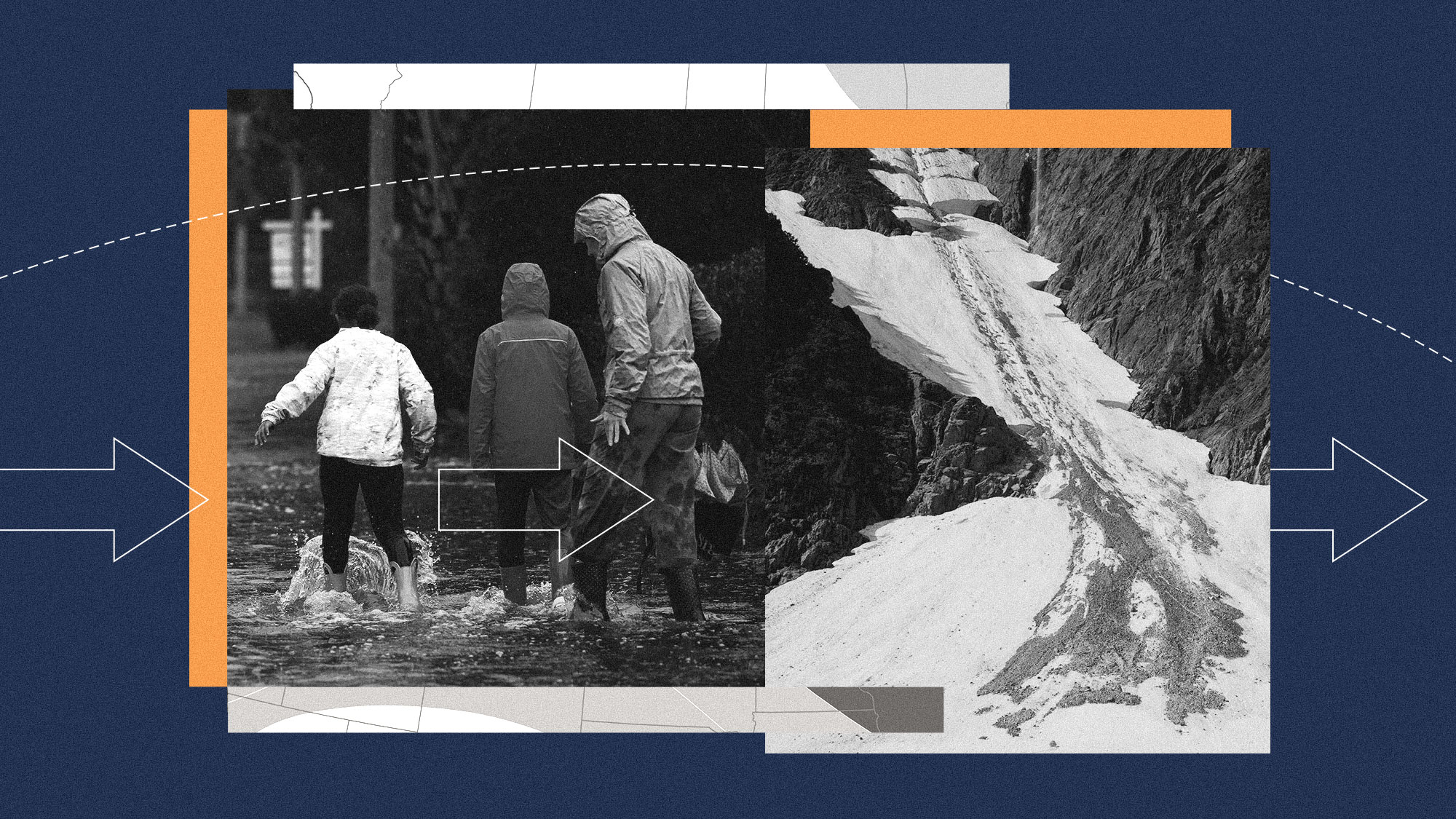
You may have heard about El Niño — the natural, recurring phenomenon that releases heat from the ocean into the atmosphere, influencing temperature and precipitation around the world. Its effects will differ this fall and winter depending on where you live, but heavy rainfall, flooding, and snowfall are some of the most likely impacts.
There’s a lot of information available on navigating extreme weather, so we came up with five things you can do to prepare right now, from packing an emergency kit and bookmarking your local National Weather Service page to knowing how to stay safe around floodwaters.
1. Sign up for local emergency alerts
Your city or county has an emergency management department, which is part of the local government. Emergency managers are responsible for communicating with the public about disasters, managing rescue and response efforts, and coordinating among various agencies. They usually have an SMS-based emergency alert system, so sign up for those texts now. Some also have an app you can download.
If you’re having trouble finding your local department, you can search for your state or territory here — but it’s easier to type your city or county name followed by “emergency management” into Google to quickly find the closest agency in your area. In larger cities, emergency management is often a standalone agency; in smaller communities, fire chiefs or sheriffs may manage emergency response and alerts.
If you’re not signed up for alerts from your utility company about power outages in your area, now is the time to do that, too. Your utility company likely has an app or dedicated website for reporting outages and tracking when power will return. For example, the Nebraska Public Power District, the power company that serves Nebraska, has an outage map here, as well as a mobile app.
2. Know where you’ll get accurate information and updates
Many people find out about disasters in their area via social media, so it’s important to make sure the information you’re receiving is correct. Below is a list of reliable sources to check and our guide to spotting misinformation about extreme weather.
National Weather Service
This agency, called NWS, is part of the National Oceanic and Atmospheric Administration, or NOAA, and offers information and updates on everything from wildfires to hurricanes to air quality. You can enter your ZIP code on weather.gov and customize your homepage to get the most up-to-date information and receive alerts for a variety of weather conditions. The NWS also has regional and local branches where you can sign up for SMS alerts. Local alerts in multiple languages are available in some areas.
If you’re in a rural area or somewhere that isn’t highlighted on the agency’s maps, keep an eye out for local alerts and evacuation orders. NWS may not have as much information ahead of time in these areas because there often aren’t as many weather monitoring stations.
“Watch” versus “warning”: You’ll often see meteorologists refer to storm watches or warnings. If a “watch” is issued, that means the conditions are ripe for extreme weather. A warning, however, means the threat is more imminent, and you should be prepared to take shelter or evacuate if told to.
You can track extreme weather via these websites:
- ElNiñoLive is an independent data journalism project that compares NOAA methods and explains results in plain language.
- NOAA has a real-time El Niño monitoring page.
- The National Hurricane Center tracks hurricanes in the Central Pacific, Eastern Pacific, and Atlantic oceans.
- The National Weather Service active-alerts page monitors severe weather by state, region, and type.
Local news
The local television news and social media accounts from verified news sources will have live updates during and after a storm. Meteorologists on your local news station use NWS weather data. Follow your local newspaper, radio station, and television station on Facebook or other social media, or check their websites regularly. If you don’t have cable, these stations often livestream online for free during severe weather. Your local news may also have a live blog that is updated regularly.
Weather stations and apps
The Weather Channel, AccuWeather, Apple Weather, and Google, which all rely on NWS weather data, will have information on major storms. That may not be the case for smaller-scale weather events, and you shouldn’t rely on these apps to tell you if you need to evacuate or move to higher ground. Instead, check your local news broadcast on television or radio, or check NWS.
Trying to fact-check during a crisis is stressful, and extreme weather makes you feel like there’s a lot to figure out in a short period of time. That’s why it’s important to know ahead of time who you can trust, how to vet information, and how to talk to your friends and family about it. Here’s a guide from Grist about how to spot misinformation.
3. Pack your emergency kit
It’s important to have an emergency kit ready in case you lose power or need to leave your home. Review this checklist from the Federal Emergency Management Agency for what to pack so you can stay safe, hydrated, and healthy. (FEMA has these resources available in multiple languages here.)
These can often be expensive to create, so contact your local disaster aid organizations, houses of worship, or charities to see if there are free or affordable kits available — or buy one or two items every time you’re at the grocery store. Ideally, this will be packed well in advance of hurricane or fire season, so gather as much as you can ahead of time in case shelves are empty when a storm is on the way. If you’re facing possible heavy snow, it’s a good idea to have an emergency kit in your vehicle as well.
FEMA has activities for kids to make this process more fun; the American Society for the Prevention of Cruelty to Animals also has useful guidelines for people with pets.
Here are some of the most important things to have in your kit:
- A list of phone numbers for your city or county emergency services, police departments, local hospitals, and health departments
- Water (1 gallon per person per day for several days)
- Food (at least a several-day supply of nonperishable food) and a can opener
- Medicines and documentation of your medical needs
- Identification and proof of residency documents (see a more detailed list below)
- A flashlight
- A battery-powered or hand-crank radio
- Backup batteries
- Blanket(s) and sleeping bags
- Change of clothes and closed-toed shoes
- First-aid kit (the Red Cross has a list of what to include)
- N-95 masks, hand sanitizer, and trash bags
- Wrench or pliers
- Cell phone with chargers and a backup battery
- If you have babies or children: diapers, wipes, and food or formula
- If you have pets: food, collar, leash, and any medicines needed
Wirecutter, Wired, Popular Mechanics, and some other news outlets have “best of” lists for many of these items, where you can find different price points and features. You can also find reviews on Consumer Reports.
Don’t forget: Documents
One of the most important things to have in your emergency kit is documents you may need to prove your residence, demonstrate the extent of damage, and vote. FEMA often requires you to provide these documents in order to receive financial assistance after a disaster. Keep these items in a water- and fire-proof folder or container. You can find more details about why you may need these documents here.
- Government-issued ID, such as a driver’s license, for each member of your household
- Proof of citizenship or legal residency for each member of your household (passport, green card, etc.)
- Social Security card for each member of your household
- Documentation of your medical needs, including medications or special equipment (oxygen tanks, wheelchairs, etc.)
- Health insurance card
- Car title and registration documents
- Pre-disaster photos of the inside and outside of your house and belongings
- For homeowners: copies of your deed, mortgage information, and home insurance policy, if applicable
- For renters: a copy of your lease and renters insurance policy
- Financial documents such as a checkbook or voided check
Planning for people with disabilities
Disabled people have a right to all disaster alerts in a format that is accessible. The Partnership for Inclusive Disaster Strategies, a disability-led nonprofit focused on disasters, has a list of these rights. The organization also runs a hotline for any questions: (800) 626-4959 or hotline@disasterstrategies.org. FEMA has a list of specific planning steps for people with disabilities. Some of these recommendations include:
- Contact your local emergency management office to ask about voluntary registries for people with disabilities to self-identify so they can access targeted assistance during emergencies and disasters.
- If you use medical equipment that requires electricity, ask your health care provider about what you may be able to do to keep it running during a power outage.
- Wear medical alert tags or bracelets. Also add pertinent medical information to your electronic devices.
- In your emergency kit, have your prescription information and medicines, as well as contact information for people who can help care for you or answer questions.
4. Prepare your home and property
It’s impossible to know what might happen to your home during a disaster, but there are many best practices to keep your belongings and property as safe as possible.
Here are some ways to protect your home and valuables from flooding, based on tips from the National Flood Insurance Program and local government sources:
- Move your most valued belongings to a high, safe place, such as an attic.
- Clear your gutters and downspouts when you know a big rain is coming, and make sure they’re pointed downhill, away from your home.
- Clear storm drains and drainage ditches of debris.
- Elevate your utilities, including electrical panels, propane tanks, sockets, wiring, appliances, and heating systems, if possible, and anchor them in place.
- Get a sump pump if you are a homeowner. A working sump pump and a water alarm can minimize flood damage in your basement. Install a battery-operated backup pump in case the power goes out.
- Seal any cracks in your foundation with mortar, caulk, or hydraulic cement.
- Secure outdoor items so they don’t blow or wash away.
- If you’re in a hurricane-prone area, install storm shutters. There are many products for every budget; some are temporary, and some are permanent.
- Secure loose roof shingles, which can create a domino effect if wind starts to take them off.
- Sandbags are an affordable way to block or redirect water from coming in doorways, garages, and low windows. However, they are not watertight and cannot stop rising floodwaters. Some cities, such as San Diego, offer free sandbag giveaways if they know floods are a risk.
The list below contains tips from several sources, including FEMA and the U.S. Energy Department, on protecting your home from frigid temperatures:
- Clear debris and tree limbs, especially those hanging over your gutters or roof, in case ice, wind, or snow knocks them down.
- Protect your pipes from cracking by detaching garden hoses before freezing weather begins. Leave your faucet dripping and open the cabinet doors under your sinks, especially if temperatures are below freezing.
- Evaluate the insulation in your home. If you’re a renter and can’t do much to your space, there are affordable options like sealing gaps around windows with plastic or weather stripping, getting heavy curtains, and installing door sweeps or putting towels along the bottom of doors. If you’re a homeowner, you can do more permanent things like insulating floors, ducts, and attics, or caulking around windows and doors.
Know your evacuation route
- Choose several places you could go in an emergency — maybe a friend or family member’s house in another city, or a hotel. Choose destinations in different directions so you have options. If you have pets, make sure the place you choose allows them, as shelters usually only allow service animals.
- Make sure you know several routes and other means of transportation out of your area in case roads are closed.
- Keep a full tank of gas in your car if you know a disaster may be coming, and keep your emergency kit in your car or in an easily accessible place.
- Come up with a plan to stay in touch with members of your household in case you are separated. Check in with your neighbors as well.
5. Know how to stay safe in rain, snow, and other extreme weather
Here are some best practices if your power goes out, or you come into contact with downed power lines:
- Keep your refrigerator closed as much as possible and eat perishable food first. Get some coolers with ice if possible, and if you’re in doubt about any food, throw it out.
- Unplug appliances and electronics, and use flashlights instead of candles to reduce the risk of fire.
- Carbon monoxide poisoning is one of the leading causes of death after a storm that knocks out power. Do not use a gas stove to heat your home and do not use barbecues, grills, or other outdoor cooking equipment inside, because they can generate carbon monoxide. If you have a generator, keep it outside in a well-ventilated area away from windows. Find more information about types of generators here; the Red Cross has more generator safety tips.
- Stay away from downed power lines, stray wires, and debris in contact with them, as they can deliver fatal shocks.
- Still curious? You can find more power outage safety practices here, from the Energy Education Council.
Here are some best practices when coming into contact with heavy rains or floodwaters:
- Do not attempt to drive or wade through floodwaters, which can sweep you away even if the water doesn’t seem deep and which can be contaminated or contain dangerous debris. Do not touch any debris or materials that may be contaminated by toxic chemicals (you may need special equipment or PPE to handle burned or flooded debris).
- Turn off your electricity and gas (here’s how).
- Have a first-aid kit handy.
- Make sure your tetanus shot is up to date (your state or county health department may offer free tetanus vaccines if you need one; it’s best to call them to find out).
- Look at the structural integrity of the building before entering, and do not go inside if it looks like there is any potential for something to collapse. Do not touch anything electrical if in doubt about the state it’s in.
- Wear protective clothing: long sleeves and pants, goggles, leather, rubber or plastic gloves, closed-toed and/or sturdy boots or shoes, a respirator or N95 mask, and a Tyvek suit if you can find one. Check with your aid distribution sites for tools, personal protective equipment, and cleaning materials.
- Be aware of mold: Here’s a fact sheet on mold risks and how to clean mold up, from the North Carolina Department of Health and Human Services. The key is moisture control. You may not be able to see all of the mold developing in your home after flooding. According to FEMA, “Everything that has been contaminated must be cleaned and dried. Items that cannot be properly cleaned and dried within 24-48 hours must be discarded, including building materials and personal property.” People with breathing problems, such as asthma, or a weakened immune system should stay away. You will likely see a lot of bleach at distribution sites. According to the EPA, bleach is not recommended for cleaning up mold. You can use bleach on hard, nonporous surfaces like countertops, but do not use it on porous surfaces like wood to kill mold — make sure those dry completely before deciding whether to keep them. If using bleach, ventilate the area and never mix it with other cleaning solutions or detergents that contain ammonia, because it could produce toxic fumes.
- If your home or belongings are damaged by water: Take wet items outside to dry; open doors and windows to air out your home, and use fans if possible; discard anything that can’t be cleaned and dried within two days; throw away perishables, clothing, cushions, and pillows. It can be difficult to throw away items with sentimental value — but anything soaked in floodwater or sewage poses a health risk.
If you’re facing heavy snowfall, ice storms, or freezing temperatures, here are some important things to know:
- Learn how to stay safe while driving, including what to do if you get stranded in your car. The Red Cross has many tips here.
- Understand how to identify and treat frostbite, in which a part of your body freezes, and hypothermia, a condition in which the body loses heat faster than it can produce it. The Red Cross has a guide here.
- Make sure you have enough warm clothing, including hats, mittens, and blankets, for everyone in your household.
- Plan to check on loved ones and neighbors, especially those who are elderly or those who have babies.
- Know where you will go if your home becomes too cold. This could be a library, community center, or friend’s house; many cities open up warming centers in times of extreme cold or winter storms.
For more information about our work around disaster resources, check out Disaster 101. Contact us if you’d like to collaborate on distributing this information in your community: community@grist.org.
This story was originally published by Grist with the headline 5 ways to prepare for El Nino’s extreme weather this winter on Nov 9, 2026.
Popular Products
-
 Fireproof Document Bag with Zipper Cl...
$60.87$31.78 -
 Acrylic Desktop File Organizer with 5...
$100.99$69.78 -
 Child Safety Cabinet Locks - Set of 6
$83.56$41.78 -
 Travel Safe Lock Box with 4-Digit Cod...
$146.99$78.78 -
 Dual Laser Engraver
$5,068.99$3034.78