Adults Who Keep Their Thermostat Colder Than Guests Prefer, Eat Dinner Earlier Than Friends Suggest, And Turn The Lights Off Room By Room Aren’t Always Stingy, They May Be Holding On To The Small Economies That Once Kept Their Family Afloat
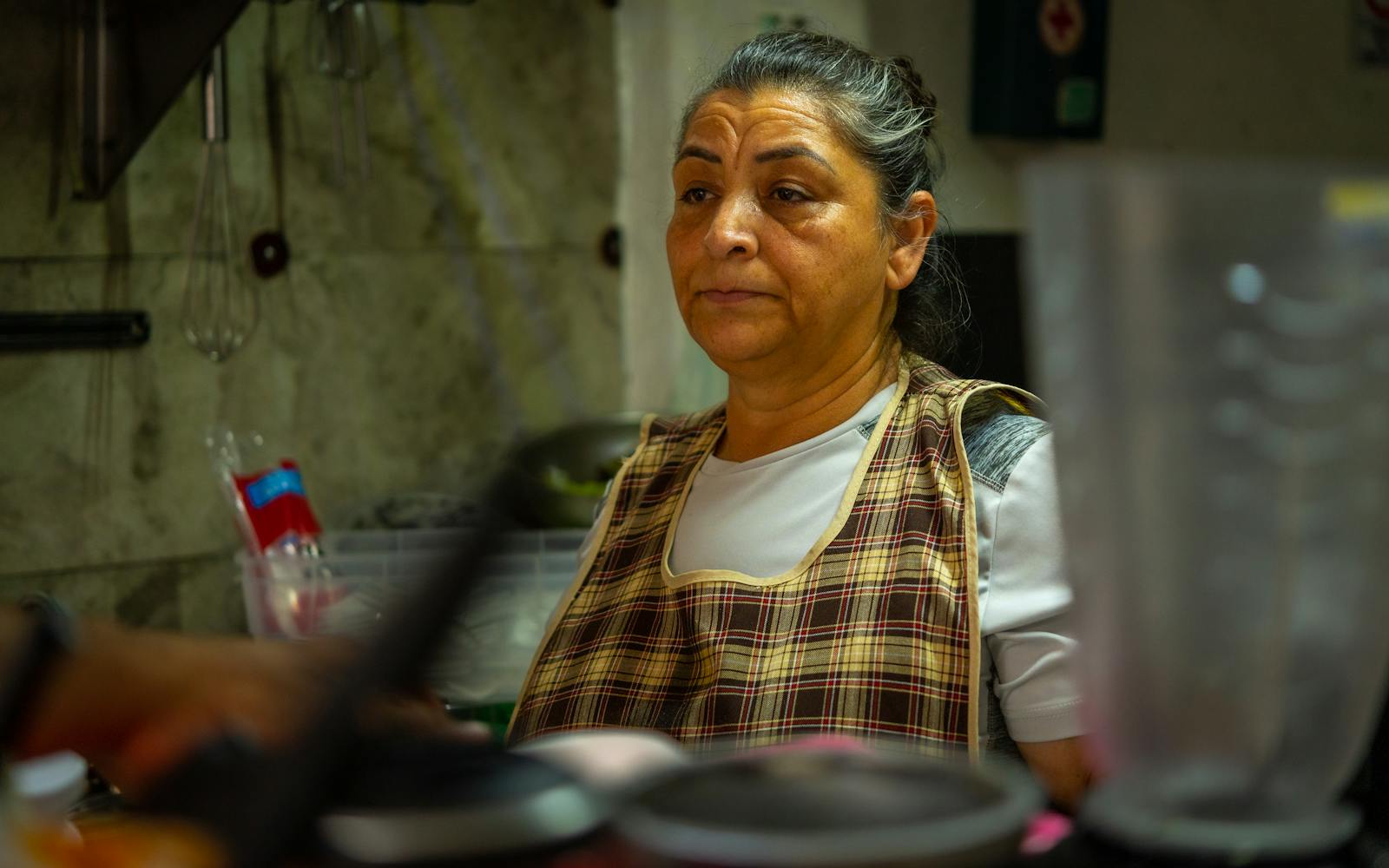
Margaret keeps the thermostat at 64 in winter. Her grown daughter visits with a sweater pulled over a hoodie, hands tucked into sleeves, and still asks if the heat is broken. Margaret laughs, says something about circulation, and goes around turning off the hallway light her daughter left on. The house is warm enough for someone who remembers when it wasn’t.
Habits like Margaret’s get filed under thrift, eccentricity, or the mild stubbornness people develop in their sixties. That explanation usually misses the point. These are not just preferences. They are household protocols, written by an earlier version of family life, and never formally rescinded.
The economies that once mattered
A cold thermostat saved on a heating bill that, in some month long ago, mattered enormously. An early dinner used the food before it spoiled and made the evening feel orderly. Lights off, room by room, was not a green initiative. It was arithmetic.
For a household running close to the edge, these gestures could be the difference between making it and not making it. The arithmetic eventually changed. The gestures did not always change with it.
Behavioral economists Sendhil Mullainathan and Eldar Shafir argued in their 2013 book Scarcity that being short on resources can reorganize attention itself, narrowing focus toward the immediate shortfall and making longer-term thinking harder. Harvard’s Institute for Quantitative Social Science summarized their work as showing that scarcity can overload mental bandwidth, affecting decision-making, self-control, and performance.
Why the habits outlast the hardship
People assume frugality fades when income rises. It can, but not always cleanly. Years of watching every bill do not automatically dissolve when the bank balance improves.
Former heavyweight boxer Ed Latimore, who grew up in Pittsburgh public housing, has written candidly about receiving a $55,000 life insurance payout at eighteen and going through it inside fifteen months. In his account for City Journal, he describes how a scarcity mindset does not instantly change when cash arrives.
That point cuts in more than one direction. Some people overspend because they were never around stable examples of patient saving. Others swing the other way, refusing to spend even when they have enough, because spending feels like tempting something they remember vividly.
The thermostat people are usually closer to the second group. They may not be afraid of this month’s bill. They may be afraid of forgetting that bills can become frightening.
The mind under long pressure
The cognitive cost of financial strain is measurable. A 2013 study by Anandi Mani, Sendhil Mullainathan, Eldar Shafir, and Jiaying Zhao found that poverty-related financial concerns could reduce performance on cognitive tasks. Princeton’s publication record for the study describes the finding as evidence that poverty itself can impede cognitive function. The study has often been summarized through the finding that financial strain can impose a mental burden comparable to a substantial drop in cognitive performance.
Live around that kind of pressure for years and a household can become trained around noticing. Children in those homes may not remember the exact moment they learned to switch off the light behind themselves. They may only remember that someone in the house cared a lot, and that caring back was a way of helping.
The light switch became a small loyalty. Loyalties do not expire just because circumstances do.
How common this story actually is
It is tempting to treat long childhood poverty as rare, something other people went through. The data argues otherwise. Research by UCL and the University of Oxford tracking children born in Britain between 1991 and 2017 found that nearly one in six children across those decades experienced poverty for at least half of childhood. Among cohorts born after 2013, the figure rose to around 23 percent.
Long-term exposure matters more than brief dips. The researchers, Selçuk Bedük and Anna Yong, found that longer time spent in childhood poverty was linked with worse later outcomes in education, employment, earnings, and health. Long-term poverty is not a brief weather event. It is a climate, and people raised in it may carry some of that climate with them.
Other research has connected prolonged financial strain to physical outcomes that reach far past childhood. Columbia University Mailman School of Public Health reported on two studies using National Longitudinal Survey of Youth 1979 data, one linking more years spent in poverty with a higher rate of premature mortality, and another linking rising unsecured debt across early adulthood with an 89 percent higher risk of death compared with consistently low debt.
The thermostat as a coded message
Watch carefully and the small economies start to look less like quirks and more like a kind of personal record-keeping. The early dinner, eaten before guests would have suggested, may come from a season when food had to be planned around what was in the house, not what someone might want at eight. The lights off room by room may come from a parent’s voice, repeated so many times it stopped sounding like instruction and started sounding like the voice of the house itself.
The thermostat at 64 says: someone in this household once watched the meter.
None of this has to be performance. Many people who live this way do not talk about it, and some would feel exposed by the suggestion that their habits are a form of memory. They would rather be called frugal. Frugal sounds like a choice. The truth may feel less like choice and more like loyalty to a self that did the math.
What newer research complicates
For years, one common story about childhood poverty was that it produced adults who took bigger financial risks and chased short-term rewards. A 2025 University of Colorado Boulder article on research from the Leeds School of Business, published in the Journal of Experimental Psychology: Applied, found the picture is more complicated than that.
The study aimed to replicate an earlier finding using a larger and more representative sample. It found that people who grew up in lower-income households were somewhat more likely to take financial risks when they felt threatened, but they did not consistently prefer short-term rewards over long-term payoffs. The researchers also stressed that childhood poverty explained less than 1 percent of differences in risk-taking behavior.
That nuance matters. Childhood scarcity may leave a mark, but it does not create one uniform adult personality. Some people become more willing to gamble under pressure. Others become intensely careful. Many become something harder to summarize: practical in some areas, fearful in others, generous in one moment, guarded in the next.
If the lesson was that careful management bought another month, the person may grow into the kind of adult who turns off lights room by room. If the lesson was that careful management did not matter because something always went wrong anyway, the person may learn a different lesson. The same hardship can teach different forms of survival.
Wealth that never quite feels like wealth
Some of these adults eventually do well financially. Their houses are paid for, their retirement accounts are stable, their kids are grown and employed. The thermostat stays at 64.
Outsiders read this as miserliness. The people living it might describe it differently if pressed. They feel safer than they used to, but not necessarily free of the old alertness. The numbers have changed, but the habit of checking has not fully gone away.
That is why arguments with adult children about the heat almost never work. The children are arguing about comfort. The parent is protecting the conditions of their own steadiness.
The shapes this takes in other parts of life
Once you see the pattern, you start spotting it elsewhere. People who grew up lower middle class or poor may carry a set of automatic behaviors into professional life that quietly mark where they came from, even after decades of success: overpacking lunch, keeping takeout containers, calculating the per-unit price of items that cost almost nothing.
The thermostat habit is in the same family. So is reusing tea bags. So is washing out a Ziploc bag and hanging it to dry on a wooden spoon stuck into a coffee mug.
None of these gestures saves meaningful money in absolute terms. They may save the meaning of the money, which is something else entirely.
The generational handoff
What is interesting is what happens to the next generation. Children of these adults often grow up middle class or above, and their relationship with the small economies is split. Some adopt the rituals without thinking. Some rebel against the rituals without understanding what they were originally protecting.
Both responses can miss the meaning. The rituals were never only about thrift. They were about a household that survived something by paying very close attention to small things, and the parent kept paying attention because that was how survival had been earned.
This is also why people who insist they do not need much may have learned early that visible needs were inconvenient, expensive, or risky. Both patterns are about the management of need. Both are about a self that learned to want less out loud.
How to talk to someone who lives this way
Adult children, partners, and friends often try to argue these adults out of their habits. Turn the heat up, you can afford it. Eat dinner at seven, the world will not end. Leave the hallway light on, electricity is cheap.
The arguments fail because they are addressing the wrong layer. The heat is not only the issue. The dinner time is not only the issue. The light is not only the issue. The issue is what the person remembers, and the habits are how the remembering stays manageable.
The more useful approach is to stop framing the habits as problems to be corrected and start treating them as a language. When the parent turns off the light behind a guest, the parent may be saying something. Probably something like: I am still the kind of person who notices. I am still capable of the attention that once kept us going. That has not been taken from me.
Letting them keep that, instead of trying to argue it away, can be a kind of respect.
What changes, slowly, and what does not
Some of these habits soften with time. Grandchildren visit and the thermostat goes up two degrees, then stays there. A friend brings over a dinner that is served at 7:30 and the world, indeed, does not end. The lights stay on a little longer in the kitchen because someone is reading.
What may not fully disappear is the underlying alertness. The person who turns off lights room by room is not only turning off lights. They are doing a check, the same check they may have done since they were small, and the check is its own form of comfort. Research on scarcity supports the idea that financial strain can shape attention and decision-making. Ordinary life suggests that habits built under pressure often take longer to loosen than the pressure itself.
This is not pathology. It is history wearing house clothes.
The grace in the small economies
There is something almost tender about a person who keeps doing the math after the math stopped being necessary. It means a younger version of them did the math hard enough, and well enough, and faithfully enough, that an older version got to be safer. The habits are a thank-you note to that earlier self.
If someone in your life keeps the thermostat colder than you would like, eats dinner earlier than feels social, and clicks off lights you did not realize you had left on, you may be looking at someone who once carried a household on attention. They may still be carrying it. They just may not have to in the same way anymore, and nobody told the part of them that is still on duty.
You do not have to fix that. You can put on a sweater. You can eat at six. You can let the hallway go dark behind you on the way to bed. The economies are small. What they once protected was not.
Photo by Israel Torres on Pexels
The post Adults who keep their thermostat colder than guests prefer, eat dinner earlier than friends suggest, and turn the lights off room by room aren’t always stingy, they may be holding on to the small economies that once kept their family afloat appeared first on Space Daily.
Popular Products
-
 All-Purpose First Aid Kit for Home & ...
$144.99$100.78 -
 CPR Breathing Mask with One-Way Valve
$33.99$22.78 -
 Lightweight Waterproof Outdoor Surviv...
$111.99$77.78 -
 Smart Ring Health Tracker
$67.99$46.78 -
 Unisex Arch Support Shoe Pads
$48.99$33.78