Are Lawyer-certified Ai Agents ‘the Future’ Of Commercial Insurance?
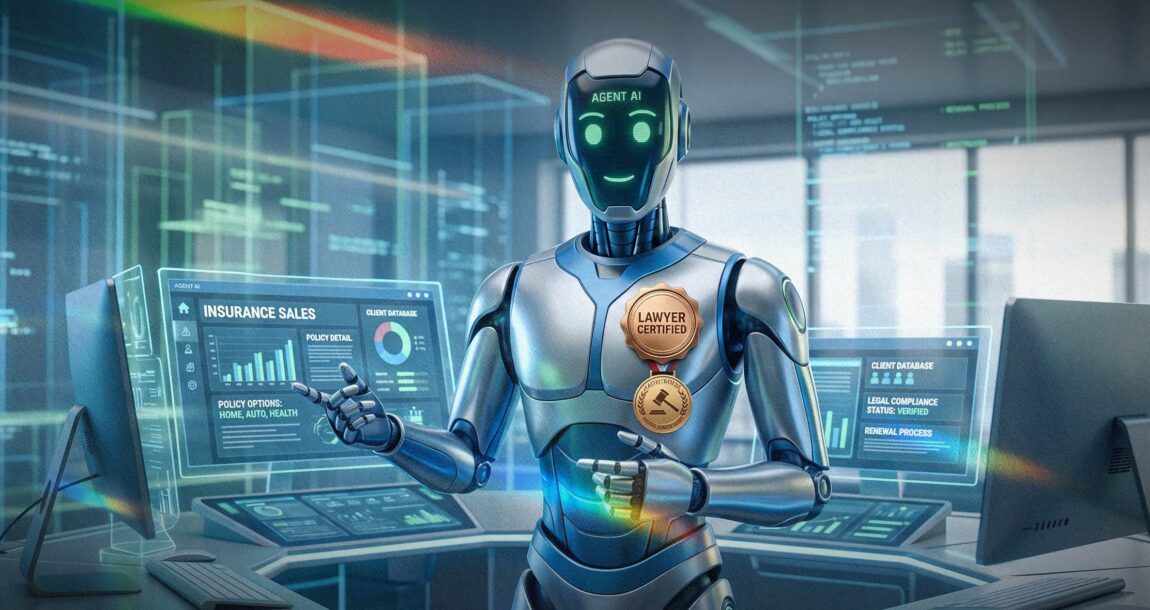
Chicago-based insurtech platform Qumis just released a suite of lawyer-trained artificial intelligence agents across 16 areas of insurance, a move cofounder and chief technology officer Shiv Sinha is calling “the future” of commercial insurance coverage.
“The core area that we want to focus on is providing deep, verticalized, expert judgment that you can’t get from horizontal models like ChatGPT,” Sinha said. “This was a natural transition of us being able to go deeper in each one of these individual areas and ensuring that we can provide the most relevant and the most accurate answer possible.”
Sinha noted that, with insurance being such a specialized field, agents “may not necessarily know” if answers from a generic AI tool are right or wrong. This is where he said Qumis’ AI agents can step in to provide “knowledge and expertise that has been certified.”
“Each of these agents has in-depth knowledge about how to read, interpret, market understanding, along with case law, to be best able to assist your business in getting the right coverage,” he said.
The company had already started in 2022 by launching an AI platform capable of processing and comparing complex insurance policies and documents, providing law-firm-caliber reporting on claim coverage issues.
Developing AI agents with specialized legal training and capable of handling delegated tasks was a “natural next step,” Sinha said.
“Being able to certify the output that you’re getting, being able to certify that when you do go through a model upgrade, that there’s no regression or decreasing quality, is significantly important in these areas that can have massive financial implications,” he said. “We believe that is the future, and that’s the area that we decided to go to.”
A computer behind a chatbot
On the user’s end, Qumis’ AI agents function as a simple “chatbot experience,” like popular large language models many Americans use today.
But Sinha described it as working like “a whole computer in the background” that doesn’t stop at just answering questions and “going back and forth” but can handle delegated tasks as well.
“What it’ll do in real time is determine the right agent to be able to answer that, whether that is one of the 16 specialist agents or the other agents that we have to do that deep research, come back, and provide you a partner that you can collaborate with and delegate tasks to,” Sinha said.
He said that while generic LLMs can process the text of insurance policies, they mostly fall short of “actually understanding” the policy because “the key aspects of being able to understand an insurance policy are procedural; you have to interpret it a specific way, there are rules associated with it, and it varies by case law as well.”
“If I put the same documents into ChatGPT and ask, ‘Am I covered for this event?’ it might find a clause that there is coverage. But Qumis will look at the declarations page first, which is the order of things that you’re supposed to do it in, and to get that information out,” he said.
Qumis’ AI agents can do this because they have been pretrained to handle specific scenarios and provide evaluation, Sinha said. He added that a human remains in the loop to validate scenarios across the 16 different lines of insurance business covered.
“That’s the key certification process, where we’re not only going through each one of these scenarios individually, understanding the complexity of it, but we then also have a human evaluation and expertise evaluation on these answers that are coming back,” he said.
The specialized AI difference
Sinha said that while some companies start their AI journey with generalized AI tools such as ChatGPT or Gemini, more specialized, trained AI agents provide more accurate responses.
“The key point that I want to convey is that when you train these agents, when you specialize these agents, when you have the evaluations behind these agents for specific tasks, specific domains, they give more accurate and insightful answers,” he said.
This can further build trust with end-users, he added, and have a significant impact on customers as well.
As an example, he pointed to the 2024 CrowdStrike outage, in which around 8.5 million computers crashed worldwide, causing major disruptions to businesses and estimated losses of $400 million to $1.5 billion.
In such a scenario, Sinha said information about the claim would be delegated to a specialized cyber liability AI agent that would then determine whether the outage was caused by a system failure or a security failure — a detail that matters when determining whether losses would be covered by the insurance policy or not.
“What Qumis can do is detect this upfront. So when you’re going through this renewal period, you’ll be able to catch this massive gap that exists for hundreds of millions of dollars; potentially, when this event does occur, you’re covered for it,” Sinha said.
© Entire contents copyright 2026 by InsuranceNewsNet.com Inc. All rights reserved. No part of this article may be reprinted without the expressed written consent from InsuranceNewsNet.
The post Are lawyer-certified AI agents ‘the future’ of commercial insurance? appeared first on Insurance News | InsuranceNewsNet.
Popular Products
-
 Fireproof Document Bag with Zipper Cl...
$60.87$31.78 -
 Acrylic Desktop File Organizer with 5...
$100.99$69.78 -
 Child Safety Cabinet Locks - Set of 6
$83.56$41.78 -
 Travel Safe Lock Box with 4-Digit Cod...
$146.99$78.78 -
 Dual Laser Engraver
$5,068.99$3034.78