Consumers Don’t Trust Ai As Much As Insurers Think They Do
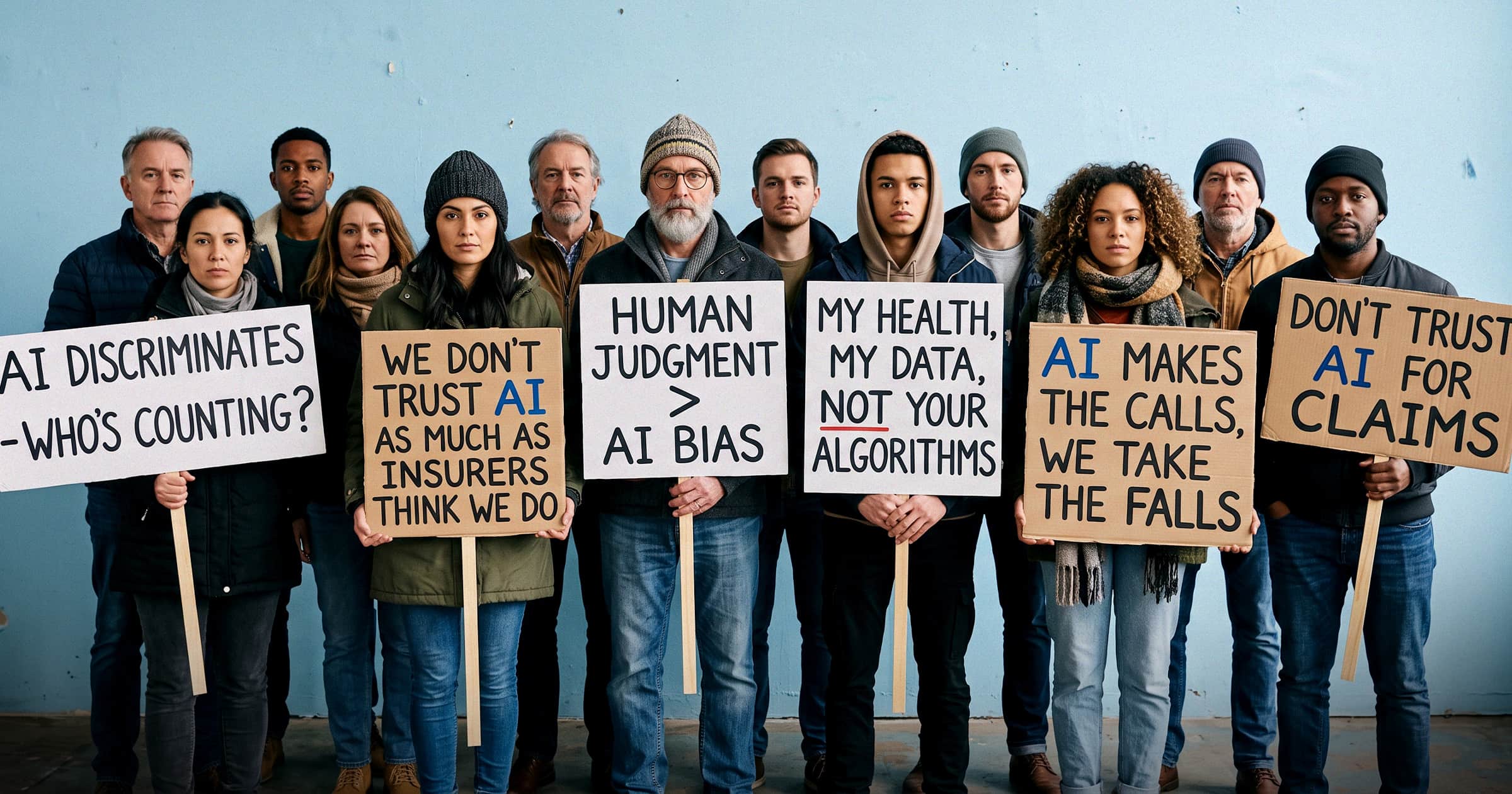
Insurers may be excited about deploying artificial intelligence across a growing number of business lines. Still, they must remember their clients may not feel the same, a new report from Hi Marley suggests.
The report surveyed U.S. and Canadian insurance leaders as well as property/casualty policyholders and found that while 85% of insurers are confident that increased use of AI will build customer trust, only 40% of consumers agreed.
Stephanie Behnke, principal, industry and market insights at Hi Marley, told InsuranceNewsNet this is a crucial disconnect that insurers should consider, especially considering the insurance industry is already starting with something of a trust crisis.
“I think it’s a really good reminder to us that we are maybe starting with a trust deficit in the industry,” Behnke said. “So, if we’re trying to build trust and loyalty, and every carrier is building their own brand, we have to be really careful about the prompts that we give to AI, the way that we test it, the guardrails that we put in place to make sure that it doesn’t go awry.”
Behnke said the data showed a “surprising” 56% of consumers who responded had already interacted with AI through their insurance company, indicating “AI in the insurance space is more prevalent than we had anticipated.”
Further, she said 91% of respondents reported they were satisfied with their AI-powered insurance interactions, “coming in at a higher satisfaction rate than other traditional insurance communications.
“For me, I’m sort of wondering if this is just a lag. So the more that people interact with AI, specifically in the insurance space, they will build more trust and more confidence because those transactions are going well,” Behnke said.
However, she also pointed to a key distinction in that consumers seem to show a clear preference for trusting AI to complete simpler tasks and not get in the way of them speaking to an agent for more complex scenarios, where an individual policyholder may have more to lose.
“I would say it’s a ‘proceed with caution’ sign but proceed nonetheless because the reality is customers are engaging with AI, and they are satisfied with those interactions,” she said. “They just want to know they can get to a person and that whatever response they get is going to be guaranteed. And I think it’s our responsibility, as an industry, to make sure that we get them there safely.”
A disconnect between perception and confidence
According to Behnke, the survey results show a clear disconnect not only between how insurers and consumers perceive AI but also between insurers’ confidence and their grasp on the regulatory aspect of AI.
For example, she said that claims automation is the leading target for AI investment among insurance leaders. Meanwhile, in the same survey, only 20% of policyholders said they feel “extremely confident” that they could trust AI when filing a claim.
Results like this clearly underscore the need for insurers to “deploy AI mindful of where your customers are still a little bit concerned about trusting AI,” Behnke said.
“It seems like if policyholders feel like a transaction has low risk, they have high trust in AI handling that. But when it comes to getting the details right on filing a claim, for example, they need a little bit more evidence; they have less confidence in that transaction than general insurance questions,” she said.
Hi Marley asked respondents what would make them, as policyholders, lose trust in AI. The results showed that not being able to reach a human agent was the biggest concern. Additionally, respondents expressed concern about insurers standing by AI-generated responses.
“I thought that was really interesting, because I think that’s another conversation that we have to have as an industry more broadly,” Behnke said. “If I ask the carrier’s AI, ‘My son comes home from college this weekend; is it OK if he drives my car?’ and AI actually responds to that and gives me an answer that says, ‘Yes, you’re good to go; he’s not excluded,’ then my expectation as a consumer and a policyholder is that the carrier will stand by that answer.”
But there was also a disconnect from the insurers’ own perspective, as 80% gave themselves high ratings for their ability to deploy AI, but only 24% said they were “very confident” they could pass an audit. Nearly 60% of carriers mentioned compliance and governance as a roadblock to deploying AI.
To this end, Behnke suggested insurers start by rolling out AI where they have the highest confidence in the underlying data.
“Wherever you’re deploying AI, one of your very first considerations is, as an example, ‘How confident am I in the data that’s going to provide the answers to that AI assistant?’ That’s a great place to start your journey,” she said.
Hi Marley is an intelligence and communications platform for the P/C insurance industry, founded in 2017 and based out of Boston, MA. Its State of AI in P/C Insurance Communication 2026 report surveyed 550 P/C insurance leaders across the U.S. and Canada between June 15 and 25, 2026, and 2,000 insurance clients across the U.S. and Canada between June 16 and 27, 2026.
© Entire contents copyright 2026 by InsuranceNewsNet.com Inc. All rights reserved. No part of this article may be reprinted without the expressed written consent from InsuranceNewsNet.com.
The post Consumers don’t trust AI as much as insurers think they do appeared first on Insurance News | InsuranceNewsNet.
Popular Products
-
 Fireproof Document Bag with Zipper Cl...
$60.87$31.78 -
 Acrylic Desktop File Organizer with 5...
$100.99$69.78 -
 Child Safety Cabinet Locks - Set of 6
$83.56$41.78 -
 Travel Safe Lock Box with 4-Digit Cod...
$146.99$78.78 -
 Dual Laser Engraver
$5,068.99$3034.78