Could Ai In Insurance Drag Employee Morale Down?
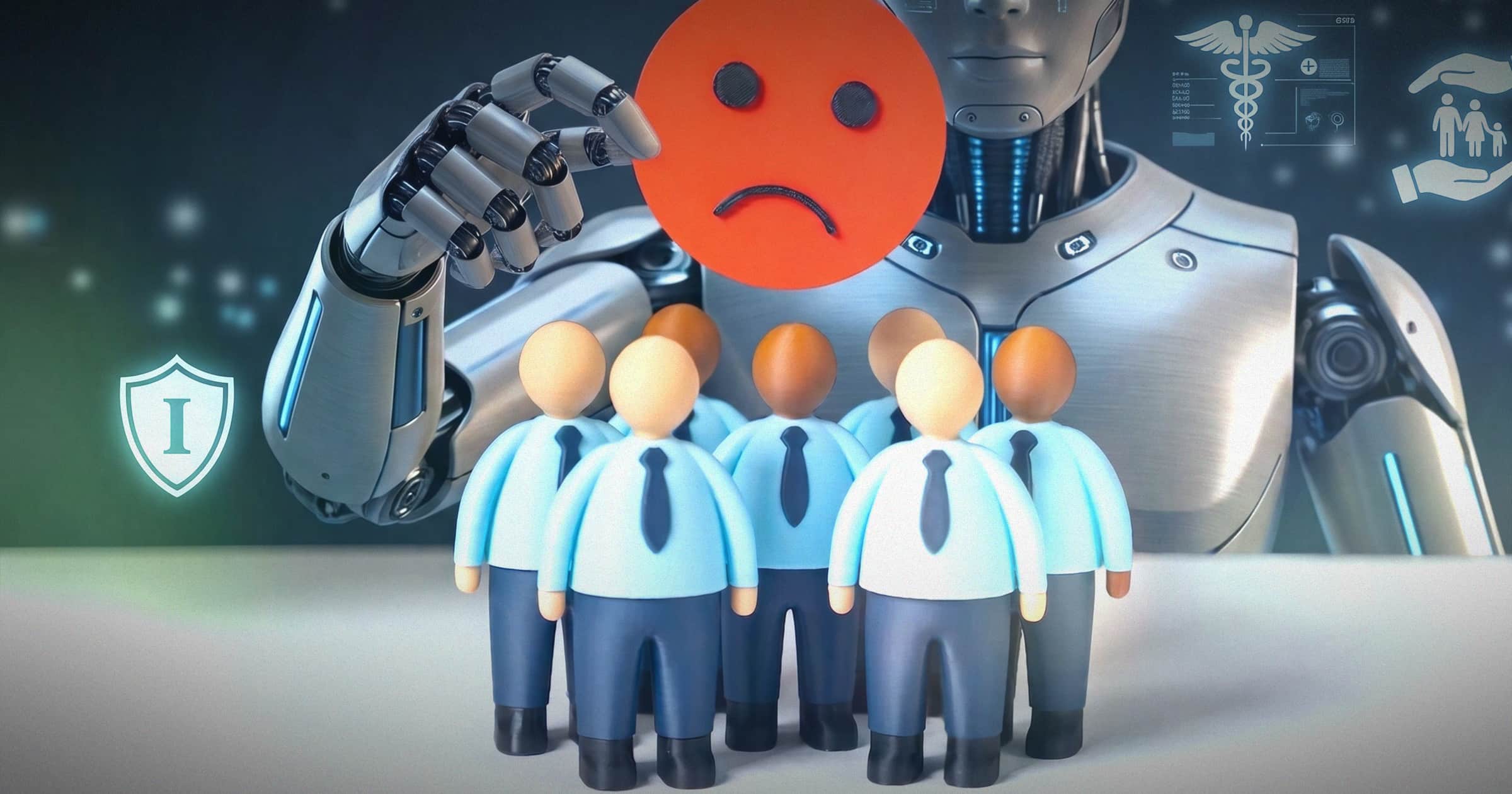
Fears about being replaced by artificial intelligence could be sucking morale out of today’s insurance workforce, as a Glassdoor report found that more than 80% of employee reviews that specifically mentioned AI in insurance were negative.
Insurance claims adjusters emerged as the most critical of AI across all industries, with a whopping 98% of their reviews mentioning AI in a negative light.
“We published a broader AI report, and as part of this report we took a look at which jobs were most positive and most critical of AI in Glassdoor reviews,” said Chris Martin, senior economist at Glassdoor. “A lot of these were jobs that we expected. For example, artists are extremely critical of AI, which wasn’t a surprise to us. But one thing that jumped out was claims adjusters were the most critical of any job when it came to AI.”
Martin, one of the report’s authors, said the negativity about AI in the insurance sector stems from three factors:
- Anxiety about insurance jobs being replaced by AI
- Insurance companies forcing their employees to use AI tools
- Insurance companies forcing their customers to use AI tools
“One is just that they’re afraid of their jobs being replaced by AI, so they kind of sound the warning in their Glassdoor reviews saying, ‘Hey, this isn’t a good place to work; it feels like we’re all about to be replaced with chatbots,’” Martin said.
“And then the second two are related. I call these ‘AI force-feeding’ comments. Some of those comments are that, as an insurance agent, I’m forced to use AI tools that maybe aren’t ready or don’t do a good job or are not helpful for my job. And then similarly forcing AI tooling onto customers as well, which degrades the customer experience.”
Martin acknowledged that insurance leaders face pressure to adopt AI to keep up with competitors and market demands. However, he said this research emphasizes why it’s just as important to listen to employee feedback and seek buy-in from those who will use the tools daily before steamrolling ahead with AI adoption.
Low confidence
In its report on the findings, Glassdoor noted that “insurance industry employee confidence is at an all-time low” in an age of rapid AI deployment, hitting its lowest level in 10 years. It noted that “historically, employee confidence in insurance has been higher than other sectors,” but that trend has since taken a turn for the worse.
Martin pointed out that insurance has some of the highest rates of negative comments about AI across all sectors. He said “about one in five comments” negatively mentions AI and fears about job replacement.
Glassdoor’s report suggested some of those fears about job replacement may be “justified,” as job postings for claims adjusters have shown “steep declines over the past year.”
Meanwhile, the same report noted a “rise in demand for senior-level roles,” which it suggests is “consistent with a story where experienced workers are increasingly able to automate entry-level tasks with AI.”
“I was chatting with some colleagues at Indeed Hiring Lab and they said, ‘We’ve been tracking claims adjusters as well because they’re down in both our data and in the government data,’” Martin said.
“This led to me joining forces with an Indeed Hiring Lab economist, and we wrote this report specifically diving into how all of these signals we were getting from the data were hinting at insurance as a fault line in AI transformation.”
Listen and learn
Martin said the onus falls on insurers to listen to employee feedback when mapping out their AI plans if they hope to preserve their reputation and positive customer experience.
“If we’re thinking about how AI can transform the industry and deliver efficiencies and eventual cost savings to customers or whatever it may be that makes you more competitive as an insurer, what I would say is first just listen to feedback from your employees,” Martin said.
He said that if employees are “really worried” about technology replacing them, even if leaders have undergone adequate talent planning for the future, “it does fall on leadership to recognize that these concerns are valid and make sure that you’re addressing those fears directly as well.”
For instance, he encouraged C-suite leaders to get feedback and buy-in from frontline employees who will be using proposed AI tools frequently, “because what you may be hearing at the top of the organization may not line up with people who need to use these tools for their day-to-day job.
“The more that you can balance AI adoption with ensuring a great employee experience and a great customer experience and making sure that your employees understand that, the better in terms of setting yourself up with a good reputation and with a good employee experience moving into the future, whatever that may look like for your specific company,” Martin said.
Glassdoor is a career platform and recruitment site that provides jobseekers with insights and analytics about companies. It was founded in 2007 and is based out of San Francisco, CA. The Glassdoor Employee Confidence Index compiled data based on employee reviews from July 2026 to July 2026.
© Entire contents copyright 2026 by InsuranceNewsNet.com Inc. All rights reserved. No part of this article may be reprinted without the expressed written consent from InsuranceNewsNet.com.
The post Could AI in insurance drag employee morale down? appeared first on Insurance News | InsuranceNewsNet.
Popular Products
-
 Fireproof Document Bag with Zipper Cl...
$60.87$31.78 -
 Acrylic Desktop File Organizer with 5...
$100.99$69.78 -
 Child Safety Cabinet Locks - Set of 6
$83.56$41.78 -
 Travel Safe Lock Box with 4-Digit Cod...
$146.99$78.78 -
 Dual Laser Engraver
$5,068.99$3034.78