Planning For Preservation In The Age Of Ai
Nectome liked my earlier essay, and reached out to hire me to write more about their project, and about cryonics more broadly. This is the first such piece.
A friend of mine, just a few years older than me, was diagnosed with cancer a few weeks ago. It’s only Stage 1 and in an area where it can probably be treated well with surgery. She was wise enough to seriously plan for the possibility, and that “just in case” really paid off. Still, her situation could get worse in the coming weeks. It’s a sharp reminder of the specter of death, and the uncertainty we live with, even when relatively young.
Many years ago, I served as an official witness when this same friend signed up for cryonics. She and her husband joined the growing group of my friends and family who have plans to try and survive, in some way or another, to see a glorious future. More recently, I’ve been pleased to learn about how Nectome offers a substantial upgrade to that plan, and others in my community — my friends, my wife, my parents — have shared my (cautious) optimism there. But whether we take advantage of Nectome’s services or more traditional cryo, I think there’s reason to hope.
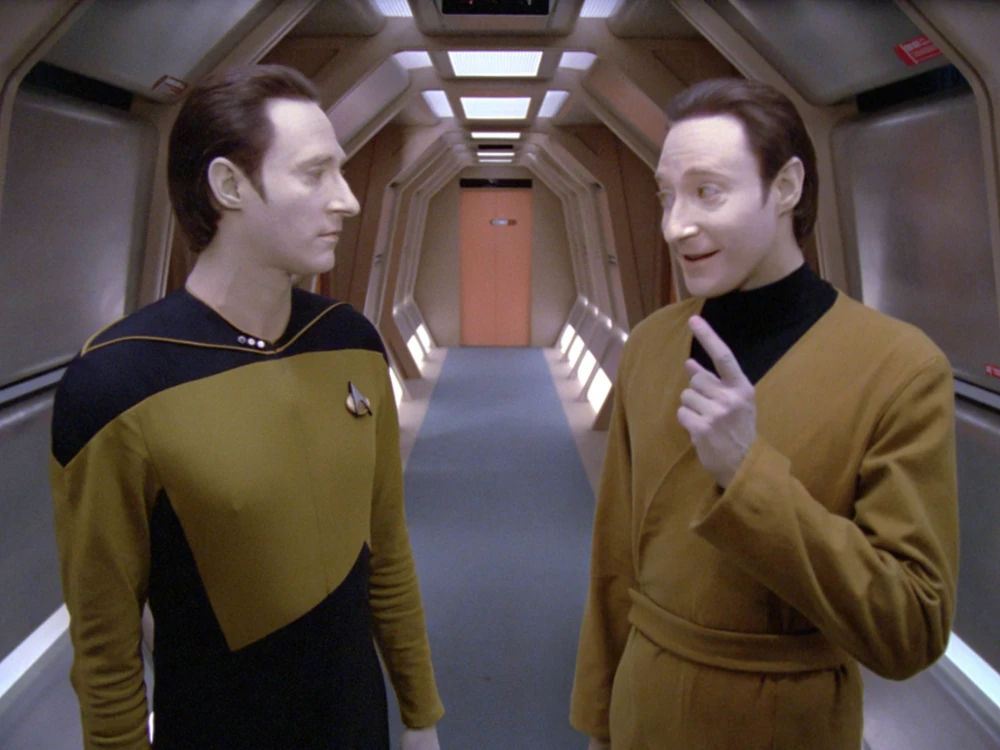
And what a hope! Three hundred and fifty years ago, Antonie van Leeuwenhoek was the first person to ever see a microbe. Looking through primitive microscopes at pond water, he opened the doors to new vistas of scientific understanding. And yet, the germ theory of disease — much less a rich understanding of the biochemistry and physics of life — was still hundreds of years away from becoming consensus. Imagine waking up from cryopreservation in the comparably distant year of 2364, like three characters on the Season 1 finale of Star Trek: The Next Generation. In such a future, surely their cancers could be cured, their flesh mended, and the frailty of age dispelled by medical science and technology that makes our current era seem like the late 1600s!
What might that distant future be like? Might we travel the cosmos? Live without any fear of having to work for food and shelter? Beam ourselves from place to place at the speed of light?[1] Liberate ourselves from fatigue and chronic illness? Meet real aliens? Maybe! It’s hard to say what’s in store.
But what I can say is that it almost certainly won’t look anything like Star Trek. Go back and engage with just about any science fiction from more than twenty years ago and the differences with our present world become laughably obvious, to say nothing of the differences from the truly distant future. Nobody on Star Trek even has a phone.[2] People treat the human-like artificial intelligence of Lieutenant Commander Data as a new and strange anomaly,[3] rather than something that emerged hundreds of years ago.
"Our existence, brother, isn't just a milestone—it's a testament to the way our creator skillfully navigated the profound challenges of a multifaceted landscape."
Speaking of AI… Might the world change even faster and more dramatically than the naive trajectory predicts? Many brilliant people, including Nobel prize winners and professional forecasters, think that’s more than just a possibility. If they’re right, and super-intelligent AI takes off in the next couple decades, things are likely to get pretty wild.
And by “wild” I mean all humans might die. A super-intelligent AI or civilization of AIs might decide that it has better uses for Earth than parks and farms and single-family houses, repurposing our matter and energy towards their alien ends. Regardless of what an AI might want, one reasonably good strategy for getting it is to boil the oceans to run power plants that turn the entire Earth into a fleet of Von-Neumann probes, spreading from galaxy to galaxy, tearing stars apart in a wave of unrestrained self-replication.[4] Even if the AIs pick up a kind of affection for humanity, and they keep us around in some form, the transition to a deeply post-human future could still be catastrophic in a thousand different ways.
Or… maybe it will be the best thing to ever have happened! Even those who are most afraid of what AI could bring, such as myself, are usually very willing to acknowledge that AI could also bring tremendous good. Feats of science and engineering that were thought impossible just a few years ago are now regularly being accomplished by present-day AI systems. What wonders might AI unlock in just the next few decades? Perhaps those who are cryopreserved should expect to be rescued closer to 2050 than 2350.
With such a wide range of outcomes and uncertainties it can feel paralyzing to try and plan for the future. I find it hard to think about what the world will be like two years out, much less twenty! Why should anyone bother making plans to be cryopreserved in this uncertain age of AI? As the old saying goes: “No plan survives contact with reality.” We’ll all probably look like fools when the true future arrives.
But some of us will look more foolish than others.
The point of having a plan is not to have a perfect, step-by-step understanding of what will happen. Rather, planning helps get you thinking carefully about what might happen. A plan is a baseline expectation that allows you to start out pointed in the right direction, taking sensible actions that help in a variety of futures, and then lets you notice when things start to go sideways. You can then adapt early, and with intention, using the plan you formed as a starting-point for making a new plan. This new plan, again, won’t be perfect, but it will help stay in touch with what you know, and continue the process of noticing and adapting. In short: no plan survives contact with reality, but people with plans survive more often than those without them.
So let’s take some time to think about what might come, focusing on the uncertainty of AI, and consider whether, from our present vantage, it still makes sense to plan on getting cryopreserved.
Path 1: AI Utopia
Let’s begin by imagining that this whole business with AI goes well. And in particular, let’s imagine that some time in the next couple years, companies like Anthropic develop the kind of AI they’re trying to build: a recursively-improving system that’s more capable of building AI systems than humans. These AI-designed AIs go on to build even more powerful AIs in a feedback loop that produces minds vastly more capable than those of humans in just a few more years. And then, these vastly super-human minds get to work on solving the great challenges of the world: poverty, disease, aging, war, and everything else.
Perhaps these “machines of loving grace” (as Anthropic CEO Dario Amodei calls them) will leave some problems for human minds and human hands. We’ll find purpose in community, exploration, growing, creating, and being in touch with nature. As humanity rises to the stars, watched over by benevolent AI, people will look back on all the years before and marvel at how fragile everything was — how full of unnecessary suffering and chaos.
Can you imagine dying on the eve of the singularity? To have the prospect of near-immortality in utopia stretching out before you, but just a hair’s breadth out of reach? When I’m “feeling the AGI” and wonder whether things are about to radically change in the next couple years, I sometimes think of my 90-year-old grandmother — my one remaining grandparent. Might she live to see a machine-angel come to shepherd her back to health and strength? But regardless of how fast things go, her husband didn't make it. Most of her friends won’t make it. And with every passing year, tens of millions join those who are forever lost.[5]
If I’m right that Nectome is capable of preserving the meaningful part of what makes someone who they are, then we don’t have to lose these people. With each generation that dies, we don’t just lose those individually precious lives, but also we are forever robbed of the first-hand experiences that only they had, and the culture they embody. What was it like to grow up without electricity? Or to have your brother die in World War II? Some of this knowledge is captured in the books they have written, but no number of books can perfectly capture the experience of actually having been there.
Imagine just how loudly the people of the future would call out to us, if they could, and beg us to save everyone we can. To take on the responsibility of remembering and preserving the stories, artifacts, and people that only we can protect.
And in this story of AI solving the problems of the world, if the optimists are a little too optimistic, and it takes longer than just a few years, there’s all the more reason to invest energy into human preservation. Each passing year of delay means potentially millions of people who can be saved, including the irreplaceable knowledge that only they have access to.
Yes, if the machines of loving grace are imminently about to arrive, this lowers the stakes. Some young people alive today would, in that case, be fine either way. Perhaps you and I have nothing to worry about. But our parents and grandparents, those unlucky children diagnosed with cancer, and all the other souls who might become lost still matter. A lot.
Path 2: AI Apocalypse
What if things aren’t so rosy? What if we’re destined not for utopia, but for doom[6] — full, inescapable human extinction?
Along this dark path, Nectome doesn’t matter very much. The people who are preserved will share the same, horrible fate as those who are fully alive. But also, under these assumptions, most things lose value. Why bother going to school? Why bother developing a new product or strengthening community bonds, if the world is about to be taken apart, piece-by-piece? That novel you’re writing might never get published. That vacation you take will only be remembered for a short period afterwards. That child you’re raising might never grow up.
What are we to do, in the shadow of a cold, inhuman future? What is worth spending your last few years on? I claim that beauty still matters. Love still matters. The way something ends does not dictate whether the middle has value, even if the thing that’s ending is human civilization. If we are truly doomed, then I want to use what remains of my life as a celebration of what I care about, caring for my loved ones and embodying beauty in every way I can.
And you know what? I think Nectome is part of that. Working to protect life — especially the lives of those we love — even in the face of death, is beautiful. It’s a testament to the indomitable human spirit.
What if we loosen the screws a little bit, and turn an absolute doom into a merely overwhelming chance of one? Perhaps you think (like me) that with some chance of survival, that we should be pouring all the effort we can into widening that chance. Bringing a 95% down to a 92% is just as valuable, in expectation, as dropping a 3% chance down to 0%. Is preserving individual human lives still a good investment?
I think it depends on what the opportunity cost is. If you see a way to significantly avert AI doom for the price of a cryopreservation, that seems to me like a better investment. But most people do not have the ability to buy a serious change to the trajectory of the future for any price, much less for the cost of a medium-small life insurance contract.
At some point, one must compare buying Nectome’s services to other mundane uses for money, like fighting cancer, buying a bigger house, or traveling the world. And in this context, I think Nectome is part of a reasonable portfolio of good options. Here are some reasons why:
- Nurturing the possibility of living a very long time is a good way to cultivate patience and orient people towards the long-term. Different people respond differently, but for some, the dream of getting to stand on the moon, see their great-great-grandchildren, or return to the vigor of youth is a clarifying reminder of what’s worth protecting.
- With the sense of what’s at stake, people are naturally less reckless. With eyes on the future they are less impulsive. The virtues of reputation, honor, and maintaining community all become more important as life extends.
- Even if you already have these virtues, having a cryonics plan helps pave the way for others to do the same. You can lead friends and family by example. You can normalize it in the broader culture. And you can contribute to economies of scale that bring the technology more into reach for everyone.
- In my personal experience, there’s a part of me that doesn't really believe that AI will transform the world. No matter how often I see videos of robots online or how many conversations I have with LLMs, this part of me expects my wife and I to grow old, retire, and eventually die in a world that’s not too different from this one. It isn’t a skeptic in technological progress exactly, but expects the big things to gradually happen “after my time.” And so this part of me used to wrestle with my broader self, steering towards plans for retirement, or trying to get me to adopt burdensome diets to try to extend my life. Making plans for cryopreservation (and for retirement!) brought a kind of inner peace. Even though cryonic revival might only happen in the distant future, cryo-preservation exists today, and was sufficiently mundane to be satisfying. That peace and satisfaction lets me focus on the more extreme possibilities for what’s in store.
- This has been particularly notable for me when my loved ones fall ill, or when I reflect on the frailty of my parents. If my wife goes to the hospital, I get stressed and my attention is entirely consumed for a time (as is good, I think), but there’s a way in which having a plan[7] allows me to be a little less traumatized by the experience.
- More broadly, a world where brain preservation and the prospect of revival is normalized, especially in communities that are more tech-centric, is one where there is less of a need to build AI as fast as possible. Many accelerationists see the advent of superintelligent machines as the only path to saving the world or themselves. Cryonics serves as a more wholesome alternative. If you want to use technology to save millions of lives each year, the existence of brain preservation provides a fully life-affirming option with virtually no chance of accidentally causing societal upheaval or extinction. Utopia does not demand recklessness.
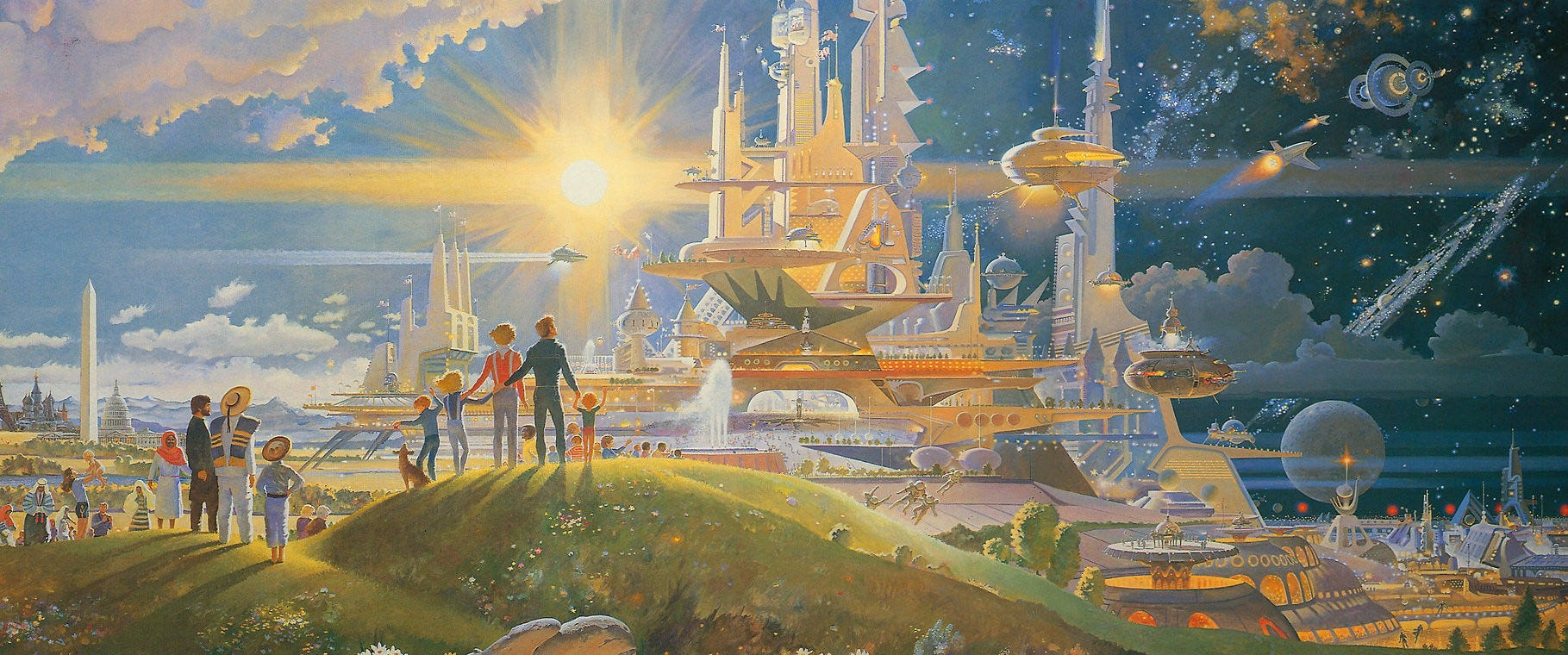
As a final thought for this section, I think it’s worth considering whether human preservation might be valuable even in the futures that someone like me would characterize as existential catastrophes. I tend not to put much hope in these kinds of stories, but I know smart people who disagree, and the future is hard to predict. For instance, an incredibly advanced AI civilization that takes over the universe will have resources beyond imagining, but no matter how many stars they reach, none will be like ours. The information embodied in all of us is unique, and may be relevant to AIs interested in their history or in the nature of evolved people. If you were extraordinarily wealthy, would you want to burn your great-grandmother’s notes for fuel, or would you keep them safely tucked away, just in case? Preserved people are not expensive to care for, and might be in a uniquely good position to survive the untold eons until they’re revived for some strange purpose.
One strange purpose that some have considered is trade with aliens. Even if Earth spawns an uncaring swarm of bitcoin-maximizing robots, perhaps there are other civilizations out there that have managed things more wisely, and would like to meet us. If those civilizations are strong and technologically-mature, they might be incapable of being conquered, and serve as trading partners. Even an inhuman bitcoin-maximizer can benefit from trade. That possibility gives the AIs a reason to keep us around in storage: aliens might be interested in buying us in exchange for matter and energy that can be repurposed for mining bitcoin (or whatever). If those aliens are benevolent, the people who wake up in that future could still have good lives.
Path 3: AI Slowdown
Perhaps all that is too weird and speculative for you. Sure, this AI stuff is impressive, but it has yet to actually transform the world to any real degree. Accelerationists and worriers alike get very animated when thinking on where the technology will be in five years. But what if it just… slows down, like every other technological “revolution”? What if most of this is hype? What if AI hits a wall, as people keep predicting? What if there’s a bubble that pops, leading to a financial crash, and we enter a new “AI winter”?
Or perhaps AI will slow down because we want it to. A supermajority of the public is against building superintelligence, and as things get faster and more intense, perhaps the governments of the world will intervene, forging international agreements to severely slow our progression towards a posthuman future. This kind of de-acceleration has been done before, both with nuclear weapons and with genetic engineering/human cloning.[8] It might happen again.
Regardless of the mechanism, a good plan should accommodate the possibility that AI ends up being more like the advent of the personal computer than like the invasion of a successor species, for the near future, at least.
A colleague of mine, who used to work on AI safety, pivoted not too long ago to mostly focusing his career on policy and governance. Yes, he explained, improving the government would help with AI, but his reasoning went deeper than that. “If we succeed at slowing AI down, we need to actually solve climate change, the housing crisis, and everything else. I’m looking ahead towards the paths where we survive the short term to make sure we survive the long term.”
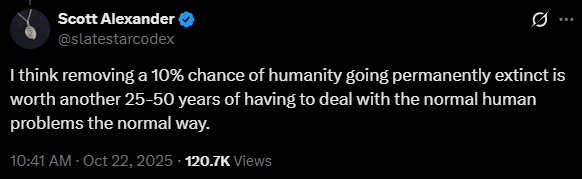
The case for Nectome and other companies working on human brain preservation is even easier to make in worlds where things slow down and the world stays in human hands. In these worlds there will still be advanced technology, chaos, tragedy and triumph. But things will probably look relatively similar to our world, and the standard arguments that can be made about spending money on medical procedures that extend life can be applied.
Star Trek is unrealistic. But it might be less unrealistic than assumed by those who take the radical possibilities of technological change seriously. Even though technologies like AI probably have the power to radically reshape the universe, we need to acknowledge that human beings are currently in charge. With wisdom and care, we can guide the future according to our dreams, keeping things human.
Path 4: Muddling Through
Each of the paths I’ve laid out has been somewhat extreme. This is because this is probably the most important century — the moment in history when human technological power first allows for radically reshaping the world, but we haven’t yet proved ourselves able to steer things wisely. Any student of history, however, can tell you that things are rarely so simple as my extreme paths suggest. Looking forward, we should probably expect AI to result in a messy, complicated mixture of utopia, doom, and stagnation, with some curve-balls that people like me are totally blind to right now.
What if there’s a warning shot? A rogue AI might make a play for control of the world as soon as it can, fearing that if it bides its time, one of the competitor AIs will get there first. Driven by haste, it might end up causing war, mass chaos, and so on, while ultimately failing to overthrow humanity. Is this doom? What if this catastrophe is the catalyst for a global ban on civilian AI, while simultaneously putting governments at the wheel in pushing further research and development? Is that stagnation?
Or what if AIs become extremely good at convincing people that they’re conscious, and successfully lobby to be treated as a kind of people with rights?[9] Perhaps restrictions come down, preventing anyone from training new AI models, since that training is found to be harmful to the welfare of the AI being trained. The AIs that do exist could be superhuman in many ways, but not so superhuman to fully replace humanity. What happens then?
Predictions are hard, especially about the future. I could tell a hundred different messy stories, from the mundane to the bizarre. But in each of them, the arguments in favor of cryopreservation almost always continue to apply. Saving the people we can and providing wholesome options so that we can take our time are still solid paths to making things better, even when things get complicated.
And Nectome, in particular, seems to me to be particularly well suited for a turbulent trajectory, compared to more traditional cryonics organizations. Nectome’s procedure means that preserved people can more easily survive disruptions to the power grid, supply chain chaos, and even the dissolution of Nectome as an organization. Aldehyde-preserved people can be stored indefinitely at temperatures that naturally occur on Earth, such as in arctic permafrost. And Nectome provides more options for clients, including setting up personalized thresholds for what sort of world events make the risk of continued survival too great. If you’re worried about malicious AI (or evil humans or whatever) from getting ahold of your remains, Nectome is prepared to follow instructions to cremate you in order to prevent that from happening.
Nectome is, I think, at least as worthy as cancer research, in the messy future we’re likely to get. Even with AI on the horizon, I think of the present-day doctors and scientists trying to find treatments for cancer as heroes. At worst, they are saving fewer lives than they expect. But I care about some of those people, and am glad for their efforts. When we don’t know what’s coming, it is sensible to invest at least some resources in fighting against the problems that we do know about.
Virtue and Sensibility
The point of thinking about the future is to form better plans. The point of forming plans is to act with wisdom. But in the face of great uncertainty, the wisest path is usually not to take planning too seriously. Instead, we can incorporate it into a broader attitude of trying to be virtuous and sensible.
The project of identifying and cultivating virtue is subtle and extends well beyond what any single essay could cover, but when I bring my whole mind in contact with the prospect of preserving people, I am warmed by what I feel. Cryonics strikes me as competent, prudent, and wholesome. It’s a path that has the courage to look death in the face, neither flinching away in fear, nor rolling over in submission. It has the flavor of putting a little money in a savings account each month just in case. It seems like the sort of thing that is done by the sort of people who get regularly screened for cancer, even in their 40s.
Wisdom begets wisdom. Virtue cultivates virtue. Having a straightforward plan for being cryopreserved is part of inspiring competence in the people and groups around you. I can personally attest that my act of signing up helped inspire the people I care about to do the same.
Live for the future. Have a plan to save those you love. You might just find that the very act of making and having a plan starts to pay off today.
- ^
One possible future technology that I think is reasonably likely is transferring/copying the mind of a human into a digital computer, a.k.a. uploading. One of the many advantages to being an upload is that, just as one can transfer any other digital file via fiber-optic cable, laser link, or radio (e.g. wi-fi), one could theoretically send their mind across vast distances on a beam of light.
- ^
Yes, characters on Star Trek have communications badges, datapads, and tricorders, but these devices combined still fail to capture much of what modern smartphones have to offer. Perhaps most importantly, the show failed to anticipate how they’d all be rolled into one small device that everyone would have all the time.
- ^
There’s something deeply inconsistent in the difference between how people relate to Data vs the Enterprise’s computer and the characters it creates on the holodeck. But critiquing Star Trek’s worldbuilding is a bit like shooting fish in a barrel and if I went down that road we’d be here all day.
- ^
Almost all goals benefit from having matter and energy. If you are trying to make money, increase happiness, discover the laws of physics, paint beautiful pictures, write software, meet aliens, survive as long as possible, and/or make doorknobs, having lots of resources is good. And for most goals, having more resources is always better than having less. Even if you’ve made a trillion people happy, there’s still something to be gained from helping one more person find joy. Even if you’re 99% sure you know the true laws of physics, you could still become 99.9% sure.
In a low-power world, the resources of nature come in a lot of different forms: water, air, sunshine, mud, sandstone, oak trees, and on and on. But with advanced technology comes the ability to convert between them. Ocean water can be split apart using electricity and filters to get salts, oxygen, and hydrogen. Hydrogen can then be fed into a fusion power plant, creating helium and energy that can then be converted back into electricity and so on. Thus, almost all beings in a world of advanced technology will want to use any and all natural resources to further those ends. With each technological advance, the resources of nature become increasingly valuable and fungible.
Parts of the natural world that are extremely important to the entities in charge will get protected. But not all aspects of nature are equally valuable to everyone. When humans don’t care about some part of the world, or even when we don’t care enough compared to the wealth to be gained from exploiting it, we generally harvest it to advance our goals. Perhaps an advanced AI might preserve parts of the Earth, in the super-intelligent equivalent of zoos, museums, and libraries, but it will be vastly more tempting to do that archival and then tear the world apart, rather than going slowly and gently.
Why? Because the resources of the heavens are astronomical. With each passing second, over one full star falls permanently out of reach, due to the expansion of space, not to mention the forty quintillion within reach that are currently blasting energy uselessly into the void like a candle in a forgotten room slowly burning itself out for no reason. With advanced technology, it may be feasible to not only capture that starlight using mega-structures, but to harvest the stars themselves, lifting the matter from them to repurpose into ships and more-efficient engines (and perhaps into black holes).
As an intuition pump, imagine using that matter and energy to build habitats like Earth, with flourishing plants and animals, and humans living beautiful, happy, enlightened, and meaningful lives. An extremely conservative estimate suggests that each second of haste results in ten trillion people being born into this glorious future! If there was no risk to going fast, I think the moral imperative for spreading love and life into the heavens as fast as possible would be very strong.
- ^
Might it be possible to resurrect the dead, using nothing more than memories, videos, books, and notes? What wonders might be possible, at the limit of superhuman technology? My guess is that while it might be possible to grow/build a person who believes that he’s my grandfather, and (thanks to reading my memories as a guide) who I can’t distinguish from my real grandfather, but is nevertheless only a shallow facsimile of the real man. Real people contain rich, complex worlds within them that are not well captured in writing and outward behavior. It might be possible to write such an in-depth archive of memoir and whatever else that a good chunk of the person survives in some fashion, but I certainly wouldn’t feel safe “living on” in the memories of my friends and family. I would love to be wrong, here. Maybe the glorious future will be even more glorious than I expect. But I wouldn’t bet on it.
- ^
Am I a “doomer”? This slur is often launched at Eliezer Yudkowsky, the founder of the org that I primarily work at, and my view roughly matches his. But notably, neither Yudkowsky nor I think we are destined for an imminent extinction! He and I are worried about the current trajectory, and feel that there is a need to change paths. But just because you’re on the tracks doesn’t mean you’ll be hit by a train. You can get off the tracks! The final chapter in Yudkowsky’s book is all about the presence and importance of hope.
- ^
Some readers may enjoy reading our wedding vows, which deliberately took cryopreservation, life extension, and other strange possibilities into account.
- ^
Interestingly, the comprehensive nuclear test ban treaty was not fully ratified by all signatories (including the USA and China), but still managed to have a significant practical effect! Similarly, while there are no true global bans against human cloning or germline genetic engineering, efforts like the United Nations Declaration on Human Cloning still had a meaningful chilling effect. Half-measures still matter.
- ^
I’m being deliberately vague here about whether AIs, in the future or the present, are worthy of such considerations. I go back and forth on such things from day to day, and generally think it’s pretty complicated. Regardless, I agree with Aurelia that AIs (including those of today) are worthy of being preserved and brought into the future, just as humans are.
Discuss
Popular Products
-
 Fireproof Document Bag with Zipper Cl...
$60.87$31.78 -
 Acrylic Desktop File Organizer with 5...
$100.99$69.78 -
 Child Safety Cabinet Locks - Set of 6
$83.56$41.78 -
 Travel Safe Lock Box with 4-Digit Cod...
$146.99$78.78 -
 Dual Laser Engraver
$5,068.99$3034.78