Rising Aca Premiums In 2026 Could Force A Surprising Tradeoff
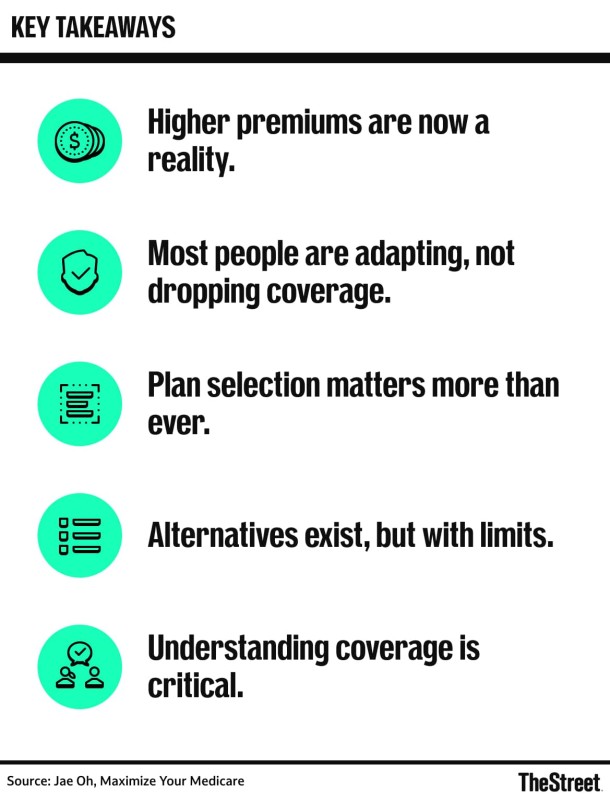
The expiration of enhanced premium tax credits at the end of 2025 is now reshaping the Affordable Care Act marketplace in 2026, with higher premiums hitting households and forcing difficult coverage decisions.
While policymakers failed to extend the subsidies, the real-world impact is becoming clear, according to Jae Oh, author of Maximize Your Medicare. Consumers are paying more, adjusting coverage and, in some cases, dropping out of the system altogether.
But the data also shows something unexpected, Oh said in an interview.
Enrollment declined by roughly 2 million people, far below earlier projections that suggested losses could reach as high as 10 million.
And that gap underscores a key reality. Even as costs rise, many households still view health insurance as essential.
Below is a transcript of the interview with Oh, edited for clarity and brevity.
Robert Powell: We’re in the new year, and that means concerns about whether people would enroll in the Affordable Care Act, given that the enhanced premium tax credit expired at the end of 2025. What does that mean for households? We’re here with Jae Oh, CFP, author of Maximize Your Medicare, to discuss what’s happening with the ACA. Jae, welcome.
Jae Oh: Bob, thanks for having me again.
Enrollment declines, but less than expected
Powell: Where should we begin?
Oh: We’re now seeing the first statistics for the Affordable Care Act in 2026. As we’ve discussed before, the enhanced premium tax credit expired at the end of 2025, and there was no resolution. That means higher premiums have taken effect, and households are feeling it.
What surprised me is that enrollment declined by about 2 million people. That actually seemed low to me. I would have expected a higher number.
Powell: If memory serves, some projections suggested as many as 10 million people might not re-enroll due to higher premiums.
Oh: There may have been some hysteria in those projections. But two things stand out.
First, people have become accustomed to the ACA. For individuals with preexisting conditions or those with lower modified adjusted gross income, the system provides a stabilizing effect. Even with flaws such as billing complexity and network issues, households recognize its value.
Jae Oh, Maximize Your Medicare
Consumers shift to lower-cost coverage
Second, people appear to be adjusting their coverage rather than dropping it altogether. Many are choosing weaker plans to maintain some level of protection.
For example, a healthy 29-year-old may not need a platinum plan. They may rarely visit a doctor but still want protection against catastrophic events. That trade-off makes sense for many households.
That said, higher premiums – sometimes $20,000 to $30,000 annually – are real for certain individuals in certain locations. All of these factors can exist at the same time.
Health insurance as a core household expense
Powell: Health care expenses are an essential part of a household budget. The cost of going without coverage could be far greater than the premium if something goes wrong.
Oh: And that varies by household. One benefit of the ACA is that it resets annually. A person might choose a lower-cost plan one year, then upgrade coverage the next year if circumstances change, such as planning a family.
That flexibility is not widely understood.
Options for those who dropped coverage
Powell: What advice would you give the roughly 2 million people who dropped their ACA plans?
Oh: One important change is that regulators are no longer strictly enforcing limits on short-term health insurance renewals. That allows some consumers to maintain a thinner layer of coverage for longer periods.
In addition, there are standalone policies – such as cancer-only or stroke-only coverage – that may help financially constrained households.
These options are not perfect, but they can provide some level of protection.
The importance of understanding coverage
Powell: Where should consumers go for help – Healthcare.gov or an adviser?
Oh: I’m biased, but I believe people need clear explanations. Many misunderstand how insurance works. Some expect immediate discounts rather than understanding the structure of coverage.
If you start with the wrong assumptions, you set incorrect expectations. That leads to frustration.
Consumers should begin with a clear understanding of how plans work, then evaluate what fits their budget and household needs.
Policy outlook remains uncertain
Powell: Do you see any chance the enhanced premium tax credit returns after the midterms?
Oh: It’s difficult to see that path. The enhanced credit was popular, but whether it could pass again – and overcome regulatory resistance – is uncertain. I would not count on it.
System complexity continues to create uncertainty
Powell: Anything else we should emphasize?
Oh: We will continue to see headlines about network disputes and coverage changes.
For example, in Michigan, there were concerns that a major insurer and a large health system would part ways. That created panic. But in most cases, these disputes are resolved because both sides need to serve the population.
The system is complicated, and that complexity can be unsettling for consumers.
Popular Products
-
 Mini Fire Extinguisher Spray
$54.99$37.78 -
 Surge Protected Power Strip
$43.99$29.78 -
 Solar Powered Wireless Outdoor Securi...
$233.99$162.78 -
 Solar Outdoor Motion Sensory Flood Li...
$68.99$47.78 -
 Solar Street Lights
$25.99$17.78