What Your Homeowners Insurance Doesn’t Cover Anymore
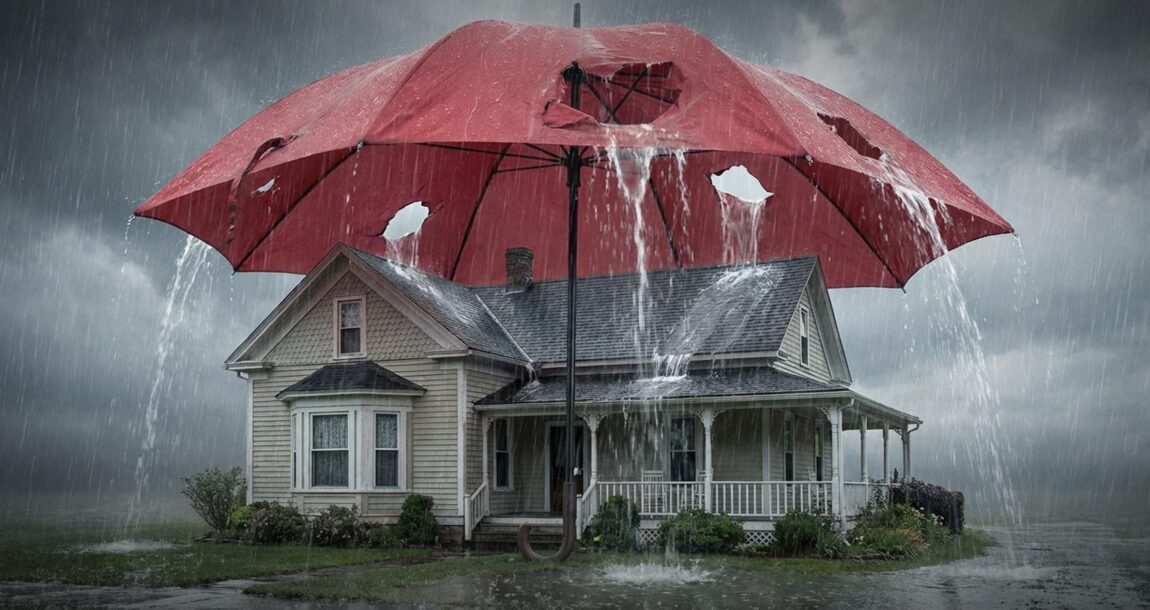
When consumers purchase insurance policies, they look for reliable coverage at a reasonable cost. Policies that have come to be known as “junk insurance” provide the opposite: high cost with low value. To make it even worse, junk policies typically involve a ton of exclusions while charging for coverage consumers already may have under warranties or consumer laws.
Ted PatestosUntil recently, junk policies were not something consumers needed to worry about when shopping for homeowners’ insurance. They were more likely to be encountered in the form of extended warranties on electronics or consumer credit insurance promising to cover loan repayments if borrowers experience illness or unemployment.
But recent trends in the home insurance market, where coverage is shrinking while premiums spike, suggest that consumers should take special care to ensure they aren’t purchasing policies that overpromise and underdeliver.
Hidden homeowners exclusions that might surprise you
A number of new exclusions are starting to appear in the pages of homeowner’s policies, each of which can be a disturbing surprise in the aftermath of a claim. To avoid such surprises, homeowners should carefully read over new policies and renewals to ensure they understand the coverage they can expect.
For example, recent changes in policy language are making water damage exclusions stricter, especially around mold damage. Mold caused by “sudden and accidental” damage, such as a burst pipe, will typically be covered, whereas that caused by “gradual damage” won’t be.
Homeowners should carefully review their policies to see the language used to define “sudden and accidental damage.” Some policies can connect sudden leaks to a lack of maintenance, for example, and deny claims based on that language.
The shift from “replacement cost value” to “actual cash value” seen in some policies can also lead to hidden exclusions. With roof replacements triggered by windstorm damage, for example, replacement cost coverage provides homeowners with a new roof of similar quality once the deductible is covered. With ACV, however, the payout provided by the insurance company is reduced based on the age of the roof, which can leave homeowners facing a larger-than-expected out-of-pocket cost.
Why ‘covered perils’ are no longer guaranteed
Many homeowners assume damage from covered perils - such as hurricanes, earthquakes and sinkhole activity - will be addressed by the general provisions of their policy, including the standard deductible. But that is no longer a safe assumption.
While policies may stipulate a flat dollar deductible for most claims, they now often include a separate, higher deductible for specific perils. Windstorm deductibles and sinkhole deductibles are common examples of this.
Higher deductibles for specific perils are typically based on the home's value. In the case of windstorms, for example, the deductible can be as high as 10 percent of the home’s value. With earthquake coverage, the deductible can be as high as 20 percent.
Higher deductibles put coverage at risk because homeowners must pay the deductible before they can access their insurance coverage. If they can’t afford the deductible, which could be a six-figure amount after an event like an earthquake, their claim can be easily denied or reduced.
What questions to ask before renewing a policy
To avoid falling prey to the type of changes that turn previous coverage into a junk policy, homeowners should carefully review the documentation they receive when renewing. Determining whether policies have been switched from RCV to ACV is important. To avoid confusion about their financial obligations, homeowners should also ask to see their deductibles listed as dollar amounts rather than percentages.
Lowering caps on payouts for certain claims is another practice that decreases the value of a policy. Homeowners should specifically look for changes in the caps applied to water damage, required code upgrades and mold remediation, and ask whether those caps have changed from previous policies.
Experts report that insurance costs are on the rise because insurance companies are taking on more risk. As the number and intensity of natural disasters, the cost of building materials and home prices all continue to rise, insurance companies face the threat of more claims and higher payouts. The trends in policy changes, which look to reduce the exposure and obligations insurance companies take on, are measures to protect the insurers’ profit margins.
To ensure they are getting value for their premiums, homeowners must seek out hidden exclusions, understand the deductibles they are agreeing to pay and address any unwanted changes inserted at the time of renewal. Taking those steps will help to avoid discovering too late that your homeowners’ policy has become a junk policy.
© Entire contents copyright 2025 by InsuranceNewsNet.com Inc. All rights reserved. No part of this article may be reprinted without the expressed written consent from InsuranceNewsNet.com.
The post What your homeowners insurance doesn’t cover anymore appeared first on Insurance News | InsuranceNewsNet.
Popular Products
-
 Fireproof Document Bag with Zipper Cl...
$60.87$31.78 -
 Acrylic Desktop File Organizer with 5...
$100.99$69.78 -
 Child Safety Cabinet Locks - Set of 6
$83.56$41.78 -
 Travel Safe Lock Box with 4-Digit Cod...
$146.99$78.78 -
 Dual Laser Engraver
$5,068.99$3034.78