Bad Breath In Dogs Is A Warning Sign
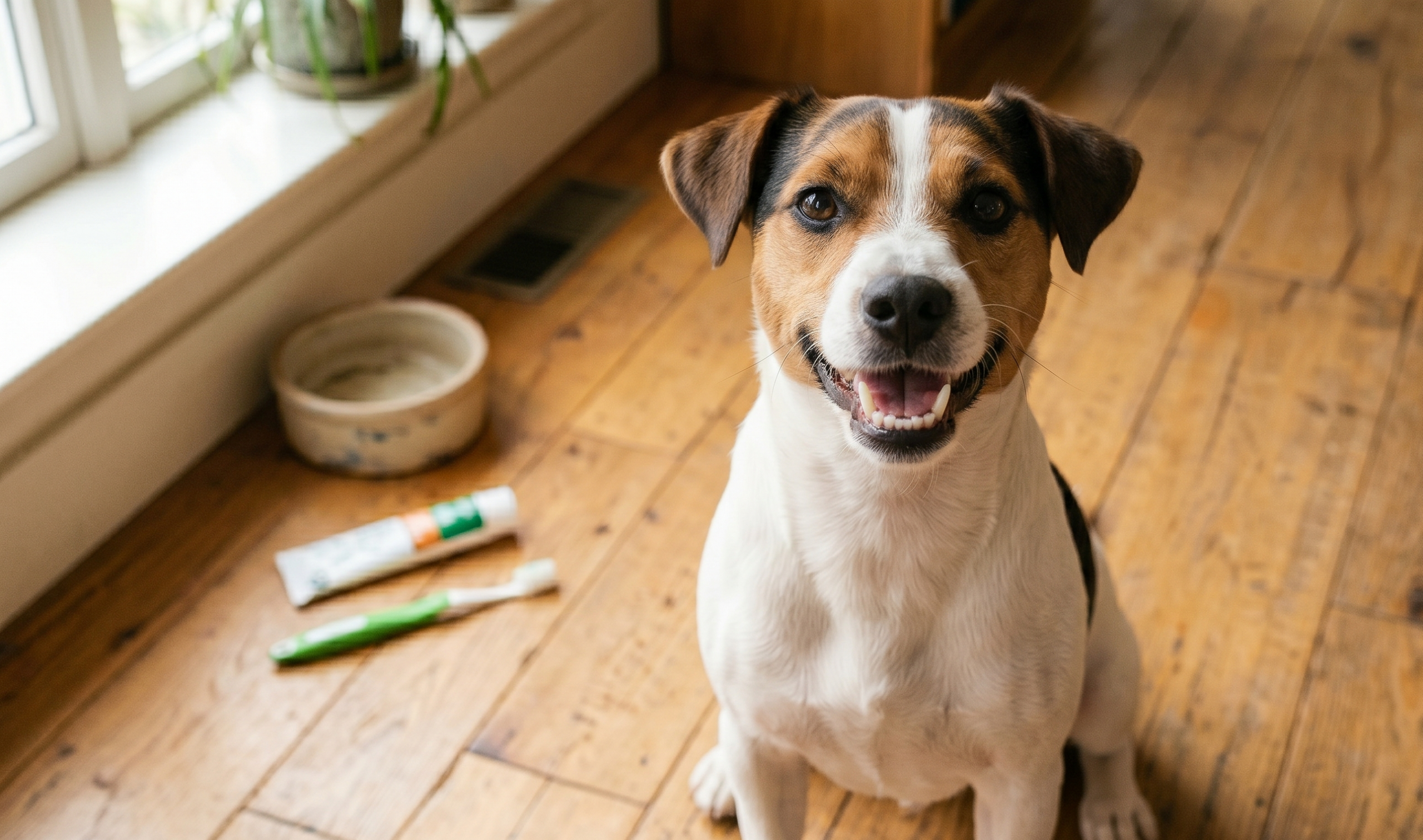
Bad breath in dogs is a warning sign that something needs attention. The good news is that there are ways to help freshen your dog’s breath while addressing the root cause.
Understanding the Real Problem
Bad breath in dogs usually comes from dental disease, specifically the buildup of plaque—an invisible layer of bacteria that forms on teeth. This plaque causes inflammation, damages gums, and creates painful problems that can affect your dog’s overall health. Even if your dog’s teeth look clean, they could still have issues developing beneath the gum line.
Daily Tooth Brushing: Your Best Defense
The most effective natural solution for bad breath is daily tooth brushing. Using a veterinary toothpaste (never human toothpaste, which contains ingredients unsafe for dogs to swallow), you can break up the bacterial buildup before it causes serious problems.
Start slowly if your dog isn’t used to brushing. Begin by letting them smell and taste the paste, then gradually work up to using a brush. Focus on the outside surfaces of the teeth, where plaque tends to accumulate most. Making this a daily routine gives bacteria less chance to multiply and cause odor.
Natural and Organic Approaches
Here are some herbal and organic options that may help:
- Probiotics – These beneficial bacteria can help with bad breath by supporting a healthy balance of good bacteria in your dog’s mouth and digestive system. Look for dog-specific probiotics with 1-10 billion CFUs per day. Products like Fortiflora and Proviable have scientific studies backing them up.
- Fresh foods – Adding small amounts of fresh, healthy foods (no more than 10% of their diet) like:
- Carrots (crunchy and help clean teeth)
- Blueberries
- Spinach
- Water additives and oral gels – There are organic dental water additives and sprays available.
Additional Tips
Look for products with the Veterinary Oral Health Council (VOHC) seal of approval. These items have been tested and proven to help control plaque and tartar. Some veterinarians also recommend special dental diets that naturally clean teeth as your dog chews.
Dental chew toys and treats can provide some benefit, though they shouldn’t replace brushing. Choose products specifically designed for dental health rather than regular treats.
When to Seek Professional Help
Remember that natural solutions work best for prevention and mild cases. If your dog already has bad breath, they likely need professional dental cleaning under anesthesia. Signs like difficulty eating, drooling, pawing at the mouth, or bleeding indicate advanced disease requiring immediate veterinary attention.
Bad breath isn’t just unpleasant—it can signal pain and health problems that affect your dog’s heart and liver. Schedule a checkup with your veterinarian to assess your dog’s dental health and create a personalized care plan. Together with professional cleanings and your daily home care routine, you can keep your dog’s breath fresh and their mouth healthy for years to come.
The post Bad Breath in Dogs Is a Warning Sign appeared first on Animal Wellness Magazine.
Popular Products
-
 Custom Engraved Acrylic LED Dog Tag L...
$51.99$35.78 -
 Dog Training Treat Poop bag with Strap
$54.99$37.78 -
 Dog Treat Training pouch with Strap
$60.99$41.78 -
 Wooden Pet Snuffle Game Toy for Rabbi...
$28.99$19.78 -
 Adjustable Dog Nail File Board
$179.56$89.78