Does Your Dog Get Anxious Around Unfamiliar People?
TL;DR
Many dogs get anxious or scared when they meet new people. This is pretty common, but with a solid routine, positive reinforcement, and gradual exposure, you can help your pup feel better. Always team up with your vet or a qualified trainer for the best results.
If your dog hides behind your legs, tucks their tail, or starts barking when someone new comes in, don’t worry because its quit common. A lot of dogs struggle with anxiety around unfamiliar faces. Understanding the reasons behind this is the first step toward helping your furry friend feel more at ease.
There are a few reasons your dog might be fearful. One big factor is a lack of early socialization. Puppies that don’t meet a variety of people during their early months might grow up anxious around strangers. Bad past experiences can contribute too. And, some dogs are just more naturally cautious or sensitive.
Recognizing the Signs
To help your dog, you first need to spot the signs of anxiety. Here are some common behaviors to watch for:
– Excessive barking or growling
– Shaking or trembling
– Panting even when it’s not hot
– Ears pulled back
– Whining
– Hiding or trying to escape
– Whites of the eyes showing
Remember, these actions are your dog’s way of saying they feel unsafe. They’re not being “bad”; they’re just scared.
How to Help Your Dog Feel More Confident
Create a Safe Space
Every dog needs a cozy retreat where they feel secure. Setting up a crate with comfy bedding in a quiet spot can be just the ticket. When guests arrive, letting your dog retreat to their crate can help them avoid feeling overwhelmed. If they’re already used to the crate, they’ll find it much easier to relax when things get hectic.
Stick to a Routine
Dogs really thrive on routine. Feeding them at the same times each day, going for walks on a regular schedule, and keeping training sessions consistent can help ease their anxiety. When dogs know what to expect, the world feels a little less scary, making it easier to handle unfamiliar faces.
Never Force Interaction
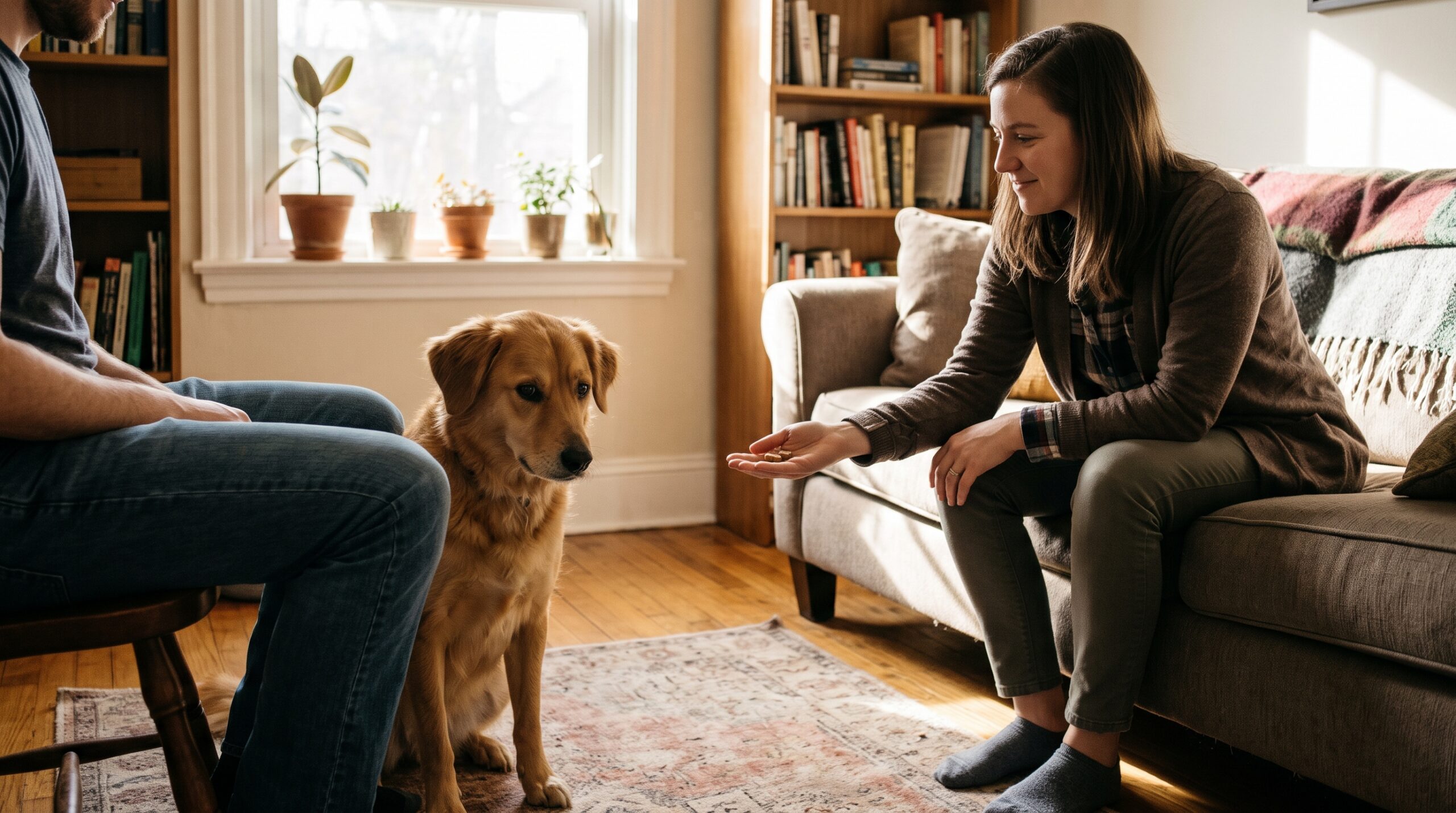
One major rule when dealing with a nervous dog is to never force them to interact with strangers. Pushing them beyond their comfort zone can make their fear worse or even lead to aggression. Instead, let your dog approach new people when they feel ready. When they do, shower them with treats and praise. This helps create a positive link between strangers and good experiences.
Use Counter-Conditioning
Counter-conditioning is all about changing your dog’s emotional response to something that scares them by pairing it with something they love. For instance, every time a stranger shows up, give your dog a tasty treat. Over time, they’ll start to see unfamiliar people as a good thing instead of something to fear. Begin at a distance where they feel safe, and gradually get closer as they gain confidence.
Ask Guests to Be Patient
Help your visitors understand how to interact with your dog. Ask them to avoid direct eye contact at first, not to reach over the dog’s head, and to let the dog come to them. Having guests sit down before your dog enters the room can also help, as it prevents that looming feeling that can be intimidating for many dogs.
If your dog’s anxiety around strangers is pretty severe or doesn’t seem to be improving with basic strategies, it might be time to get some professional help. A veterinarian or a certified, fear-free trainer can work with you to create a tailored plan. In some cases, a veterinary behaviorist might suggest additional support. Don’t hesitate to reach out, your pup deserves to feel safe and happy.
Helping your dog feel comfortable around strangers takes time, patience, and a whole lot of compassion. Progress may be slow, but every little victory is worth celebrating. With the right approach and a bit of time, many dogs can learn that strangers aren’t something to fear. Remember, you’re your dog’s best advocate, and that makes all the difference. Always consult your vet for personalized guidance suited to your dog’s needs.
Frequently Asked Questions
Can a dog outgrow their fear of strangers on their own?
It’s pretty unlikely that a dog will just get over this kind of fear without some help. In fact, if left alone, their fear could actually get worse over time. A good approach is to focus on gradual, positive exposure paired with consistent training, which usually works best. And of course, it’s always a good idea to chat with your vet for professional advice.
Is it okay to comfort my dog when they’re scared of a stranger?
Absolutely! Comforting your dog doesn’t make their fear worse. Speaking softly and providing reassurance can really help them feel more secure in those moments. Just remember to stay calm yourself, dogs are great at picking up on our emotions.
What should I do if my dog snaps or growls at a stranger?
If your dog growls or snaps, that’s a serious warning sign. It means they’re feeling really threatened and might be nearing their breaking point. It’s important to calmly remove your dog from that situation and reach out to a vet or a veterinary behaviorist as soon as you can. And remember, don’t punish them for growling; it’s a key way they communicate.
How long will it take for my dog to feel less afraid of strangers?
There’s no straightforward answer here. Some dogs might show progress in just a few weeks, while others could take months of consistent effort. Factors like the intensity of the fear, the dog’s background, and how consistent your training is all play a part. So, be patient and celebrate the little wins along the way. Your vet can help you set realistic goals for your dog.
The post Does Your Dog Get Anxious Around Unfamiliar People? appeared first on Animal Wellness Magazine.
Popular Products
-
 Adjustable Cat Muzzle Anti Bite Scrat...
$44.99$30.78 -
 Automatic Cat Water Fountain with Ste...
$78.99$54.78 -
 Automatic Cat Feeder & Water Dispense...
$87.67$55.78 -
 Automatic Pet Feeder with camera and ...
$369.99$257.78 -
 Wifi 3L Automatic Pet Feeder with Voi...
$200.00$126.78